Qingyang Travel Guide: Beishiku Grottoes, Dongzhi Plateau and Longdong Crafts
Qingyang sits at the eastern tip of Gansu, almost surrounded by Shaanxi and Ningxia, on one of the broadest tablelands of the Loess Plateau. The main sight is Beishiku, the North Grotto Temple, a Buddhist cave site begun in 509 about 25 km southwest of the city and counted as Gansu's third great grotto complex after Mogao and Maijishan. Add the city museum and the region's embroidered sachets and paper-cuts, and you have a full day. The Yinxi high-speed line brings Xi'an North within about 70 minutes.
Why Qingyang is different
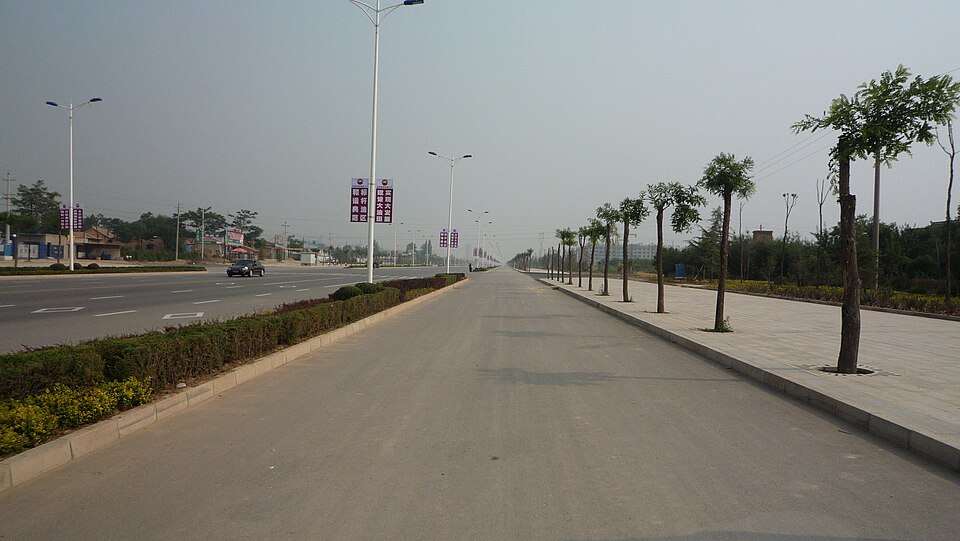
Most of Gansu's famous sights lie west along the Hexi Corridor. Qingyang, known as Longdong or "east of Long", feels closer to the loess country of northern Shaanxi: cave dwellings cut into the earth, deep gullies and wide farmed plateaus. The Dongzhi Yuan, the tableland on which the city of Xifeng stands, is often described as the largest of its kind on the Loess Plateau. The region was part of the Qin heartland, and later part of the Communist Shaan–Gan–Ning Border Region. Oil and gas now drive the local economy.
Places worth visiting
Beishiku (North Grotto Temple)
Carving began in 509 under the Northern Wei and continued through the Western Wei, Northern Zhou, Sui, Tang and Song. The site now counts 308 caves and more than 2,000 statues along the Pu River. Unlike the clay figures at Mogao, these are carved directly into yellow sandstone, which has weathered badly in exposed niches; the large main caves are the ones to see. It has been a nationally protected site since 1988. Go by taxi or hired car from Xifeng, about 25 km. Opening hours and ticket rules are on the site's official notice.
Qingyang Museum
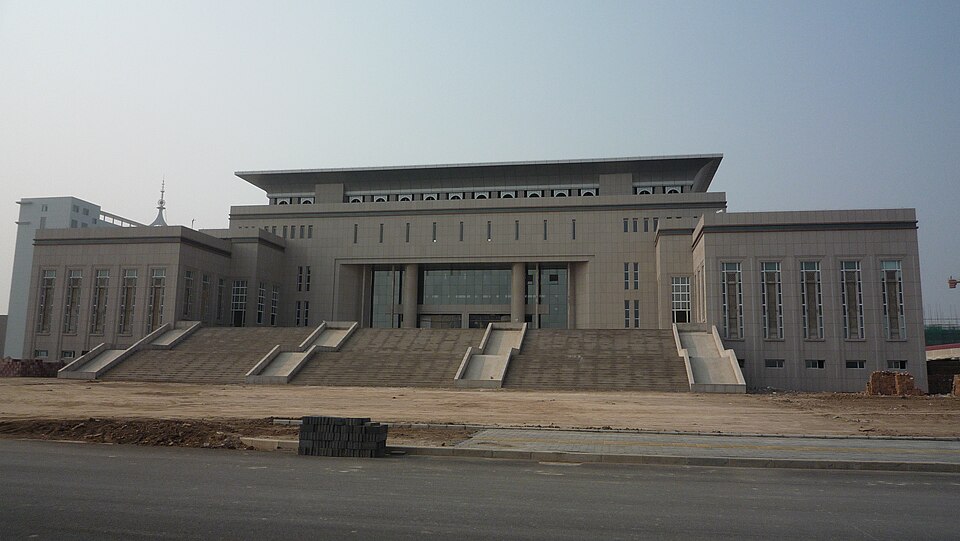
The museum covers the region's prehistory, Zhou and Qin links, and folk culture, and is the best place to see Qingyang's crafts if you do not have time to visit workshops. It is a natural pairing with Beishiku on the same day: grottoes in the morning, museum in the afternoon. Confirm closing days before you go.
Sachets and paper-cuts
Qingyang is known for embroidered sachets (xiangbao), small fragrant pouches stitched in bright colours, and for folk paper-cutting. Sachet embroidery is recognised as national intangible heritage. Shops and workshops in Xifeng sell them; look for hand stitching and ask where they were made.
City plazas
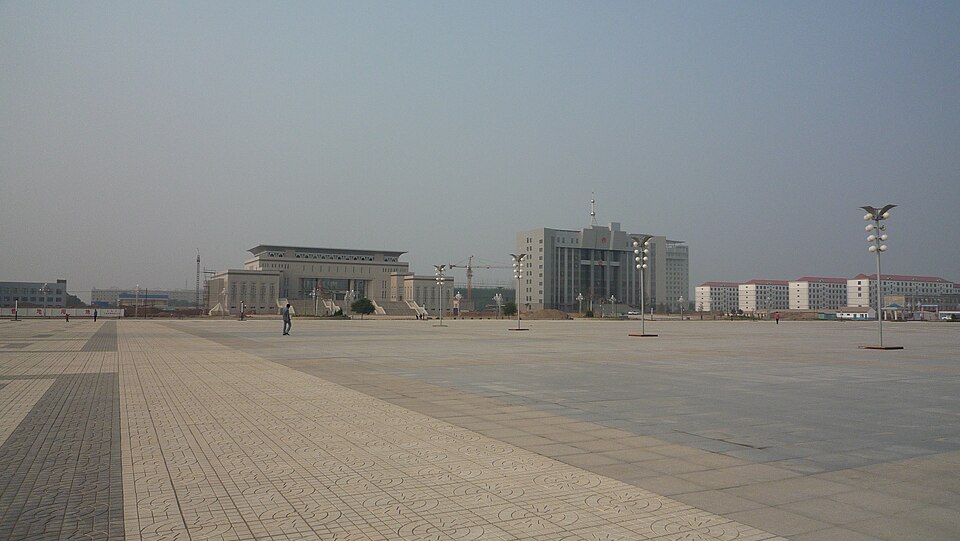
Xifeng's squares fill with families and dancers in the evening. They are pleasant for an hour after dinner and need no more planning than that.
Nanliang
In Huachi County to the north, the Nanliang revolutionary base area has a memorial hall about the 1930s Communist base in the region. It is a long drive and mainly of interest to travellers following that history.
When to come to Qingyang
May to October is the best window. Most of the year's rain falls between June and September, often in heavy summer storms, while winter is cold and dry with January averages below freezing. Spring can be windy and dusty. Autumn, with harvested fields and clear air on the plateau, is the most photogenic season.
Getting in and where to stay
- High-speed rail: Qingyang Station is on the Yinchuan–Xi'an high-speed line. The fastest trains from Xi'an North take about 1 hour 10 minutes; Yinchuan is in the other direction.
- Air: Qingyang Xifeng Airport has domestic flights.
- Getting around: taxis are the practical way to reach Beishiku and the museum. Arrange a return pickup at the grottoes, which are outside town.
- Where to stay: Xifeng District, the urban core, has the hotels and restaurants.
Eating in Qingyang
Loess-plateau food is wheat and mutton: noodles in many forms, steamed buns, lamb stews and simple home cooking. Restaurants around the city centre are busy with locals in the evening. Breakfast stalls near hotels are a good chance to try a bowl of local noodles.
How to arrange the route
One day: morning taxi to Beishiku, lunch back in Xifeng, Qingyang Museum in the afternoon, plaza walk after dinner.
Two days: add a slower craft-shopping morning, or the long drive to Nanliang.
Onward, Pingliang and Kongtong Mountain are to the southwest, Xi'an is the big hub, and Yan'an lies across the border in Shaanxi. Lanzhou is the provincial capital to the west.
What to cut if short on time
Keep Beishiku. The museum comes second. Nanliang and the plazas are the easy cuts.
Things to confirm before you go
- Opening hours and ticket rules at Beishiku.
- Museum closing days.
- Train times on the Yinxi line.
- A return taxi from the grottoes.
Frequently asked questions
What is the main sight in Qingyang?
Beishiku, the North Grotto Temple, a Buddhist cave complex begun in 509 with 308 caves carved into sandstone along the Pu River.
How do I get to Qingyang from Xi'an?
Take a high-speed train on the Yinxi line from Xi'an North to Qingyang Station; the fastest take about 70 minutes.
Is one day enough in Qingyang?
Yes, for Beishiku and the museum. Stay two days for crafts or a county trip.
Sources
The facts in this article were checked against the following sources, retrieved September 27, 2026, and rechecked on October 20, 2026.
- Qingyang, Gansu https://en.wikipedia.org/wiki/Qingyang,_Gansu
- North Grotto Temple (Chinese) https://zh.wikipedia.org/wiki/北石窟寺
- Qingyang Culture and Tourism Bureau, Beishiku visitor guide https://wtgdly.zgqingyang.gov.cn/xwzx/zdgz/ly/jpjq/content_335680
- Xi'an North to Qingyang timetable (gaotie.com.cn) https://www.gaotie.com.cn/lieche/xianbei-qingyang.html
Tickets change; this article does not quote yuan amounts, so check the official notice for your date.
All photos are from Wikimedia Commons, used under CC licenses or public domain; re-use requires attribution.
- qingyang-museum.jpg from File:庆阳博物馆 (2).jpg, by xudongyong, CC BY 3.0
- qingyang-plaza.jpg from File:庆阳和谐广场.jpg, by xudongyong, CC BY 3.0
- qingyang-landscape.jpg from File:Untitled - panoramio - xudongyong (1).jpg, by xudongyong, CC BY 3.0