Jinci Temple, Ancestral Architecture Southwest of Taiyuan
Jinci, often labelled Jinci Museum in tickets and maps, stands about twenty-five kilometers southwest of central Taiyuan at the foot of Xuanweng Mountain in Shanxi. It began as a shrine for Tang Shuyu, the founding prince of the Jin state, and grew through Northern Qi, Sui, Jin and later dynasties into one of China's densest open-air museums of timber architecture. Li Daoyuan's Northern Wei Commentary on the Water Classic already mentions the site. In 1961 the Sacred Mother Hall and the Fish Pond Flying Bridge entered China's first batch of nationally protected monuments. Most travelers treat Jinci as Taiyuan's signature half-day, then decide whether to continue to the Tianlongshan Grottoes on the same mountain corridor.
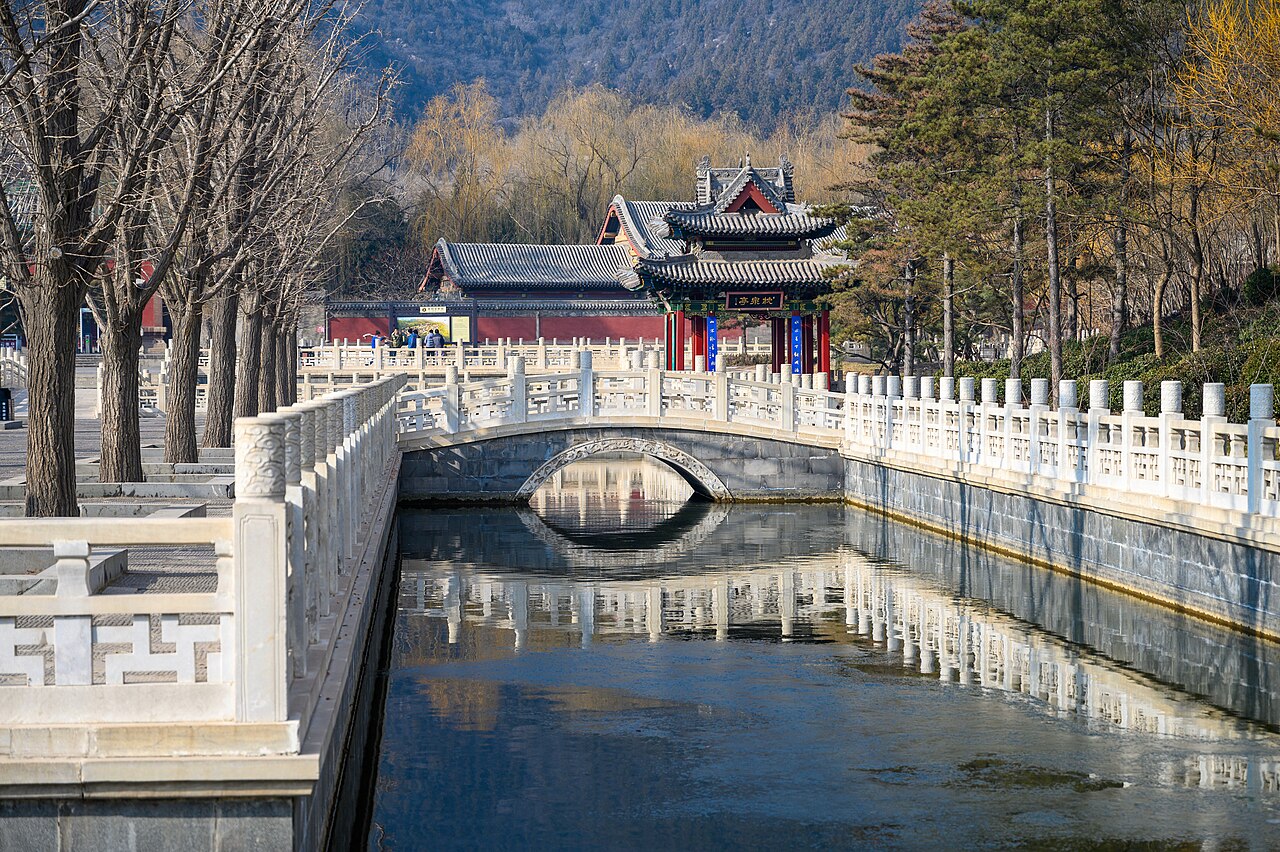
The central axis and the three wonders
Walk the paid museum axis in order rather than zigzagging side yards first. Landmarks include the Water Mirror Stage, Huixian Bridge, the Golden Man Platform, Duiyue Archway and the nail-free Xian Hall dated to 1168 under the Jin. The Sacred Mother Hall, built in the Song Tiansheng reign (1023–1032), holds forty-three painted clay figures: the Sacred Mother Yi Jiang enthroned, with attendants along the sides, each mid-task with a distinct expression. Two figures were restored in the Ming; the rest are original Song work. In front stands the Fish Pond Flying Bridge, a rare surviving cross-shaped bridge over the temple water.
Local tradition groups three wonders nearby: the Song maid statues inside the hall, the Zhou cypress said to date from the Western Zhou and tilting like a coiling dragon, and the Never Aging Spring (Nanlao Spring), a source of the Jin River that still runs. Tang locust trees and the Water Mother Tower fill out a two-to-three-hour loop if you read plaques instead of racing for the exit. Free Jinci Park surrounds the museum; do not confuse the free park stroll with the ticketed museum core.
Tickets, hours and reservations
Travel listings for 2026 commonly quote a full-price museum ticket around 80 yuan and a half-price rate around 40 yuan for eligible students and minors, with free entry for seniors aged 60 and above and young children under posted rules when they present accepted documents. Peak and off-season hours often open around 8:30, with last entry roughly thirty to sixty minutes before closing; autumn 2026 notices have listed 8:30–17:30 with ticket checks stopping at 17:00 for parts of October. Holiday periods may require real-name timed reservations through official WeChat channels such as China Jinci or related OTA platforms. Combined Jinci–Tianlongshan tickets appear in some seasons around a higher bundle price that can include scenic shuttles. Treat every yuan figure and hour as a listing snapshot and check the day's official notice before you pay.
Arrive early on weekends. The museum logged millions of visitors in recent peak years, and tour groups pack the Sacred Mother Hall mid-morning.
Getting there and pairing with Tianlongshan
City buses from Taiyuan Station and South Station routes such as 308, 804, 856 or 79 (numbers can change) terminate near Jinci Park; ride-hailing to "Jinci Museum" is straightforward. From downtown, expect roughly thirty to fifty minutes depending on traffic. Inside, an electric cart sometimes covers the walk from free park edges to the museum gate for a small fee when operating.
Tianlongshan sits farther up the same southwestern hills. A same-day stack works only if you start Jinci early and confirm the last scenic shuttle toward the grottoes; some notices stop that link mid-afternoon. Many travelers give Jinci a full morning and keep Tianlongshan for a separate half-day. The Taiyuan guide also lists Mengshan Giant Buddha on the wider Jinyuan circuit if you have a third outdoor slot.
Season and comfort
May through September suits outdoor walking; July stays cooler than the North China Plain at the same latitude. Late spring peonies at Yongzuo Temple are a separate city stop. Clear dry autumn light is excellent for timber halls and steles. Winter is cold and the courtyards feel stark; ice underfoot is possible. Strong sun is normal on open courtyards; bring sunscreen and water. Modest clothing is appropriate inside active shrine spaces.
Before you go
- Book or buy the museum ticket, not only the free surrounding park.
- Reserve on holidays through official channels when required.
- Walk the axis to Sacred Mother Hall before side gardens.
- Confirm shuttle timing if you hope to add Tianlongshan the same day.
- Carry identification for student, senior or other concessions.
Frequently asked questions
How long for Jinci?
Two to three hours for the museum axis and main wonders. Half a day if you add gardens slowly.
Jinci Park or Jinci Museum?
The museum is the paid historic core. The park around it is largely free walking.
Same day as Tianlongshan?
Possible with an early start and confirmed shuttles. Safer as two half-days if you dislike rushing halls.
Do I need a reservation?
Often required on major holidays; ordinary weekdays may allow walk-up purchase. Check the current official notice.
Sources
Facts in this article were checked against the following sources, retrieved 14 October 2026.
- Jinci, Chinese Wikipedia
- Taiyuan local tourism ticket and hours summaries (2026 listings)
- Taiyuan travel guide on this site
- Tianlongshan Grottoes sibling page
Photos are from Wikimedia Commons under the licences shown in each caption.