Tianlongshan Grottoes, Cliff Art Above the Jinci Hills
The Tianlongshan Grottoes occupy south-facing cliffs on the twin peaks of Mount Tianlong, roughly thirty-six to forty kilometers southwest of central Taiyuan in Shanxi. Caves stretch about five hundred meters along the rock. Carving began in the late Northern Wei and Eastern Wei periods and continued through Northern Qi, Sui and Tang; more than twenty caves survive. Eastern Wei and Northern Qi figures tend to look lean and austere; Tang figures turn fuller and rounder. One cliff walk shows centuries of style change in a single morning. When Northern Qi made Jinyang its secondary capital in 550, the mountain entered a first golden age. Cave 8 is a key Sui work; Cave 9's large Tang Buddha marks the style at full height.
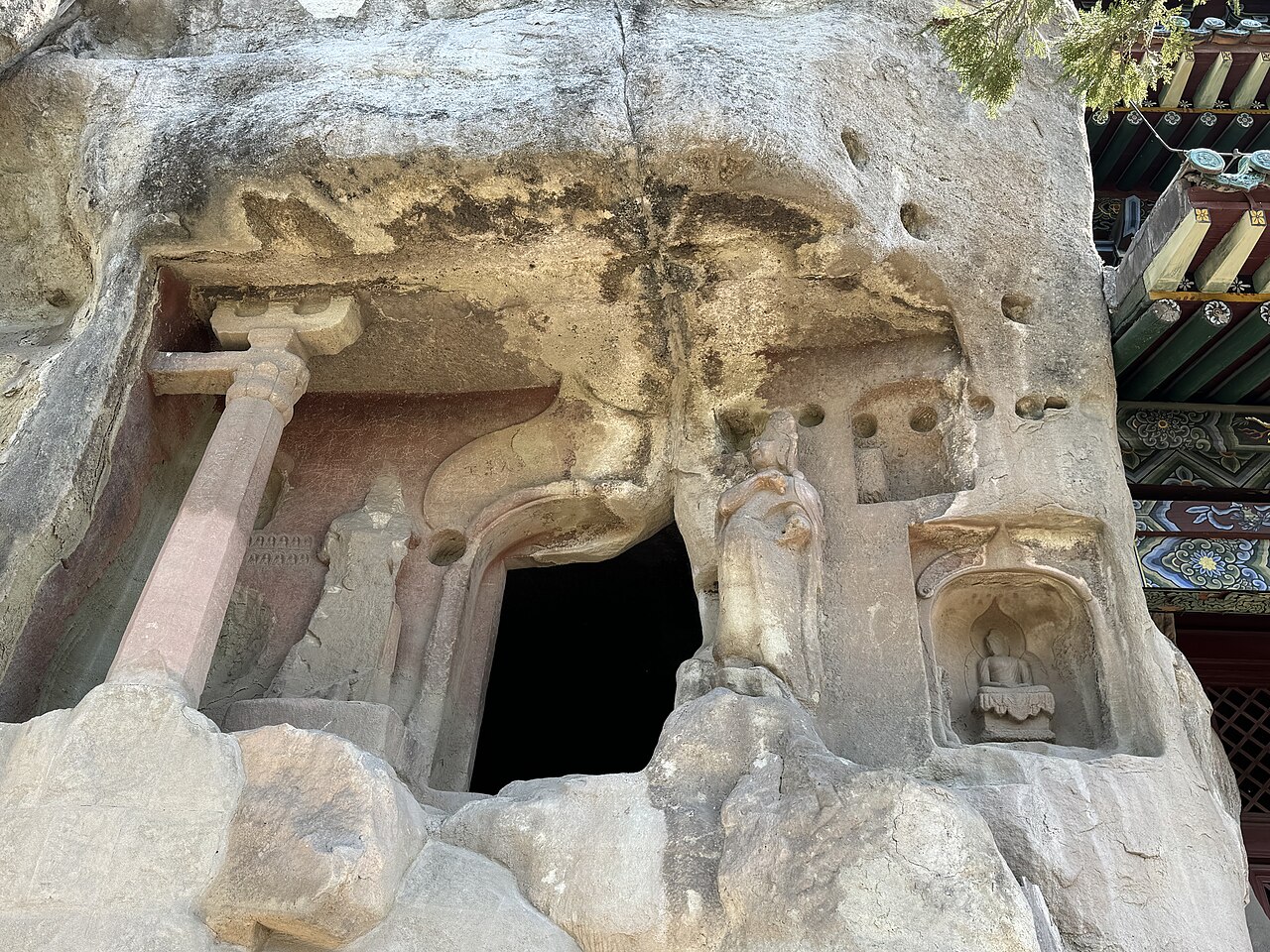
Looting, return and why the site feels incomplete
Tianlongshan carries a hard modern history. In the 1920s the caves were systematically looted; surveys count more than 240 statues or fragments chiseled away, with at least 150 now in overseas museums and private collections. Many Chinese heritage writers call it the most heavily damaged cave complex in modern China. In September 2020 China's National Cultural Heritage Administration identified a Tang Buddha head from Tianlongshan about to be auctioned in Japan and secured its return; the head later appeared on the Spring Festival Gala, which is how many domestic travelers first learned the mountain's name. The site entered the national protection list in June 2001. A digital exhibition hall on the mountain reunites lost pieces on screen so visitors can see what the empty niches once held.
Walk slowly. Empty sockets and repaired faces are part of the story, not a failure of the visit. Pair the cliff path with the grotto museum exhibits when open.
Tickets, hours and mountain logistics
Travel listings commonly price Tianlongshan admission around 50 yuan in peak seasons, with half-price rates for eligible students and minors, and free entry for seniors and young children under posted rules. Combined Jinci–Tianlongshan day tickets sometimes list around 110 yuan and may wrap scenic shuttle segments; compare against separate tickets if you already visited Jinci on another day. Opening hours in recent notices often run roughly 8:30–17:30 with ticket sales ending earlier, and the grotto museum may close slightly before the outdoor area. Last scenic buses from the Jinci side have been listed mid-afternoon in some official tips, so do not start the mountain late if you depend on that link. Treat every price and hour as provisional and check the day's official notice.
Private cars usually stop at a lower parking area. A winding shuttle covers the final approach to the grotto zone; do not assume you can drive to the cave mouth. Stairs and cliff paths need decent shoes. Two to three hours covers the main east and west peak caves plus museum time; add more if you walk to Tianlong Temple or spring pools deeper in the forest.
Getting there and pairing with Jinci
From Taiyuan, reach Jinci New Town by city bus or ride-hail, then transfer to the scenic Y1 or equivalent mountain shuttle when it is running. Ride-hailing directly toward Tianlongshan parking also works. Same-day pairing with Jinci is popular because both sit on the southwestern cultural belt, yet each deserves unhurried time. The Taiyuan guide suggests half a day or more for each. If you only have one outdoor block, Jinci is the richer architecture half-day; Tianlongshan is the cliff-art and restitution story.
Mengshan Giant Buddha sits on a related Jinyuan loop and is a different logistics problem; cut it when Tianlongshan already fills the afternoon.
Season and comfort
May through September is the comfortable outdoor window; the mountain runs cooler than downtown Taiyuan. Autumn light is clear for cliff photos. Winter visits are possible with ice risk on steps. Fog and rain erase distant ridge views and make stone slick. Bring water, sun protection and a light layer even in summer. Modest behavior around remaining Buddhist images is expected.
Before you go
- Confirm last shuttle times before leaving Jinci or the city.
- Wear shoes for stairs and uneven cliff paths.
- Budget museum time to understand the looted and returned pieces.
- Compare combo tickets only if both Jinci and Tianlongshan fall on the same day.
- Recheck hours; weekday maintenance closures appear in some older listings.
Frequently asked questions
How long for Tianlongshan?
Two to three hours for caves and museum. Half a day with temple and forest extras.
Can I see it without Jinci?
Yes. Many visitors come only for the grottoes. Jinci is complementary, not mandatory.
Why are so many niches empty?
Twentieth-century looting removed hundreds of fragments. Digital displays help reconstruct what was lost.
Is the road difficult?
The final approach uses scenic shuttles on a winding mountain road. Self-driving all the way to the caves is generally not the plan.
Sources
Facts in this article were checked against the following sources, retrieved 14 October 2026.
- Tianlongshan Grottoes, Chinese Wikipedia
- Taiyuan Tianlongshan ticket and hours notices (local tourism summaries)
- Taiyuan travel guide on this site
- Jinci Temple sibling page
Photos are from Wikimedia Commons under the licences shown in each caption.