Linhai Ancient City Wall
Linhai, a county level city in Taizhou prefecture, was the seat of Taizhou for fourteen centuries, from 591 until the government moved to Jiaojiang in 1993. Its old wall, the Taizhou Prefecture City Wall, still climbs over the hills behind the old town and runs along the Ling River in front of it. Locals call it the Great Wall south of the Yangtze. The name is a local boast, though it has a real basis, since the Ming general who strengthened this wall later carried his methods to the Great Wall in the north.
From the Jin to the Song
Chinese Wikipedia traces the first wall to the Eastern Jin, with enlargement in the Tang and the shape fixed in the Song. In 978, when the Wuyue king Qian Chu surrendered his kingdom to the Song, he pulled down the walls of his cities as a sign of loyalty. Linhai's wall along the river was spared because it held back floods.
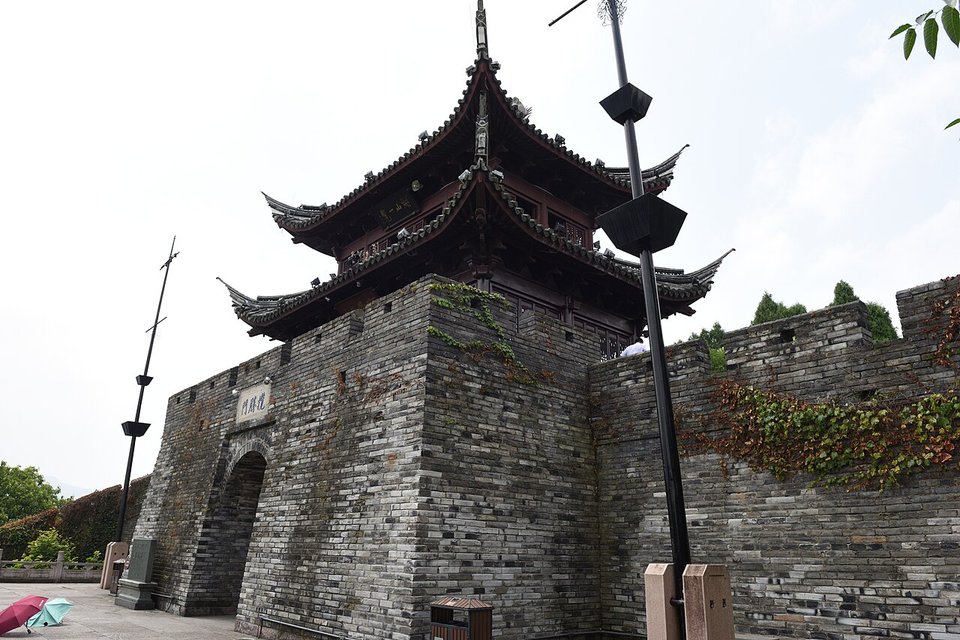
That double role explains much of what you see. In 1045 the prefect Peng Siyong rebuilt the wall with a brick and stone facing set in mortar that, by tradition, included sticky rice, making it stronger against both armies and water. In 1071 the prefect Qian Xuan moved the eastern line inside the East Lake. The river side was given curved bastions, rounded on the side facing the water to break the current and square on the land side, a design Chinese Wikipedia describes as unique among Chinese city walls. The barbican gates were added in 1712.
Qi Jiguang and the northern Great Wall
In the mid sixteenth century the Zhejiang coast suffered raids by the pirates known as wokou. The general Qi Jiguang was stationed in Taizhou for eight years and, together with the prefect Tan Lun, raised and thickened the wall and added thirteen two storey hollow watchtowers. Taizhou commemorates his victory over the raiders outside the city in 1561 with a wall protection day on 10 May each year.
Qi was later sent north to command the defences of the Great Wall. Chinese Wikipedia says the hollow towers he had tried out at Taizhou influenced his rebuilding of the Ming wall at places such as Badaling, Mutianyu, Huangyaguan and Shanhaiguan, which is why the Linhai wall is often called a model for the Ming Great Wall.
The wall today
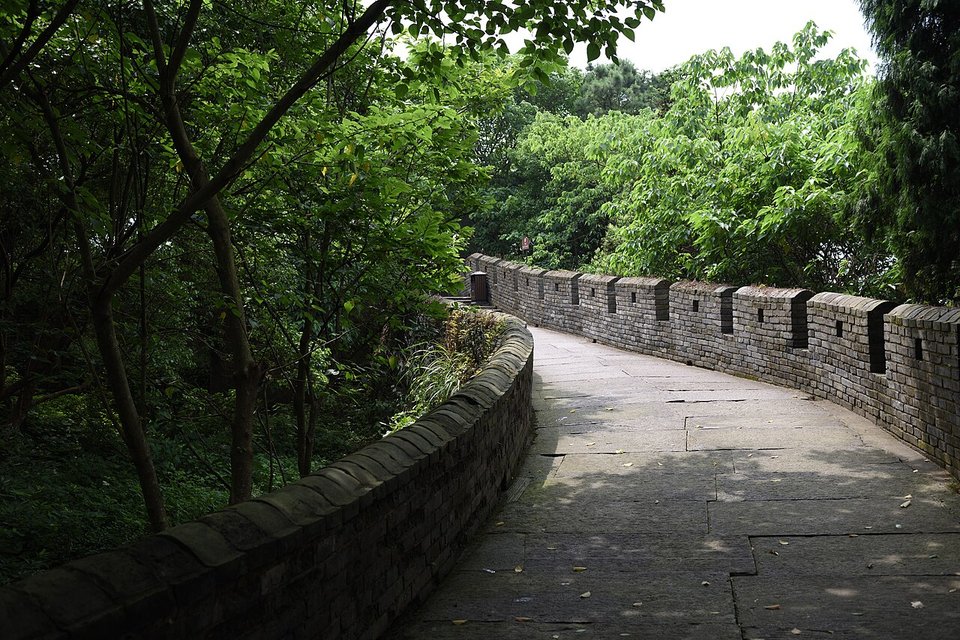
Chinese Wikipedia gives the full circuit as about 6,287 metres, with walls about 7 metres high, four gates with barbicans and eight bastions. The east side, 1,615 metres long, was demolished in 1956. The west and south sides along the river, together about 2,370 metres, are the original flood wall. The north side follows the ridge of Beigu Mountain for about 2,300 metres and was rebuilt on its old foundations in the 1990s, after a city campaign in which residents were asked to donate a brick each.
The flood wall still works. When Typhoon Lekima came ashore in Taizhou on 10 August 2019, floodwater reached the foot of the wall, and Chinese Wikipedia credits the wall with protecting the buildings inside. The wall has been on China's tentative list for World Heritage since 2006, as part of a group bid for the Ming and Qing city walls.
Walking it
The walk over the hill section is the highlight, with steep steps, watchtowers and views over the grey roofs of the old town to the river. A route suggested in Qunar's notes starts at the Lansheng Gate on the north side of East Lake, follows the wall over Beigu Mountain and down to the Chaotian Gate by the river, and then leaves the wall to walk into Ziyang Street. Allow two to three hours with stops. Wear proper shoes, as the hill steps are steep.
Ziyang Street, East Lake and Jinshan
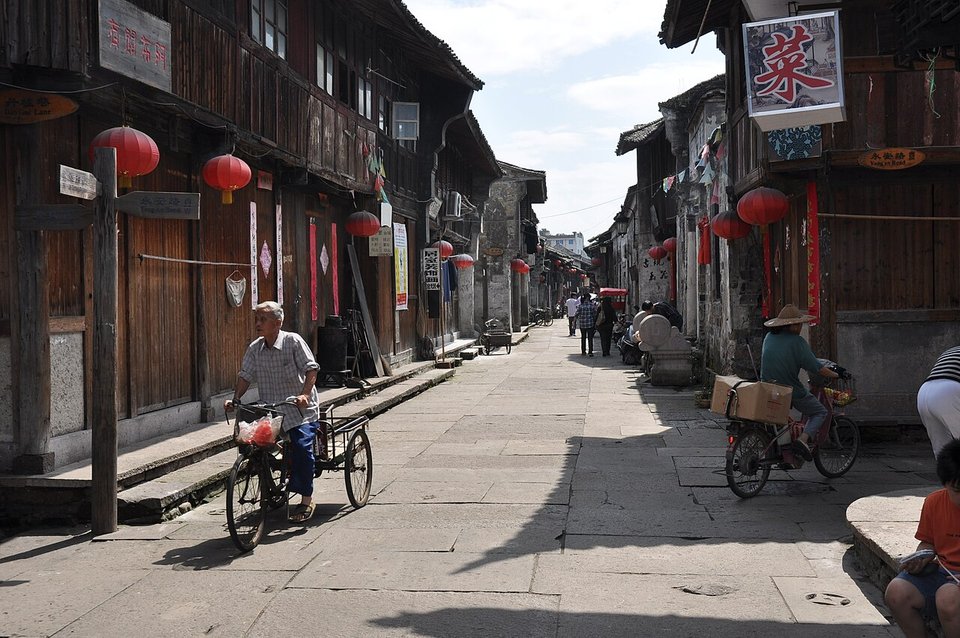
Ziyang Street is the old main street, about 1,080 metres of stone paving lined with shops below and homes above, small museums and snack stalls. East Lake, about 500 metres by 150 metres, was dug in the Song on the site of a naval dockyard and is a quiet park. Jinshan, a small hill in the southeast corner of the old town, carries a cluster of pagodas. All three are free.
Ticket and hours
Taizhou Bendibao lists the wall at 60 yuan per person and says East Lake, Ziyang Street, Longxing Temple and Jinshan Park are free. It gives the scenic area as open from 7:00 to 18:00. Qunar lists the wall from 7:00 to 17:30, with ticket sales ending at 16:00 and last entry at 16:30. The Taizhou Fucheng scenic area became a national 5A site in 2022. Check the day's notice, especially in typhoon season.
Getting there
Linhai station is on the coastal railway, and the old town is a short taxi ride away. From Tiantai and Guoqing Temple, trains on the Hangzhou to Taizhou line reach the coast near Linhai. Stay a night inside the old town if you can, as Ziyang Street is busiest and liveliest in the evening.
Frequently asked questions
Do I need a ticket to see the old town?
No. Only the wall needs a ticket. The streets, East Lake and Jinshan are free.
How fit do I need to be?
The river section is level. The Beigu Mountain section has long flights of steep steps.
How long should I spend in Linhai?
A full day for the wall, Ziyang Street and East Lake.
Sources
Facts in this article were checked against the following sources, retrieved 22 October 2026.
- 台州府城, Chinese Wikipedia
- Taizhou Bendibao, Taizhou Fucheng scenic area listing
- Qunar, Taizhou prefecture wall listing
- Qunar, Ziyang Street and East Lake route notes
- Taizhou (Zhejiang) travel guide on this site
Photos are from Wikimedia Commons under the licences shown in each caption.