Weifang Travel Guide: The World Kite Museum, Shihu Garden and Yangjiabu
Weifang, between Jinan and Qingdao in Shandong, calls itself the kite capital of the world. It has held an international kite festival every spring since 1984, and the International Kite Federation is based here. A day is enough for its two main sights: the World Kite Museum, free with ID and closed on Mondays, and Shihu Garden, a tiny 1885 courtyard garden in the old town. Add Yangjiabu's woodblock New Year prints if folk art is your interest, and the festival in April if you can time it. High-speed trains from Jinan or Qingdao take about an hour.
Getting in and where to stay
Weifang North is the high-speed station, on the line between Jinan and Qingdao. It is well outside the city, so allow 40–60 minutes to reach the centre by taxi or bus. The older Weifang station on the Jiaoji railway is closer in. Stay in Kuiwen District near the kite museum; Shihu Garden is a short taxi ride west, in Weicheng District.
Places worth visiting
World Kite Museum
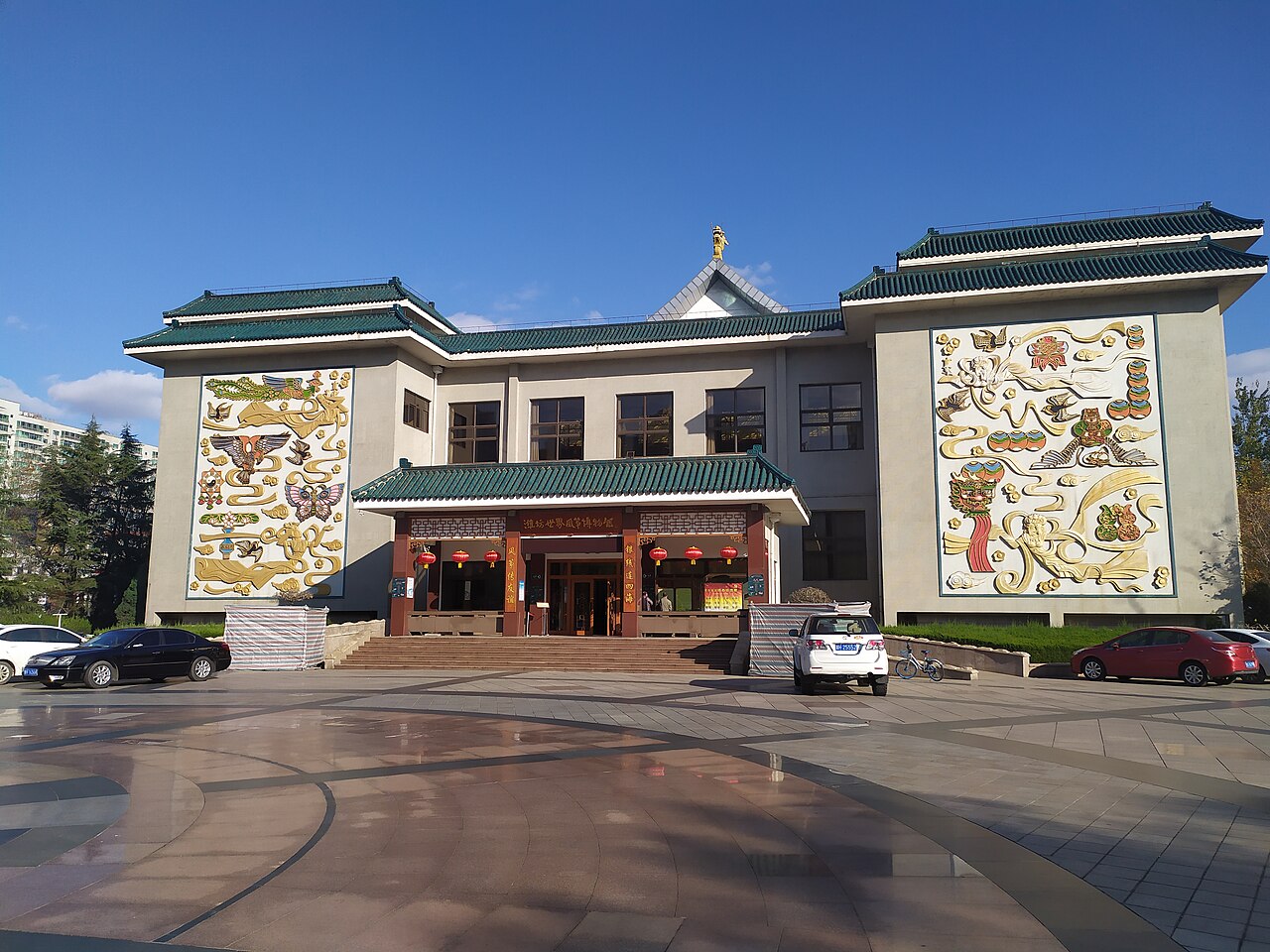
Opened on 1 April 1989 at 66 Xingzheng Street, this was China's first museum devoted to kites. The building copies the shape of a Weifang dragon-head centipede kite: the roof ridge is one long ceramic dragon over peacock-blue glazed tiles. Its eight halls display more than 1,000 kites of five main types (tube, flat, hard-wing, soft-wing and string kites) and about 300 historical items. They trace kites from early China to Weifang's own styles and to kites from abroad, and they cover the history of the festival. A refit added a multimedia hall and a hands-on craft area. Allow 90 minutes to two hours.
Entry is free but needs a ticket collected with ID. It is open Tuesday to Sunday, 09:00–17:00 in summer (last entry 16:30) and 09:00–16:30 in winter (last entry 16:00), and closed on Mondays except holidays.
Inside the kite halls
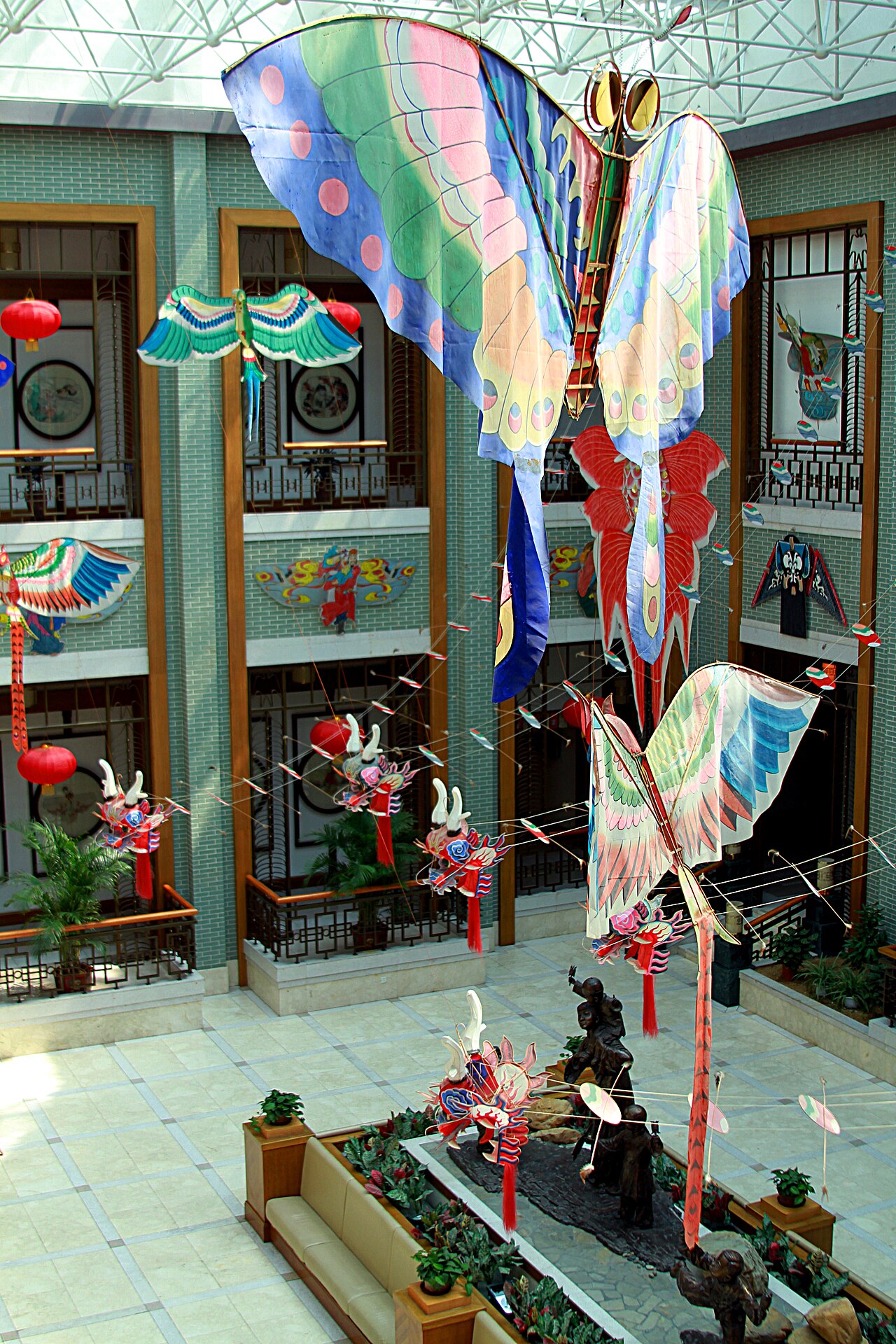
The giant centipede kites, dozens of discs linked behind a dragon head, are what Weifang makers are known for. In the craft area you can watch or try frame-building and painting. If you want to fly one, buy from a maker who will check the frame, and test it before you leave the shop.
Shihu Garden
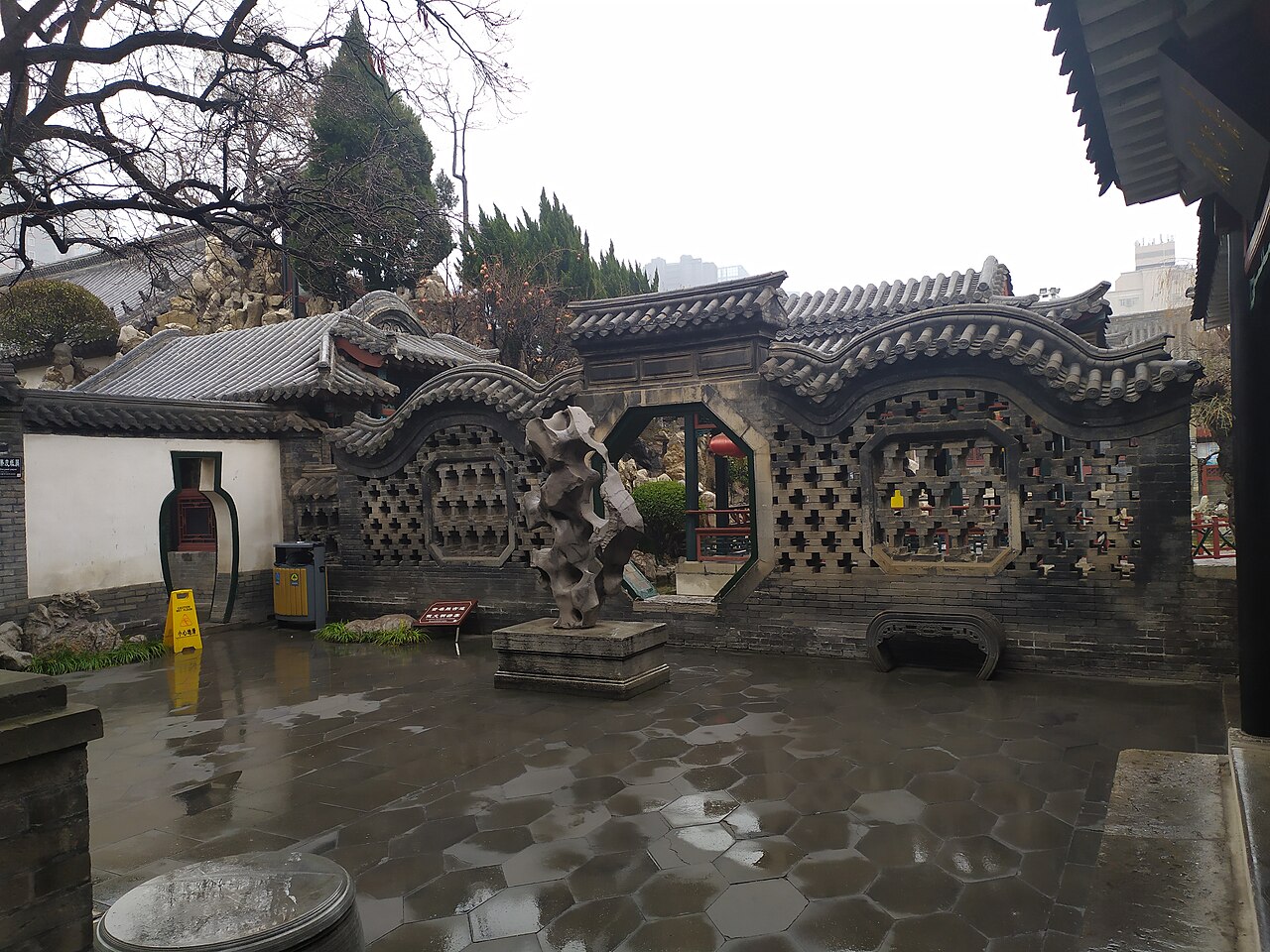
The name means "ten tablets", a joke on its size: the garden covers only about 2,000 m², as if it would fit on ten court tablets. Built in 1885 on Hujia Paifang Street, it was bought by Ding Shanbao, then the richest man in Wei County, and is also called the Ding Family Garden. Courtyards, a rockery and a pond pack a northern scholar's garden into a city block. It has been a national protected site since 1988. Zheng Banqiao, one of the Eight Eccentrics of Yangzhou, once served as magistrate of Wei County, and the garden displays many of his works. The pig-wedding scene of the 1986 Journey to the West TV series was filmed here. Listed tickets are ¥22 (students ¥11), 09:00–17:00 with last entry at 16:30. One to two hours is plenty.
Yangjiabu
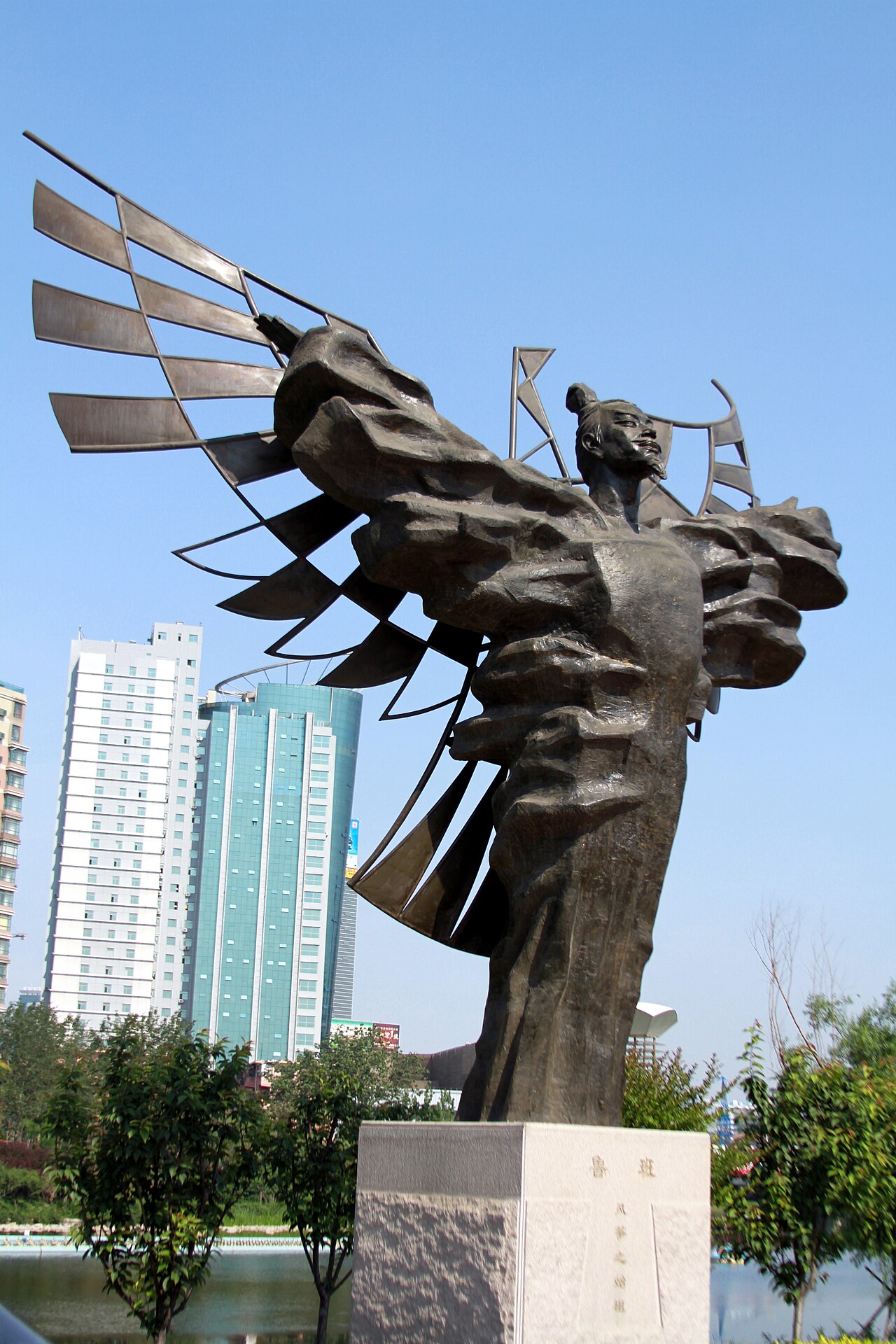
The village of Yangjiabu, east of the city, is one of China's best-known centres for woodblock New Year prints and for kite-making. Workshops show the carving and colour printing, and you can buy prints straight from the makers. It needs a half-day with a taxi. Weifang is also proud of its craft tradition generally; this statue shows Lu Ban, patron saint of carpenters, whom legend credits with making a wooden bird that flew.
When to come
April, for the kite festival, which Wikipedia dates to around 20–25 April; check the year's official dates, as they shift. Spring and autumn are the most comfortable for walking. Summers are hot and humid; in winter the museum and garden are still worthwhile.
Eating in Weifang
Try chaotianguo, the open-pot breakfast of pork and offal simmered in a big wok and eaten wrapped in thin pancakes, and roujiao huoshao, crisp meat-filled baked buns. Weifang's green radishes are eaten raw as a snack. Seafood comes in from the Bohai coast to the north.
How to arrange the route
- Morning: World Kite Museum at opening (not on a Monday).
- Lunch: chaotianguo or huoshao in the centre.
- Afternoon: Shihu Garden, then a walk in the old Weicheng streets.
- Next day (optional): Yangjiabu, then a train to Qingdao or Weihai.
What to cut if short on time
With half a day, choose the kite museum. Yangjiabu is the first thing to drop.
Things to confirm before you go
- Kite museum hours, ID for the free ticket, and the Monday closure.
- Kite festival dates for the year.
- Shihu Garden ticket and last entry.
- Whether your train uses Weifang North or Weifang station.
Frequently asked questions
Is the Weifang kite museum free?
Yes. Collect a free ticket with ID. It is closed on Mondays.
When is the Weifang kite festival?
Usually in April; Wikipedia gives 20–25 April, but check the official dates each year.
Is Weifang worth a stop without the festival?
Yes, for a day. The museum and Shihu Garden are open year-round.
Sources
The facts in this article were checked against the following sources, retrieved September 16, 2026, and rechecked on October 21, 2026.
- Weifang https://en.wikipedia.org/wiki/Weifang
- Weifang (Chinese) https://zh.wikipedia.org/wiki/潍坊市
- Weifang International Kite Festival https://en.wikipedia.org/wiki/Weifang_International_Kite_Festival
- 潍坊世界风筝博物馆 (Chinese Wikipedia) https://zh.wikipedia.org/wiki/潍坊世界风筝博物馆
- 十笏园 (Chinese Wikipedia) https://zh.wikipedia.org/wiki/十笏园
- World Kite Museum 2026 hours (Weifang Bendibao) http://wf.bendibao.com/jingdian/weifangfengbowuguan/
- Shihu Garden Museum 2026 tickets and hours (Weifang Bendibao) https://wf.bendibao.com/jingdian/weifangshiyuanbowuguan/
Ticket prices and hours are 2026 listings; check before you go.
All photos are from Wikimedia Commons, used under CC licenses; re-use requires attribution.
- weifang-1.jpg from File:Weifang World Kite Museum.jpg, by Ngguls, CC BY-SA 4.0
- weifang-shihu.jpg from File:十笏园内景 (3).jpg, by Ngguls, CC BY-SA 4.0
- weifang-2.jpg from File:Kite museum weifang 2010 06 06.jpg, by Rolfmueller, CC BY-SA 3.0
- weifang-3.jpg from File:Luban sculpture weifang 2010 06 06.jpg, by Rolfmueller, CC BY-SA 3.0