Hunan Museum, Changsha: Mawangdui, Tickets and How to Book
The Hunan Museum is the one Changsha sight that justifies a trip by itself, and the reason is a single excavation. The Han tombs at Mawangdui, dug out between 1972 and 1974 on the edge of the city, gave up a noblewoman whose body had not decayed in more than two thousand years, a silk gown light enough to fold into a matchbox, and a painted silk banner that carries the Han imagination of heaven, earth and the underworld. All of it sits in the museum's Mawangdui halls, and admission is free — but you must reserve a slot, and the bookings go fast. It is the anchor of day two in the Changsha guide, a short ride from Orange Isle and the old town.
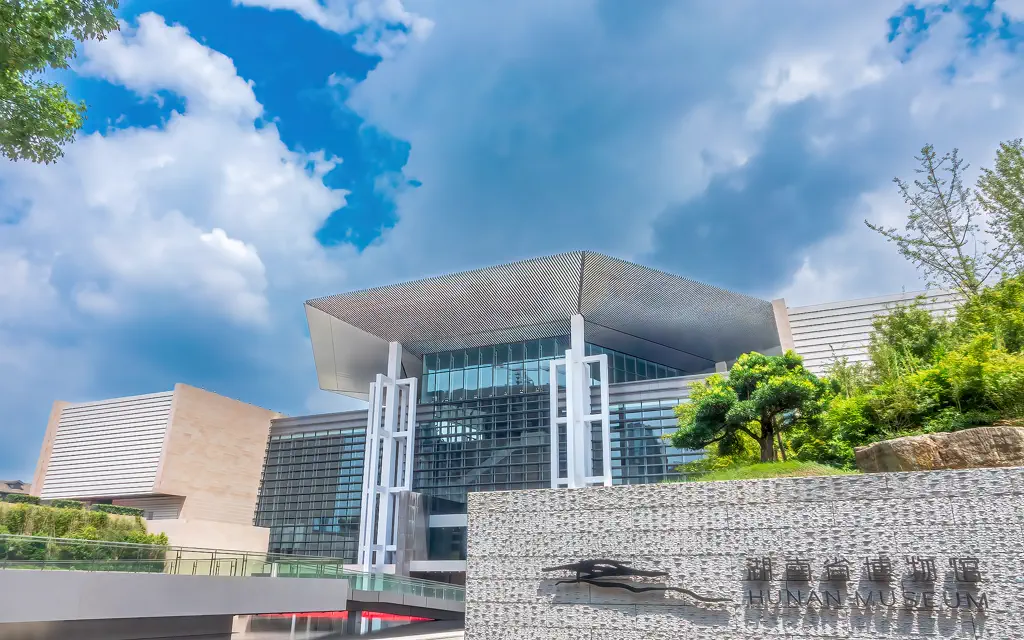
What the museum is
The Hunan Museum — renamed the Hunan Museum (湖南博物院) from the older Hunan Provincial Museum — was founded in 1956 and moved into its present building on Dongfeng Road in Kaifu District after a major expansion completed in 2017. It was named among the country's first national first-grade museums in 2008, and its collections are built around three pillars: the Mawangdui Han tomb finds, the region's Shang and Zhou bronzes, and the arts of Chu and of later Hunan.
The building itself is worth a glance — a long grey mass with an angular roof and a planted terrace, more horizontal than the towers around it.
The Mawangdui galleries
The Mawangdui site, in the eastern suburbs, held three Western Han tombs. Tomb Two was that of Li Cang, the Marquis of Dai and chancellor of the Kingdom of Changsha; Tomb Three was his son's; and Tomb One was that of Li Cang's wife, Xin Zhui — Lady Dai — and it is her tomb that made the site famous.
Her body was found intact, the skin still supple and the joints still movable — the best-preserved wet corpse known from the ancient world, and enough of a sensation that the museum built its reputation around it. Alongside her were the things a Han noblewoman was buried with: lacquerware by the hundred, silk textiles, musical instruments, medicines and food. The two objects everyone comes for are the plain yarn gauze garment, a robe of undyed silk so fine that it weighs less than fifty grams and folds into a handful, and the T-shaped silk painting laid over the coffin, painted with the journey of the soul through the sun, the moon, the dragon and the underworld. Both are treated as national treasures, and both are in these halls.
The Mawangdui display is dense. Give it the most time; the labels are in Chinese and English, and the object-to-wall ratio is unusually high.
The bronzes and the rest
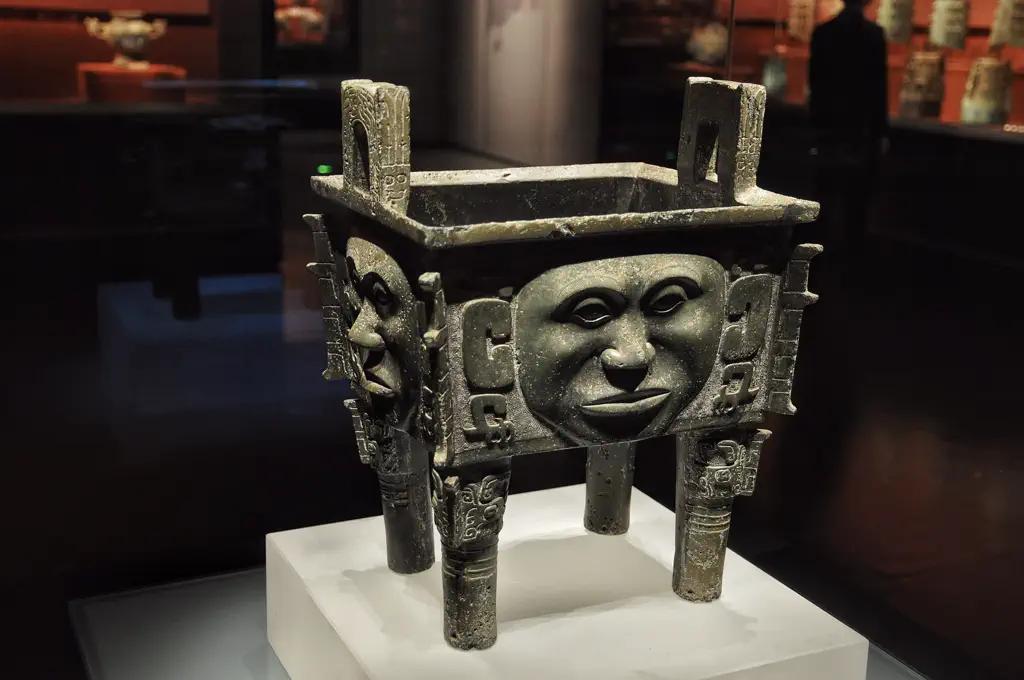
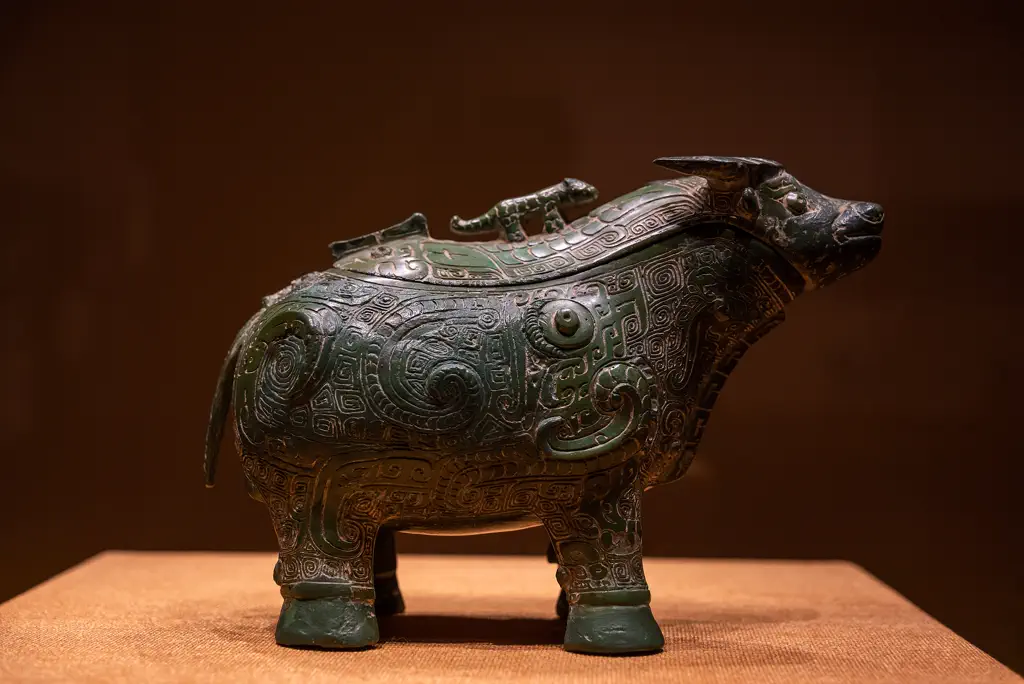
Beyond Mawangdui, the museum's second strength is bronze. Hunan produced some of the most eccentric ritual bronzes of the Shang and Zhou — working south of the mainstream, its foundries cast faces, animals and elephants into shapes the Central Plains never made, including the human-face square ding that is one of the museum's signature pieces and the great Min fanglei, a wine vessel whose body was reunited with its long-lost lid in 2014. The permanent galleries also cover the arts and crafts of Hunan and its modern history, and there is a changing programme of special exhibitions that charge their own tickets.
Tickets, hours and booking
Admission to the permanent galleries is free, and the museum has no walk-up ticket desk for general entry — you reserve a timed slot through the official Hunan Museum website, WeChat account or Alipay mini-program, show the same ID at the door, and walk in. The museum's own notice currently releases slots about five days ahead, not including the day itself, at 20:00; some older listings still say seven days. Either way the museum is one of the most in-demand in the country, so reserve as early as your dates allow, especially around holidays.
Opening hours are roughly 9:00 to 17:00, with the last entry at 16:00, and the museum closes on Mondays, shifting a day for public holidays; in recent summers it has extended evening opening into late August. Special exhibitions are ticketed separately, and the separate Mawangdui tomb-pit site in the suburbs has its own arrangement. Verify the day's hours on the official site before you travel, since both hours and closure rules change with the season and with exhibitions.
How to visit
Go early. This is a museum where the first hour, before the tour groups arrive, is worth two later in the day. If Mawangdui is your priority, head straight for those halls at opening; the silk gown and the T-painting draw steady crowds and the gallery is narrow. Three hours covers the Mawangdui galleries properly; add an hour if you also want the bronzes and the special exhibitions. The museum is a short metro ride from the old town, so it pairs naturally with a morning here and Taiping Street and Pozi Street in the afternoon and evening.
Things to confirm before you go
- Reserve a free timed slot in advance through the official Hunan Museum account; entry is by reservation and ID, and quotas fill on holidays.
- The museum is closed on Mondays (shifted for public holidays) and sometimes runs extended summer hours — check the day's notice.
- Special exhibitions carry their own tickets on top of the free permanent display.
- The main building and the outlying Mawangdui tomb-pit site are different places with different access; do not confuse them.
- The Mawangdui halls are the busiest part of the museum; start there at opening.
Frequently asked questions
Is the Hunan Museum free?
Yes. The permanent galleries are free, but you must book a timed slot in advance through the official WeChat account and bring ID. Some special exhibitions are ticketed separately.
How do I book Hunan Museum tickets?
Through the official website, WeChat account or Alipay mini-program. The museum's current notice releases slots about five days ahead, not including the day itself, at 20:00. They run out quickly around holidays, so book as early as you can and be flexible on the time block.
What is there to see at the Hunan Museum?
The Mawangdui Han tomb galleries above all — Lady Dai's preserved body, the sub-50-gram plain silk gown and the T-shaped silk painting — plus the museum's Shang and Zhou bronzes, including the human-face square ding, and a changing special-exhibition programme.
When is the Hunan Museum closed?
It is normally closed on Mondays, with the closure shifted for public holidays. Opening is around 9:00 to 17:00 with the last entry at 16:00, and recent summers have added late opening.
Sources
Facts in this article were checked against the following sources, retrieved 13 September 2026.
- Hunan Museum, Chinese Wikipedia
- Hunan Museum booking service and opening notices
- Hunan Provincial Cultural Heritage Department, on Mawangdui and booking
- Xinhua, on the plain yarn gauze garment
- Xinhua, on the Mawangdui T-shaped silk painting Photos are from the Ctrip sight page for the Hunan Museum and are credited to that page.