Tianxin Pavilion, Changsha: The Old City Wall and Its View
Tianxin Pavilion is the one place in Changsha where you can stand on the old city and look at the new one at the same time. The pavilion crowns the last surviving stretch of the Ming-Qing city wall — almost everything else was pulled down after the 1911 revolution to make room for roads — so the wall under your feet is the only piece of old Changsha's defences left, and the view from the top is the river, the towers and the ring of the old town all at once. It is a short walk from Taiping Street and Pozi Street, cheap to enter, and an easy half-hour add-on to the day in the Changsha guide.
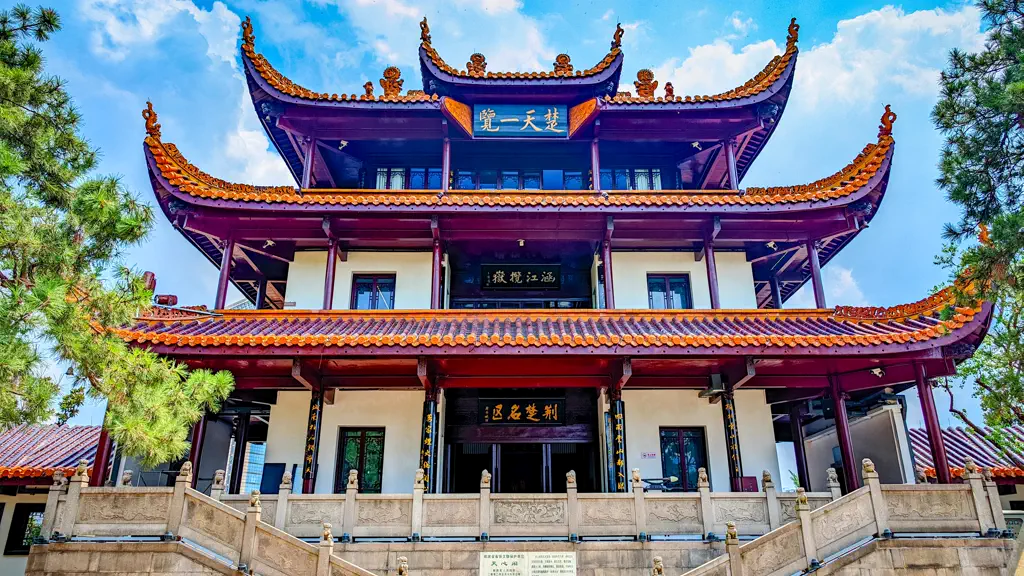
What Tianxin Pavilion is
Tianxin Pavilion began as a tower on the highest ground in the walled city, the point from which the city watched the sky. By the old theory of astral correspondences, a place on earth mirrored a place in heaven; this hill was matched to the Changsha star, and so the pavilion took a name built from "heaven's heart" — the same word, Tianxin, that the district keeps today. The lines on the pavilion, "an old pavilion of Xiang and Xiang, a famous city of Qin and Han," are its self-description: it looks back over the whole length of Changsha's history.
The pavilion itself is not ancient in its timbers. The building on the wall now was rebuilt in 1983, a three-storey tower of red columns, green-grey tiles and flying eaves with some eight hundred square metres of floor and the great plaques — "A Panorama of the Chu Sky" and "Famous Region of Jing-Chu" — hung across its faces. Earlier pavilions were destroyed and rebuilt many times, most recently in the War of Resistance, when the 1938 Changsha fire and the fighting that followed levelled what stood here.
The city wall
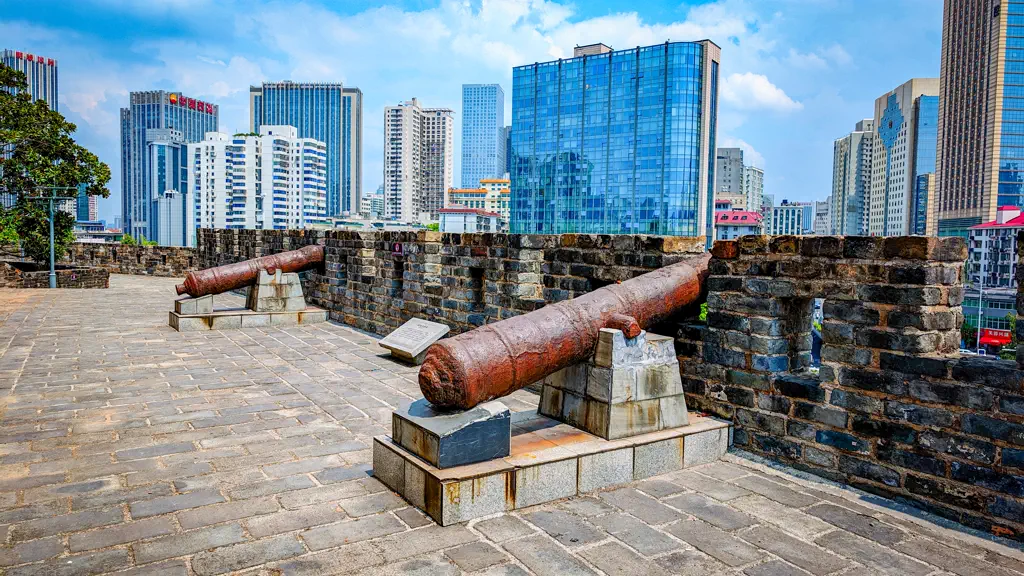
The wall is the reason to come. Changsha's ramparts were first raised in the Western Han, in 202 BC, by Wu Rui, the first king of Changsha, and were repaired and rebuilt through the Ming — the Hongwu-era rebuilding of 1372 gave the wall the line that survived. When the city dismantled its walls after 1911, this stretch, on the highest ground, was left; it is about 250 metres long and 13.4 metres high with a top about six metres wide, and in 1983 it was protected and restored along with the pavilion. Two antique cannons stand on the parapet, pointing out over the streets that were once outside the city — and the modern towers rising beyond them are the whole story of old and new Changsha in one photograph.
Walk the wall rather than only the pavilion; the parapet path and the corner bastion give you the outline of the old town more clearly than any map.
The view and the memorials
From the top of the pavilion the city opens out: the Xiang River away to the west, the ring road along the old moat, and the high-rises of the modern centre. It is not a tall tower, but it is the traditional vantage point, and the contrast between the old wall and the towers around it is the thing to see.
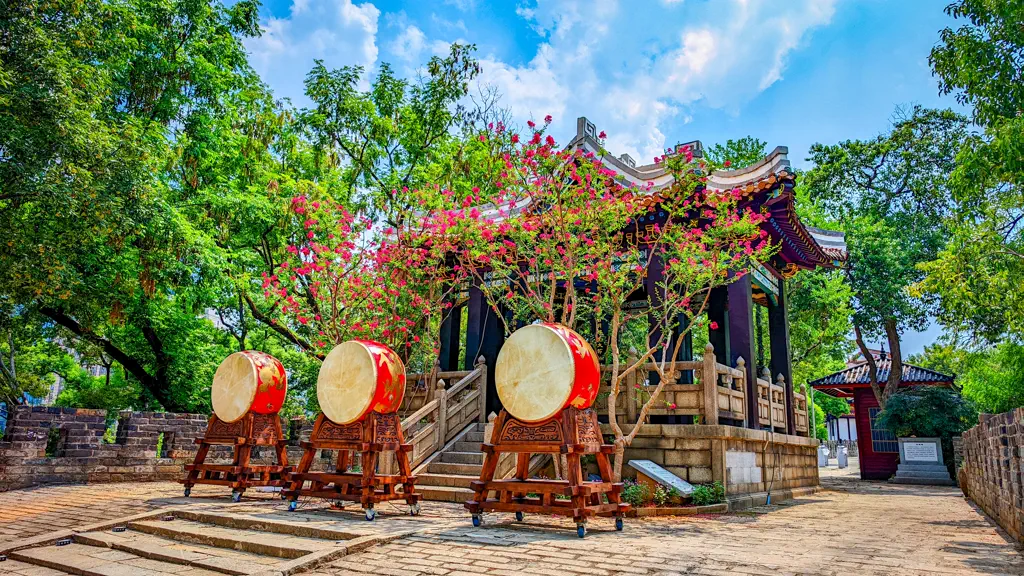
Below the pavilion, the park holds the memorials of the modern battles. The Chonglie Gate and the Chonglie Pavilion were raised to the soldiers who died in the Changsha battles of the War of Resistance — the city was fought over repeatedly between 1939 and 1944 — and they give the site a weight beyond its view. The grounds around the wall are also where the Taiping army attacked Changsha in 1852; the wall held, and the siege is remembered among the reasons the old defences are cherished.
Tickets and hours
Tianxin Park, the grounds, is free and open through the day. The wall and the pavilion are ticketed together. The management office currently lists a daytime adult ticket around 30 yuan and a night-visit ticket around 58 yuan; older 32-yuan listings still circulate. Opening hours split into a day session (roughly 8:00 to 17:00 or 17:30) and a separate night session when it is running. Both the ticket and the hours move, so check the notice at the gate or the park's official channel before you go.
How to fit it into a day
Tianxin Pavilion is a 30- to 45-minute visit, and it slots neatly into the old-town half-day: walk from the pavilion down to Pozi Street and Taiping Street for food, or start at the pavilion in the morning and drift towards the Huangxing Road pedestrian street. It is a short taxi or one metro hop from the riverside, and it pairs with Orange Isle and the Hunan Museum as the third stop of a city day.
Things to confirm before you go
- The wall and pavilion are ticketed (about 30 yuan by day and about 58 yuan at night on the current management notice) while the surrounding park is free; prices change, so check at the gate.
- Opening hours are roughly 8:00 to 17:30 with some seasonal evening opening; confirm the day's schedule.
- The wooden pavilion has steep stairs; the wall path is uneven in places.
- It is a short walk from the snack streets, so combine it with a meal rather than making it a separate trip.
- Summer afternoons on the open wall are hot; morning or late afternoon is more comfortable.
Frequently asked questions
Is Tianxin Pavilion worth visiting?
Yes, if you want the old city rather than the new one. It is the only place to stand on Changsha's surviving city wall and see the old and new town together, and it is cheap and central.
How much is the Tianxin Pavilion ticket?
The management office currently lists about 30 yuan for a daytime adult ticket and about 58 yuan for the night visit; older 32-yuan listings persist. Tianxin Park around it is free. Check at the gate.
How long do you need at Tianxin Pavilion?
Thirty to forty-five minutes for the pavilion, the wall and the view; an hour if you linger in the park and read the war memorials.
When was Tianxin Pavilion built?
The present pavilion was rebuilt in 1983; the stretch of city wall beneath it goes back to the Western Han and was last rebuilt in the Ming, in 1372.
Sources
Facts in this article were checked against the following sources, retrieved 13 September 2026.
- Tianxin Pavilion, Chinese Wikipedia
- Tianxin Pavilion management office, on the pavilion and the surviving wall
- Changsha Evening News, on the pavilion and the old city
- Tianxin Pavilion visitor information listing Photos are from the Ctrip sight page for Tianxin Pavilion and are credited to that page.