Orange Isle, Changsha: Juzizhou and the Mao Statue Walk
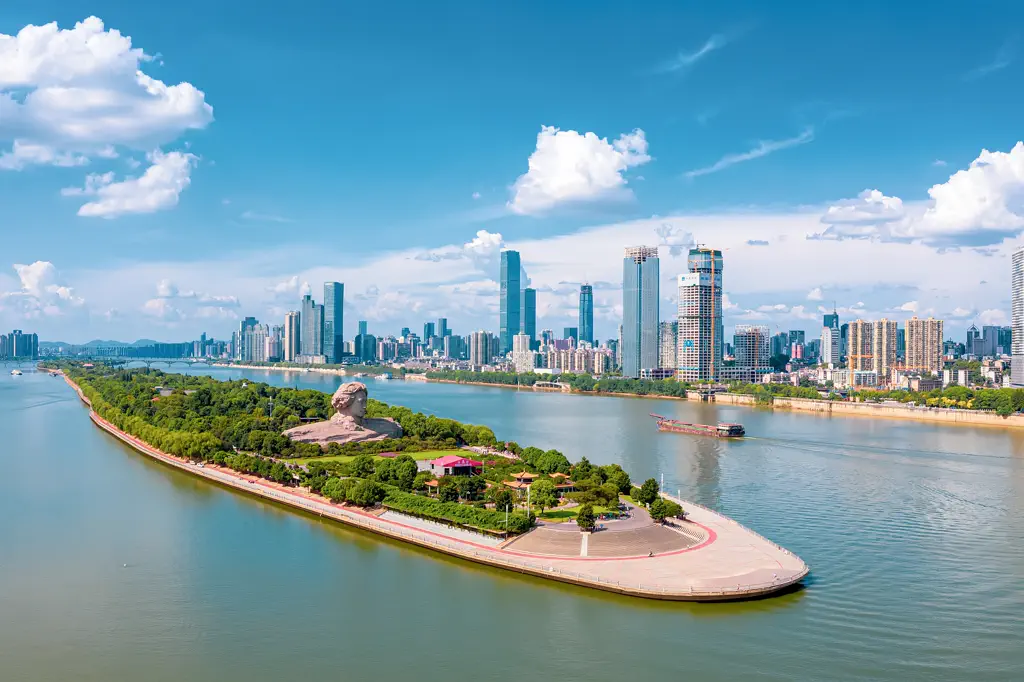
Orange Isle — Juzizhou — is the long green sandbar down the middle of the Xiang River, and the image most people carry of Changsha is taken from it: the head of the island, with the young Mao Zedong sculpture in granite looking downstream and the city towers stacked on the far bank. It is free to enter, needs a timed reservation in the same system as Mount Yuelu, and is best done as a slow walk or a short bus ride along the water. It sits across the river from the academy and a metro stop from the old town, and it runs through the Changsha guide as day two of the classic three.
What Orange Isle is
Juzizhou is a sandbar in the middle of the Xiang River, about five kilometres long north to south and narrow the whole way, so that from the bank it reads as one green ridge on the water. It has carried orchards and villas for a century — the name comes from the orange groves that cover it — and it has been a park since the early 1980s, when Juzhou Park was laid out and the head of the island opened to visitors. The isle is the "island" of Changsha's self-description, the "mountain, river, isle and city" that people say when asked what Changsha looks like.
For most of the twentieth century its fame came from a poem. Mao Zedong, who came to the isle many times from his student years into old age, wrote "Qin Yuan Chun — Changsha" in 1925, asking the Xiang River and the autumn landscape who should rule the earth; the poem is inscribed on the isle today, and the engraving on the rock at the head, "Juzizhou Tou," marks the place.
The Mao sculpture
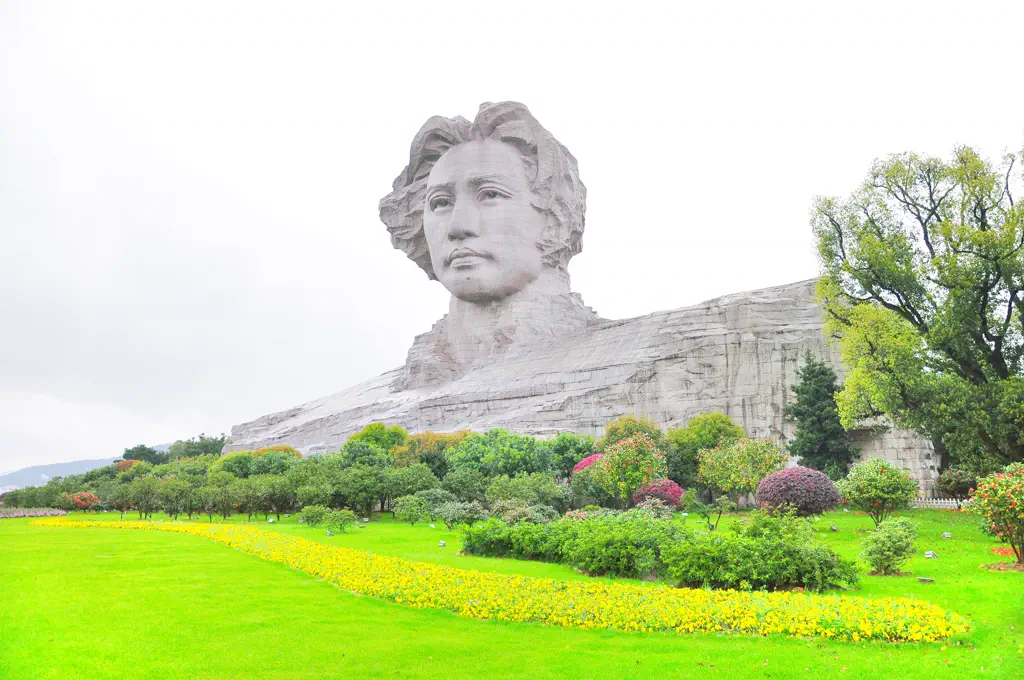
The heavy landmark at the head of the isle is the young Mao Zedong art sculpture, unveiled in December 2009. It is 32 metres tall — a nod to the age he was when he wrote the Changsha poem — and 83 metres long and 41 metres wide across its base, assembled from more than eight thousand blocks of granite and worked, in the end, more as masonry than as casting. The shoulders of the figure form the pedestal, and the whole sits on a base of thousands of square metres facing upstream. Up close the face is rough, blocky and enormous; from across the river it resolves into the profile that appears on every Changsha postcard.
It is the most photographed object in the city, and the reason the head of the isle is busiest at dusk, when the sculpture is lit and the skyline behind it comes alive.
Walking the isle
The island is long and flat, and the two ways to see it are the sightseeing bus and your own feet.
The sightseeing bus runs a one-way loop around the isle from about 7:30 in the morning to about 21:30, at 20 yuan a person for the day; it starts near the metro station and runs to the head, so you can ride out and walk back. If you prefer to walk, the central path runs the length of the isle under the trees, with the orange groves and lawns on either side and the river always in view over the railings; the full walk end to end is a couple of hours at a stroll.
The head of the isle is the focus — the sculpture, the "Juzizhou Tou" inscription, the poem stele, and the long view up and down the river. From the head at dusk you look west to Mount Yuelu and east to the city, with the lights coming on along both banks. Further along the isle there are the orange groves, a small beach park on the west side (separately ticketed), and the odd surviving villa and pavilion; most visitors do the head and the middle and leave.
Fireworks and the river at night
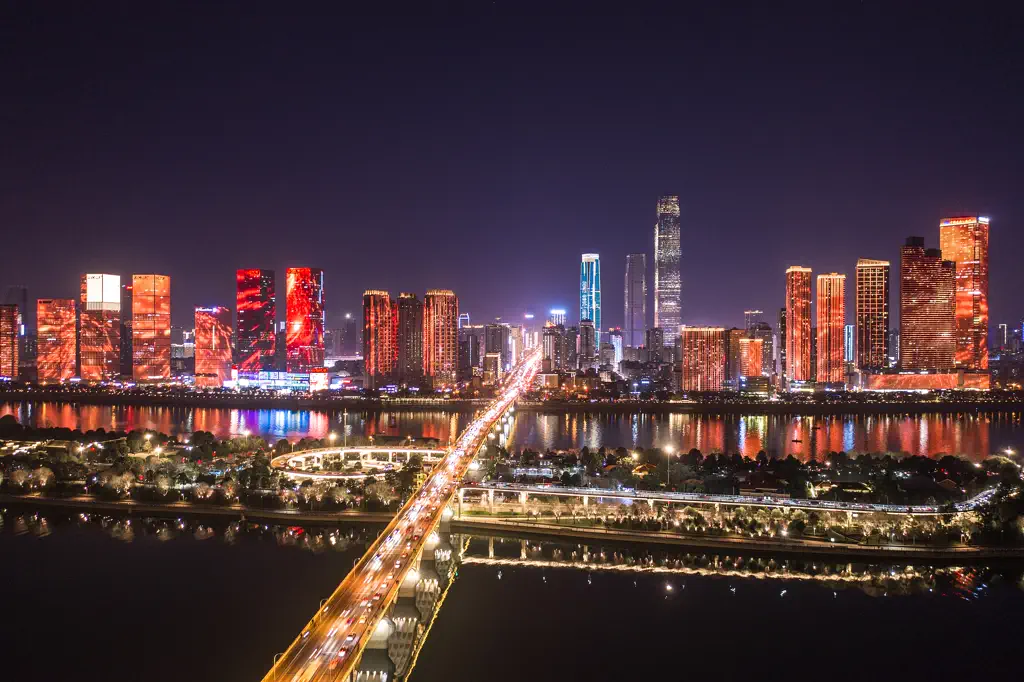
Changsha has staged a fireworks show over the river from the isle at various times, traditionally on Saturday nights, and when it runs it is one of the city's fixed spectacles — the best places to watch are the riverside promenades and the Du Fu Pavilion on the east bank, not the isle itself, which is cleared and crowded. The schedule has been changed and paused more than once over the years, so treat any date you read as unconfirmed and check the current announcement before planning an evening around it.
Getting there and tickets
The easiest arrival is by metro: Line 2 stops at Juzizhou station, which is on the isle itself — take exit 2 and you are on the island. Driving is awkward, because private cars are not allowed onto the isle and the bridge approaches put you on the bank; the metro avoids all of it.
Entry to the isle is free, but it runs on the same timed reservation as Mount Yuelu, through the official "Yuelu Mountain–Orange Isle" WeChat account. Slots are split into morning, afternoon and evening blocks and the daily cap is large but not unlimited; on holidays they go early. The sculpture, the park and the walk are all free; the sightseeing bus and the small beach park on the west side are the only charges.
How to arrange the visit
The best sequence is to come in the late afternoon: reserve an evening slot if you can, ride or walk to the head, watch the light go down the river, and take the sculpture lit against the skyline before heading back to the metro. Combine it with Mount Yuelu in the morning and the old-town streets — Taiping Street and Pozi Street — for dinner, and you have filled a full Changsha day without travelling far.
Things to confirm before you go
- Orange Isle and Mount Yuelu share one timed reservation system; book a slot through the official WeChat account a few days ahead, more on holidays.
- The sightseeing bus runs a one-way loop and stops in the early evening; check the last departure so you are not stranded at the far end.
- The fireworks schedule has changed repeatedly; confirm the current arrangement before you plan a night around it.
- The isle is exposed and hot in summer and cold and windy in winter — there is little shade on the crossing paths.
- Private cars cannot drive onto the isle; the metro is the reliable way in.
Frequently asked questions
Is Orange Isle free?
Yes, entry is free, but it needs a timed reservation through the official "Yuelu Mountain–Orange Isle" WeChat account. The sightseeing bus (about 20 yuan) and the small beach park are charged separately.
How do I get to Orange Isle?
Take metro Line 2 to Juzizhou station, which is on the isle itself; leave by exit 2. Cars cannot drive onto the island.
How long does Orange Isle take?
Two to three hours at a comfortable pace, walking out to the head and back, or about an hour and a half if you ride the sightseeing bus in one direction and walk the other.
What is the Mao statue on Orange Isle?
The young Mao Zedong art sculpture, unveiled in December 2009: 32 metres tall, 83 metres long and built from more than eight thousand granite blocks. It stands at the head of the isle facing upstream.
Sources
Facts in this article were checked against the following sources, retrieved 13 September 2026.
- Orange Isle, Chinese Wikipedia
- Young Mao Zedong art sculpture, Baidu Baike
- Hunan Provincial Government, on the sculpture and the isle
- Orange Isle scenic area visitor information Photos are from the Ctrip sight page for Orange Isle and are credited to that page.