Du Fu Thatched Cottage, Chengdu: The Poet's Garden on Huanhua Creek
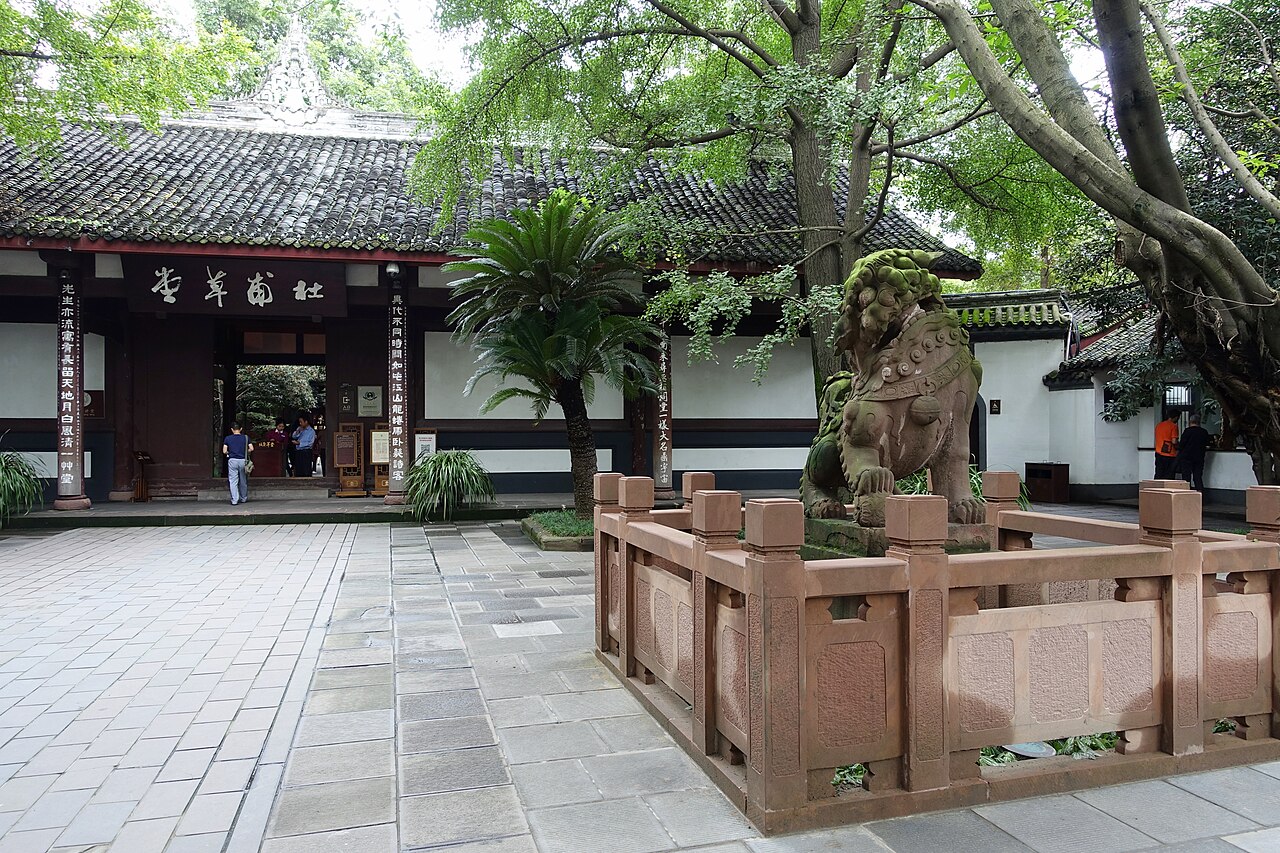
The Du Fu Thatched Cottage is a garden museum in western Chengdu on the spot where the Tang poet Du Fu built a simple home in 759, after fleeing war in the north. Nothing of his original house survives. What you see are memorial halls, a reconstructed thatched cottage and a large, quiet garden of bamboo, plum trees and streams, rebuilt and extended over the centuries. Tickets cost 50 yuan, the museum opens 09:00 to 18:00 and one to two hours is enough. It is the calmest of Chengdu's main sights. Take metro Line 13 to Dufu Caotang station, Exit C2, which leads straight to the north gate.
How it fits a wider trip is covered in the Chengdu travel guide.
Tickets and hours
From the Chengdu Du Fu Thatched Cottage Museum (cddfct.cn) and 2026 listings:
- Price: 50 yuan full price, 25 yuan half price for eligible visitors.
- Hours: 09:00 to 18:00, with last entry at 17:00.
- Booking: tickets can be booked up to 14 days ahead through the museum's official channels, with a passport for foreign visitors. Outside holidays, buying on the day is usually fine, but book on weekends and holidays.
Getting there
The museum has two entrances. The main (south) gate is at 28 Caotang Road; the north gate is at 37 Qinghua Road.
- Metro Line 13 to Dufu Caotang station, Exit C2, straight to the north gate. The easiest option.
- Metro Line 4 to Caotang Beilu station, or Line 5 to Qingyanggong station, then a walk to the north gate.
- Buses 35, 58, 82 and 170 stop at Dufu Caotang. Bus 82 continues to the Wuhou Shrine.
A one-hour route
Main axis halls. From the south gate, a line of halls runs through the garden: the Daya Hall, with murals and statues of Chinese poets, the Hall of Poetic History and the Gongbu Shrine, named after Du Fu's official title. They hold statues, calligraphy and editions of his poems.
The flower path. A path between red walls and green bamboo, similar in feel to the famous lane at the Wuhou Shrine and quieter. It is the most photographed part of the cottage.
The thatched cottage. A reconstruction of a simple Tang-style home, with a thatched roof, a small courtyard and simple furnishings. It is based on Du Fu's descriptions in his poems, especially My Thatched Hut Is Torn by the Autumn Wind, in which wind blows the thatch from his roof.
The Tang site. Remains of a Tang-era settlement found on the grounds in 2001 are displayed under a roof. They show what ordinary homes of Du Fu's time looked like, but they are not his house.
The gardens. Plum trees bloom in winter, the bamboo stays green all year, and paths follow Huanhua Creek through the grounds. On a weekday morning you can walk them in near silence.
Who Du Fu was and why this place matters
Du Fu (712 to 770) is one of the two most celebrated poets of the Tang dynasty, with Li Bai, and is often called the "poet-historian" for his poems about war and hardship. After the An Lushan rebellion he arrived in Chengdu, where friends helped him build a cottage by the creek. He lived here for nearly four years, the most settled period of his life, and wrote many of his best-known poems here, several of them about the cottage itself. Later generations rebuilt the site as a memorial, and it has been a nationally protected site since 1961.
If you don't read Chinese poetry, save a translation of one or two poems on your phone, such as the autumn wind poem or Spring Night, Happy Rain. It changes the visit from a pleasant garden walk into something more.
Next door: Huanhuaxi Park and Qingyang Palace
Huanhuaxi Park, right beside the cottage, is a free public park along the creek with lakes, lawns and a path of poets' statues. It is a good place to sit after the museum, especially in spring.
Qingyang Palace, a Taoist temple a short walk north near Qingyanggong station, is one of the oldest Taoist sites in Chengdu. Add it if you want another quiet stop nearby.
Pairing it with the rest of Chengdu
The cottage fits best as a half day with the Wuhou Shrine, about 15 minutes away by taxi or a ride on bus 82. Do the shrine in the morning and the cottage in the afternoon, or the other way round. It is also an easy walk-and-taxi combination with Kuanzhai Alley, which is a few metro stops away on Line 4.
Don't add it to a panda base morning plus a Kuanzhai afternoon. That's too much walking for one day. Keep Dujiangyan and Mount Qingcheng for their own days.
Who should skip it
Skip it if you have only two days and the pandas, the Wuhou Shrine and a hotpot dinner already fill them, or if classical gardens and poetry don't interest you. Keep it if you want a quiet green space in the city, a break from crowds, or if you have read any Tang poetry.
Things to confirm before you go
- Last entry at 17:00.
- Weekend and holiday booking.
- The weather: most of the visit is outdoors, though the halls give shelter from rain.
- Photo rules in the exhibition halls.
Frequently asked questions
How much is the Du Fu Thatched Cottage ticket?
50 yuan full price and 25 yuan half price. Book up to 14 days ahead for weekends and holidays.
Is the thatched cottage Du Fu's original house?
No. The cottage is a reconstruction based on his poems. The site has been rebuilt as a memorial many times since the Tang dynasty.
Which metro station is best for the Du Fu Thatched Cottage?
Dufu Caotang station on Line 13, Exit C2, which leads to the north gate.
How long do you need at the Du Fu Thatched Cottage?
One to two hours. Add an hour for Huanhuaxi Park next door.