Wuhou Shrine, Chengdu: The Three Kingdoms Memorial Next to Jinli
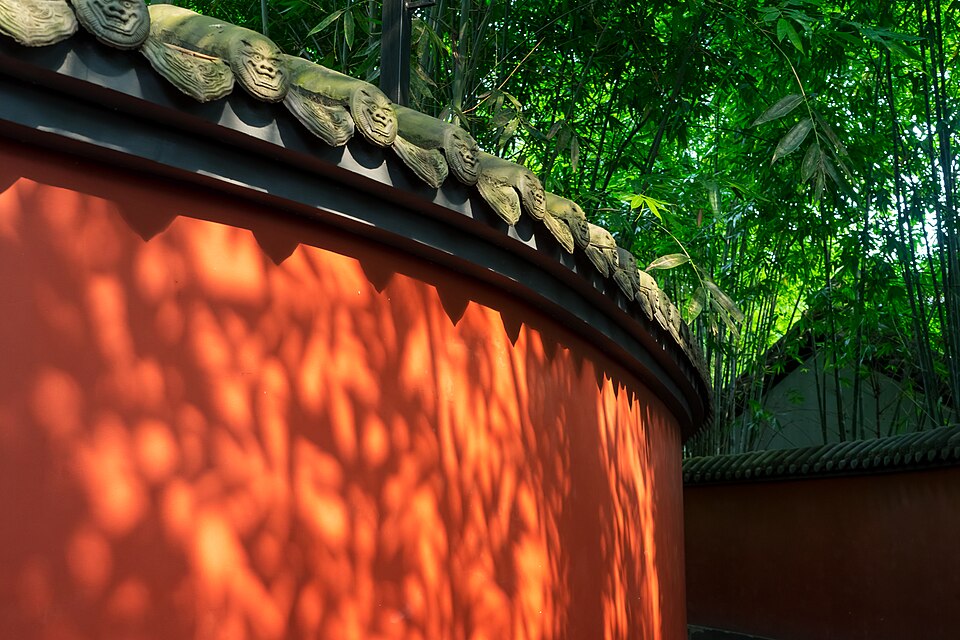
Wuhou Shrine is Chengdu's memorial to Zhuge Liang, the strategist of the Three Kingdoms era, built together with the temple and tomb of Liu Bei, the founder of the Shu Han state he served. It is the best single stop in the city for Three Kingdoms history. It also has Chengdu's most photographed corner, a narrow lane between tall red walls and bamboo. Tickets cost 50 yuan and can be booked up to 14 days ahead. The museum opens 09:00 to 18:00, with last entry at 17:00. Allow one and a half to two hours. The shrine shares a site with Jinli, the reconstructed old street next door, and Wuhouci (Jinli) station on metro Line 10 is a three-minute walk away.
The full trip plan is in the Chengdu travel guide.
Tickets and hours
From the Chengdu Wuhou Shrine Museum's official site:
- Price: 50 yuan full price, 25 yuan half price for eligible visitors.
- Hours: 09:00 to 18:00. Entry and ticket sales stop at 17:00.
- Booking: real-name, up to 14 days ahead, on the official website or the 成都武侯祠 (Chengdu Wuhou Shrine) WeChat account. Foreign visitors book with a passport.
Summer evening openings and festival events, such as the Lunar New Year temple fair, are announced separately. Walking through Jinli is free and does not get you into the shrine.
Getting there
- Metro Line 10 to Wuhouci (Jinli) station, Exit A2, then about three minutes on foot.
- Metro Lines 3 and 5 to Gaoshengqiao station, Exit A, then about ten minutes on foot.
- Buses 1, 57, 82, 334 and 335, among others, stop nearby. Bus 82 also runs to the Du Fu Thatched Cottage.
The address is 231 Wuhouci Street, Wuhou District.
What to see, in order
The shrine runs front to back along a straight axis, and the layout explains its odd history. Liu Bei, the emperor, should have the bigger temple, but visitors call the whole place after his minister, Zhuge Liang.
The Three Masterpieces Stele. In the first courtyard, a Tang dynasty stone tablet from 809 earns its name: the text was written by the statesman Pei Du, the calligraphy is by Liu Gongchuo, and the carving is by the stonemason Lu Jian. Many Chinese visitors stop here first.
Liu Bei's hall (Hanzhaolie Temple). A gilded statue of Liu Bei sits in the main hall, with his sworn brothers Guan Yu and Zhang Fei in side halls. The corridors on either side line up clay statues of Shu Han officials on one side and generals on the other, each with a name plaque. If you know the Romance of the Three Kingdoms, this is where the cast assembles.
Zhuge Liang's hall. Behind Liu Bei's temple is the hall for Zhuge Liang, shown holding his feather fan. A famous couplet at the entrance, the "Attack the Heart" couplet, gives advice on governing that is still quoted today.
The red-walled lane. A path between high red walls and bamboo leads towards the tomb. It is the most photographed spot in the shrine, and on busy days there is a queue for the clearest shot. Arrive at 09:00 to get it with fewer people in the frame.
Huiling, Liu Bei's tomb. A large earth mound surrounded by a brick wall, with a walkway around it. Liu Bei is traditionally believed to be buried here.
Exhibition halls and gardens. The side rooms tell the Three Kingdoms story, and the gardens, ponds and tea house near the back are good places to rest before leaving through Jinli.
Background
The shrine began as a temple to Liu Bei beside his tomb. A separate memorial to Zhuge Liang was later joined to it, which is why ruler and minister are honoured on the same site. Most of the present buildings date from a rebuilding in 1672, under the Kangxi Emperor of the Qing dynasty. The site became a museum in 1984. It is also a research centre for the Three Kingdoms period, which shows in the depth of its displays.
Getting the most from a visit
- Use a guide or audio guide if you don't read Chinese. Many labels are bilingual, but the stelae and couplets carry most of the meaning. The museum offers guided tours at extra cost.
- Read up a little. Five minutes on the story of Liu Bei, Guan Yu, Zhang Fei and Zhuge Liang makes the statue corridors much more interesting.
- Go in the morning. Tour groups arrive later, and the outdoor lane gets hot in summer.
Pairing it with Jinli and the rest of Chengdu
The shrine and Jinli sit side by side, so a morning in the shrine and a walk out through Jinli for lunch or a snack works well. Jinli is at its best after dark, though, so if lanterns are what you want, come back in the evening or finish your sightseeing day here.
The Du Fu Thatched Cottage is a short taxi ride or bus 82 away, which makes a good day of shrine in the morning and cottage in the afternoon. Kuanzhai Alley is across town and has a similar feel to Jinli, so most people choose one alley rather than both. Keep the panda base for a separate early morning.
Things to confirm before you go
- Your booking for the date, and the passport you used.
- Last entry at 17:00.
- Any special exhibition or evening opening that needs a separate booking.
- Festival dates, especially the Lunar New Year temple fair, when the shrine is very crowded.
Frequently asked questions
How much is the Wuhou Shrine ticket?
50 yuan full price and 25 yuan half price. Book online up to 14 days ahead.
Is Jinli part of Wuhou Shrine?
Jinli is next to the shrine and managed with it, but it is a free street. The shrine's memorial halls need a separate ticket.
How long do you need at Wuhou Shrine?
About one and a half to two hours for the halls, the red-walled lane and Liu Bei's tomb. Allow longer if you read the exhibitions.
Which metro station is closest to Wuhou Shrine?
Wuhouci (Jinli) station on Line 10, Exit A2. Gaoshengqiao on Lines 3 and 5 is about ten minutes' walk away.