Jinli Ancient Street, Chengdu: Lanterns and Snacks Next to Wuhou Shrine
Jinli is a pedestrian street of about 550 metres beside the Wuhou Shrine, lined with Qing-style wooden shopfronts, red lanterns, snack stalls and souvenir shops. Despite the name "ancient street", it was built in 2004, with a waterside extension added around 2009. It is free to walk, and it is best after dusk when the lanterns are lit. Allow about an hour. Metro Line 10 to Wuhouci (Jinli) station puts you a few minutes' walk from the entrance. If you are short on time and have already walked Kuanzhai Alley, Jinli is optional.
More on planning your days is in the Chengdu travel guide.
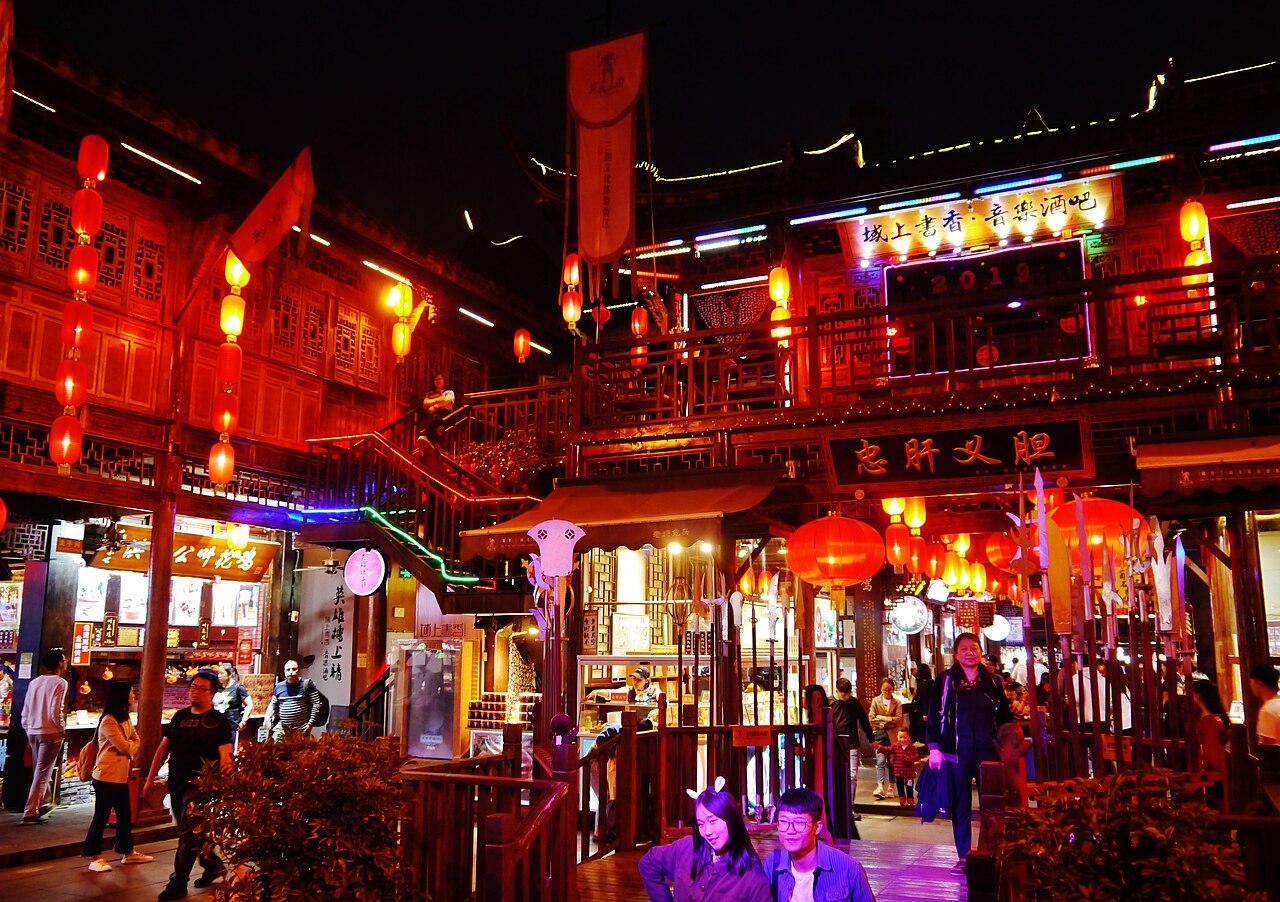
What Jinli is
The name borrows an old term for a Chengdu market street, and the design draws on the Three Kingdoms theme of the shrine next door. The buildings, though, are modern reconstructions in a western Sichuan style, with timber facades, grey tiled roofs, small courtyards and a stage for performances. The street is managed together with the Wuhou Shrine and is physically joined to it, but you don't need a shrine ticket to walk it.
So treat it as a well-designed night market rather than a heritage site. Taken that way, it is enjoyable.
Day or night?
Night is better. The lanterns come on at dusk, the snack stalls are busiest, and the reflections on wet stone after rain make the best photographs. Weekend and holiday evenings are very crowded, sometimes too crowded to stop at a stall. Weekday evenings are easier.
Daytime works if you are leaving the shrine anyway. Walking out through Jinli is convenient, but by day it is a fairly ordinary souvenir street.
A good plan is the shrine in the late afternoon (last entry 17:00), then Jinli as the lights come on.
What to eat
Stalls change, but these Sichuan snacks are regulars on the street and around Chengdu:
- San da pao (three cannons): glutinous rice balls thrown against a board with a loud bang, then rolled in brown sugar and soybean powder. Part snack, part show.
- Tang you guozi: fried glutinous rice balls coated in sugar and sesame.
- Skewers in spicy broth or grilled, priced per stick.
- Spicy rabbit head, a Chengdu favourite that not every visitor wants to try.
- Liangfen, cold mung bean jelly with chilli oil.
- Sugar painting, a folk art in which the vendor draws a figure in melted sugar. Children love it.
Prices are higher than in local neighbourhoods. Pick busy stalls with fast turnover. Seating is scarce at peak times, so most people eat on the move.
Practical tips for a busy evening
- Arrive before full dark. Coming 20 to 30 minutes before sunset lets you see the street in daylight, find your bearings, and be in place when the lanterns come on.
- Walk the waterside section. The later waterside extension is often less packed than the main lane, and the lanterns reflect in the water.
- Watch your phone and bag. Holiday crowds are dense, and the narrow lane slows to a shuffle.
- Shows vary. Tea houses and the small stage sometimes host Sichuan opera excerpts or face-changing, but the schedule and prices change. Ask at the venue rather than relying on an online listing.
- Plan the exit. Taxis are hard to find outside the shrine late on weekends. The metro is the reliable way back.
Getting there
- Metro Line 10 to Wuhouci (Jinli) station.
- Metro Lines 3 and 5 to Gaoshengqiao station, then about ten minutes on foot.
- Buses 1, 57, 82 and 334, among others, stop at Wuhou Shrine.
Jinli runs along the east side of the shrine. You can enter from Wuhouci Street near the shrine gate or from the side streets.
Jinli or Kuanzhai?
| Jinli | Kuanzhai Alley | |
|---|---|---|
| Built | 2004 (new street) | Qing lanes, rebuilt 2008 |
| Best time | After dusk | Afternoon to evening |
| Feel | Busy, lanterns, snacks | Calmer, courtyards, tea houses |
| Pairs with | Wuhou Shrine | Panda base morning, People's Park |
Both are free. On a three-day trip most visitors pick one. Choose Jinli if you are going to the Wuhou Shrine anyway and want a lantern-lit evening.
Pairing it with the rest of Chengdu
The Wuhou Shrine followed by an evening in Jinli is the natural combination. To add the Du Fu Thatched Cottage, visit it in the morning, then go to the shrine in the afternoon and finish in Jinli. Don't stack Jinli after a panda base morning and a Kuanzhai afternoon: that is three crowded walks in one day. Keep Dujiangyan and Mount Qingcheng for separate days.
Things to confirm before you go
- The Wuhou Shrine's last entry (17:00) if you want the shrine the same day.
- Holiday crowd levels.
- Mobile payment: most stalls take Alipay or WeChat Pay.
- Whether you've already done Kuanzhai, in which case Jinli is a repeat.
Frequently asked questions
Is Jinli free?
Yes. The street is free to walk. The Wuhou Shrine next door needs a separate ticket.
Is Jinli really an ancient street?
No. It was built in 2004 in a traditional style. The Wuhou Shrine next to it is the historic site.
What time is best for Jinli?
After dusk, when the lanterns are lit. Weekday evenings are less crowded than weekends.