Xiamen Travel Guide: Gulangyu, Campus and Coast in Three Days
Three days gives you a full day on Gulangyu, the car-free island of old consulates and villas; a morning at Xiamen University and Nanputuo Temple next door; and a day on the coast road past Hulishan Fortress. Two things need booking before you arrive: a Gulangyu ferry ticket, which opens 15 days ahead and sells out on holidays, and a Xiamen University visit slot, allocated by lottery since January 2026. Everything else can be decided on the day. Xiamen is an island city off the Fujian coast. It was one of China's first Special Economic Zones in 1980 and became a sub-provincial city in 1994, and Gulangyu joined the World Heritage list in 2017. The six places below each have their own page with the current booking rules, prices and routes.
Getting in and where to stay
High-speed trains mostly arrive at Xiamen North station in Jimei on the mainland. Metro Line 1 runs from there across to the island and ends at Zhenhai Road, the stop for Nanputuo Temple. Xiamen station, on the island itself, handles some services and is a short taxi ride from the old centre. Gaoqi airport is also on the island, north of the city centre.
For a short stay, the old town around Zhongshan Road is the practical base. It is close to the ferry wharves, full of food, and a short ride from the university. A night on Gulangyu in a villa guesthouse gives you the island early and late, when day visitors have gone, and it removes the need to book a return boat. Zengcuo'an on the coast road suits travellers who want to be near the beach and do not mind crowds in the evening.
When to come
Xiamen has a humid subtropical monsoon climate, with an annual average around 21°C, long summers and short, mild winters. March to May and October to November are the most comfortable months. Summers are hot and sticky, though the sea breeze helps. Typhoon season is concentrated in July to September, when ferries can be suspended and the beaches closed. Showers arrive suddenly at any time of year, so carry an umbrella. Avoid national holidays if you can: Gulangyu and the university both hit their visitor caps.
Places worth visiting
Gulangyu
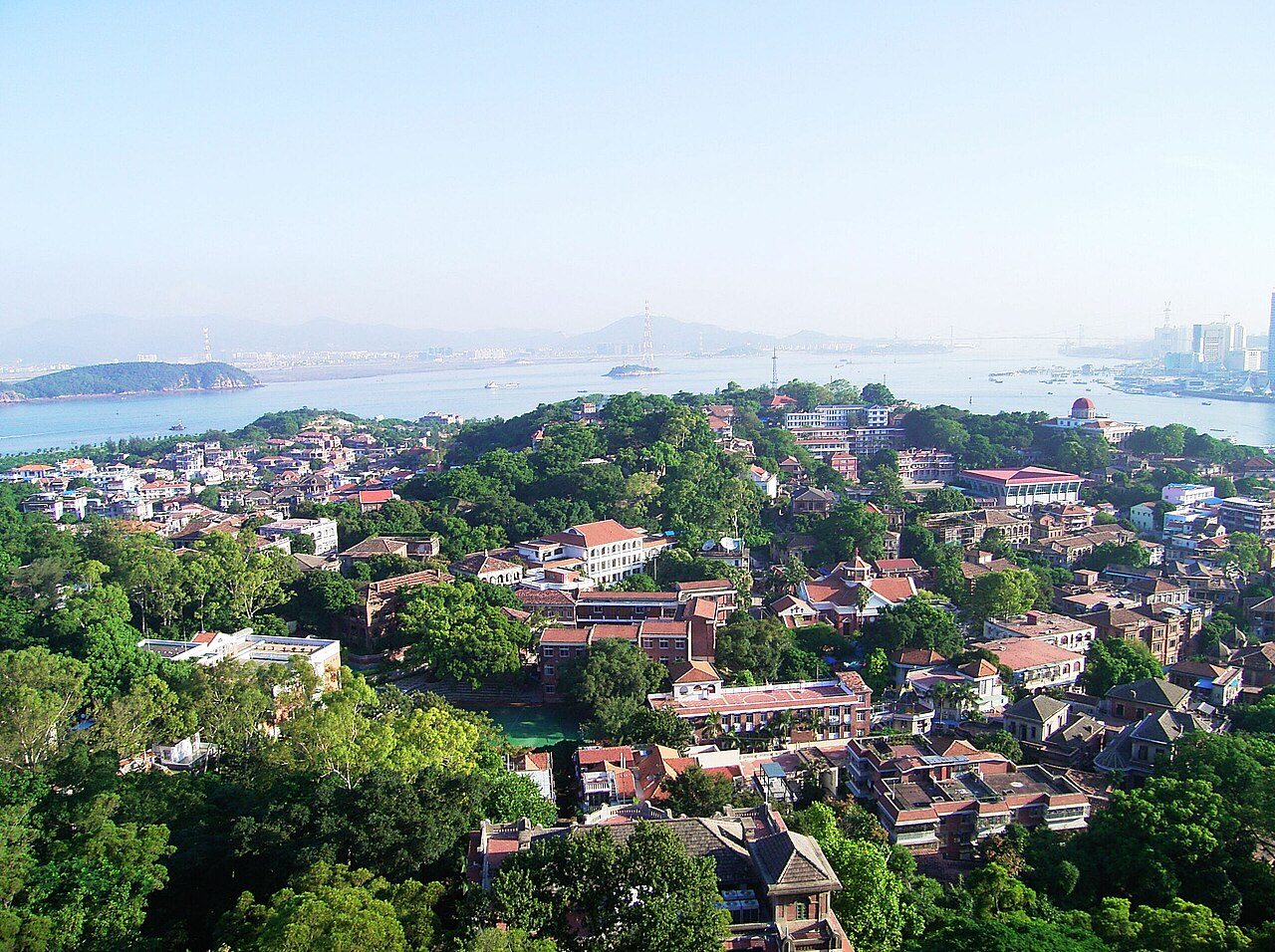
Gulangyu lies just off the southwest corner of Xiamen Island, under two square kilometres of lanes with no cars and no bicycles. After Xiamen became a treaty port in 1843, foreign merchants and missionaries settled here, and in 1902 it became a public international settlement. Consulates, churches, Minnan courtyard houses and the villas of returning overseas Chinese now sit side by side, which is why UNESCO inscribed it in July 2017 as "Kulangsu, a Historic International Settlement". It was the Chinese mainland's 52nd World Heritage site. The island is also known for music, especially the piano, and has produced a long line of musicians.
Getting there is the part to plan. Visitor ferries are real-name and capped, mostly leaving from Dongdu Passenger Terminal at the cruise centre. The Gulangyu page explains booking, wharves and the 90-yuan five-site ticket.
Sunlight Rock (Riguangyan)
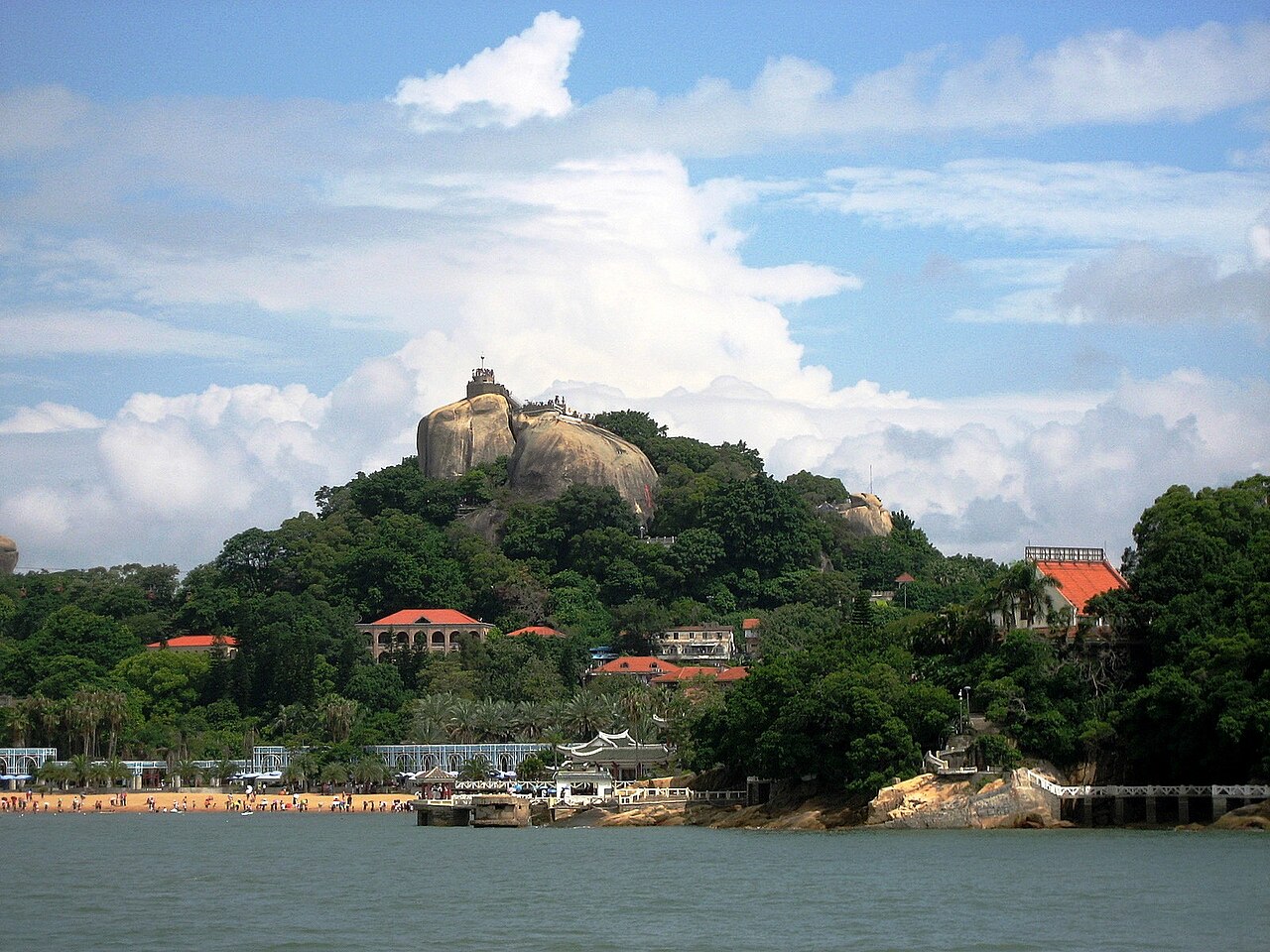
Sunlight Rock, a granite boulder over 40 metres tall on Longtou Hill, is Gulangyu's summit at 92.68 metres above sea level. The round platform on top looks over the whole island, across the channel to Xiamen and out to sea. Zheng Chenggong (Koxinga) trained his fleet here in the seventeenth century, and the remains of his "water-drill platform" and camp gate are on the slope below. Go first thing after landing, before the tour groups reach the final staircase. The ticket is sold singly or as part of the Gulangyu combined ticket; the Sunlight Rock page has prices, hours and crowd timing.
Xiamen University
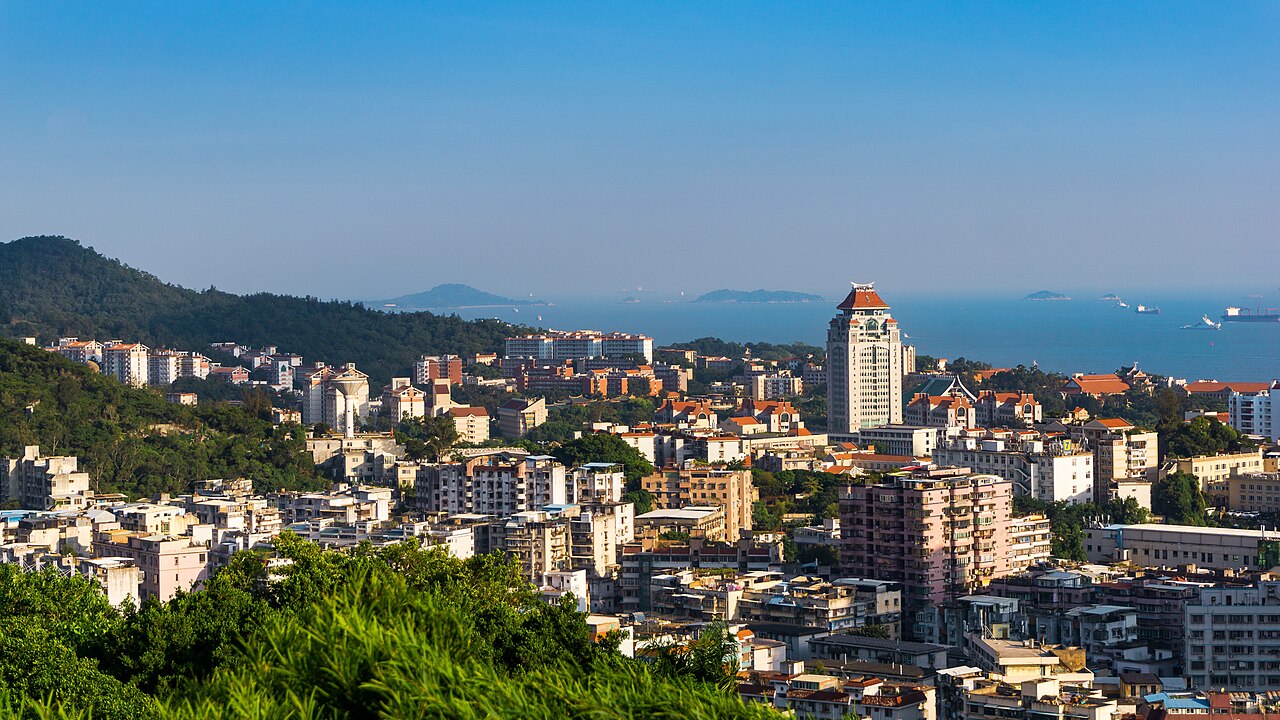
The overseas Chinese philanthropist Tan Kah Kee (Chen Jiageng) founded Xiamen University in April 1921. It was the first university in modern China founded by an overseas Chinese. The Siming campus runs between the Wulao Peaks and the sea, built in the red-brick, green-tiled "Kah Kee style" that mixes Western colonnades with Minnan roofs. Furong Lake is the centre, the Jiannan Auditorium stands above the half-moon terraces of Shangxian Field, and the Furong Tunnel was long known for its student murals. Entry has been by online reservation and lottery since January 2026. The Xiamen University page sets out the windows, quotas and passport entry.
Nanputuo Temple
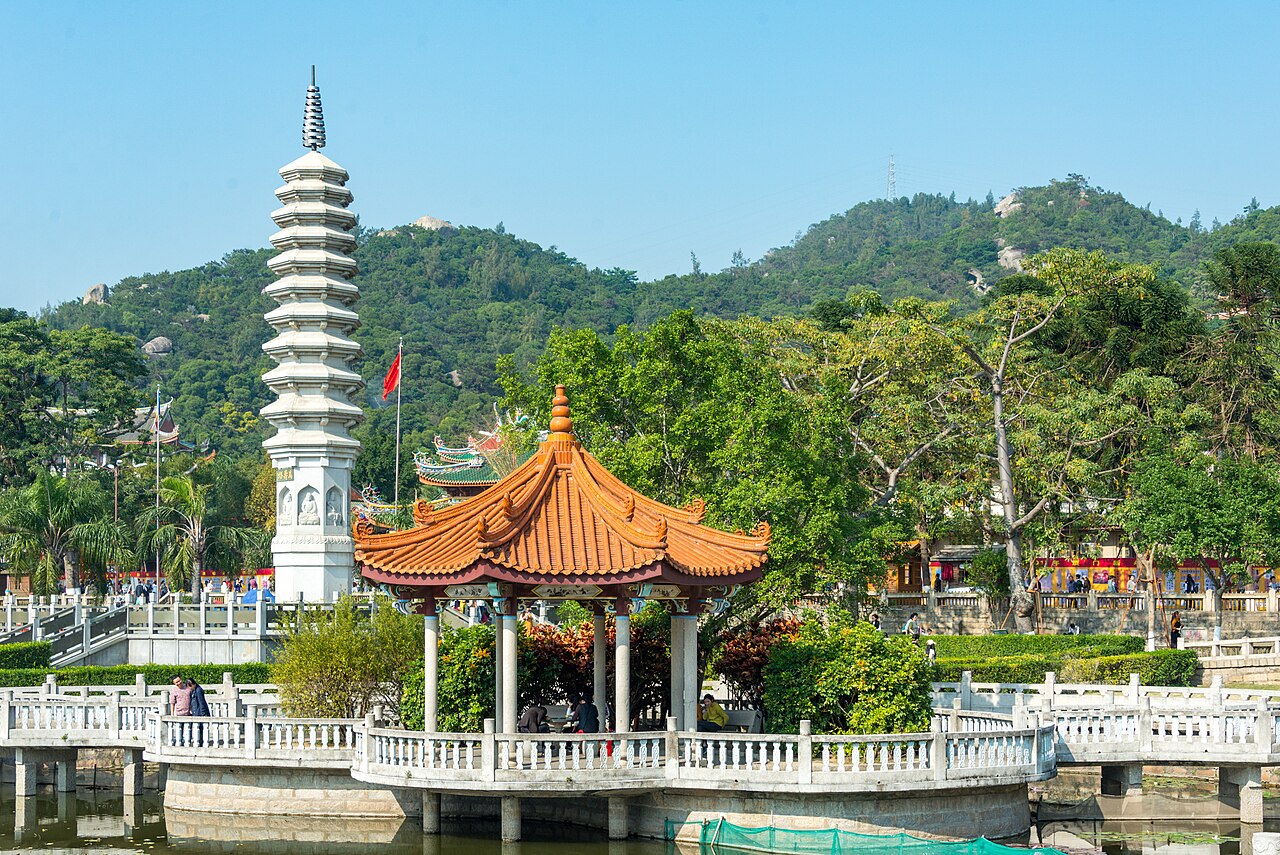
Nanputuo sits at the foot of the Wulao Peaks beside the university, facing the bay. A temple stood here by the late Tang, when it was called Sizhou Temple. The "Southern Putuo" name came from its Guanyin worship, which pairs it with Mount Putuo in Zhejiang. The release pond, the Hall of the Heavenly Kings and the Mahavira Hall follow the classic layout of a Minnan temple, with crowded porcelain decoration on the roof ridges. Entry is free with a reservation on busy days. A stone path behind climbs the Wulao Peaks for views over the campus and the harbour, and the temple's vegetarian pastries are a well-known Xiamen gift. The Nanputuo Temple page covers booking, the route through the halls and the climb.
Hulishan Fortress
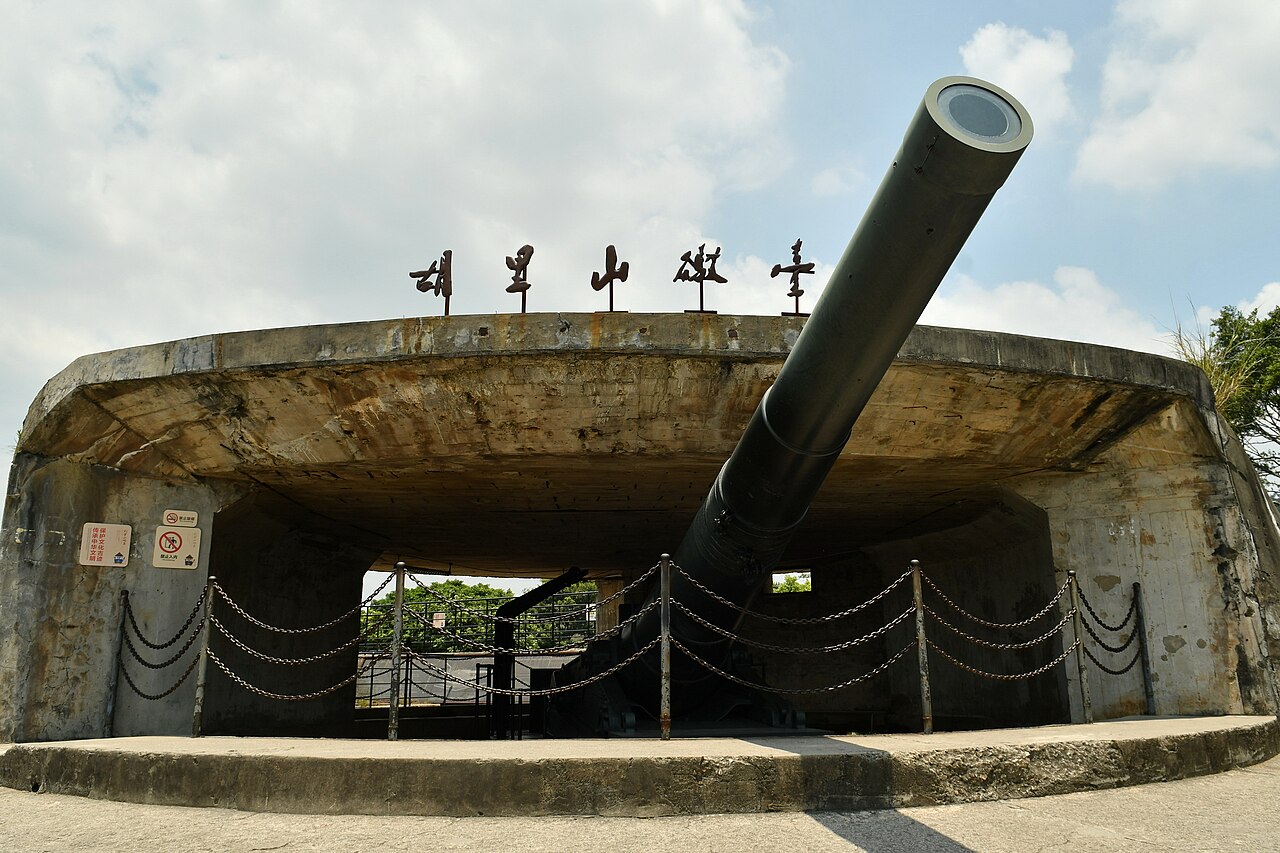
Hulishan Fortress, on the headland at the southeast tip of the island, was built between 1894 and 1896, half a century after the British had taken Xiamen in the First Opium War. It still mounts its 280-millimetre Krupp coastal gun, made in Germany in 1887 and described as the largest surviving nineteenth-century coastal gun in the world. Tunnels, barracks, a moat and an observation terrace looking toward Kinmen fill out a visit of an hour or two. A costumed drill show runs twice a day. The Hulishan Fortress page has the gun's story, show times and tickets.
Huandao Road (Island Ring Road)
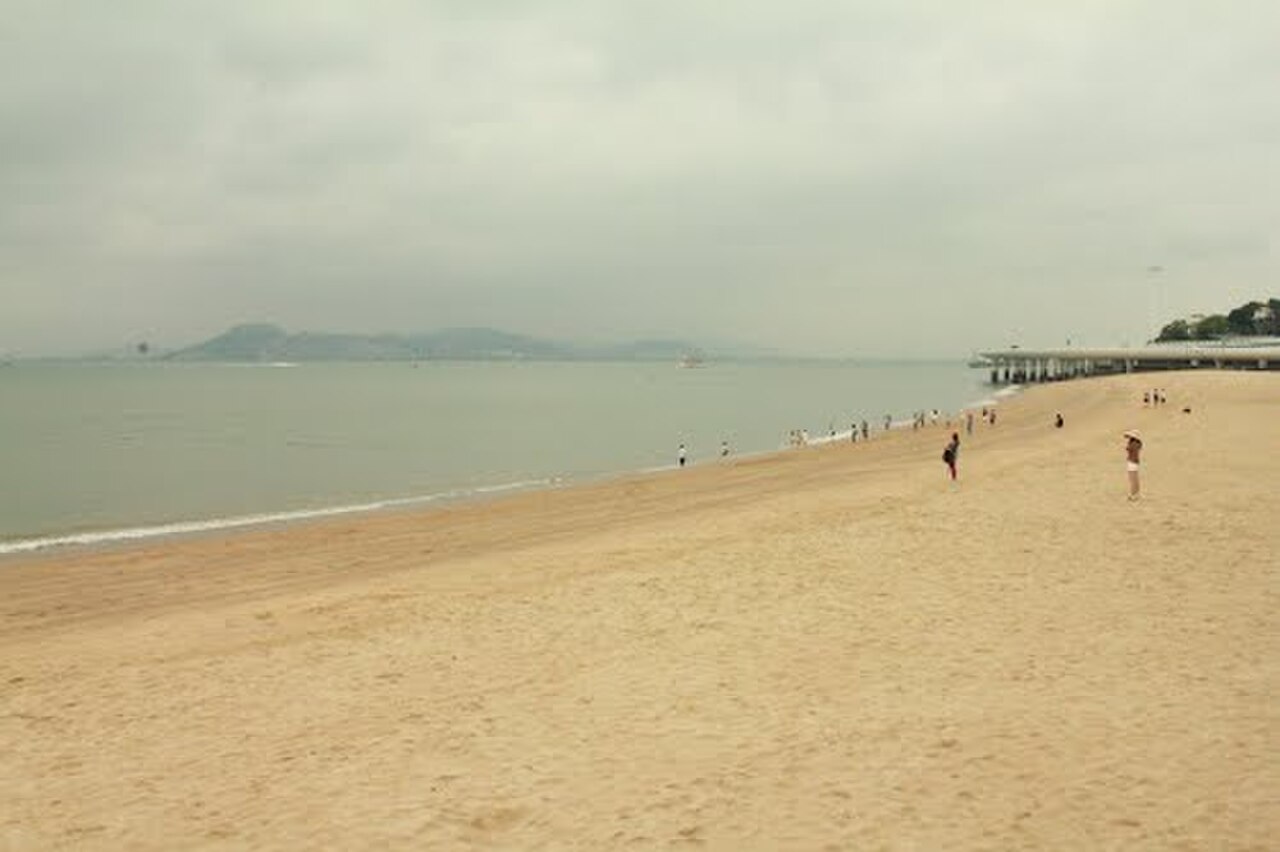
Huandao Road circles Xiamen Island. The stretch visitors mean is the seaside section on the southeast shore, from the Baicheng beach below the university past Hulishan, Zengcuo'an and the Huangcuo beaches. It is free and needs no booking, and it is the course of the Xiamen Marathon each winter. Ride a bike or walk a section, stop at Zengcuo'an to eat, and finish at Yanwu Bridge or Baicheng for sunset. The Huandao Road page breaks the route into stretches with bike and timing tips.
Eating in Xiamen
Xiamen food is Minnan food, and much of it is seafood. Shacha noodles are the city's everyday bowl: a rich broth made from a sauce of dried shrimp, dried fish, shallot, garlic and ginger, topped with seafood, pork and offal as you choose. Mianxian hu, thin rice noodles in a thick broth with pig's blood, scallion oil and seafood, is the classic breakfast. Look for oyster omelette, tusun dong (a cold jelly made from a small marine worm, better than it sounds) and sweet peanut soup around Zhongshan Road and the Eighth Market, a working wet market in the old town. Seafood is priced by weight at market rates, so agree the price before the kitchen starts cooking. Nanputuo's vegetarian pastries are the easiest gift to carry home.
How to arrange the route
Day one: Gulangyu. Take an early boat from Dongdu, climb Sunlight Rock first, then walk down to Shuzhuang Garden and the Piano Museum. After lunch in the lanes, see Bagua Lou and the consulate streets, then catch a boat back near dusk. Or stay the night on the island.
Day two: university and temple. Visit Nanputuo Temple in the morning, then enter Xiamen University in your booked window. Climb the Wulao Peaks in the afternoon if you still have the legs (or if the lottery went against you), and finish at Baicheng beach for sunset.
Day three: the coast. From Baicheng, ride or walk east along Huandao Road, stopping at Hulishan Fortress (time it for the 10:00 or 16:00 show), lunch in Zengcuo'an and an afternoon on the Huangcuo beaches.
With less time, combine days two and three. Put the temple and university in the morning, then go to Hulishan and Zengcuo'an in the afternoon.
Beyond Xiamen, Quanzhou is about half an hour north by high-speed rail and pairs naturally with it. Zhangzhou and Longyan are the bases for Fujian's tulou earth houses. Fuzhou, the provincial capital, is further up the coast, and Shantou is the next old port to the south.
Confirm before you go
- Gulangyu ferry: real-name tickets open 15 days ahead and sell out on holidays. Book on the official channel with the ID you will carry.
- Xiamen University: apply in the official system three days ahead and check the lottery result at 20:00 the evening before your visit.
- Nanputuo Temple: reserve on weekends, holidays and festival days.
- Typhoons: from July to September, check the forecast before any ferry or coast day.
- Sun and insects: the coast and the island have little shade, so bring sunscreen and insect repellent.
Frequently asked questions
How many days do I need in Xiamen?
Three days covers Gulangyu, the university and temple, and the coast road. Four or five days lets you slow down or add Quanzhou or the tulou.
How long should I spend on Gulangyu?
A full day for Sunlight Rock, the gardens and the lanes. Half a day is possible if you skip most of the paid sites.
Can foreigners visit Xiamen University?
Yes. Book through the official reservation system with your passport details, then use the manual check lane at the visitor centre with the original passport.
What is the best way to see Huandao Road?
By bike, on the seaside stretch from Baicheng beach eastward. Walk a shorter section if you only want Hulishan and Zengcuo'an.
Sources
The background facts in this article were checked against the following Chinese Wikipedia entries, retrieved August 11, 2026. Ferry and campus booking rules come from the published 2026 notices of the Xiamen ferry company and Xiamen University, as described on the individual sight pages.
- Xiamen (city) https://zh.wikipedia.org/wiki/厦门市
- Gulangyu https://zh.wikipedia.org/wiki/鼓浪屿
- Sunlight Rock https://zh.wikipedia.org/wiki/日光岩
- Xiamen University https://zh.wikipedia.org/wiki/厦门大学
- Nanputuo Temple https://zh.wikipedia.org/wiki/南普陀寺
- Hulishan Fortress https://zh.wikipedia.org/wiki/胡里山炮台
- Island Ring Road https://zh.wikipedia.org/wiki/环岛路
All photos are from Wikimedia Commons, used under CC licenses; re-use requires attribution.
- xiamen-gulangyu.jpg from File 鼓浪屿 - panoramio.jpg, by gdczjkk, taken August 13, 2006, CC BY 3.0
- xiamen-riguangyan.jpg from File 厦门鼓浪屿轮渡望鼓浪屿地标 - 日光岩 - panoramio.jpg, by Tiger@西北, taken August 4, 2009, CC BY-SA 3.0
- xiamen-xmu.jpg from File Xiamen University, view from Hongshan.jpg, by 周流劲火, taken October 1, 2019, CC BY 2.5
- xiamen-nanputuo.jpg from File South Putuo Temple 07235-Xiamen (48814044816).jpg, by xiquinhosilva, CC BY 2.0
- xiamen-hulishan.jpg from File Hulishan Fort Krupp artillery 01 20170728.jpg, by Tyg728, taken July 28, 2017, CC BY-SA 4.0
- xiamen-huandao.jpg from File 厦门环岛路沙滩.jpg, by HorsefaCe, taken June 2012, CC BY-SA 3.0