Quanzhou Travel Guide: The Old Port Town, Luoyang Bridge and Chongwu
Quanzhou, the Zayton of medieval traders, was one of the great ports of the world in the Song and Yuan dynasties, and in 2021 UNESCO listed 22 of its sites as "Quanzhou: Emporium of the World in Song-Yuan China". Most of the best ones are within walking distance in the old town: Kaiyuan Temple and its twin stone pagodas, West Street, the Qingjing Mosque and the Tianhou Temple. Give the old town a full day, a second day to Qingyuan Mountain and Luoyang Bridge, and a third to the Ming stone city of Chongwu on the coast.
How the old town fits together
What makes Quanzhou unusual is how many religions left their mark within a few streets. Song and Yuan Quanzhou hosted Arab, Persian and Indian merchants alongside Chinese traders, and Buddhist, Daoist, Islamic and Hindu remains still sit close to one another. The old town is compact. West Street runs east–west past Kaiyuan Temple; Tumen Street, south of it, holds the Qingjing Mosque, the Guandi Temple and the Confucius Temple; the Tianhou Temple and the Deji Gate ruins lie at the southern edge, where traders once came up from the river wharves. You can walk all of it in a day, with stops for food.
Places worth visiting
Kaiyuan Temple
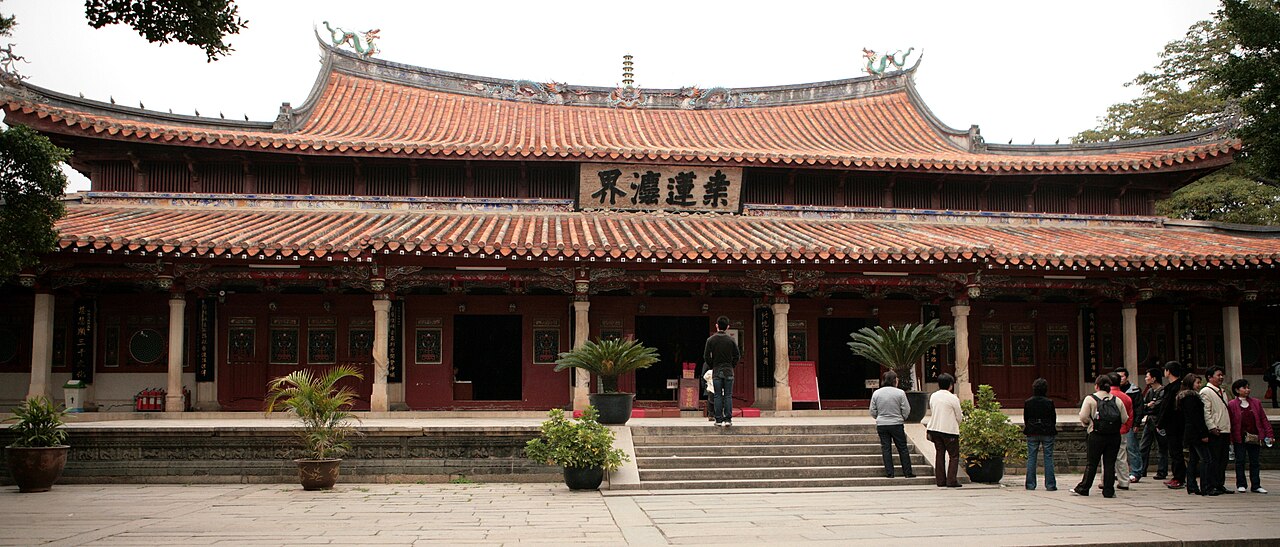
Founded in 686, in the Tang dynasty, on land the merchant Huang Shougong is said to have donated, Kaiyuan is Quanzhou's signature temple. The axis runs through the Mahavira Hall, the Ordination Platform and the sutra library, with the Zhenguo Pagoda to the east and the Renshou Pagoda to the west. The two stone pagodas are the tallest surviving pair in China and have stood through centuries of typhoons and earthquakes; look closely at the carved figures on their bodies. Inside hangs a couplet by Zhu Xi in the hand of the monk Hongyi, calling the city "a land of Buddha, where every street is full of sages". Entry is free. Come at opening time on holidays, when the courtyards fill quickly. The Kaiyuan Temple page covers the halls and pagodas in detail.
West Street
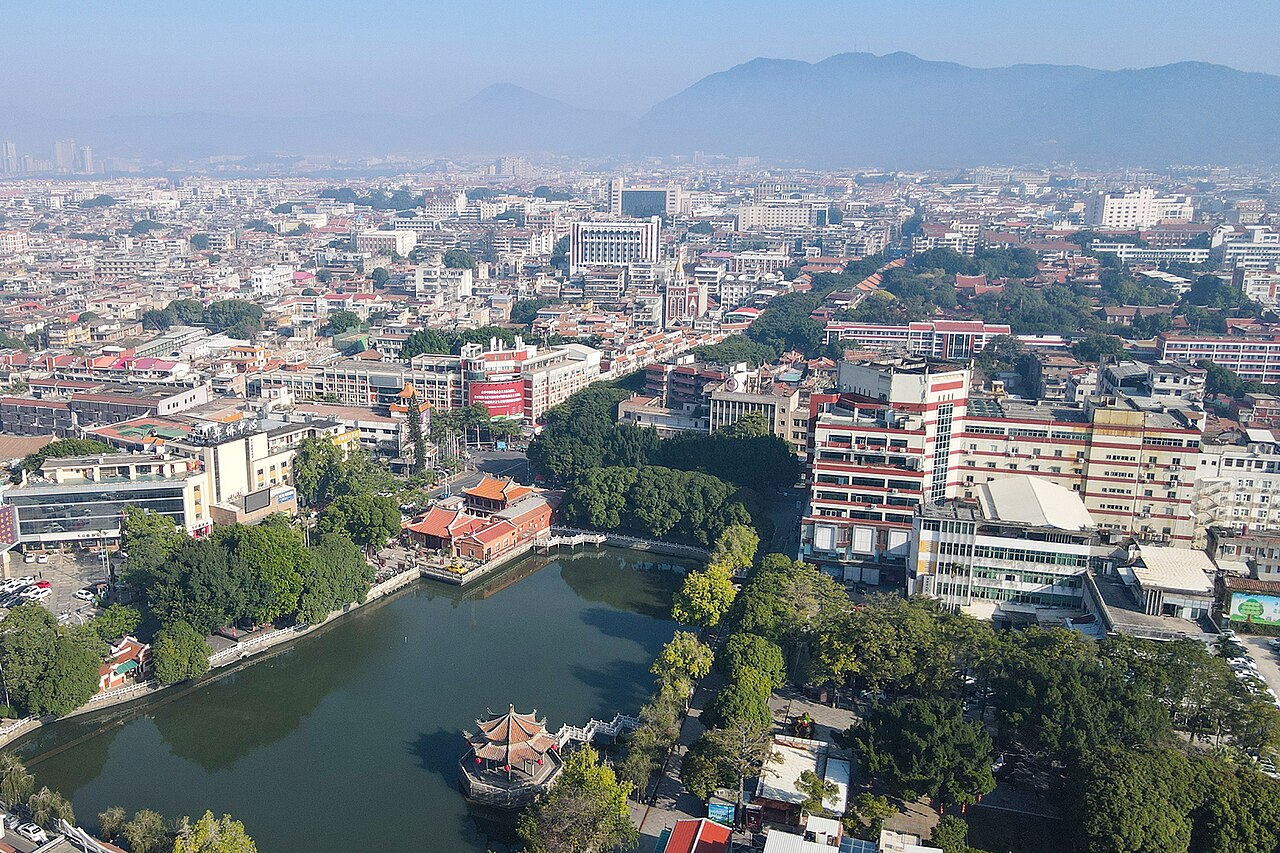
West Street is the oldest street in the old town and now its busiest: snack shops, cafes and old houses, with the pagodas rising behind. The side lanes are quieter and more interesting than the main drag. Evenings are crowded, especially on holidays; early morning, before the shops open, is when it feels like a neighbourhood again. The West Street page has a walking route.
Qingjing Mosque and Tumen Street
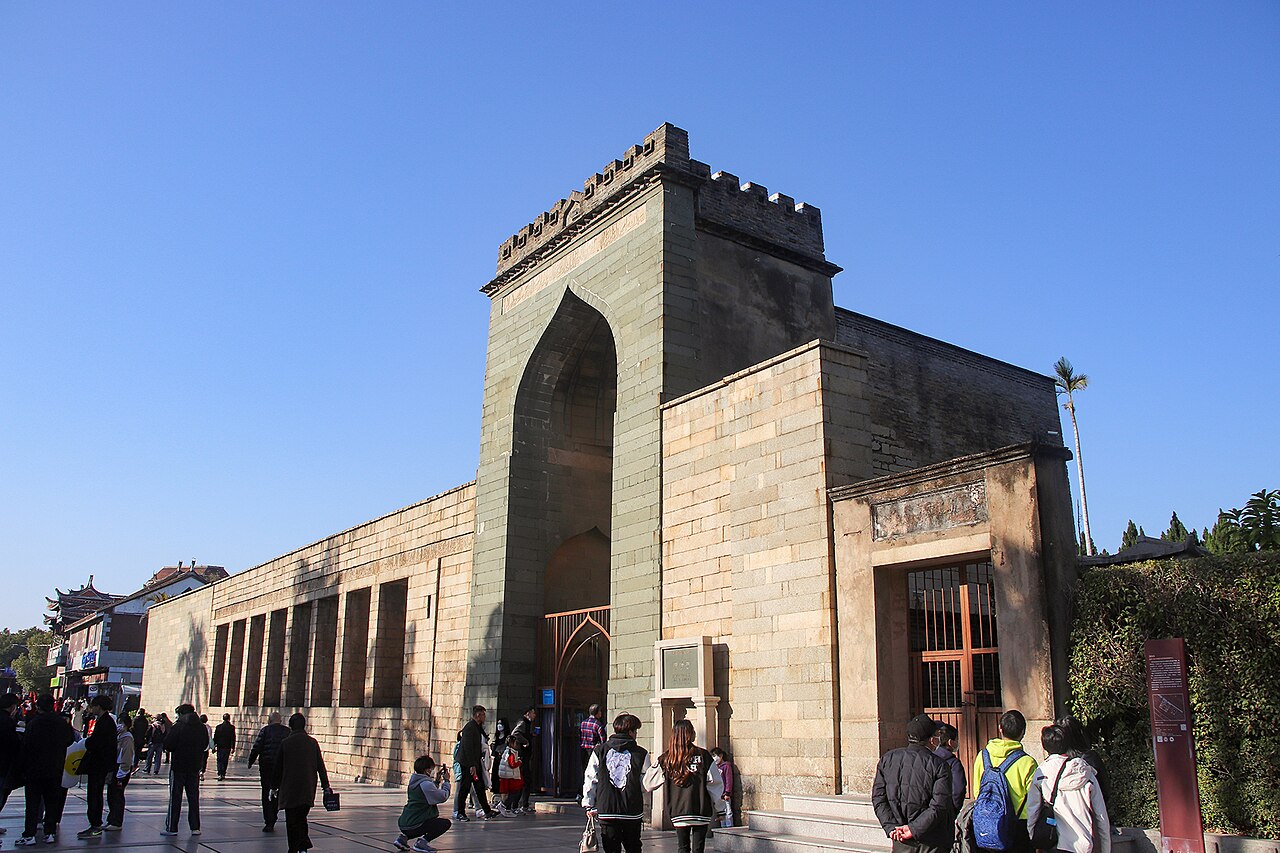
Built in 1009, the Qingjing (Ashab) Mosque is the oldest surviving mosque in China built in the Arab style. Its stone gate tower and the bare columns of the Fengtian hall follow building traditions from Syria and the Levant, with almost no parallel elsewhere in East Asia. Next door, the Guandi Temple is permanently thick with incense, a contrast that sums up the city. The mosque is small and takes under an hour; dress modestly, as parts remain a place of worship. Continue along the same street to the Confucius Temple.
Tianhou Temple and Deji Gate
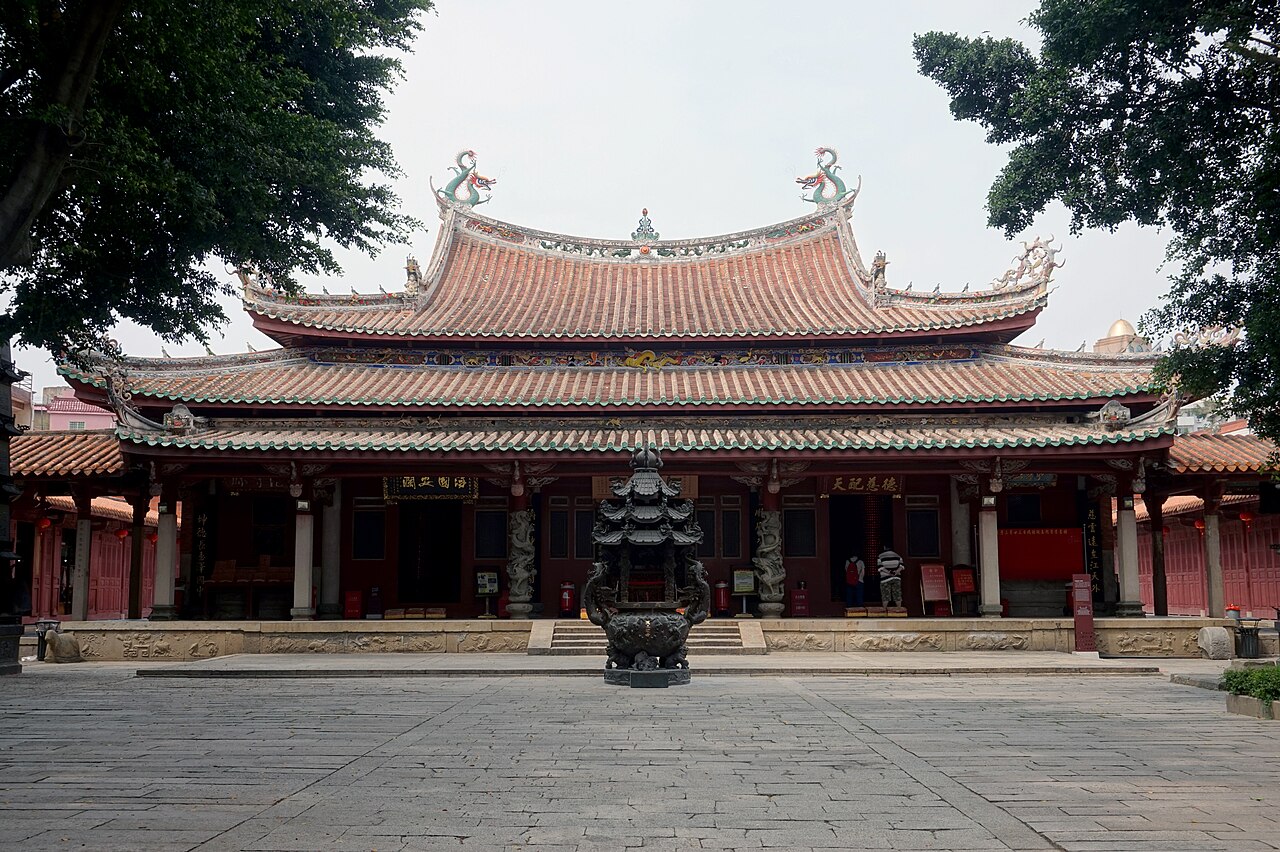
Founded in 1196, the Tianhou Temple is one of the senior temples of the sea goddess Mazu, and many Mazu temples in Fujian and Taiwan trace their incense back to it. Sailors prayed here before voyages. Look up at the roof ridges, decorated with cut porcelain. Beside it are the excavated ruins of the Deji Gate, the old city gate nearest the wharves. Entry is free and an hour is enough. More on the Tianhou Temple page. For Mazu's birthplace itself, Meizhou Island is up the coast in Putian.
Qingyuan Mountain and the Laojun statue
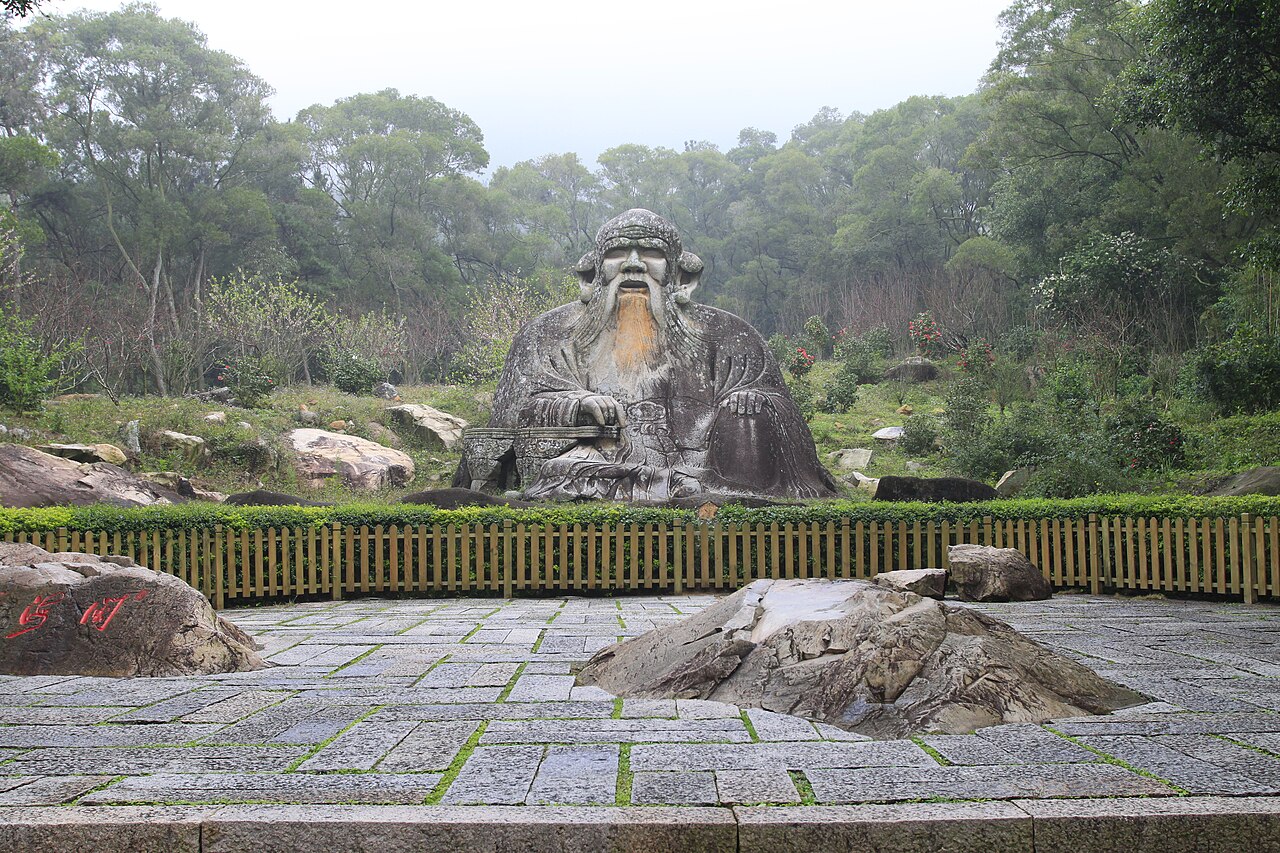
Just north of the city, Qingyuan Mountain is a 5A scenic area named for its springs. Its famous sight is near the foot: the Song-dynasty Laojun statue, a seated Laozi carved from a single boulder and the largest surviving Daoist stone sculpture in China. Higher up is the memorial pagoda of the monk Hongyi, who spent his last years in Quanzhou, with his final calligraphy, "joy and sorrow mingled", carved nearby. Half a day covers the statue and the main paths. Go early in summer; there are a lot of steps. See the Qingyuan Mountain page.
Luoyang Bridge
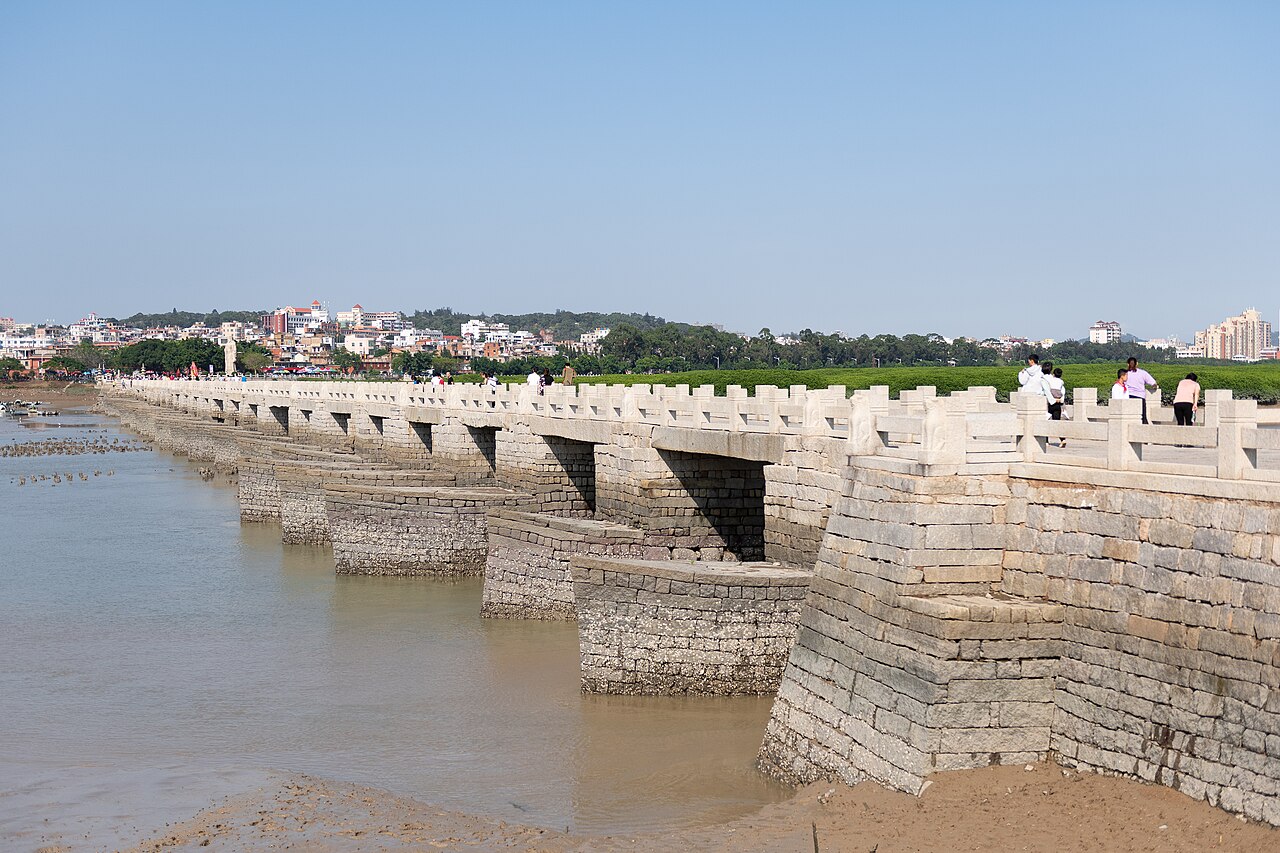
Built between 1053 and 1059 under the prefect Cai Xiang, Luoyang Bridge crosses the mouth of the Luoyang River and is China's oldest surviving stone bridge over tidal water. Its builders laid a raft-like stone foundation and grew oysters on it to bind the stones together. Today's deck is about 731 metres long on 45 boat-shaped piers, with small Song stone pagodas along the way and Cai Xiang's own stele nearby. Walking across and back takes an hour or two; it is breezy and best in late afternoon light. It lies northeast of the centre and pairs well with Qingyuan Mountain. More on the Luoyang Bridge page.
Chongwu Ancient City
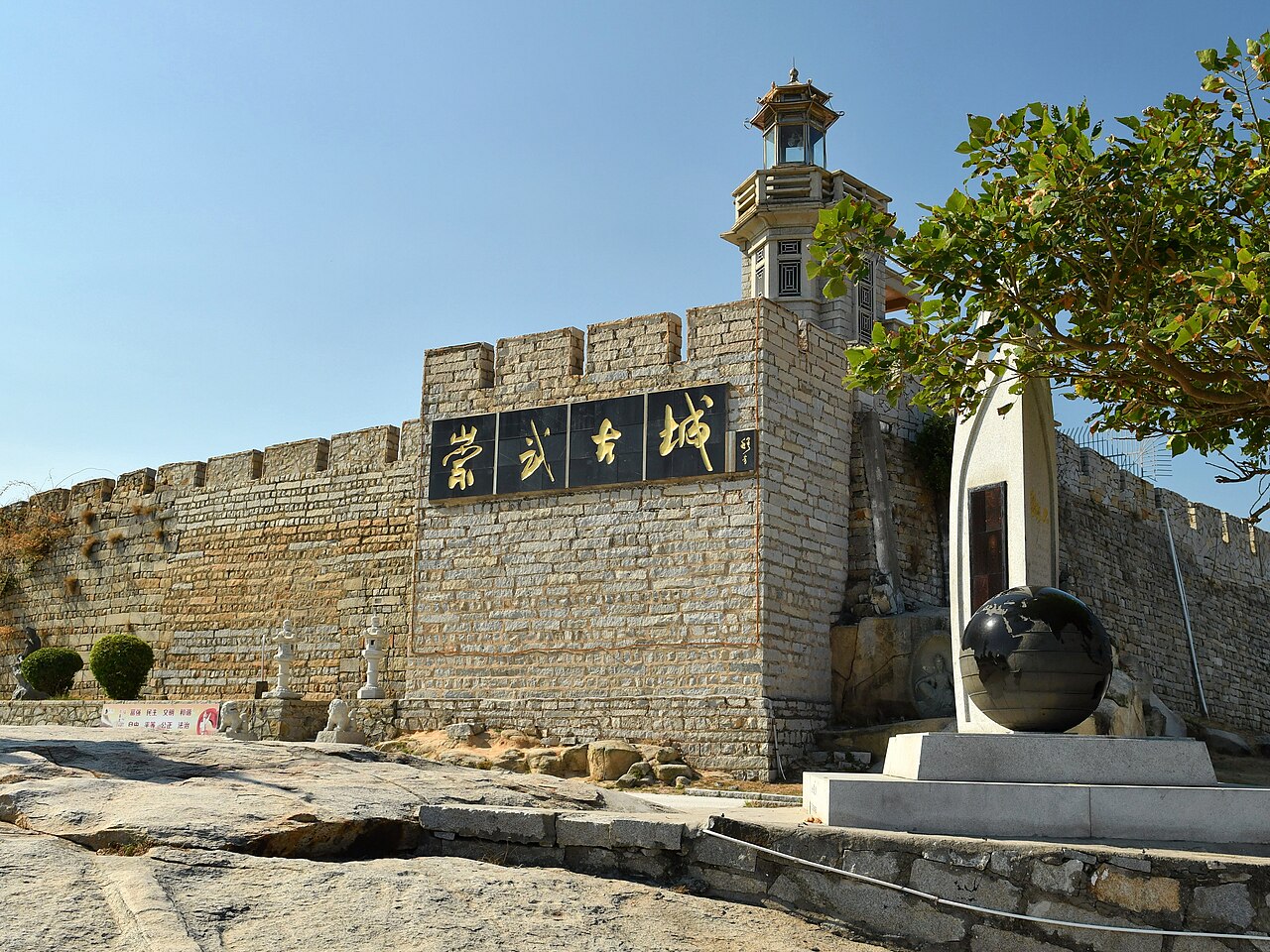
On a peninsula in Hui'an County, Chongwu was built from 1387 under Zhou Dexing as a Ming garrison against coastal pirates. Its granite wall, about 2.45 km round and seven metres high, is one of the best-preserved Ming stone city walls in China, and people still live inside. You may see Hui'an women in their distinctive traditional dress, and the lanes are lined with workshops of Hui'an's famous stone carvers. A beach runs below the walls, and harbour restaurants serve the day's catch. Quanzhou East high-speed station is the nearest, about 26 km away; a taxi takes under an hour, while buses are slow. Plan half a day or more.
When to come to Quanzhou
October to April is the comfortable season, mild and mostly dry. Summer is hot and humid, with typhoons possible from July to September, which can disrupt coastal plans. Folk festivals and temple processions happen through the year, especially around the lunar new year and the spring; they make the old town crowded and lively. Weekdays outside Chinese holidays are much calmer in the old town.
Getting in and where to stay
- Quanzhou Station is the closest station to the old town. Bus K1 runs toward West Street; get off at the Second Affiliated Hospital (Licheng campus) stop and walk a few minutes.
- Quanzhou East and Quanzhou South are on the newer Fuzhou–Xiamen high-speed line. Quanzhou East is the handy one for Chongwu; Quanzhou South is further from the centre.
- From Xiamen, fast trains take around half an hour; Xiamen also has the bigger airport. Quanzhou Jinjiang International Airport handles domestic and some regional flights.
- Where to stay: a guesthouse or hotel in or near the old town lets you walk everywhere and see West Street before the crowds. Outlying sites are day trips.
Eating in Quanzhou
Breakfast is mianxian hu, thin rice vermicelli cooked to a thick soup with pork intestine, vinegar-fried pork or seafood, topped with pepper and fried dough. Tudongdong, a jelly made from coastal sipunculid worms and eaten cold with garlic and vinegar dip, is the dare dish, and good once you try it. Ginger duck, cooked in clay pots with old ginger, is the hearty dinner. Look for meat dumplings, four-fruit soup and seaweed jelly around West Street and the Tianhou Temple. Seafood is best and freshest at Chongwu's harbour; check prices by weight before ordering.
How to arrange the route
Day 1, the old town on foot: Kaiyuan Temple at opening, West Street lanes, lunch, Tumen Street for the Qingjing Mosque, Guandi Temple and Confucius Temple, then the Tianhou Temple and Deji Gate in late afternoon. West Street again after dark.
Day 2, north and east: Qingyuan Mountain and the Laojun statue in the morning, Luoyang Bridge in the afternoon, ginger duck for dinner.
Day 3, the coast: Chongwu Ancient City and its beach, seafood lunch at the harbour, back by late afternoon.
With a fourth day: visit more of the 22 heritage sites, such as the Song kiln sites or old harbour sites, which are spread around the prefecture.
Fuzhou is the provincial capital to the north; Longyan to the west has the Yongding tulou; Shantou is the next old port down the coast.
What to cut if short on time
With one day, stay in the old town. With two, add Luoyang Bridge before Qingyuan Mountain if you prefer history to hiking. Chongwu is the trip to drop if you are short of time, though it is the most atmospheric.
Things to confirm before you go
- Opening hours of the mosque, Qingyuan Mountain and Chongwu, plus any ticket requirements.
- Holiday crowds around Kaiyuan Temple and West Street.
- Which Quanzhou station your train uses.
- Typhoon warnings in summer.
Frequently asked questions
How many days do I need in Quanzhou?
Three days covers the old town, Qingyuan Mountain with Luoyang Bridge, and Chongwu. Heritage enthusiasts can easily use a fourth.
What is Quanzhou's World Heritage listing?
"Quanzhou: Emporium of the World in Song-Yuan China", inscribed in 2021, with 22 sites including temples, bridges, wharves, kilns and tombs.
Which station is closest to Quanzhou old town?
Quanzhou Station. Bus K1 runs toward West Street.
Should I visit Quanzhou or Xiamen?
Both, if you can. They are about half an hour apart by train. Xiamen is the island city with Gulangyu; Quanzhou has the deeper heritage and food.
Sources
The facts in this article were checked against the following sources, retrieved August 30, 2026, and rechecked on October 20, 2026.
- Quanzhou (city) https://zh.wikipedia.org/wiki/泉州市
- Kaiyuan Temple (Quanzhou) https://zh.wikipedia.org/wiki/开元寺_(泉州)
- Qingyuan Mountain https://zh.wikipedia.org/wiki/清源山
- Luoyang Bridge https://zh.wikipedia.org/wiki/洛阳桥
- Quanzhou Tianhou Temple https://zh.wikipedia.org/wiki/泉州天后宫
- Qingjing Mosque https://zh.wikipedia.org/wiki/清净寺
- Chongwu Ancient City https://zh.wikipedia.org/wiki/崇武古城
- Quanzhou bus route K1 https://zh.wikipedia.org/wiki/泉州公交K1路
- Quanzhou Bendibao, nearest station to Chongwu (December 2023) https://qz.bendibao.com/tour/20231219/27703.shtm
Tickets change; this article does not quote yuan amounts, so check the official notice for your date.
All photos are from Wikimedia Commons, used under CC licenses; re-use requires attribution.
- quanzhou-kaiyuan.jpg from File Quanzhou Kaiyuan Temple-the Hall of Mahavira.jpg, by Tom@HK, CC BY 2.0
- quanzhou-qingyuan.jpg from File Quanzhou Qingyuan Shan 20120301-08.jpg, by Zhangzhugang, CC BY-SA 4.0
- quanzhou-luoyangqiao.jpg from File Luoyang Bridge, Quanzhou (20201001150149).jpg, by N509FZ, CC BY-SA 4.0
- quanzhou-tianhou.jpg from File 泉州天后宫大殿3.jpg, by 三猎, CC BY-SA 4.0
- quanzhou-qingjing.jpg from File 20230130 Qingjing Mosque 01.jpg, by Windmemories, CC BY-SA 4.0
- quanzhou-chongwu.jpg from File Chongwu Ancient City 20170727.jpg, by Tyg728, CC BY-SA 4.0
- quanzhou-city.jpg from File 20230130 Old City of Quanzhou 01.jpg, by Windmemories, CC BY-SA 4.0