Xidi Village, Huangshan: Lanes, Carvings and the Hu Clan Arch
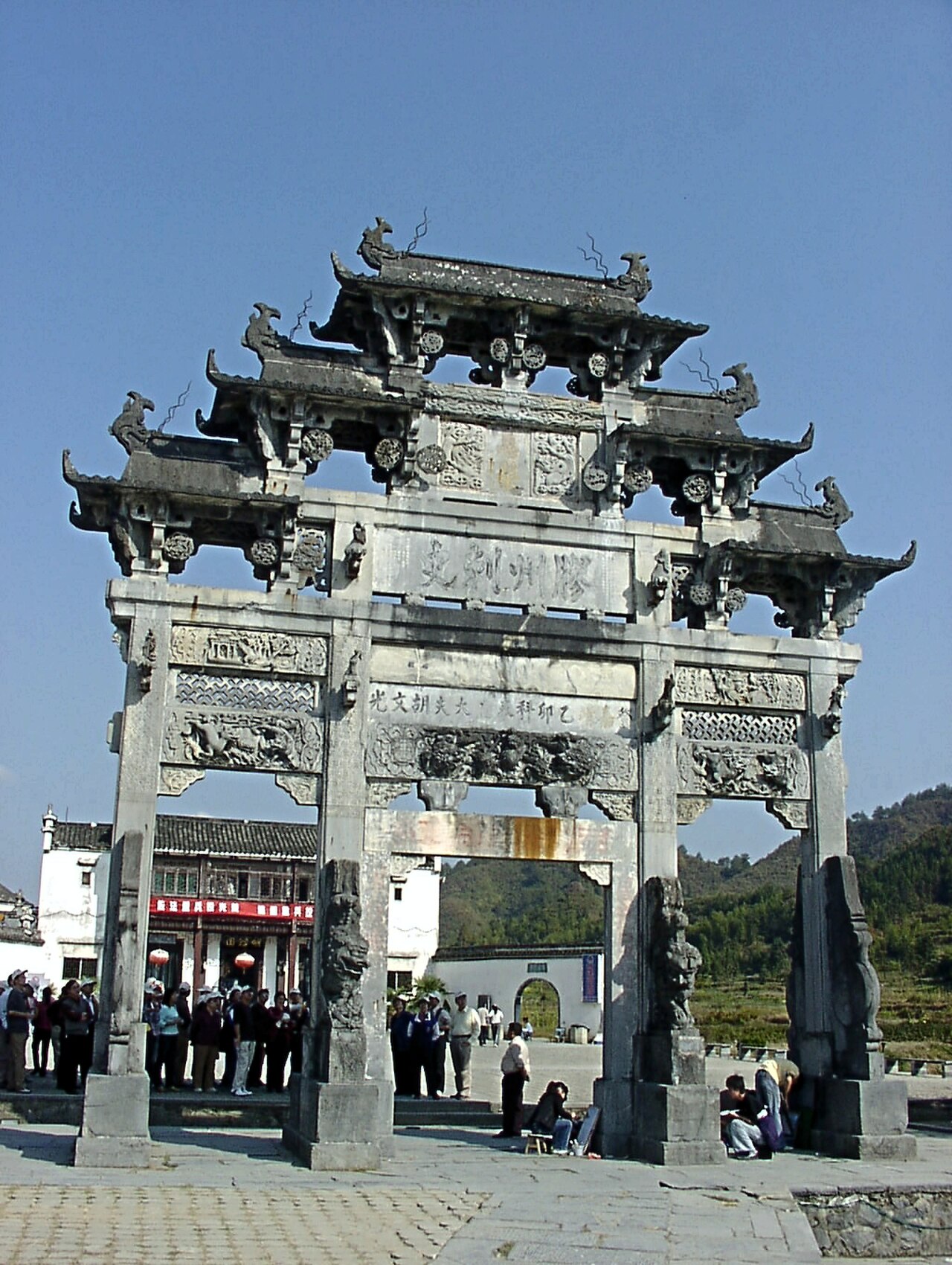
Xidi (西递) is the quieter of the two World Heritage villages in Yi County, half an hour by road from Hongcun, and the better of the pair for narrow lanes, carved house interiors and a sense of how a merchant clan lived. About 124 Ming and Qing houses and three ancestral halls survive, and the Hu Wenguang memorial arch of 1578 stands at the village entrance. Public listings for 2026 give a 104-yuan ticket, sold separately from Hongcun and valid for about three days, with hours of roughly 07:30 to 17:30. The Hongcun bus from Huangshan North station stops here. Two to three hours is enough. It is the afternoon half of the village day in the Huangshan travel guide.
One family's village
Xidi dates to the Northern Song in the eleventh century. It was first called Xichuan, West River, for the streams that run through it; the later name refers to an old post station, a di, on its west side. It is a single-clan village. The Hu family who built it traced their descent to a son of the Tang emperor Zhaozong who, in the family story, fled the fall of the dynasty and took the Hu surname.
The village grew with the family's money. Hu clan members went into trade around 1465, in the Ming, and the profits came home as houses, ancestral halls, paved roads and bridges. By the mid-seventeenth century some of the family had moved from commerce into official posts, which brought more prestige and more building. Xidi peaked in the eighteenth and nineteenth centuries with about six hundred households. When the Huizhou merchant networks declined in the late Qing, building stopped, and that halt is a large part of why so much survived.
UNESCO inscribed Xidi with Hongcun in 2000 as the Ancient Villages in Southern Anhui.
The memorial arch
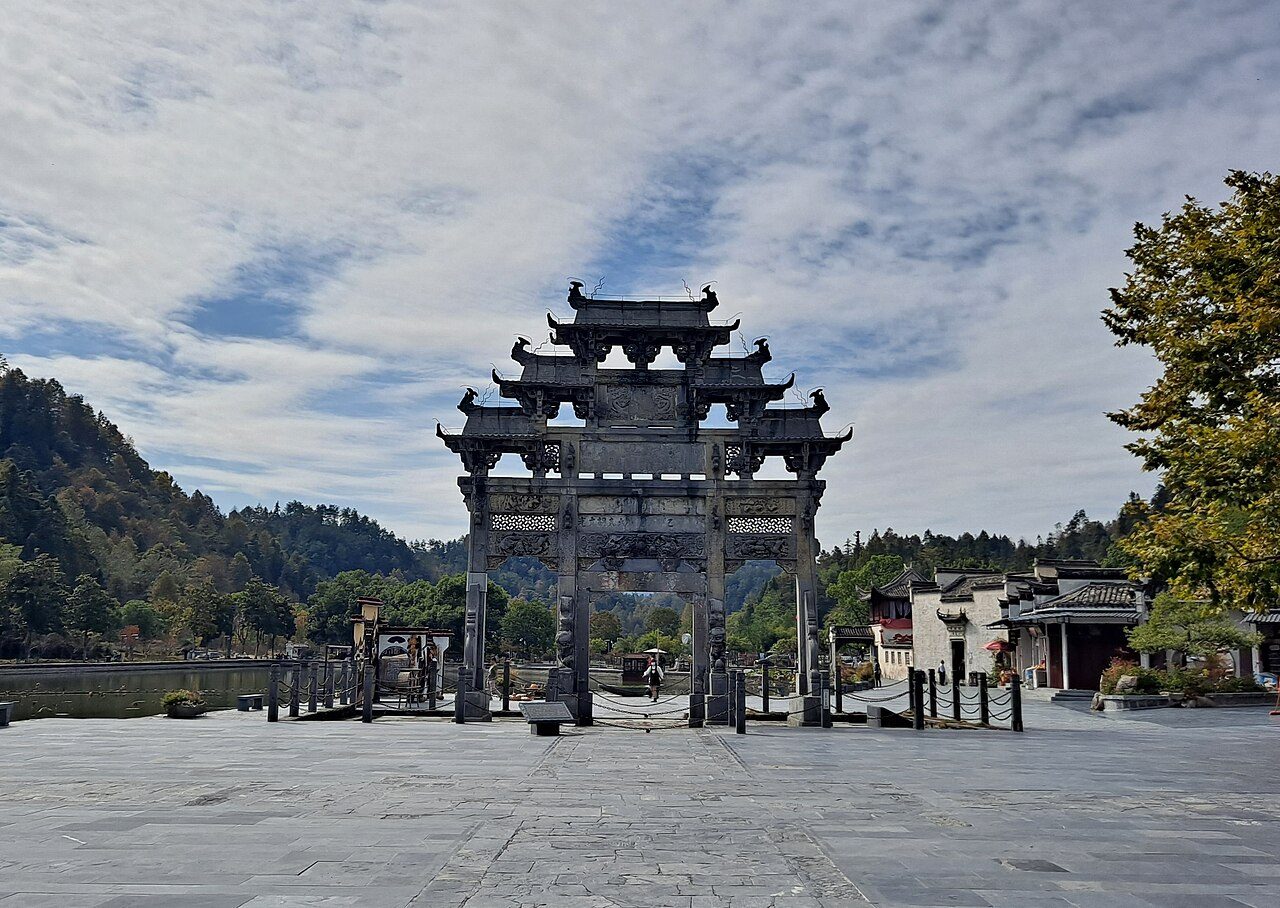
The landmark at the village entrance is the Hu Wenguang memorial archway, built in 1578 in the Wanli reign for Hu Wenguang, a local man who served as a prefect. It is stone, three bays wide and carved over most of its surface. It is the image most people take home from Xidi, and the morning light falls on it well.
Reading the lanes
Behind the arch the village keeps its old plan: one main street running east to west, a parallel street on each side, and narrow alleys of local granite between them. Open spaces exist only in front of the main public buildings, such as Jing'ai Hall, the main clan hall, and Zhuimu Hall. The rest is walls. High, blank and whitewashed, they hide everything that families wanted to show off inside.
That is the key to Xidi. A house faces the lane with a plain wall and a carved stone gateway. Inside, rooms are arranged around a narrow internal courtyard, a skywell, that collects rain and light. Look up at the carved beams and brackets, and down at the stone thresholds. The quality of carving was how a family displayed wealth without changing the face it showed the street. Lintels and walls also carry family precepts and couplets about study, office and honest trade, the values Huizhou merchants wanted their sons to absorb.
Houses worth finding
- Dafudi, built in 1691, known for an upper-storey pavilion that looks out over the street.
- Taoli Garden, one of the small house gardens tucked behind the street walls.
- The West Garden, known for its carved stone lattice windows.
- Jing'ai Hall, the main clan hall, large, plain and open, for a sense of the clan's scale.
Many houses are still lived in, and front rooms double as small shops. Which ones are open varies by day.
A two-hour walk
- Start at the memorial arch.
- Walk into the village and along the main street, eastward.
- Turn into the side lanes and duck into the open houses as you go.
- Find Jing'ai Hall, then loop back through a parallel street.
- Sit for tea before the bus.
Xidi tends to be quieter than Hongcun even on busy days. The lanes are shaded most of the day, so the afternoon works fine.
Tickets and hours
Public listings for 2026 commonly give:
- Xidi ticket: 104 yuan, sold separately from Hongcun, valid for about three days with re-entry.
- A combined Xidi and Hongcun ticket is also listed.
- Hours: about 07:30 to 17:30.
Official booking runs through the Xidi operator's own channels and the big travel platforms. Check the price, combo and hours on the official notice for your date.
Getting there
- From Huangshan North high-speed station: the bus toward Hongcun from the tourist transport hub stops at Xidi, at a slightly lower fare, in seventy to ninety minutes.
- Between Xidi and Hongcun: about half an hour by local bus.
- By hired car: a driver for the day from Tunxi saves time if you want both villages plus Tachuan or the Yi County seat.
Xidi or Hongcun?
If you can only see one, choose Xidi for lanes, carving and calmer streets, and Hongcun for the water and the lake views. Most people do both: Hongcun early in the morning before the tour groups, Xidi after lunch.
Things to confirm before you go
- The ticket price, and whether a combo with Hongcun suits you. A Hongcun ticket alone does not usually cover Xidi.
- Opening hours and the last bus back to Huangshan North or Tunxi.
- Which houses are open on the day, since private homes can close without notice.
- Evening events in season, which have their own tickets.
Frequently asked questions
Is Xidi worth visiting if I have seen Hongcun?
Yes for most people. The style is shared, but Xidi's lanes, arch and house interiors feel different, and it is usually less crowded.
How far is Xidi from Hongcun?
About half an hour by local bus or car.
What is the archway at Xidi?
The Hu Wenguang memorial archway, built in 1578 for a Hu clan member who served as a prefect in the Ming.
How long should I spend in Xidi?
Two to three hours covers the main street, the arch and the open houses.
Sources
Facts in this article were checked against the following sources, retrieved 6 October 2026.
- 西递村, Chinese Wikipedia
- Xidi, English Wikipedia
- UNESCO World Heritage Centre, Ancient Villages in Southern Anhui
- Xidi and Hongcun visitor notes, Travel China With Me
Photos are from Wikimedia Commons under the licences shown in each caption.