Tunxi Old Street, Huangshan: The Evening Walk Before or After the Mountain
Tunxi Old Street (屯溪老街) is downtown Huangshan's pedestrian high street, a free, open-all-day lane of two-storey Ming and Qing shopfronts where three rivers meet in Tunxi District. China Daily gives the main street a length of 1,272 metres, with a core section of 853 metres, and it dates back to the Song. Come in the evening, when the lanterns are lit and the shops are open until about ten. An hour gets you from end to end; two if you browse ink, tea and medicine shops and stop for stinky mandarin fish. It is the easiest outing in the city after a day on Mount Huangshan, and Tunxi is the most convenient base for the villages, as the Huangshan travel guide explains.
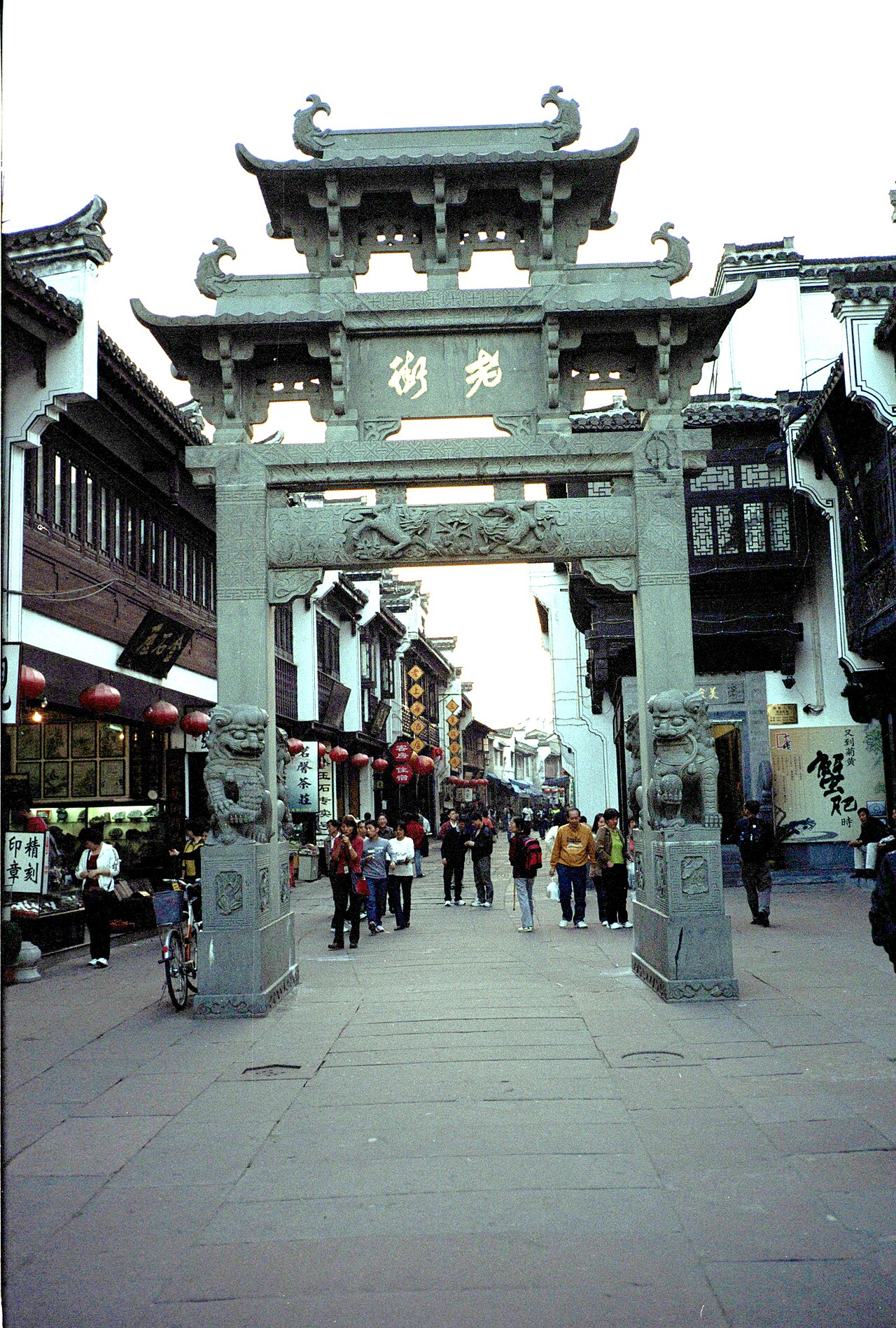
A shipping street, still trading
Tunxi grew where the Hengjiang, Shuaishui and Xin'an rivers meet, at the head of the boat route east toward Hangzhou. Goods from the Huizhou hills, tea, timber, ink and paper, were loaded here, and the old street was the trading lane behind the wharves. In the Ming and Qing it was the busiest commercial street in the region, and it has been compared to a moving version of the Song scroll Along the River During the Qingming Festival.
In 2009 it was named one of China's historic and cultural streets, in the same group as Guozijian Street in Beijing and Pingjiang Road in Suzhou.
How the street is laid out
The quarter is one long main street with three cross streets and eighteen alleys, in what China Daily calls a fishbone plan that narrows toward the west. More than three hundred Huizhou-style buildings line it, from different periods. The shopfronts have white walls, black tiles, horse-head gables and carved wooden fronts that fold away completely during the day, so the shop opens straight onto the flagstones.
At the western end, the Ming-dynasty Laojie Bridge, also called Zhenhai Bridge, crosses the Hengjiang. The riverbank by the bridge is the place to finish a walk, especially at dusk.
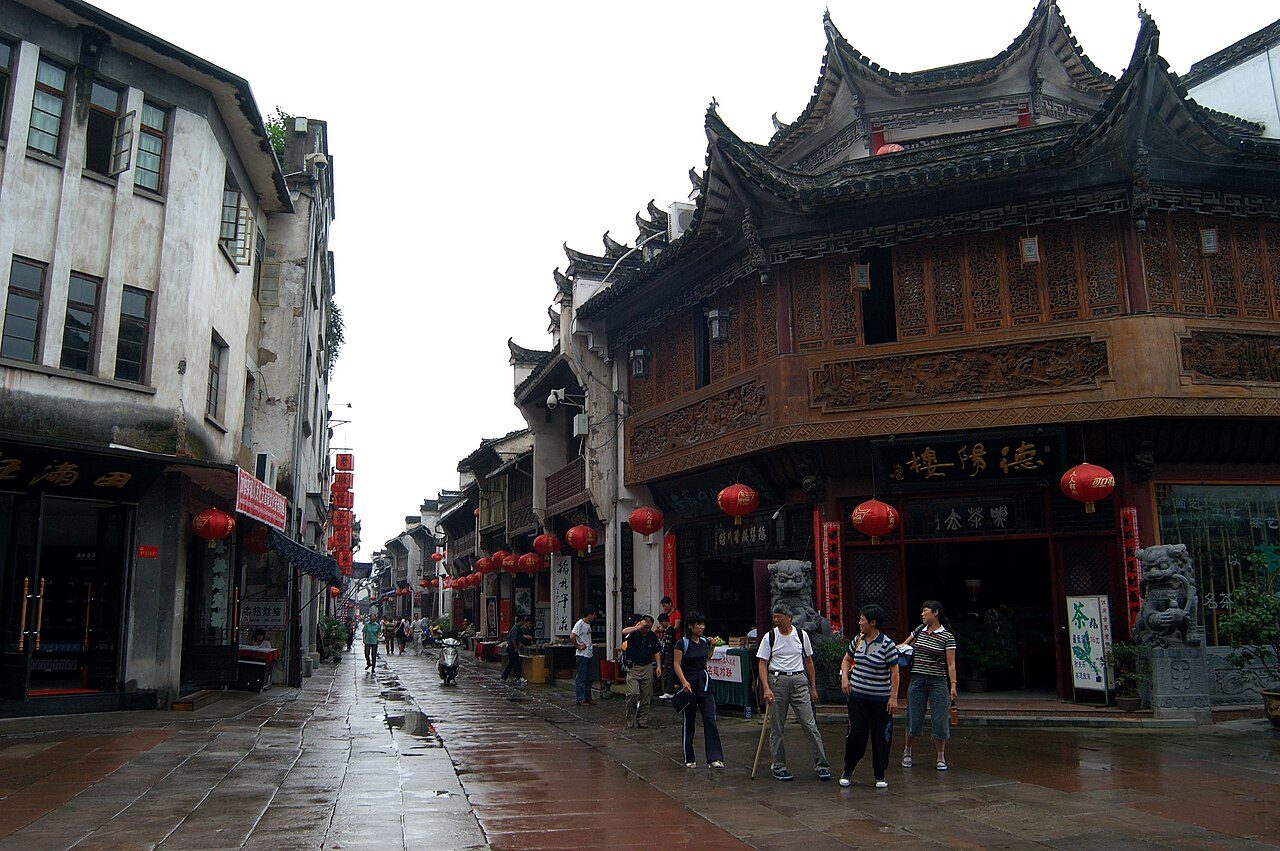
What to look for along the way
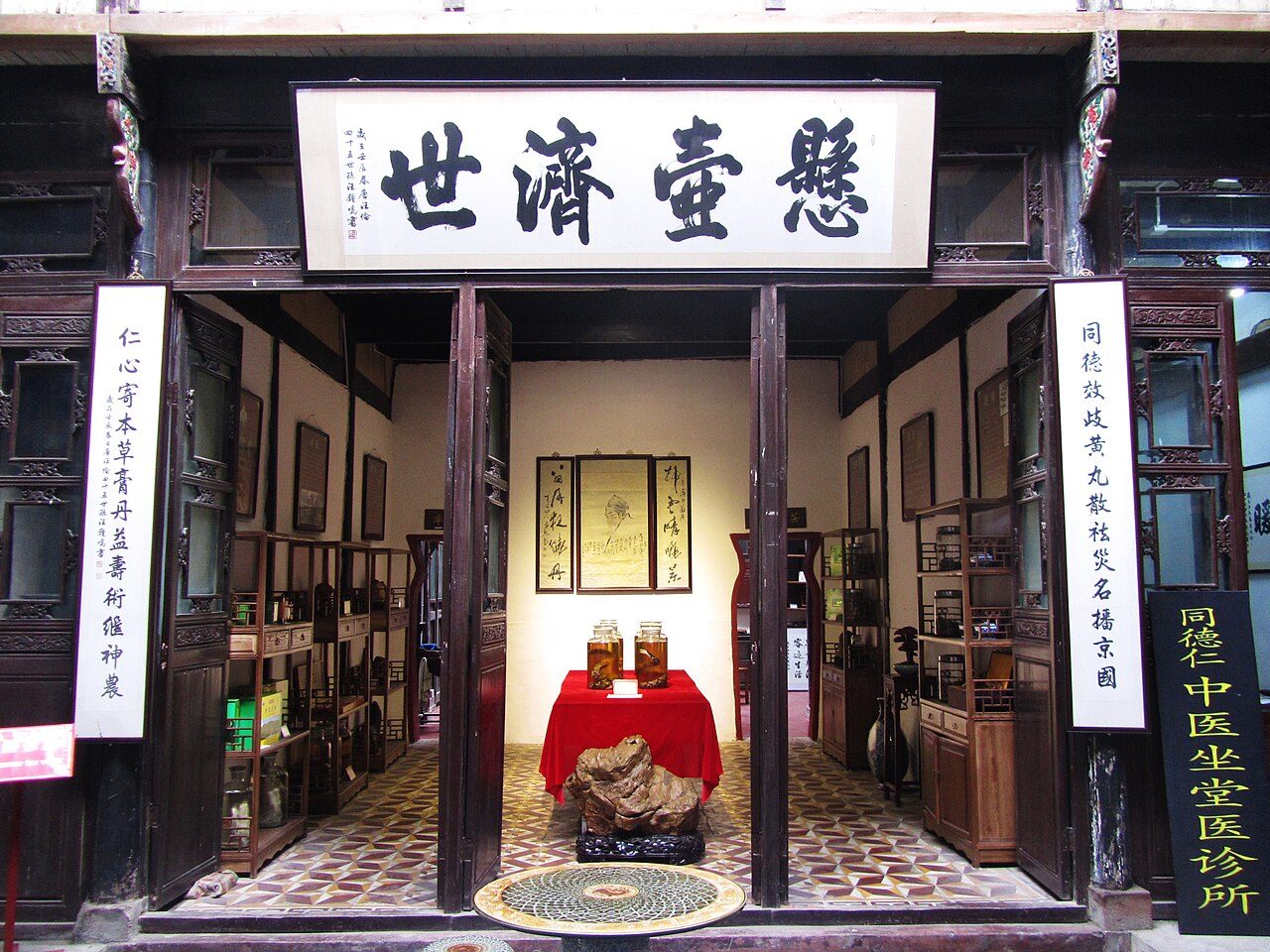
Tongde Ren, a traditional Chinese medicine shop founded in 1863, is a provincially protected building and still trades. The wooden counters and walls of old drawers are worth a look even if you buy nothing.
The Dai Zhen memorial hall remembers the Qing scholar from Huizhou, one of the great philologists of his age.
Wancui Lou, a small museum of Huizhou building components and furnishings, is a good primer before you see the real thing in Hongcun and Xidi.
Buying ink, tea and carvings
The street sells what Huizhou has always sold. Ink sticks and inkstones from the region are part of the scholar's "four treasures of the study" with brushes and paper, and you will find all four. Tea shops sell Huangshan Maofeng green tea and Keemun black tea, both grown nearby. Other stalls sell antiques, jade, calligraphy and carved wood of varying age and honesty.
A few rules of thumb:
- Taste before you buy tea, and ask the grade and harvest date. Maofeng from the early spring picking costs far more than later leaves.
- Treat "antique" claims with suspicion unless you know the field. Buy what you like at a price you are happy to pay for a new piece.
- Compare a few shops before buying ink or inkstones, which vary widely in quality.
- Ask for a receipt on anything expensive.
What to eat
Tunxi is the easiest place in the city to try Hui cuisine:
- Stinky mandarin fish (臭鳜鱼), lightly fermented before braising. Pungent when it arrives, savoury once you eat it.
- Hairy tofu (毛豆腐), tofu left to grow a coat of white mould, then pan-fried and served with chilli sauce. Stalls on the street sell it hot.
- Huangshan shaobing, small crisp pastries filled with preserved vegetables and pork, sold fresh from stalls and boxed as gifts.
For a full meal, a proper Hui cuisine restaurant on one of the side lanes is usually better than the busiest frontages on the main street. Order a small portion of the fish first if you are unsure.
When to go
The street is open all day, and most shops close around 22:00. Evening is when it looks best: lanterns lit, wooden fronts glowing, the riverbank cool. Mornings are quieter and better for photographs of the shopfronts before the goods are set out. Holiday evenings are crowded.
Staying in Tunxi
The old street is in central Tunxi, a short taxi ride from Huangshan Tunxi International Airport and the main bus station. Huangshan North high-speed station is farther out, so allow time for a taxi or bus. There are plenty of hotels within walking distance, which makes Tunxi a convenient base for day trips to Hongcun, Xidi and the Huizhou Ancient City in Shexian. For an early start on the mountain, Tangkou near the southern gate is closer.
Things to confirm before you go
- Opening hours of the museums and memorial halls, which differ from the shops.
- Your transfer time from Tunxi to Huangshan North station if you are catching a train.
- Prices and grades for tea and inkstones before you pay.
Frequently asked questions
Is Tunxi Old Street free?
Yes. There is no ticket for the street. Individual museums inside may charge.
How long do I need on Tunxi Old Street?
An hour end to end, two if you shop and eat.
Is it better at night?
Yes for atmosphere, when the lanterns are lit. Mornings are calmer for photographs.
Should I stay in Tunxi or near the mountain?
Tunxi suits a trip that includes the villages and Shexian. Tangkou is better for an early start on the mountain.
Sources
Facts in this article were checked against the following sources, retrieved 6 October 2026.
- 屯溪老街, Chinese Wikipedia
- Tunxi Old Street Historical and Cultural Block, China Daily
- Tunxi Old Street visitor notes, Top China Travel
Photos are from Wikimedia Commons under the licences shown in each caption.