Mount Huangshan: Tickets, Cable Cars and How to Plan the Climb
Mount Huangshan (黄山) is a long day on stone steps between granite peaks, with cable cars doing the big climbs. Public listings for 2026 put the entrance ticket at 190 yuan in the main season and 150 yuan in winter, valid for about three days, with each cable car charged separately one way (roughly 80 to 90 yuan) and a shuttle bus on top. Entry is by real-name timed reservation made in advance, and since a March 2026 notice the ticket checkpoints for walking routes close at 15:00, so start early. Most visitors go up by the Yungu cable car and down by Yuping, or the reverse, in one long day. Sleep on the summit only if you want sunrise. The mountain is day one in the Huangshan travel guide, before the villages of Hongcun and Xidi.
Tickets, booking and hours
From public listings and the scenic area's notices for 2026:
- Entrance ticket: 190 yuan in the main season, 150 yuan in the winter season. Several sources describe it as valid for three days after first entry, which suits a summit night.
- Cable cars, one way: about 80 yuan for Yungu and Taiping and 90 yuan for Yuping in the main season, a little less in winter.
- Shuttle bus: extra, between the gateway transfer centre and the lower cable-car stations.
- Booking: real-name, timed reservation in advance, with your ID or passport checked at the gate.
- Cut-off: a March 2026 notice adjusted opening, shuttle and cable-car hours and set walking-route ticket checkpoints to close at 15:00. Arriving after lunch can leave you with no way up.
Golden Week, May Day and the Spring Festival bring special hours and long cable-car queues. Season boundaries and discounts are re-announced each year, so check the day's notice on the official platform.
The three cable cars
The core walking area is the summit plateau, between the southern gate near Tangkou and the northern gate near Taiping. Three cable cars lift you onto it:
- Yungu, on the eastern side, rising to the area around Beginning-to-Believe Peak and the North Sea.
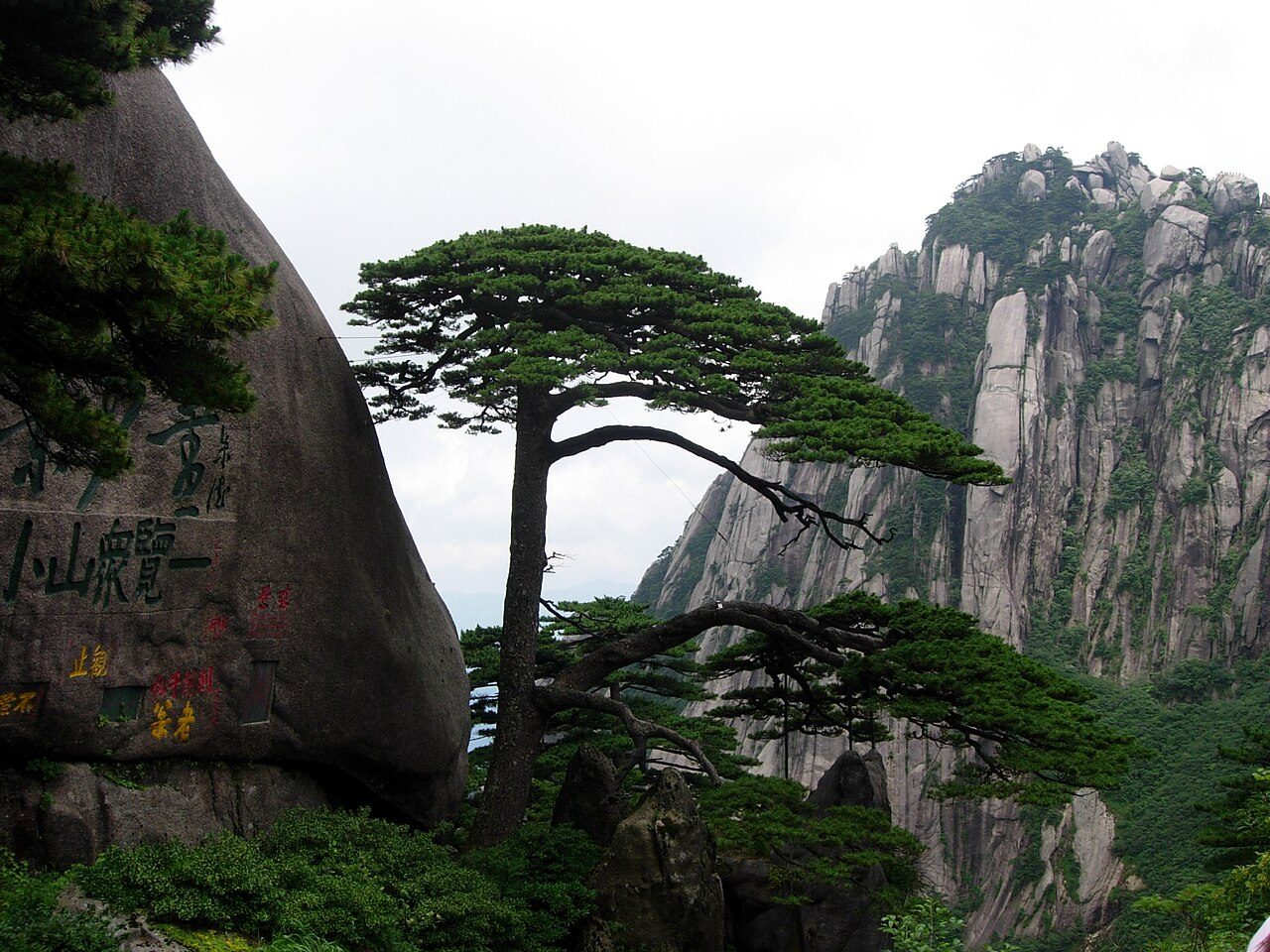
- Yuping, on the front of the mountain, arriving near the Welcoming Pine and Jade Screen.
- Taiping, from the north side, often quieter, useful if you are coming from or going toward Taiping.
Going up one and down another lets you cross the top without repeating ground. Queues are worst going up in the morning and coming down in the late afternoon, and on holidays they can stretch for hours. Some people walk up or down one of the stepped trails instead, which takes several hours and is hard on the knees.
A one-day loop
- Early start from Tangkou, shuttle bus to the Yungu cable car, and up.
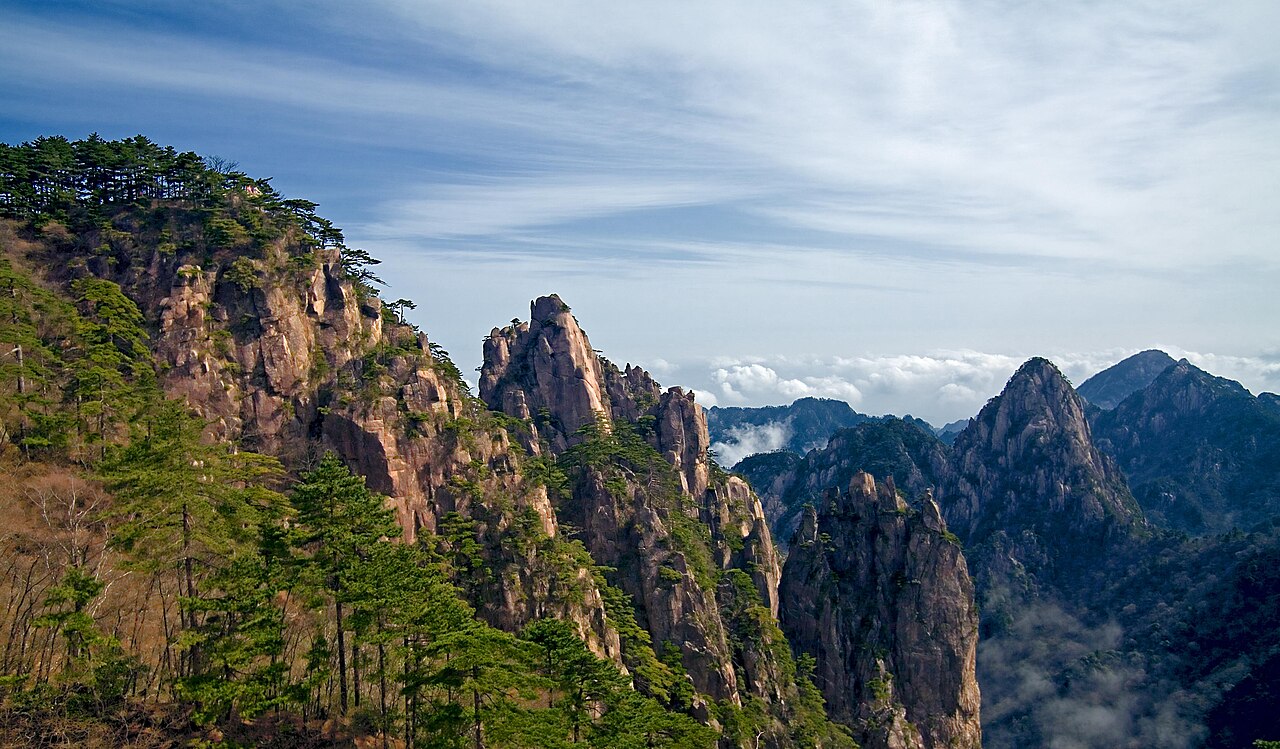
- Beginning-to-Believe Peak and the North Sea area, with the pine-studded views that make up most Huangshan photographs.
- Bright Summit (1,860 metres), the broad high point with views in every direction.
- Toward Jade Screen and Lotus Peak (1,864 metres), the highest summit, when its trail is open.
- The Welcoming Pine, below Yuping Peak.
- Down by the Yuping cable car, then the shuttle back to Tangkou.
Expect eight to ten hours from hotel to hotel, much of it on steps. Huangshan is known for its stone stairways, by some counts more than sixty thousand across the range, and the paths between viewpoints go up and down even after the cable car has done the main climb. Porters carry supplies for the summit hotels on shoulder poles up the same steps. Give them the inside line on narrow stairs.
Some areas close in rotation for ecological rest. The scenic area's 2026 notices list Celestial Capital Peak (Tiandu, 1,829 metres), the West Sea Grand Canyon and other spots as subject to separate opening dates. Check what is open before you build a route around them. The West Sea Grand Canyon has its own sightseeing rail when running.
The pines, the rocks and the name
Under the Qin the mountain was called Yishan, after its dark rock. In 747, the sixth year of the Tianbao reign, Emperor Xuanzong of Tang renamed it Huangshan, the Yellow Mountain, after the legend that the Yellow Emperor refined elixirs here. The Ming traveller Xu Xiake climbed it twice in the early seventeenth century, and a line attributed to him is still the stock compliment: after the Five Sacred Mountains you need not see other mountains, and after Huangshan you need not see the Five. Writers left more than twenty thousand poems about it between the Tang and the end of the Qing, and the Huangshan school of painting is named after it.
Its four traditional wonders are the pines, the granite rocks, the sea of clouds and the hot springs. The pines, Pinus hwangshanensis, grow straight out of cracks in bare rock, and the old ones have names. The Welcoming Pine below Yuping Peak is probably the most photographed tree in China, and the crowd around it forms early.
The prefecture-level city around the mountain took its name in 1987, when the old Tunxi city and the surrounding prefecture were renamed after the mountain. UNESCO inscribed Huangshan in 1990 for both culture and nature, and it joined the Global Geoparks Network in 2004.
When a summit night is worth it
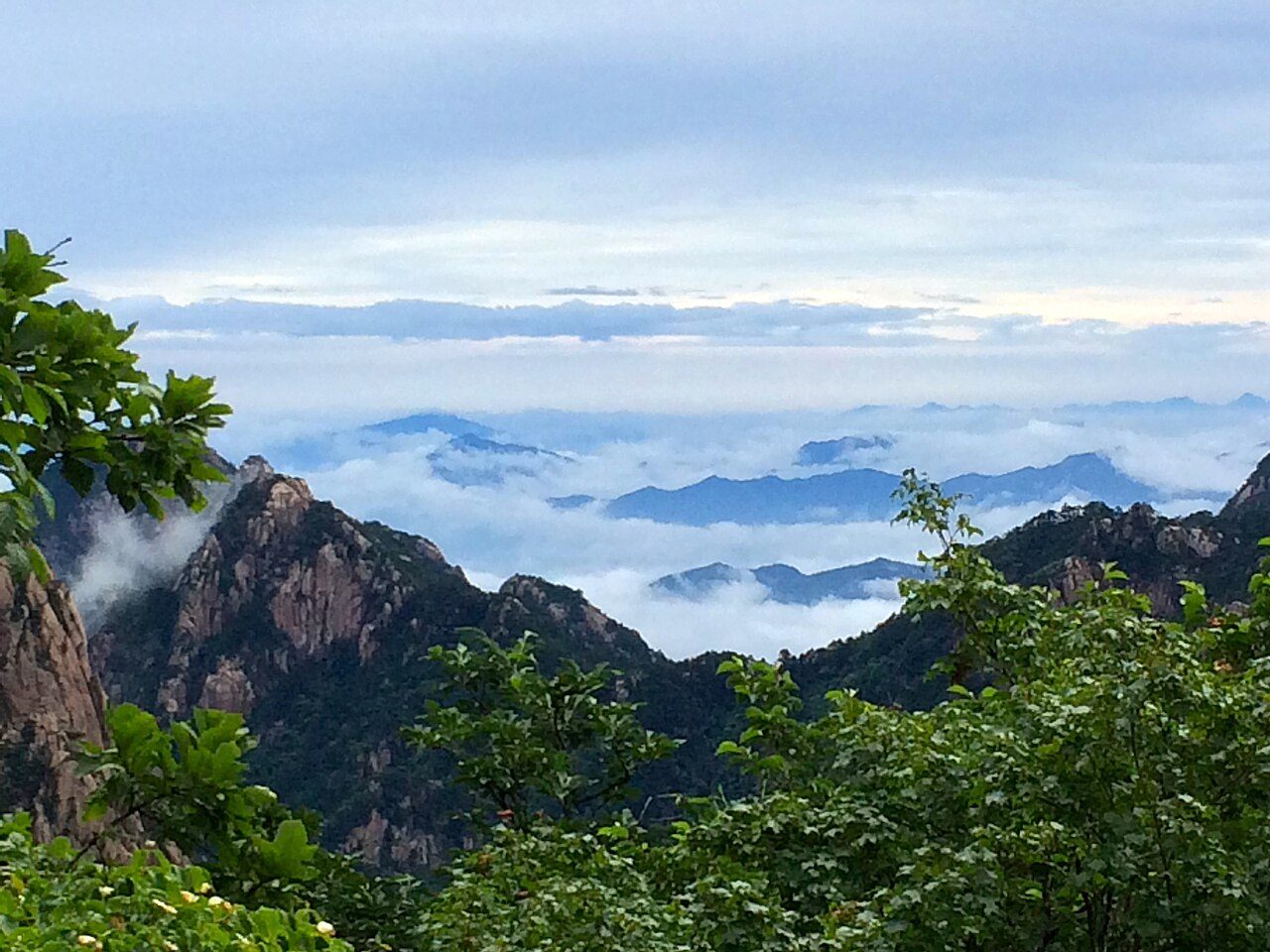
A night on top buys you sunrise and a second chance at the sea of clouds. The clouds form most reliably after rain and in the clear autumn weeks from September to November. A rare effect called Buddha's light, a rainbow ring around your shadow on the clouds, appears only a few times a month on average.
Summit hotels are few, priced high and booked out early in summer and on holidays. Book the room before anything else. Sunrise viewpoints get crowded well before dawn, so take a headlamp and a warm layer.
Getting there
High-speed trains reach Huangshan North station, about two hours from Hangzhou. Buses and the scenic-area transfer system continue to the Tangkou side, where shuttles climb to the lower cable-car stations. Many people sleep in Tangkou the night before so they can be at the gate early. If you stay in Tunxi, near Tunxi Old Street, allow for the transfer each way and check the first shuttle times.
Weather and safety
The mountain makes its own weather. Fog can close the views in minutes, and stone steps turn slick in rain and ice. A raincoat works better than an umbrella on exposed ridges. In winter the snow on the pines is beautiful and the paths are hazardous, so wear shoes with real grip. Carry water and snacks; summit prices are high because everything came up on someone's back.
Things to confirm before you go
- Your timed entry booking and the day's hours on the official platform.
- Which cable cars are running and the walking-route checkpoint time.
- Whether Tiandu Peak, the West Sea Grand Canyon or other areas are open or resting.
- A summit hotel booking if you want sunrise.
- The summit forecast, which is colder and wetter than Tunxi.
Frequently asked questions
Can you see Huangshan in one day?
Yes. Up one cable car and down another covers Bright Summit, the Welcoming Pine and several viewpoints in a long day. A summit night is only needed for sunrise or the farther areas.
How much is the Huangshan ticket?
Public 2026 listings give 190 yuan in the main season and 150 yuan in winter, with cable cars charged separately one way.
Which cable car is best?
Yungu and Yuping are on the southern side and suit a loop from Tangkou. Taiping on the north side is often quieter.
When is the best time to visit?
September to November for clear skies and good odds of cloud seas. Spring is also good. Summer is cool on top and crowded; winter brings snow, rime and icy steps.
Sources
Facts in this article were checked against the following sources, retrieved 6 October 2026.
- Huangshan, English Wikipedia
- 黄山, Chinese Wikipedia
- Huangshan Scenic Area Administrative Committee, ticket notices
- Mount Huangshan ticket, Baidu Baike English
- UNESCO World Heritage Centre, Mount Huangshan
Photos are from Wikimedia Commons under the licences shown in each caption.