How the Striped Hills of Zhangye Rainbow Danxia Are Visited
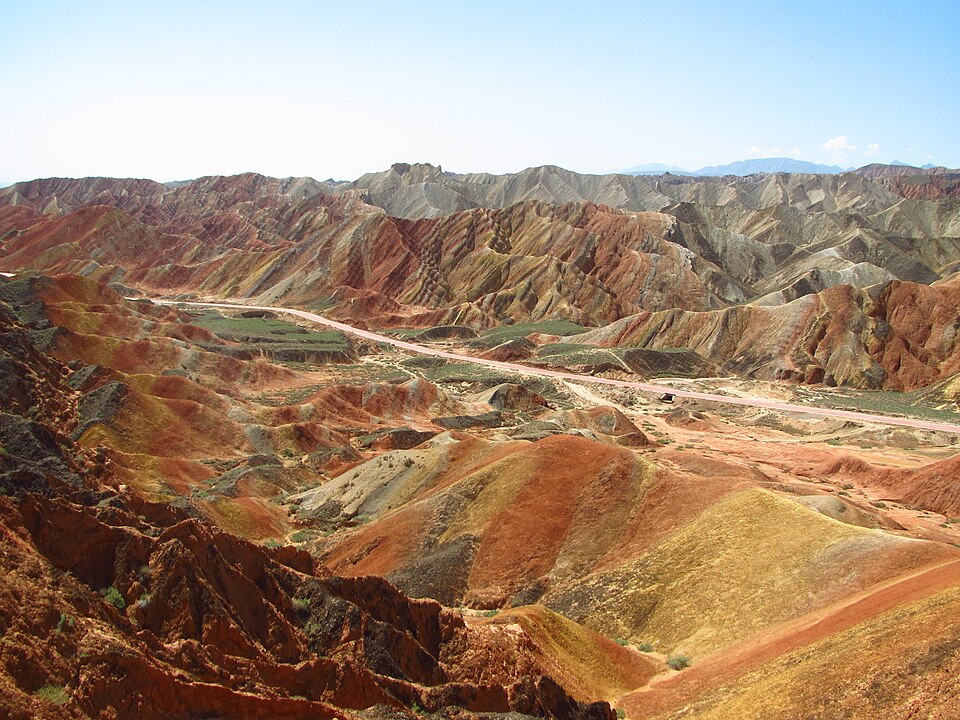
The striped hills most people call the Zhangye Rainbow Mountains sit inside the Zhangye National Geopark, about 30 kilometres west of downtown Zhangye and 20 kilometres south of the Linze county seat. The developed core is the Qicai (Colorful) Danxia scenic area. It is the part on the postcards, the part with boardwalks and shuttle buses, and the reason most travellers stop in Zhangye at all. Everything about a good visit comes down to arriving with enough light left and knowing that the park moves you between viewpoints by bus.
What the park is
The geopark covers about 322 square kilometres across Linze and Sunan counties, on the northern foothills of the Qilian Mountains. It became a provisional national geopark in April 2012 and was formally named Zhangye National Geopark in June 2016 after inspection by the Ministry of Land and Resources. UNESCO's geopark council endorsed it in 2019, and the Executive Board approved its Global Geopark status in July 2020. The Qicai scenic area was raised to national 5A rating in January 2020.
The name took a while to arrive. Chinese sources credit the Lanzhou Evening News with the first report on "Zhangye Danxia" in August 2003. In 2005 reporters from 34 media outlets voted it among the most beautiful Danxia areas in China, and in 2009 Chinese National Geography put it on its list of the six most striking landforms in the country. Tourism followed, and with it the boardwalks and roads you use today.
Why the hills are striped
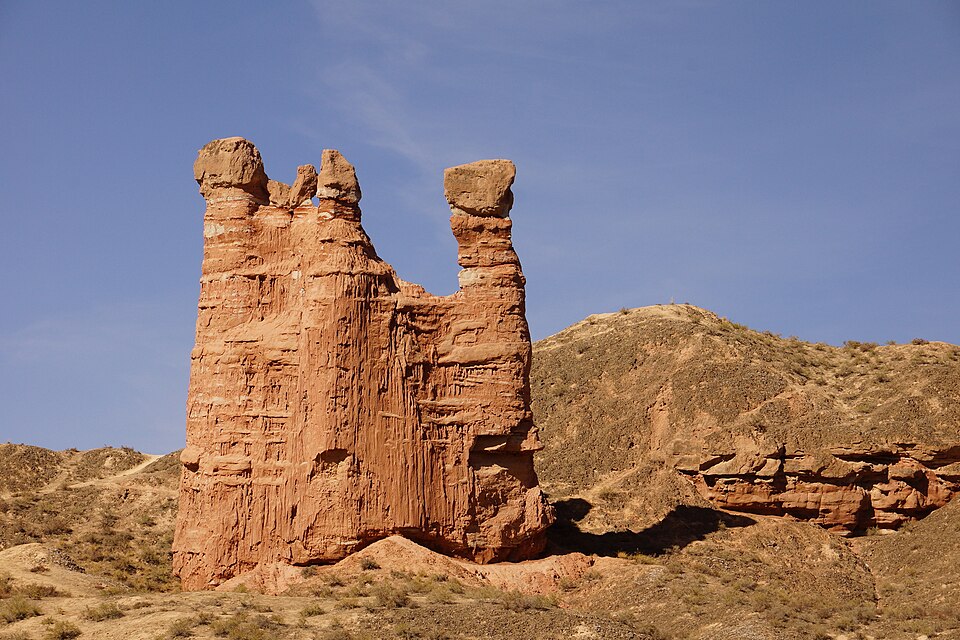
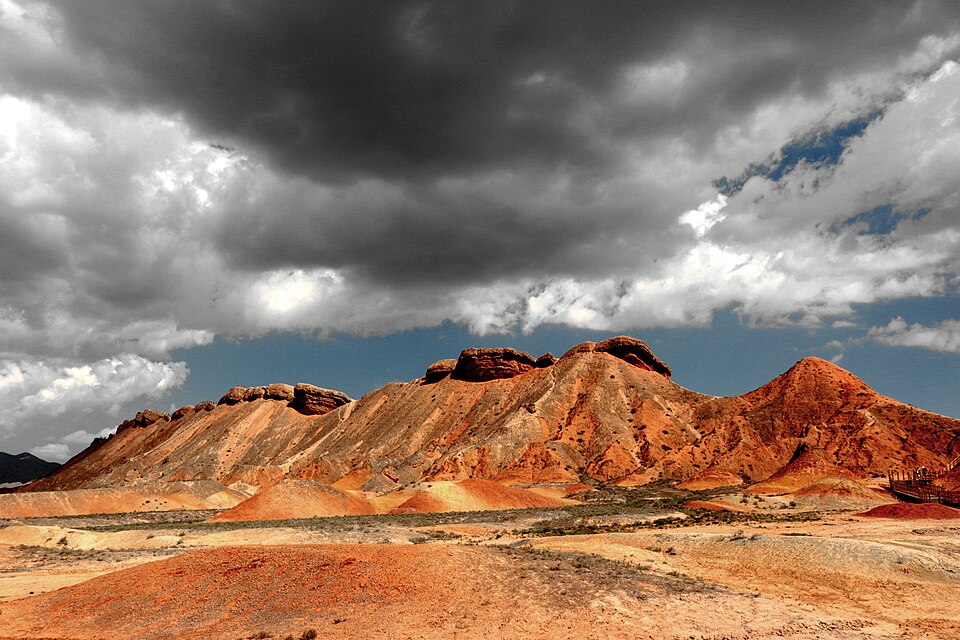
Chinese geological descriptions treat Zhangye as a mix of two landforms. On the Sunan side, around Hongshanwan and Baiyin, you find steep cliffs and red walls with vertical joints, the classic Danxia profile with flat tops and sheer sides. On the Linze side, where the Qicai platforms are, the ground is mostly low rolling hills of weakly cemented siltstone and mudstone in red, yellow, green and white bands. Strictly speaking those are "colourful hills" more than Danxia, and Chinese sources describe the park as a rare place where the two sit together. The red beds are usually dated to the Cretaceous. Tectonic uplift tilted the layers, and wind and rain cut the ridges you see.
This matters for expectations. The colour sits in bands across gentle ridges, so it reads best when low sun throws side light across the folds. At noon the same hills look pale and flat.
How a visit works
Inside the Qicai area you do not walk between viewpoints. Sightseeing buses run a loop between the platforms, and current visitor guides describe the bus as part of the standard entry arrangement. The four main stops usually listed are Qicai Xianyuan (Colorful Fairyland), Qicai Yunhai (Sea of Clouds), Qicai Jinxiu (Splendour) and Qicai Hongxia (Rainbow Glow). The order depends on which gate you enter. Guides that use the north gate run Xianyuan first and Hongxia last, while west-gate routes start at Yunhai.
Hongxia is the platform people usually mean when they say "Platform 4". The Gansu tourism department's own one-day route in 2025 sent visitors there for sunset. Yunhai is the common pick for sunrise. Platform numbering and bus order have changed over the years, so take the map at the gate as the authority and ask staff which stop gives the widest view before closing.
Stay on boardwalks and marked decks. The colour layers are soft rock, and footprints scar them for years. Rangers enforce closures, and drones need whatever permission the park currently requires.
Timing and light
Plan the day backward from sunset or forward from sunrise. Arrive with enough time to ride to two or three platforms before the light gets good, then hold your spot. Sunrise works if you sleep near the gate. Sunset suits travellers coming from town or off a train the same day. Opening hours shift by season, and Baidu's listing for the winter of 2024 to 2025 showed a shorter day than summer, so check the day's notice for opening, last entry and last bus.
May to October is the main season. Summer evenings are long and the exposed paths get hot in the afternoon. Spring and autumn are cooler, with cold evenings that need a jacket. Visitor accounts often say colours look most saturated after rain, when dust has settled. A dust storm does the opposite, so watch the forecast and keep a spare evening if you can.
Tickets and getting there
Ticket prices for the scenic area were adjusted under a 2025 municipal decision, which makes older blog totals unreliable. This page does not quote yuan amounts. Buy through the official channel, check whether the shuttle is bundled, and carry the ID you booked with.
Scheduled buses run from Zhangye city to the scenic area, and taxis and hired cars are common. The harder part is coming back after sunset, when public buses may have finished. Arrange the return ride before you go in. The Danxiakou tourism town near the gate runs evening shows and has food, which helps if you are waiting for a driver.
Colorful Danxia or Binggou
Binggou, on the north bank of the Liyuan River, opened as a separate scenic area on 3 August 2014 at elevations between 1,500 and 2,500 metres. Its rock forms are taller and more sculpted, closer to the cliff-and-tower Danxia of the Sunan side. It needs its own transfer and works best in morning light. For a first visit with one evening, Qicai is the one to keep. Binggou suits a second nature day.
Pairing with the rest of Zhangye
The Giant Buddha Temple in the city centre makes the natural morning before an evening at the Danxia. It is compact, indoors and close to restaurants. Leave the temple for the following morning if a late return from the park leaves you tired. Rail links continue west to Dunhuang and east to Lanzhou, so many travellers spend one night here between the two.
Things to confirm before you go
- Opening hours, last entry and the last shuttle for the day.
- Which gate your ticket is tied to and the bus order from that gate.
- Whether the shuttle is included in the price you see.
- Your ride back to town after sunset.
- Wind and dust forecasts, plus a warm layer for the evening.
Frequently asked questions
Can you walk between the viewing platforms?
Inside the Qicai area the platforms are linked by the park's sightseeing buses. You walk on the boardwalks at each stop.
Sunrise or sunset?
Both work. Sunset is easier if you stay in town, sunrise if you sleep near the gate. Midday is the weak slot for colour.
How long do you need?
Plan on two and a half to four hours for a relaxed loop with time to wait for the light.
Is it the same as Binggou?
No. Binggou is a separate scenic area in the same geopark with taller sculpted forms and its own entrance.
Sources
Facts in this article were checked against the following sources, retrieved 10 October 2026.
- Zhangye National Geopark, English Wikipedia
- 甘肃张掖国家地质公园, Chinese Wikipedia
- Zhangye Colorful Danxia Scenic Spot, Baidu Baike English
- Gansu Department of Culture and Tourism one-day Zhangye route, April 2025
Photos are from Wikimedia Commons under the licences shown in each caption.