Rishengchang Exchange House: China's First Draft Bank
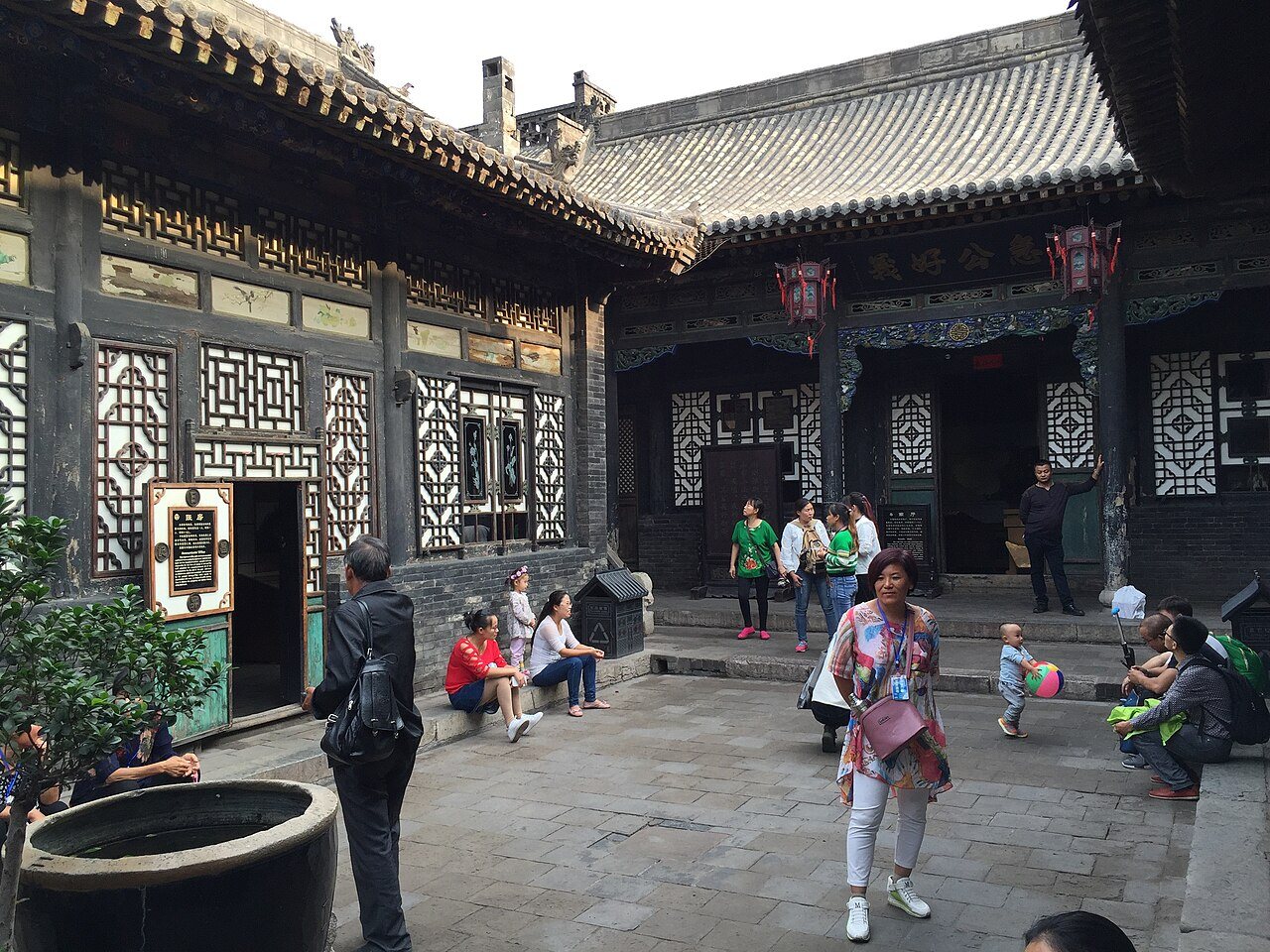
Rishengchang stands on West Street inside the walls of Pingyao Ancient City. It is usually described as the first piaohao, or draft bank, in China, a firm that moved money between cities on paper instead of in carts of silver. The courtyard compound, about 2,324 square metres, now houses the China Piaohao Museum and is one of the 22 sites on the Pingyao through ticket. The name means roughly the rising sun and prosperity. It was listed as a national heritage site in 2006, and it is the place in Jinzhong that explains why a small county town had so many grand houses.
From dye shop to bank
The business began as the Xiyucheng dye shop, owned by the Li family of Dapu village near Pingyao, with outlets on Pingyao's West Street and outside Chongwen Gate in Beijing. Its manager in the late Jiaqing years was Lei Lütai. Banditry and rebellion made shipping silver between the branches dangerous and expensive, since every load needed an armed escort company. Lei started settling accounts between the shop's own branches with written drafts, and other merchants soon asked to use the service.
At some point the Li family dropped dyes and reorganised the firm as a remittance house. The usual founding date is 1823, but it is not certain. English Wikipedia notes that scholars have proposed 1797 and 1824. Chinese Wikipedia works from two stone tablets in the Pingyao dye guild hall in Beijing; the dye shop appears as the largest donor on one from 1819 and is missing from one of 1838, so the change happened between those years. The same article gives the starting capital as 300,000 taels from the owner Li Daquan and 20,000 from Lei.
How the drafts were protected
A draft was only useful if the branch paying it could tell a real one from a forgery. English Wikipedia says the firm used watermarked paper, seals on key points of each draft, and handwriting samples from the issuing clerk sent ahead to the branches. The amounts and dates were also encoded.
The museum shows the key. On its face it is a 56-character rhyme about honesty and cheats. Chinese Wikipedia explains that one twelve-character line stands for the months, a thirty-character passage for the days of the month, ten characters for the digits and four more for ten thousand, thousand, hundred and one tael. A draft for 3,000 taels sent on the tenth day of the sixth month could be marked with five characters that look like an ordinary phrase. The code was changed regularly.
Peak and collapse
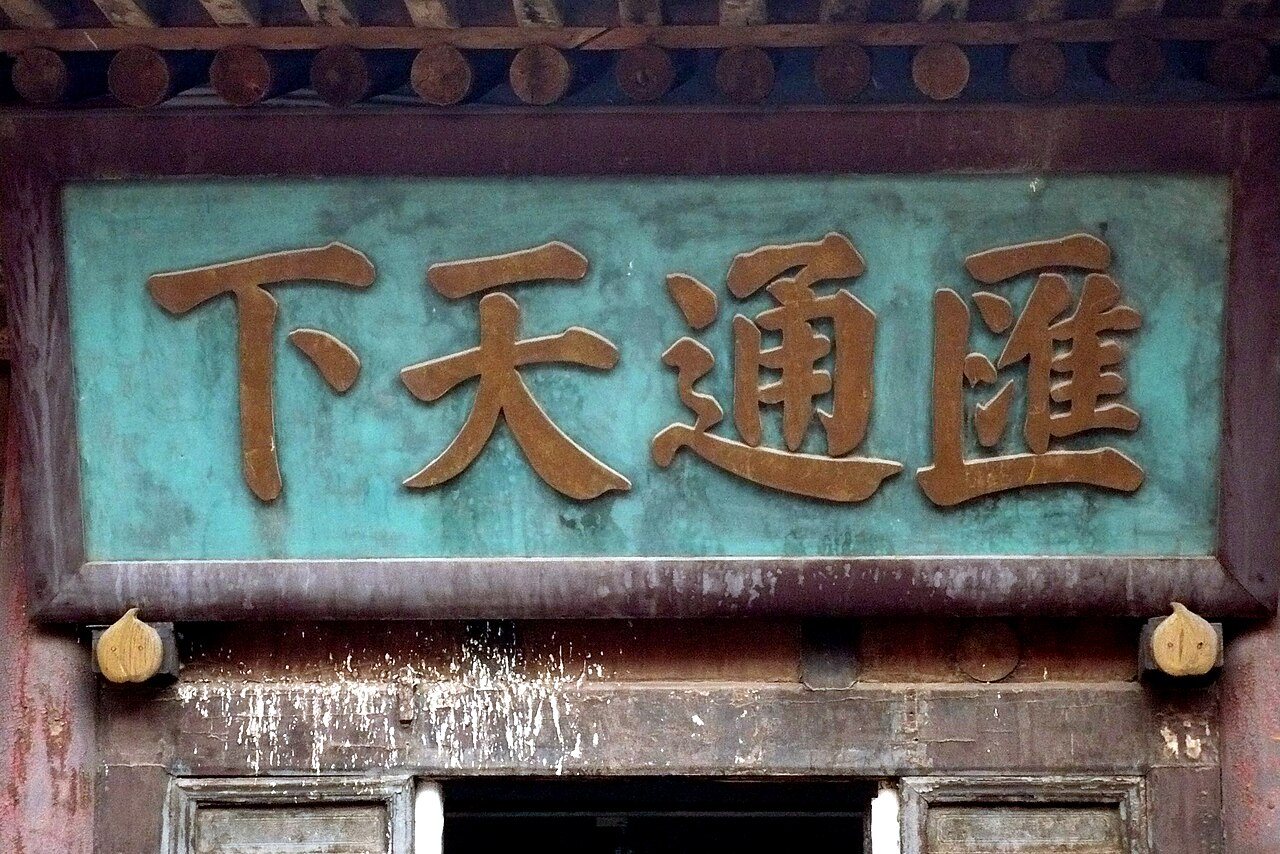
Rishengchang grew quickly. Chinese accounts list branches in Hankou, Tianjin, Jinan, Xi'an, Chengdu, Chongqing, Guangzhou, Suzhou, Shanghai, Nanjing and many other cities. Imitators followed in Pingyao and the neighbouring counties of Qi, Taigu and Yuci; English Wikipedia counts 32 piaohao with 475 branches by the end of the nineteenth century, owned mostly by Shanxi merchants. The banks moved tax revenue for provinces cut off from Beijing during the Taiping war and arranged government loans. Chinese Wikipedia records that in 1900, when the Empress Dowager Cixi fled Beijing, her expenses on the road were remitted through Rishengchang.
Management followed a strict model. The owner put up capital and appointed a chief manager who ran the business, managers rose from apprenticeship, and the owner's close relatives were barred from posts. Lei Lütai died at his desk in 1849 and was succeeded by Cheng Qingpan.
The fall came with the end of the dynasty. After the 1911 revolution loans to officials and provinces could not be recovered, and Chinese Wikipedia puts losses in Sichuan, Shaanxi and elsewhere above three million taels. In 1914 a guarantee given by the Beijing branch went bad, creditors sued, and the head office and the Beijing branch were sealed. The bank reopened in 1922 with creditor approval and finally closed in 1932.
Visiting
The museum fills the old offices around the courtyards: counters, the manager's rooms, letter rooms, the treasury and displays on the piaohao system and the code. Labels are mostly Chinese, so a guide or an audio set helps; local reports mention audio guide rental in the town. Allow one to two hours. Next door, the Xietongqing draft bank and its underground vault appear on local lists of through-ticket sites, and travel reports describe it as quieter.
The through ticket is listed at 125 yuan, valid three days, covering Rishengchang and the other 21 sites. Hours follow the town's sites, roughly 08:00 to 18:00 with seasonal changes and last entry 15 minutes before closing. Check the day's notice. Early morning is the calmest time to go.
Things to confirm before you go
- That your through ticket is still within its three-day validity.
- Opening hours for the season.
- Guide or audio rental if you do not read Chinese.
Frequently asked questions
Is Rishengchang worth visiting?
Yes, if you want to understand Pingyao. It explains where the town's money came from and how the Shanxi banks worked.
Do I need a separate ticket?
No. It is one of the 22 sites on the Pingyao through ticket.
How long does it take?
One to two hours, more with a guide.
When was Rishengchang founded?
Around 1823 by the usual account, though the exact year is disputed and Chinese sources place the change from dye shop to bank between 1819 and 1838.
Sources
Facts in this article were checked against the following sources, retrieved 7 October 2026.
- Rishengchang, English Wikipedia
- 日昇昌, Chinese Wikipedia
- Pingyao, English Wikipedia
- Pingyao through ticket and hours, Taiyuan Bendibao
- Pingyao three-day through ticket notes, Qunar
Photos are from Wikimedia Commons under the licences shown in each caption.