Jiuquan Travel Guide: The Wine Spring City on the Hexi Corridor
Jiuquan is a mid-sized oasis city in western Gansu with a famous name and a confusing map. The prefecture of the same name is enormous, more than 600 km across, and includes Dunhuang and the Mogao Caves, but those are a long way west. Jiuquan city itself is a good one-night stop: walk the park around the spring that gave the city its name, see the drum tower, eat well, and use it as a base for the Ming fort at Jiayuguan, 20 km away. The satellite launch centre that carries the city's name is in fact over 100 km away in Inner Mongolia.
The wine spring
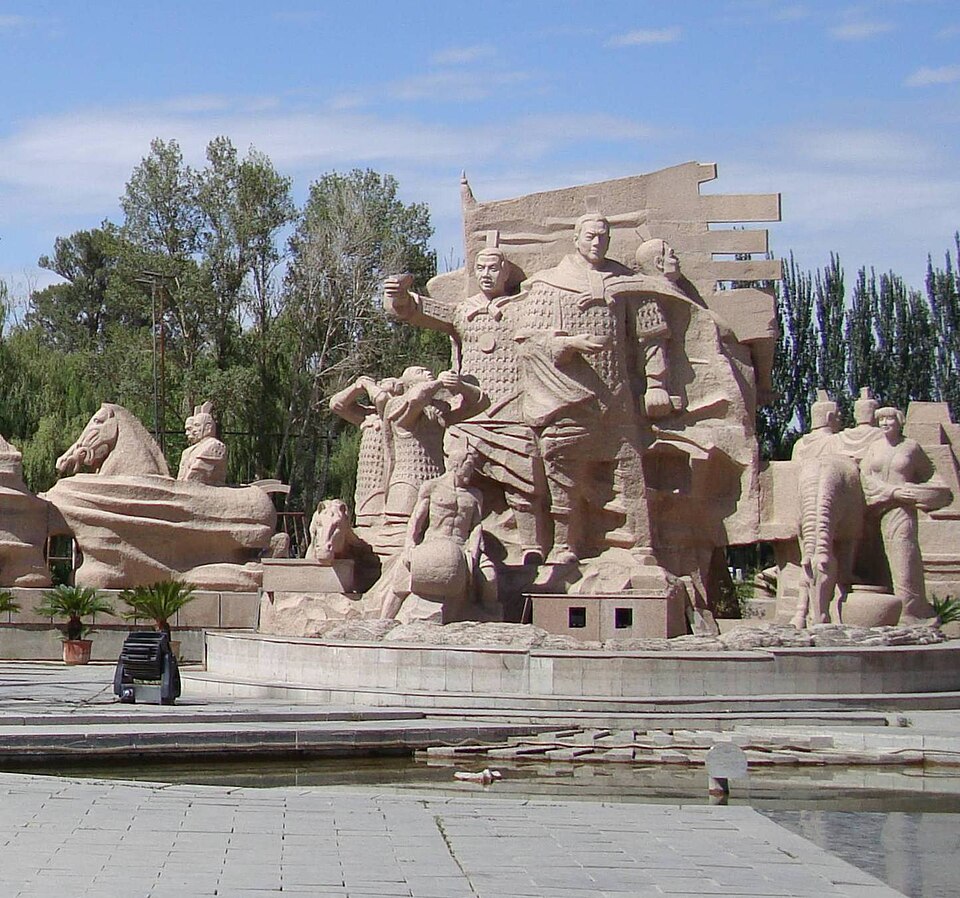
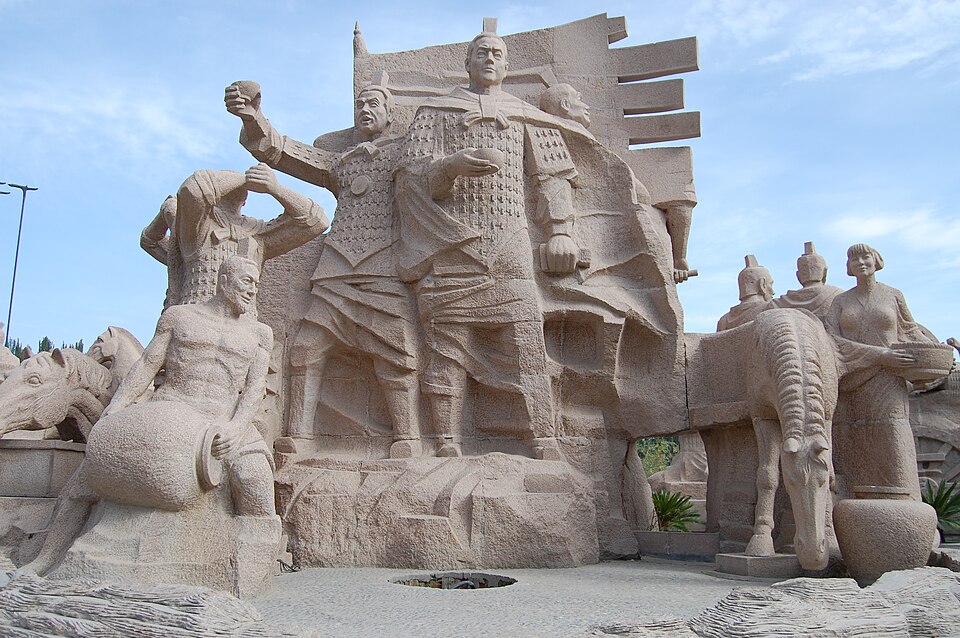
Jiuquan means "wine spring". The story, told by every guide in town, is that in the 2nd century BC the young Han general Huo Qubing, after beating the Xiongnu, was sent a jar of wine by the emperor. There wasn't enough for his army, so he poured it into a spring and let all his soldiers drink from it. The town was founded as a Silk Road outpost in 111 BC, and over the centuries it passed through Tibetan, Uyghur and Western Xia hands before the Ming. Its old name, Suzhou, still turns up in older travel books; the Portuguese Jesuit Bento de Góis died here in 1607 at the end of the journey that proved Cathay and China were the same country.
Jiuquan Park
The spring sits in a park on the east side of town, now called the Western Han Jiuquan Historic Site. It's a pleasant garden of lakes, willows, pavilions and a carved spring basin, popular with families at weekends. An hour or two is enough. Go in the morning or late afternoon; midday sun is strong at around 1,500 metres. Check whether a ticket is charged at the gate; this page doesn't quote prices.
The city centre
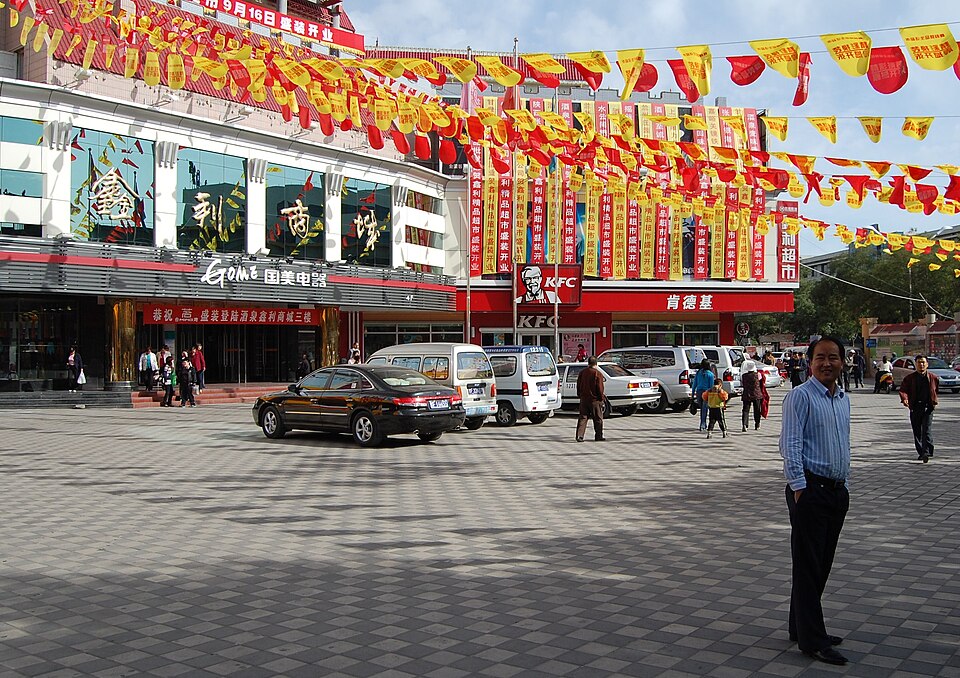
The old drum tower stands at the central crossroads, with inscriptions on its four arches pointing to the corridor's distant destinations. The streets around it have the city's main food and shopping. The city is also known in China as the first place rhubarb was cultivated.
Day trips from Jiuquan
Jiayuguan
The Ming fortress at Jiayu Pass, the western end of the Ming Great Wall, is only about 20 km west and makes an easy half-day. Between the two cities lie the Wei-Jin tombs with painted bricks of daily life. The Jiayuguan guide has the details, including the Overhanging Great Wall and the First Beacon.
Dunhuang and the Mogao Caves
Dunhuang is a county-level city within Jiuquan prefecture but a long journey from Jiuquan city. Mogao's limited, timed tickets need advance booking, and the caves, the dunes and the passes need two or three days. Don't try to fit them into a day from here; move your base to Dunhuang. See the Dunhuang guide and the Mogao Caves page.
The launch centre
The Jiuquan Satellite Launch Center, built in 1958, sent China's first astronaut, Yang Liwei, into orbit on Shenzhou 5 on 15 October 2003. It is in Inner Mongolia, more than 100 km from the city, inside a restricted military area. Visits only happen through approved tour operators with ID checks arranged well in advance, and they can be suspended around launches. Don't count on one unless it is booked.
When to come to Jiuquan
May to October. The climate is cold desert: January averages about −9 °C, July about 22 °C, and it gets more than 3,000 hours of sunshine a year. Days and nights differ by around 14 °C on average, so carry a layer even in summer. Spring winds can bring dust.
Getting in and where to stay
- High-speed rail: Jiuquan South is on the Lanzhou–Xinjiang high-speed line, with trains east to Zhangye and Lanzhou and west towards Xinjiang.
- Conventional rail: Jiuquan station is on the old Lanzhou–Xinjiang railway; a branch line off it reaches Dunhuang.
- Air: Jiayuguan Jiuquan Airport, between the two cities, has domestic flights. Dunhuang has its own airport.
Stay near the drum tower for food and walking. Jiuquan and Jiayuguan are close enough that you can base yourself in either for both.
Eating in Jiuquan
This is noodle and lamb country. Breakfast is beef noodles in clear broth; later, look for hand-pulled noodles, grilled lamb skewers, and saozi noodles with a sour, spicy topping. The night market streets near the centre are the liveliest places in the evening. Prices are low and usually posted. Drink more water than you think; the air is very dry.
How to arrange the route
One night: Arrive at Jiuquan South, Jiuquan Park in the late afternoon, dinner near the drum tower. Next morning to Jiayu Pass, then a train on to Dunhuang.
Two days: Add the Wei-Jin tombs and a slower morning in the park, or use the second day as a buffer before a booked Mogao slot.
What to cut if short on time
Keep the park and a good dinner. Skip the launch centre unless it is already arranged. If you're only passing through, Jiayuguan's fort is the bigger sight of the two cities.
Things to confirm before you go
- Whether your ticket names Jiuquan, Jiuquan South or Jiayuguan South.
- Mogao booking if Dunhuang is next.
- Any launch-centre tour paperwork, months ahead.
- Wind and dust forecasts in spring.
Frequently asked questions
Can I visit the Mogao Caves from Jiuquan in a day?
It isn't practical. Dunhuang is a long way west and Mogao entry is timed and limited, so stay in Dunhuang instead.
Is the launch centre in Jiuquan?
No. The Jiuquan Satellite Launch Center is in Inner Mongolia, more than 100 km away, and is only open to pre-arranged tours.
Jiuquan or Jiayuguan as a base?
Either. They are about 20 km apart. Jiayuguan is closer to the fort; Jiuquan has the livelier centre.
Sources
The facts in this article were checked against the following sources, retrieved September 18, 2026, and rechecked on October 18, 2026.
- Jiuquan https://en.wikipedia.org/wiki/Jiuquan
- Hexi Corridor https://en.wikipedia.org/wiki/Hexi_Corridor
- Jiuquan (Chinese) https://zh.wikipedia.org/wiki/酒泉市
- Jiuquan Satellite Launch Center https://en.wikipedia.org/wiki/Jiuquan_Satellite_Launch_Center
- Dunhuang https://en.wikipedia.org/wiki/Dunhuang
Scenic tickets change; this article does not quote yuan amounts.
All photos are from Wikimedia Commons, used under CC licenses or public domain; re-use requires attribution where applicable.
- jiuquan-park.jpg from File:Jiuquan Park.jpg, by GwydionM, public domain
- jiuquan-park-2.jpg from File:Jiuquan-09.JPG, by Sigismund von Dobschütz, CC BY-SA 3.0
- jiuquan-park-3.jpg from File:Jiuquan-03.JPG, by Sigismund von Dobschütz, CC BY-SA 3.0