Apak Hoja Tomb: Tiles, Domes and a Half-Day Outside the Core
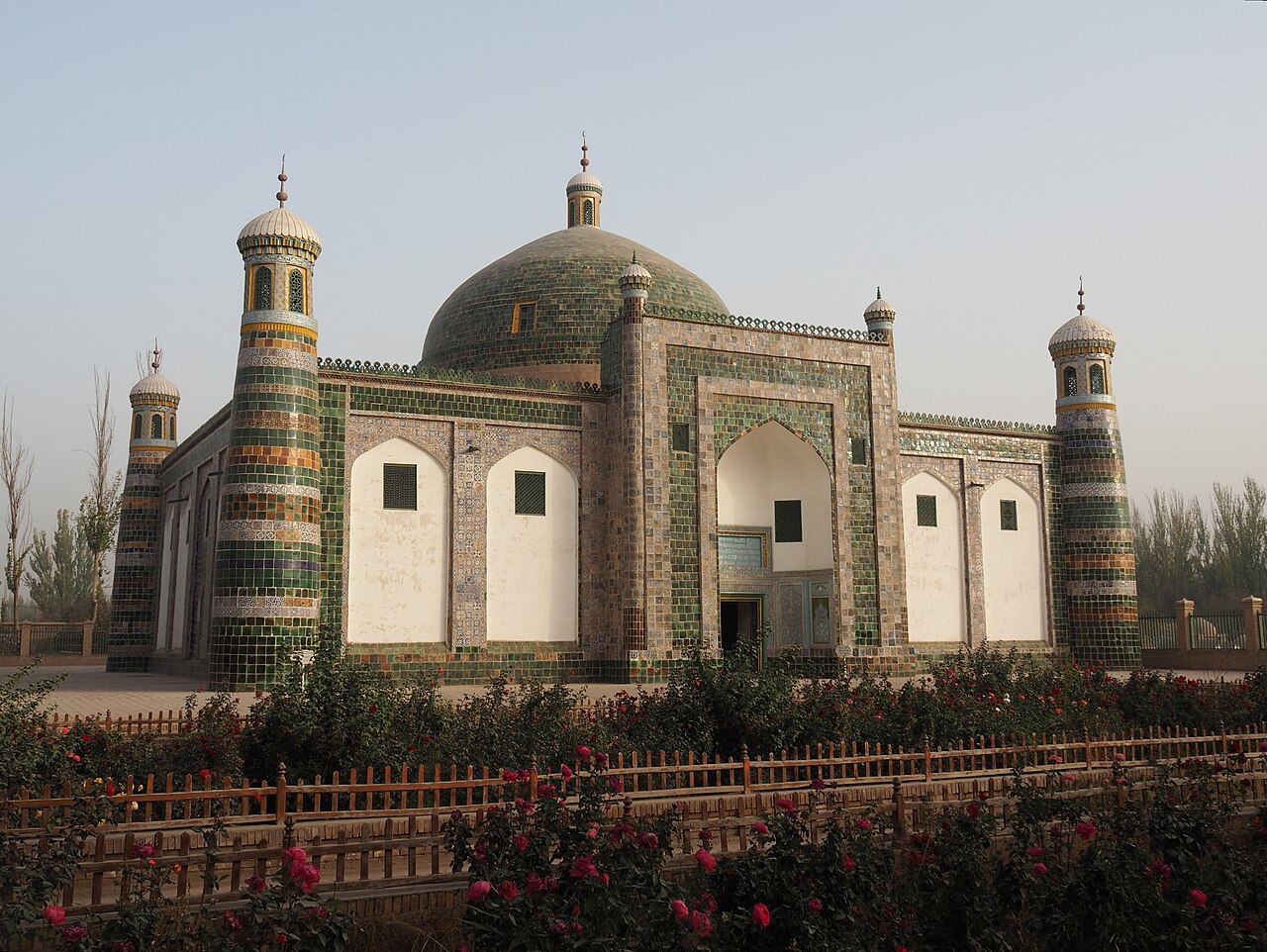
The Apak Hoja (Afaq Khoja / Abakh Hoja) Mausoleum, often marketed as Xiangfei Garden, sits a few kilometres outside Kashgar’s tight Old City walking core. It is Xinjiang’s best-known Islamic tomb garden: glazed-tile domes, courtyard walls and a surrounding cemetery landscape. Add it when you have a fourth half-day; cut it first on a two-day plan that must protect Old City lanes, Id Kah and, if dates align, the Sunday bazaar. The city overview is in the Kashgar guide.
History without the tourist script
Afaq Khoja was a seventeenth-century Naqshbandi religious and political figure in the region; the mausoleum grew as a family burial complex and later a pilgrimage and tourism site. Chinese marketing often links the garden to the “Fragrant Concubine” (Xiangfei) legend of a Kashgar woman in the Qing court. Historians treat the identification as contested folklore layered on a real tomb landscape. Come for tilework and garden scale; treat the romance narrative as colour, not proven biography.
How to visit
Give it sixty to ninety minutes for courtyards, exterior tile close-ups and a cemetery-edge walk. Mid-afternoon light on glazed surfaces photographs well; midday glare is harsh. Some packages bundle a folk performance; buy only if dance or wedding-custom shows interest you. Modest dress is appropriate in a religious burial complex even when the site is ticketed as a garden.
Taxis from the Old City / Id Kah area cover the short hop. Confirm return pickup if you are not comfortable hailing on-site. Combining Apak Hoja with a full Pamir day is usually too much; combining it with a relaxed Old City afternoon works.
Tickets and hours
It is a paid scenic stop. Recent local tourism tables list daytime opening into early evening in peak season, with last-ticket cutoffs before closing. Adult prices and performance combo tickets appear on official and OTA boards; discounts for students and seniors are common under local rules. Verify the day’s notice before you budget. This page does not invent yuan amounts.
When to cut it
Cut Apak Hoja if you have only one or two full days, if Sunday livestock takes your only free morning, or if heat already limits outdoor walking. Keep Old City and Id Kah as the minimum honest Kashgar. Reinstate the tomb when a third or fourth half-day opens and you want Islamic architecture beyond the mosque facade.
Things to confirm before you go
- Ticket price and whether a performance combo is separate.
- Opening hours and last entry on your date.
- Taxi timing from your hotel.
- Dress and photography rules inside courtyards.
Frequently asked questions
Is Xiangfei buried here?
The site is popularly tied to the Fragrant Concubine story; scholarly and popular accounts disagree. Visit for the architecture either way.
Same morning as the livestock market?
Possible if you finish the market early and accept a packed Sunday. Most travellers split them.
Worth it on a two-day trip?
Usually no. Protect lanes, mosque and one market morning first.
Reading the complex
Glazed tilework on the main dome and surrounding chambers is the visual centre. Cemetery lanes and garden plantings extend the visit beyond a single postcard angle. Some courtyards host staged welcome or wedding-custom performances aimed at tour groups; watch if curious, skip if you came for quiet architecture. Interior access to burial chambers follows staff rules - do not lean on tile surfaces.
The site’s Chinese tourism name, Xiangfei Garden, foregrounds the Fragrant Concubine narrative. Encyclopedias and popular histories disagree on how tightly that Qing court story maps onto this mausoleum. Enjoy the tiles either way.
Logistics that trip people up
The complex is outside the Old City pedestrian core. Budget taxi time both ways, especially if you hope to return for dusk food near Id Kah. Midday heat on open cemetery ground is real; carry water. Combine with a relaxed Old City afternoon only if energy remains; do not bolt from Apak Hoja straight into a long Pamir drive.
Cut list reminder
On a two-day Kashgar, Apak Hoja loses to Old City walking, Id Kah respect visits and Sunday livestock when dates align. Reinstate it when you have a quiet half-day and want Islamic funerary architecture beyond the mosque facade.
Pairing and timing detail
Late morning or mid-afternoon usually beats harsh noon on open tile and cemetery ground. If Sunday livestock already filled your morning, keep Apak Hoja for Monday or a quieter weekday. Families with elders should note uneven paving and limited shade. Combine with Old City evening food, not with a same-day high-pass Pamir itinerary, unless you already know your permits and energy budget.
Sources
Facts in this article were checked against the following sources, retrieved 9 October 2026.
- Afaq Khoja Mausoleum, English Wikipedia
- Kashgar, English Wikipedia
- Local Kashgar tourism notices on Xiangfei Garden / Apak Hoja tickets
Photos are from Wikimedia Commons under the licences shown in each caption.