Id Kah Mosque: The Square That Orients Kashgar
Id Kah Mosque sits on the west side of Id Kah Square in central Kashgar, the civic and religious landmark most walks through the Old City eventually meet. Tradition places a major rebuild in 1442 under Saqsiz Mirza, with older roots and later Qing-era expansions. Yellow-brick gate towers, asymmetric minarets and a large courtyard made it China’s largest mosque by congregation capacity in modern descriptions. It remains an active religious site with tourist visiting windows; treat it as a place of worship first, a photograph second.
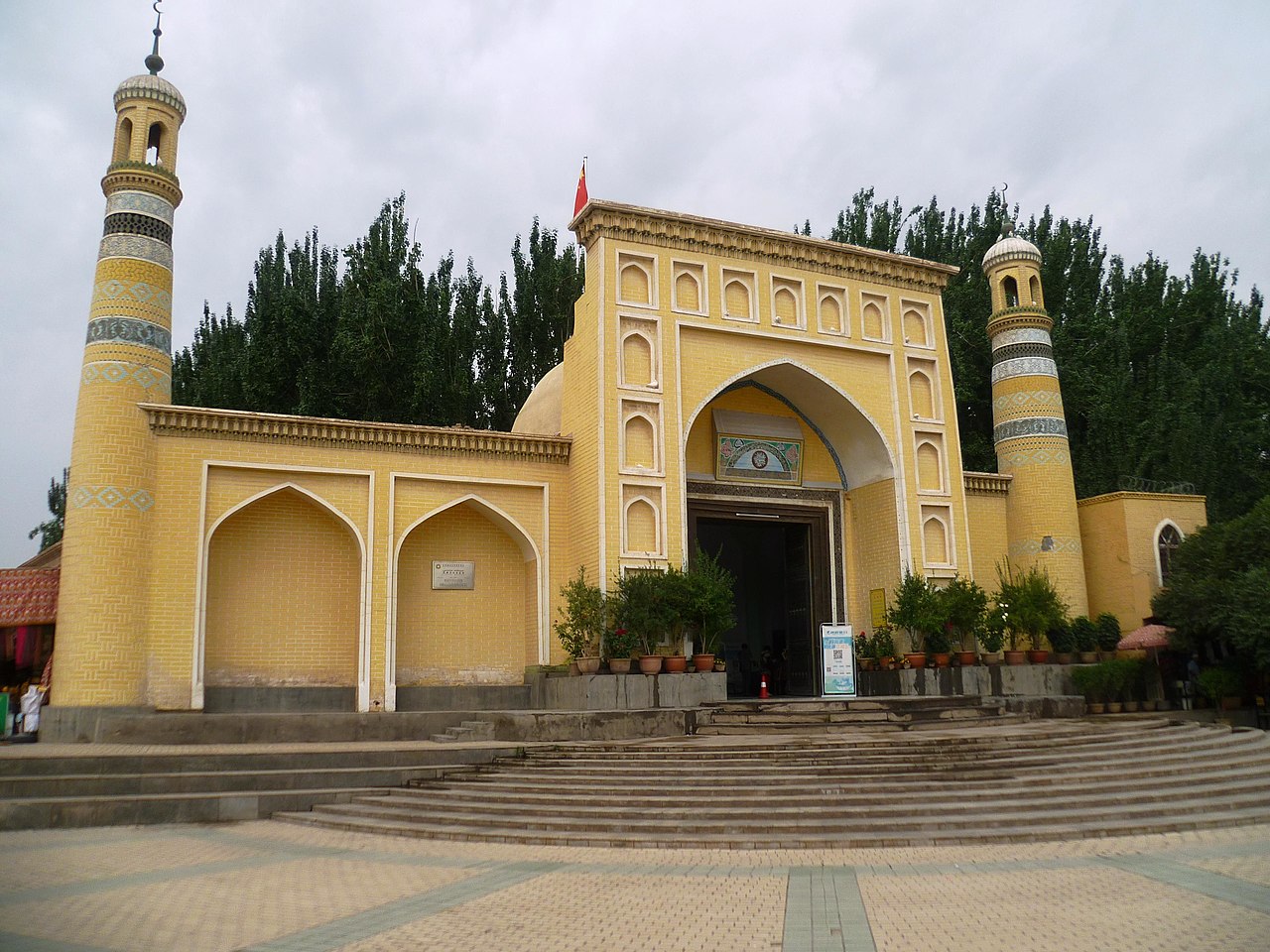
What to expect on a visit
Non-Muslim visitors usually enter outside peak prayer times when staff allow tourist access. Hours and pause windows change; recent visitor guides commonly list daytime opening with midday interruptions for prayer, and Friday midday as especially restricted for non-worshippers. Remove shoes where required, cover shoulders and legs, and follow any headscarf request for women. Photography rules inside halls are staff-controlled; assume restraint rather than a free shoot.
The courtyard and gate facade are the architectural centre. Interior capacity figures in encyclopedias run into the thousands; festival days historically filled the square itself. Contemporary access for worship has been reported as more limited than in earlier decades; for travellers the practical point is simple: confirm the day’s visitor window at the gate and do not invent a private tour around prayer.
Tickets and timing
Visitor entry is a paid stop separate from free Old City lanes. Published adult prices in recent tourism write-ups cluster in a modest range, but boards change. Students, seniors and children often see discounts under local rules. Buy at the window or a verified platform; skip unmarked touts. This page does not invent yuan amounts. Thirty to sixty minutes covers the gate, courtyard and exterior photographs for most visitors.
Soft morning or late-afternoon light flatters the yellow brick. Combine with Old City lanes the same day: mosque first if you need a fixed entry window, lanes and tea around the heat, evening food near the square.
Etiquette that matters
Dress modestly even if you only photograph the facade. Keep voices low in the courtyard. Do not interrupt worshippers. Friday congregational prayer and Eid gatherings reshape the square; if you are not joining worship, observe from outside or choose another hour. Festival calendars follow the Islamic year, so fixed Gregorian dates are a poor substitute for local confirmation.
Pairing the same day
Walk the Old City fabric that surrounds the square. Keep early Sunday morning free for the livestock bazaar if that is on your list. The Apak Hoja complex sits outside the tight walking core and wants its own half-day. Do not stack a full Pamir highway day on the same calendar as your first mosque-and-lanes circuit.
Things to confirm before you go
- Current visitor hours and whether Friday midday is closed to non-Muslim guests.
- Dress and shoe rules at the gate.
- Ticket price and ID discounts on the official board.
- How you will rejoin Old City lanes afterward.
- Festival dates if travelling near Eid.
Frequently asked questions
Can non-Muslims enter?
Usually yes outside prayer peaks when tourist entry is open. Confirm at the gate; Friday midday is the most common exclusion window.
How long inside?
Under an hour for most visitors. The square and surrounding food streets take longer.
Is it the same as the Sunday bazaar?
No. Id Kah is the mosque and square; the livestock market is a separate early-Sunday trade east of centre.
Architecture in brief
The mosque covers a large courtyard compound with a yellow-brick gate tower and paired minarets. Encyclopedias describe expansions through the Qing that brought the complex to its present footprint. Crescent finials and carved woodwork reward a slow circuit of the courtyard rather than a single facade selfie. Interior prayer halls are dimmer and more restricted; follow staff if tourist access opens beyond the court.
Do not treat Id Kah as interchangeable with every Xinjiang mosque photo you have seen online. The square, the gate colour and the surrounding food streets are specific to Kashgar’s civic centre.
How access has changed
Travel writing and news reporting over the past decade describe tighter control of congregational worship and a stronger tourist framing of the site. For a visitor the operational rule is unchanged: use the published tourist window, dress modestly, and do not argue about prayer pauses. If the gate is closed to non-worshippers, photograph the exterior from the square and continue into Old City lanes.
Square life around the mosque
Id Kah Square is orientation, meeting point and evening food orbit as much as it is a religious plaza. After your visit, walk the craft lanes north of the square or settle for polo and skewers nearby. Keep Friday midday free of ambitious interior plans. Festival mornings can fill the open ground; arrive earlier than you think or watch from the edges.
Sources
Facts in this article were checked against the following sources, retrieved 9 October 2026.
- Id Kah Mosque, English Wikipedia
- Kashgar, English Wikipedia
- Local Kashgar tourism notices on mosque visitor access
Photos are from Wikimedia Commons under the licences shown in each caption.