Kashgar Old City: Walk the Lanes, Not a Checklist
Kashgar Ancient City (the Old City tourist area) is the reason most travellers fly to China’s far-west oasis hinge. Earthen-brick lanes, craft courtyards and tea houses sit around Id Kah Mosque and its square. Much housing stock was reinforced or rebuilt after 2009 for safety and tourism; read the place as living street pattern and craft continuity, not as an untouched medieval shell. Give it a full day, not ninety minutes. The wider plan is in the Kashgar guide.
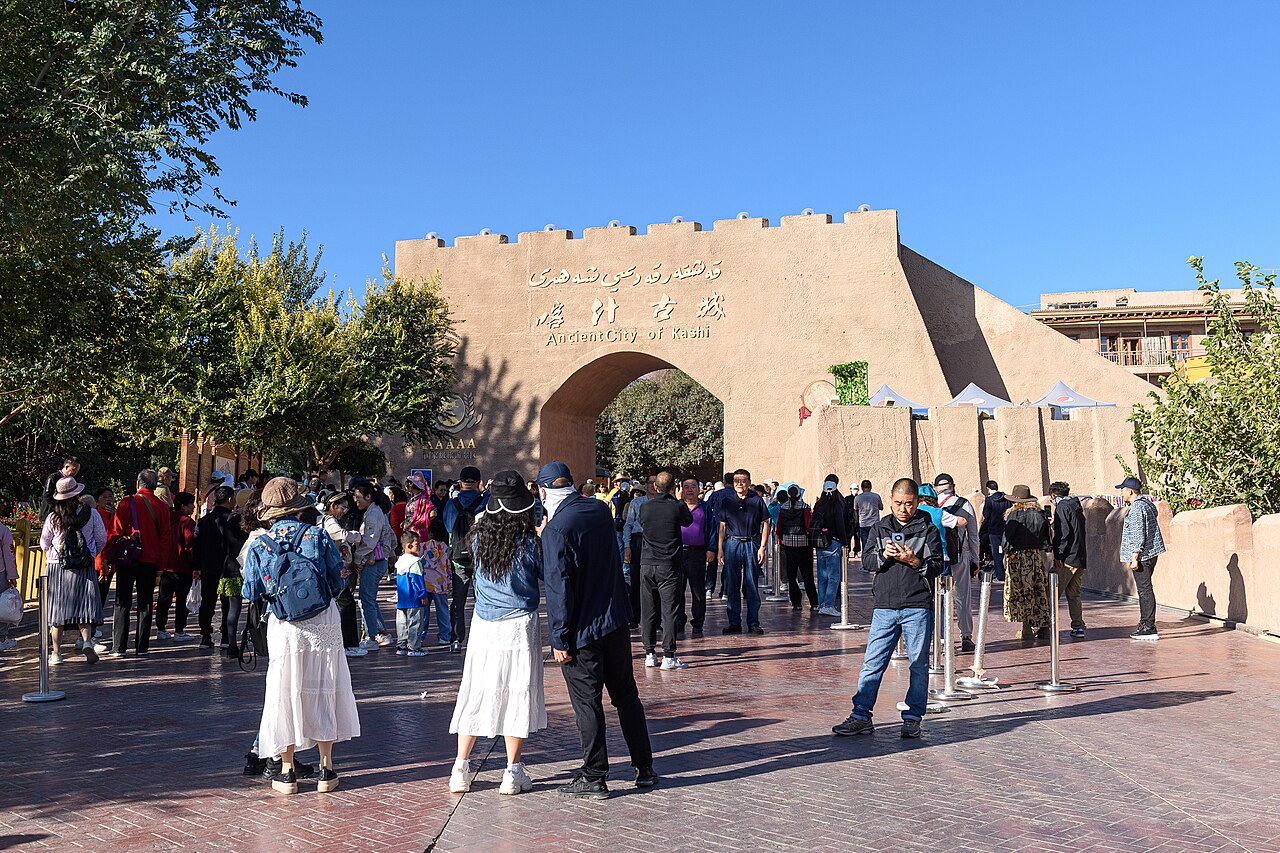
What you are walking through
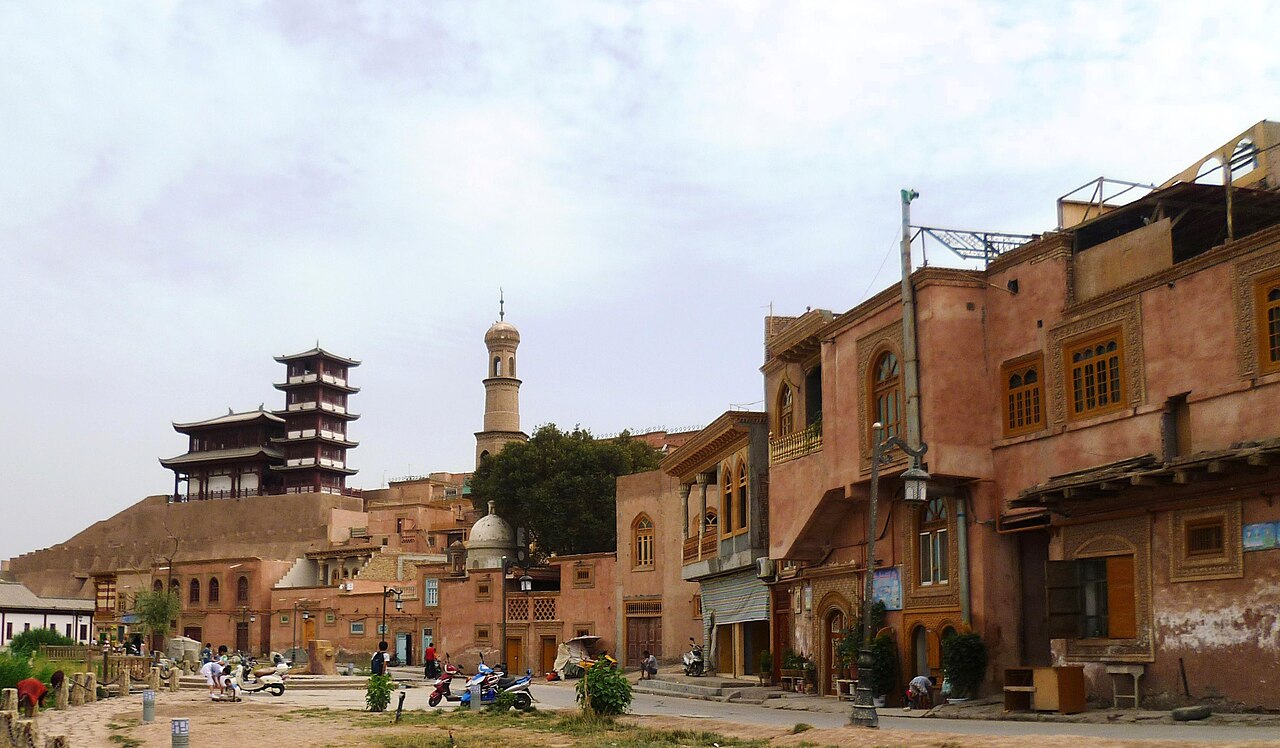
Kashgar has been a Silk Road oasis for centuries, where routes toward Central Asia met the Tarim Basin. The present scenic Old City concentrates visitor walking on gated streets, courtyard displays and workshop fronts north and east of Id Kah Square. Hexagonal paving often marks continuous routes; dead-end spurs still trap first-time visitors. Treat gate photos as orientation, then slow down for Atlas silk, copper, pottery and instrument workshops where they remain open.
An East Gate opening ceremony is commonly staged mid-morning (and sometimes again in evening in peak season). It is free to watch from the plaza; arrive early for a clear view, then leave the crowd for quieter side lanes.
A practical walking order
Start at a main gate in cooler morning light, walk toward Id Kah Square without skipping every side courtyard, then loop residential lanes for crafts. Midday heat pushes you into tea houses; return after dusk for food alleys when the light softens. One full day covers gates, mosque exterior, crafts and an evening meal. Two mornings let you add the Sunday livestock bazaar if your dates align, or the Apak Hoja tomb on a quieter half-day.
Tickets, hours and what is free
Street fabric in the Old City is widely reported as free to enter around the clock; shops keep their own hours. Paid stops inside or beside the area, including Id Kah visitor entry and some private courtyard exhibitions, follow their own boards. Confirm scenic-area rules and any real-name registration for Gaotai residences on the day’s official notice. This page does not invent yuan amounts.
Heat, dress and courtesy
Arid oasis sun is strong even in spring. Carry water, a hat and sunscreen. Streets are living neighbourhoods as well as a tourist product: ask before photographing people at close range, keep voices moderate near homes, and dress modestly if you will enter the mosque. Festival dates around Eid reshape crowds on the square; check the Islamic calendar against your stay.
Getting there and pairing
Stay near the Old City or Id Kah area so evenings stay walkable. Airport hotels only make sense for same-day flights. Taxis and walking cover the core; the livestock market needs a short taxi ride east of centre. Pair Old City walking with Id Kah outside prayer peaks, keep Sunday morning free if you want the animal market, and treat any Pamir highway day as a separate permit-and-altitude block, not a same-day sprint after arrival.
Things to confirm before you go
- Whether any gate or Gaotai registration is required on your dates.
- East Gate ceremony times if you want the free show.
- Mosque visitor hours and dress rules for Id Kah.
- Sunday market timing if livestock is on your list.
- Sun protection and a dusk food plan near the square.
Frequently asked questions
Is the Old City “authentic”?
Street pattern and craft life continue; much housing was rebuilt. Come for atmosphere and food, not for a frozen fifteenth-century set.
How long do I need?
A full day for lanes, Id Kah and evening food. Two days if you add Sunday market or Apak Hoja.
Same day as a Pamir trip?
Only if you already know permits, altitude and fatigue. Most first visits keep the mountain day separate.
Craft stops worth slowing for
Atlas silk, copperware and stringed instruments still appear in courtyard workshops, though density shifts as leases change. Ask before photographing artisans at their benches. Buy only what you can carry and verify; airport security and airline rules on knives are stricter than a market smile suggests. Tea houses break the heat better than another identical souvenir alley. A second evening pass after dinner often feels more local than the midday tour pulse.
If a private courtyard charges for a “folk house” visit, treat it as optional entertainment rather than required Old City content. The free lane fabric already carries the trip’s value.
Seasonal notes
April–June and September–October favour lane walking. Summer works with early starts and shade breaks; winter is clear but cold for outdoor markets. Sand and dust rise on windy days - wrap cameras and consider a light mask. Eid and other festival dates reshape crowds around Id Kah Square; match the Islamic calendar to your booking rather than assuming Gregorian “peak season” labels.
With children or limited mobility
Main gate streets are mostly flat; side lanes can be uneven brick. Strollers struggle on older paving. Plan tea stops as recovery, not as afterthoughts. Keep the livestock market as an adults-only dusty morning unless your group specifically wants it.
Sources
Facts in this article were checked against the following sources, retrieved 9 October 2026.
- Kashgar, English Wikipedia
- Kashgar, Chinese Wikipedia
- Id Kah Mosque
- Local Kashgar tourism notices on Old City access and affiliated tickets
Photos are from Wikimedia Commons under the licences shown in each caption.