Shuhe Old Town: The Quieter Heritage Cluster
Shuhe Old Town sits about four kilometres north of Dayan. Its Naxi name, Shaowu, means the village below the high peak. It is one of the earliest Naxi settlements in the Lijiang basin and one of the best-preserved market towns on the Ancient Tea Horse Road. Together with Dayan and Baisha it forms the Old Town of Lijiang World Heritage site. Come here when you want canals, bridges, and cafes without the densest bar-street volume of Old Town of Lijiang. The wider plan sits in the Lijiang travel guide.
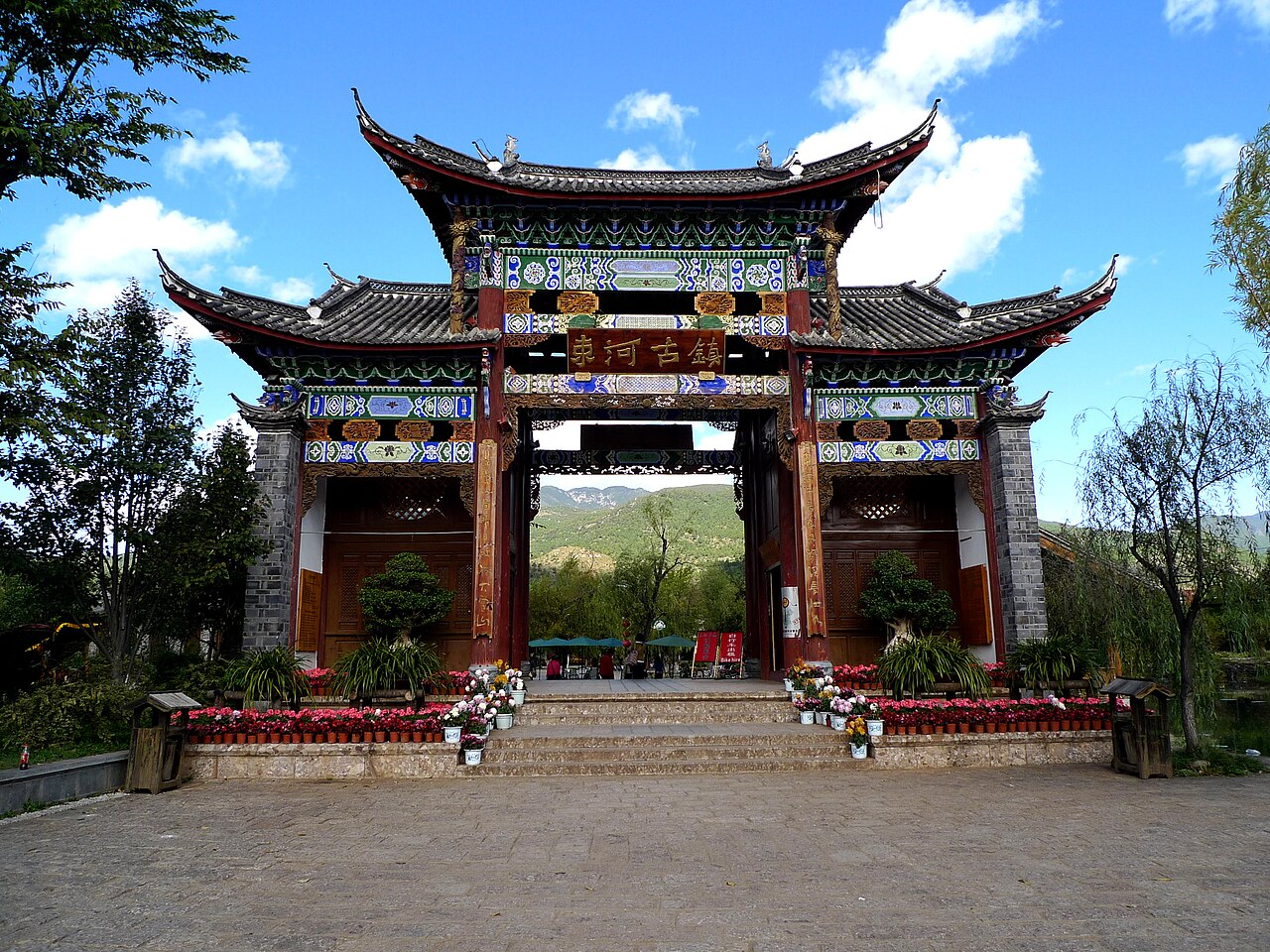
What you come to see
From the Ming dynasty onward, leather workers and other artisans gathered here, and Shuhe grew into a key stop on the tea-horse corridor. The Ming-era Qinglong Bridge is the photogenic stone crossing. Local lore says a master once stepped from the bridge toward Jade Dragon Snow Mountain; treat that as story. Nine Cauldron Dragon Pool can mirror the snow mountain on clear days when water and sky cooperate.
Ming-era Dajue Palace and Qing-era Sansheng Temple keep murals and timber work worth a quiet look when open. Sansheng Temple even houses a shrine linked to Sun Bin as a patron of leatherworkers, a reminder that this was a craft town, not only a postcard lane. Shuhe carries a 4A scenic-area label; any separate admission boards follow official notices.
Two to three hours covers a first visit at an easy pace. Morning light on the river and fewer tour groups reward an early start. Afternoons suit cafes along the Qinglong River when you want to sit rather than collect every courtyard.
How Shuhe differs from Dayan
Dayan is the dense commercial heart with Sifang Street and nightlife. Shuhe is lower-rise, more spread along water, and usually quieter after dark. Souvenir shops still exist; the volume is lower. If your Lijiang nights already fill with Dayan music, keep Shuhe for a daylight reset. If you dislike crowds entirely, give Shuhe more hours than Dayan and keep Dayan to one evening circuit.
Baisha, farther along the same north belt, holds the famous mural halls (Dabaoji Palace and Liuli Hall). Pair Shuhe and Baisha on the same morning when the calendar is tight; do not force both plus Glacier Park into one day.
Fees and practical notes
Shuhe sits inside the World Heritage maintenance-fee zone described in the July 2025 municipal rules (50 yuan per payment, 365-day validity, covering Dayan including Black Dragon Pool, Baisha, and Shuhe, with stated exemptions). Whether every Shuhe entrance checks the fee on your date is an enforcement question; confirm the day's notice. Any Shuhe scenic ticket or temple fee is separate and posted locally. Never invent yuan amounts for side tickets.
Flagstones and bridge approaches get slippery in rain. The plateau sun is strong even when air feels cool. Carry water; cafe prices vary and are not part of any heritage fee.
Getting there and pairing
Short taxi or local bus rides link Dayan and Shuhe; cycling is possible for confident riders on the connecting roads. Stay in Dayan for nightlife logistics, or sleep in Shuhe when you want quieter nights and shorter morning walks. Pair Shuhe with Baisha murals, then return for an old-town evening, or continue to Lashihai wetland in season for birds with the mountain mirrored in the lake.
Avoid stacking Tiger Leaping Gorge after a full Shuhe-Baisha morning unless you started before dawn. Keep Jade Dragon Snow Mountain as its own day. Black Dragon Pool can share a Dayan evening instead.
Things to confirm before you go
- Maintenance fee and any Shuhe gate checks for your date.
- Opening status for Dajue Palace and Sansheng Temple.
- Road or path conditions after heavy rain.
- Whether you want Baisha murals the same morning.
- Cafe and guesthouse noise if you plan to sleep in Shuhe.
Who should skip Shuhe
Skip it when you have only one full day in Lijiang and must choose between the mountain and a second old-town cluster; keep Dayan plus Glacier Park, then add Shuhe on a longer trip. Skip a rushed twenty-minute photo stop that costs an hour of transfer; either give Shuhe a real morning or leave it. Keep Shuhe on most three-day plans that already include Dayan: it shows the Tea Horse Road craft-town side of the same heritage listing.
A simple walking order
Enter toward the Qinglong River and bridge first, then loop residential lanes away from the densest shop fronts. Sit once for tea facing water; three cafe stops erase the morning. Look into Dajue Palace and Sansheng Temple when doors are open, then decide whether Baisha murals deserve the extra transfer. You do not need every courtyard on camera. One continuous river loop plus one temple already communicates why Shuhe belongs on the World Heritage map beside Dayan.
Leather-craft history is easier to feel in quieter side lanes than on the main souvenir strip. Ask before photographing people at work. Evening lights are softer than Dayan's bar streets; they suit a dinner walk if you sleep here, less so if you still need to cross back to Dayan late.
When rain or altitude changes the plan
Wet stone bridges are slick; shorten the loop rather than forcing every spur path. If altitude already tired you in town, Shuhe is still gentler than Glacier Park, but it is not a substitute for rest. Move Baisha to another morning if murals matter and energy is gone. Keep Black Dragon Pool for a Dayan evening so north-side heritage does not become one exhausting shuttle day.
Official notice reminder
Fees, temple hours, and transport options change. Confirm on Old Town protection and local scenic notices before you lock the morning.