Tiger Leaping Gorge: One Full Transport Day
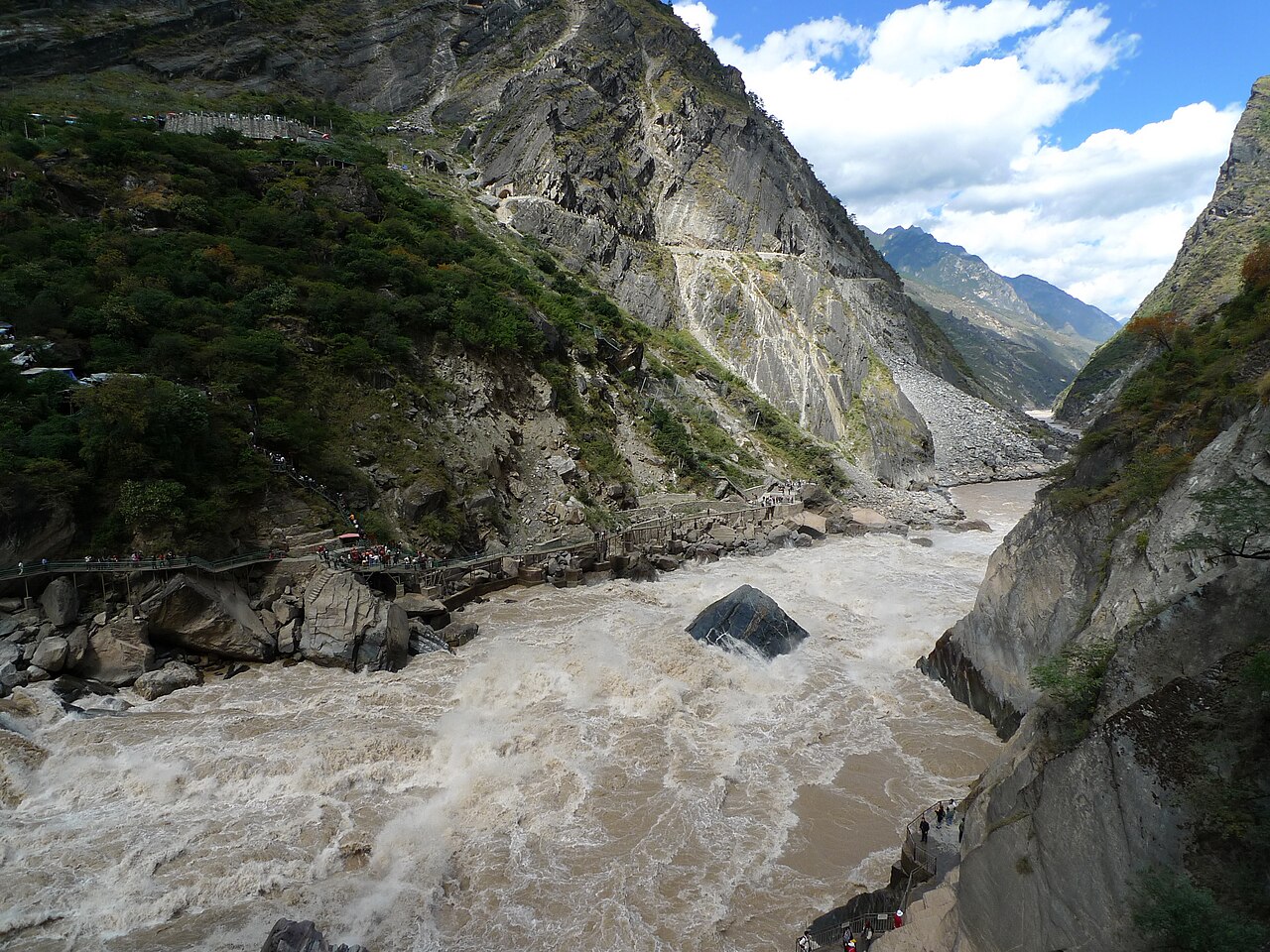
Tiger Leaping Gorge cuts the Jinsha River between Jade Dragon Snow Mountain and Haba Snow Mountain and sits inside the Three Parallel Rivers World Natural Heritage story. Legend says a tiger leapt the narrows from a midstream rock in low water; the rock keeps the name. The gorge runs on the order of 16 kilometres through Upper, Middle, and Lower sections, with walls rising thousands of metres from river to summit and a river drop of more than 200 metres along the way. From Lijiang it is a day trip with a long road loop, not a half-day add-on after Jade Dragon Snow Mountain. The wider plan sits in the Lijiang travel guide.
What most visitors actually do
Most first-time visitors walk the developed Upper Tiger Leaping boardwalks, view platforms, and (where operating) assisted descents toward the river viewpoint, then return to Lijiang the same evening. That delivers the roar of the Jinsha and the scale of the cliffs without a multi-day trek. Hikers who want the classic high trail treat the gorge as an overnight or two-day walk with guesthouse stops, which is a different trip and a different fitness bar.
Upper Tiger Leaping has been the ticketed, managed scenic section in recent years, often listed around the mid-tens of yuan for admission with optional paid assisted lifts on some approaches. Hours commonly sit in a daytime window that shifts by season. Treat prices, lift availability, and closing times as board-level facts for your date; scenic operators change them.
High trail and Mid gorge caution
The high path between Qiaotou and the Mid gorge guesthouse belt is a famous trek. It is also exposed, with rockfall risk after rain and sections that demand sure footing. In recent seasons, parts of the Mid gorge river-level routes (including popular viewpoint approaches that social media made famous) have been closed or restricted after accidents. Permanent or temporary closures change; do not trust a 2024 blog for a 2026 river-level detour. Confirm on local government and scenic notices before you plan any descent to the water or any overnight high-trail itinerary.
Rainy season raises both the river's drama and the trail hazard. Turn back when rockfall warnings or trail closures appear. This is not the place to invent a private path around a barrier.
Getting there from Lijiang
Count on a full day for road time plus Upper gorge walking. Coaches, shared vans, and hired cars run toward Qiaotou and the Upper scenic area; schedules thin in the late afternoon, so plan the return before you start a long descent. The road loops through Jinsha valley terrain; motion sickness is common on winding sections. Avoid stacking this after Glacier Park. Do not promise Lugu Lake on the same calendar day either.
Pair the gorge with an easy Dayan evening only if you return with daylight and energy. Sleep matters more than another bar street after cliff switchbacks.
How long and what to pack
Two to three hours on site covers Upper viewpoints for most non-trekkers. High-trail days are measured in hours of walking with elevation change, not in viewpoint minutes. Wear shoes with grip, carry water, and pack a shell for wind in the canyon. Sun is strong on exposed ridges; shade is uneven. Phone signal can drop in the gorge; download offline maps if you trek.
Things to confirm before you go
- Upper scenic admission, optional lift fees, and last entry time.
- Whether Mid gorge or river-level paths are open on your date.
- Return transport times to Lijiang.
- Weather and rockfall notices after rain.
- Your own knees and head for heights before buying a deep descent.
Who should skip the gorge
Skip it when the calendar has only three Lijiang days and the mountain plus Dayan already fill them; choose the gorge over Lugu Lake when you want canyon drama without an overnight lake drive. Skip deep trekking if you want only the Upper boardwalk postcard; that shorter visit is still worth the road time for many travelers. Skip any closed river-level selfie spot entirely.
Neighbour stops
Old Town of Lijiang and Shuhe Old Town are town days. Jade Dragon Snow Mountain shares the skyline but not the itinerary block. Lugu Lake is the overnight alternative when culture and high lake matter more than canyon narrows.
Upper boardwalk pacing that works
Enter with the first reliable morning transport so you are not racing last-entry clocks. Walk the main platforms in one direction rather than doubling every spur. Save the deepest stair or lift segment for when legs still feel fresh; turning back from mid-descent is harder than skipping it. Eat a simple meal before you start; cliff vendor prices and quality vary, and this is not the stop for a long banquet.
Photograph from marked railings. The river spray and wind punish phones left on walls. Keep a dry bag for the return ride. If clouds fill the canyon, the sound of the Jinsha still delivers the place; wait twenty minutes for a clearing if time remains, then leave rather than camping on one viewpoint all afternoon.
Sharing the day with Shangri-La logistics
Some itineraries continue north toward Shangri-La after the gorge instead of returning to Lijiang. That only works when seats and daylight are confirmed in advance. A late Mid gorge finish can strand you without a ride. When in doubt, return to Lijiang and move north another morning. Old Town of Lijiang nights are easier to book last-minute than canyon guesthouses in peak weeks.
Official notice reminder
Tickets, trail closures, and transport schedules change. Confirm on Tiger Leaping Gorge scenic and local government notices before you leave Lijiang.