Tongji Weir
About half an hour's drive west of Lishui city, a low curved dam crosses the Songyin River just above the point where it flows into the Ou River. The water slides over it in a thin white sheet and has done so, in one form or another, for about 1,500 years. Tongji Weir is still irrigating the Bihu plain today, and in 2014 it was named one of the first World Heritage Irrigation Structures. The weir sits in Yantou village on one bank, and across the Ou River is Dagangtou, a riverside town that became a base for landscape painters. Together they are sold to visitors as Guyan Huaxiang, the ancient weir and painting village.
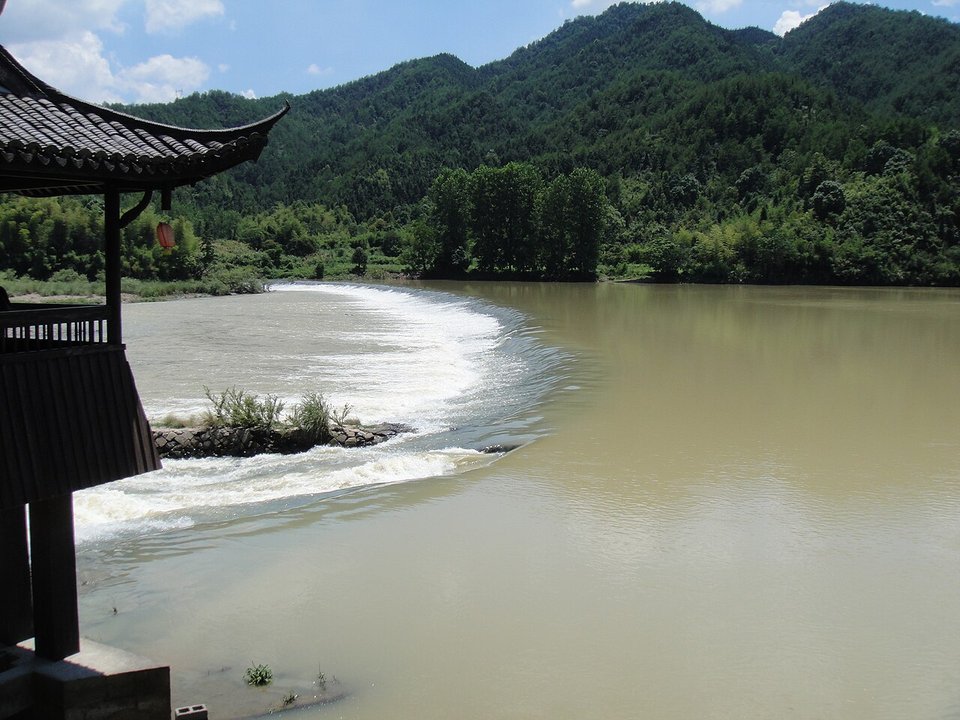
The oldest arch dam
The International Commission on Irrigation and Drainage, which gave the weir its heritage status at a meeting in Gwangju, South Korea, in 2014, dates the first dam to AD 505, in the Liang dynasty. It was built as a rock filled timber crib about 270 metres long. Because floods on the Songyin River kept washing it away, the dam had to be rebuilt nearly every winter and spring for about seven centuries, until it was replaced by stone masonry in 1205. A sand flushing sluice and a boat lock were added later.
The ICID calls it the earliest arch dam in the world. The present dam curves upstream in a shallow arc of about 120 degrees and is 275 metres long and about 25 metres wide at the base. Chinese Wikipedia, which also calls it the world's oldest arch dam, says it became a major national protected site in 2001.
How the system works
The dam is only the start. At its north end is the Tongji sluice gate, which lets water into the main canal. Chinese Wikipedia gives the main canal a length of 22.5 kilometres, feeding 48 branch canals and 321 smaller ditches across the Bihu plain. The ICID describes more than 70 gates along the network and ponds at the ends of the canals that store surplus water for dry spells. By the 13th century the system was irrigating about 2,000 hectares, and the area has changed little since.
One of the clever parts is the stone aqueduct, built in 1111 according to the ICID. Here the canal and a mountain stream cross one above the other without mixing, and Chinese guides call it an ancient flyover for water.
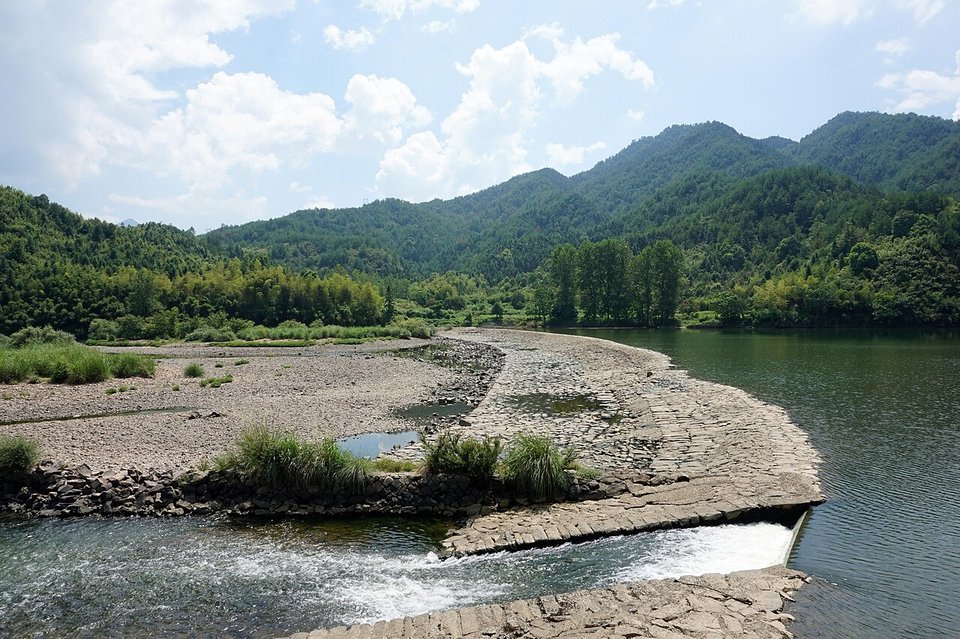
The water rules
What sets Tongji apart from many old dams is that its management rules survive. The ICID explains that the local government looked after maintenance and repair, while a body of users shared out the water. The earliest written regulations date from 1092 and were revised in 1169; Ctrip's description credits the revision to the poet Fan Chengda, then prefect of Chuzhou, as Lishui was known. The rules set the size of gates, the order of watering, and the labour and materials owed for repairs each year. They are carved on stone tablets kept in the Zhan Nan Sima Temple beside the weir, which honours the two officials surnamed Zhan and Nan who are credited with the first dam. Chinese Wikipedia counts eighteen inscribed steles from different dynasties there.
Yantou village
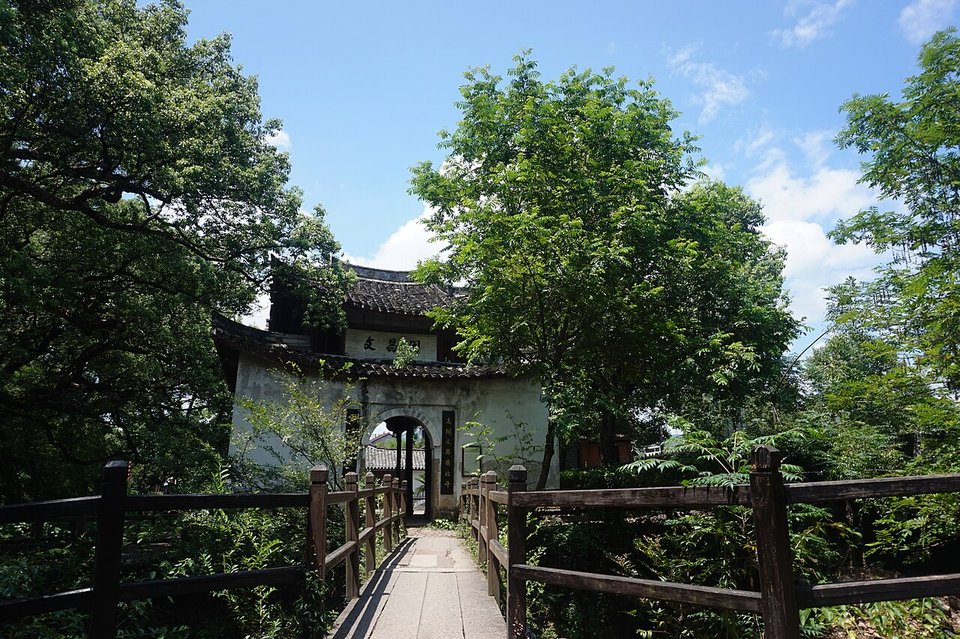
The village on the weir side is the quieter half of the visit. Ancient camphor trees, said to have been planted to protect the dam, shade the bank, and visitors on Ctrip describe a grove of trees more than a thousand years old. A stone paved lane runs past old houses, a Qing dynasty Wenchang Pavilion and a stone memorial arch. Stepping stones cross a side stream.
The painting village
Across the Ou River, Dagangtou had been a river port. Ctrip's description says painters began gathering here to paint the river from around the 1980s, forming a group that came to be called the Lishui Barbizon school after the French village of landscape painters. Today the old street along the water has galleries, studios and cafes, and on fine days rows of art students set up easels on the bank. A boat crosses between the two sides in about ten minutes, and the river views from it are part of the pleasure. Late afternoon light on the Ou, sometimes with a sail on the water, is the classic photograph.
Hours and tickets
Ctrip lists opening hours of 8:00 to 17:00 all year, while the resort's official site gives business hours of 8:00 to 20:30 for the area as a whole. Ctrip says the standard ticket includes the return boat ride, and a 2026 travel site reports a combined ticket of 50 yuan at the gate, a little less online, with the last ferry around 17:30. Half price applies to people aged 60 to 69, minors from 6 to 18, full time students and children from 1.2 to 1.5 metres, and people aged 70 and over go free. Residents of Liandu district enter free. Check the day's notice. The ticket line is 0578 2863703.
Getting there
The resort is in Dagangtou town, Liandu district. By car it is a little over half an hour from Lishui city, with parking on both sides of the river. A Ctrip reviewer in October 2026 took bus K202 back to the city, a ride of about an hour. Allow three to four hours to see both banks without rushing.
With a car, the weir fits on the way to or from the Yunhe Terraces, which lie further up the Ou valley. Xiandu is in the other direction, north of Lishui city.
Frequently asked questions
Is the weir still in use?
Yes. It still diverts water into the canals of the Bihu plain.
Which side should I visit first?
Either works. Many visitors cross to the weir side first and finish in the painting village for the evening light.
How long do I need?
Half a day covers both sides.
Sources
Facts in this article were checked against the following sources, retrieved 23 October 2026.
- ICID, Tongjiyan Irrigation Structure
- 通济堰, Chinese Wikipedia
- Ctrip, Ancient Weir Painting Village listing
- Ancient Weir Painting Village official site
- Zhunaqu Bikengbao, Ancient Weir Painting Village notes, September 2026
- Lishui travel guide on this site
Photos are from Wikimedia Commons under the licences shown in each caption.