Yunhe Terraces
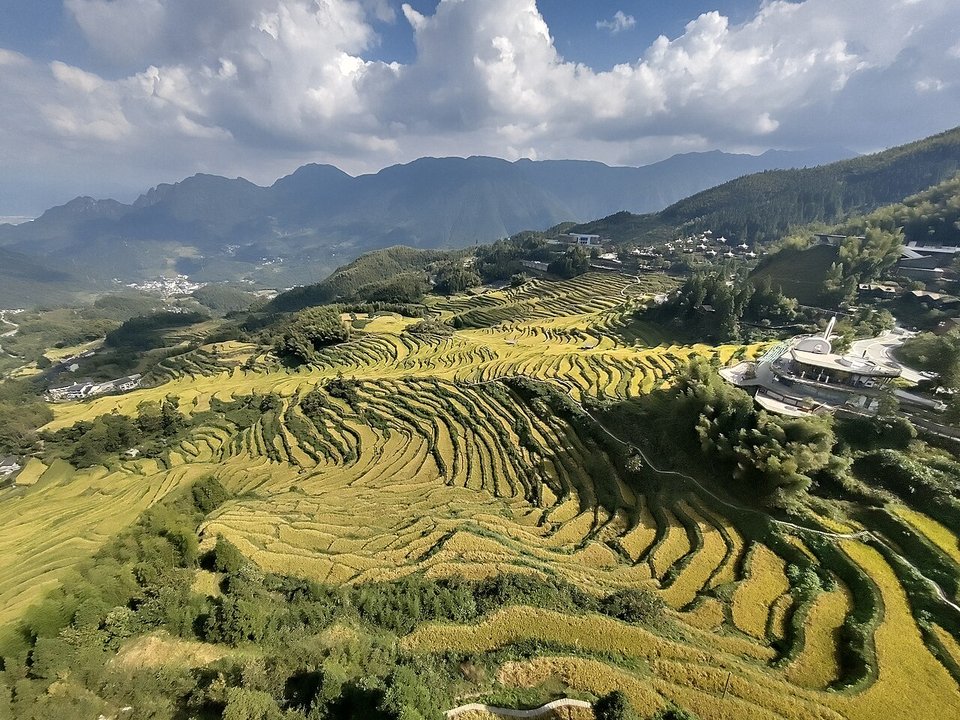
The Yunhe Terraces climb the hills of Chongtou town in Yunhe County, in the southwest of Lishui prefecture. Chinese Wikipedia describes about 50 square kilometres of terraced fields between 200 and 1,400 metres above sea level, with more than 700 levels in the steepest places, and calls it the largest terrace system in East China. The core scenic area that visitors pay to enter is far smaller; the county government gives it as 5.02 square kilometres. It is a working farming landscape with villages, waterfalls and bamboo, and it changes completely with the seasons.
How the terraces were made
According to Chinese Wikipedia, terracing here began in the Tang and grew in the Yuan and Ming. In the Hongwu reign at the start of the Ming, large scale rice farming on the slopes was closely tied to silver mining and smelting in the area, since the miners had to be fed. In the late Ming and early Qing many She people moved in, and the She, one of China's ethnic minorities, worked the terraces on a large scale.
Modern farming was harder on them. The fields are small and steep, machines cannot work them, and as young people left for the cities many plots were abandoned. Since the 2000s the county has leased out land and brought in outside contractors to replant and repair the fields, and Chinese Wikipedia says more than 5,000 mu, about 330 hectares, has been restored.
The honours followed. The terraces became a 4A scenic area in 2011, a provincial wetland park the same year and a national wetland park in 2019. In 2017 the Yunhe terrace farming system was named one of China's important agricultural heritage systems, and on 6 February 2024 the scenic area was upgraded to 5A.
The ploughing festival
Opening the fields has long come with rites to welcome and honour the gods of the land. Chinese Wikipedia quotes the Tongzhi era county gazetteer saying the custom of welcoming the gods was old even then. The practice faded after 1949 and revived in the reform era. Since 2006 the Meiyuan Mangzhong Ploughing Festival has been held each year around Mangzhong, the solar term in early June, with offerings in the fields, a feast for the oxen, the first ploughing and a parade. In 2021 it was added to the national intangible heritage list.
The three areas
Ctrip's listing divides the scenic area into two main parts reached by separate roads after the ticket office. To the right is Jiuqu Yunhuan, the nine bend cloud ring, which is smaller and has two viewing platforms over the most photographed curves; it is the usual place for sunrise and a sea of cloud. To the left is Baiyin Valley, which Ctrip says many photographers prefer, and which leads to the old stone village of Kenggen. Higher up is Qixingdun, the seven star mound, a lookout reached by the ropeway.
A 2026 Qunar reviewer suggests a route that avoids the worst of the ropeway queues. Ride the ropeway up to Qixingdun, spend an hour or so there, walk down past the Wujian waterfall to Kenggen in about an hour, then follow the road for forty minutes or so to Jiuqu Yunhuan, and ride the ropeway down at the end.
Which season
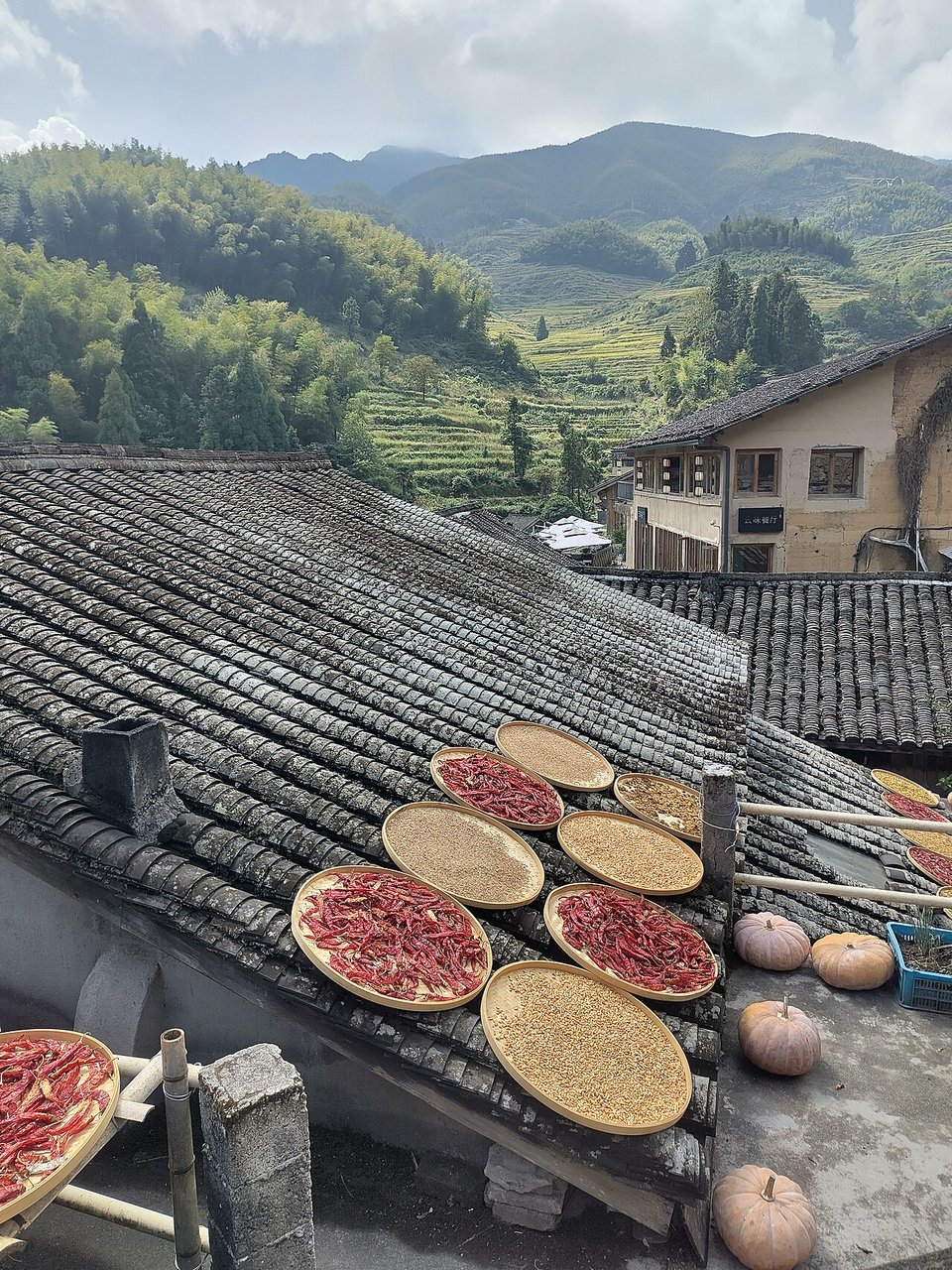
Each season gives a different picture. In spring the fields are flooded for planting and reflect the sky, and late spring and early summer bring the best odds of cloud filling the valleys at dawn. Summer is green and cooler than the cities below. Autumn, roughly from September into October, turns the rice gold before the harvest. Winter can bring frost and occasionally snow. Midday light is usually flat and hazy, so photographers aim for dawn or late afternoon. To be at a viewpoint for sunrise you really need to sleep in one of the guesthouses inside or near the scenic area.
Hours, tickets and closures
Ctrip lists opening hours of 8:00 to 17:00 from 16 March to 15 November and 8:30 to 16:30 from 16 November to 15 March. The ropeway runs 8:00 to 16:30 in the high season and 8:30 to 16:00 in the low season, and the shuttle buses between areas run from 8:30 to 16:20 and 9:00 to 15:50 respectively. Note that the winter hours start in mid November. Travel sites put the adult ticket at around 80 yuan, with the ropeway and shuttle charged separately. Half price applies to children from 1.2 to 1.5 metres, people aged 60 to 69, full time students and several other groups, and people aged 70 and over go free. The scenic area's phone number is 0578 5156688.
Qunar carried a notice that the observation tower in the wetland park would close for maintenance from 20 October 2026 until further notice. Mountain weather also closes parts of the site, and Qunar's ticket page warns that some services stop in thunderstorms, fog, heavy rain or typhoons. Check the day's notice.
Getting there
By car, leave the G25 expressway at the Yunhe exit and follow provincial road 53 toward Longquan, then the signs to the scenic area. Qunar lists an hourly bus from Yunhe bus station toward Zhangjiadi between about 6:30 and 17:00. From Lishui Station allow around an hour and a half by road.
The Tongji Weir and Ancient Weir Painting Village is on the way back toward Lishui city, and Xiandu in Jinyun is a separate day to the northeast.
Frequently asked questions
Yunhe or Yuanyang?
Yuanyang in Yunnan is bigger and more famous. Yunhe is far easier to reach from Shanghai or Hangzhou and makes a good weekend.
Is one day enough?
A long day covers the main areas. Stay the night if you want sunrise.
Do I need the ropeway?
No, there are roads and paths, though the ropeway saves a long climb to Qixingdun.
Sources
Facts in this article were checked against the following sources, retrieved 23 October 2026.
- 云和梯田, Chinese Wikipedia
- Ctrip, Yunhe Terraces listing
- Qunar, Yunhe Terraces hours, notice and transport
- Yunhe County government, Yunhe Terraces scenic area page
- Zhunaqu, Yunhe Terraces travel guide, July 2026
- Lishui travel guide on this site
Photos are from Wikimedia Commons under the licences shown in each caption.