Luoyang Museum: Heluo Civilization, Tang Sancai and How to Book
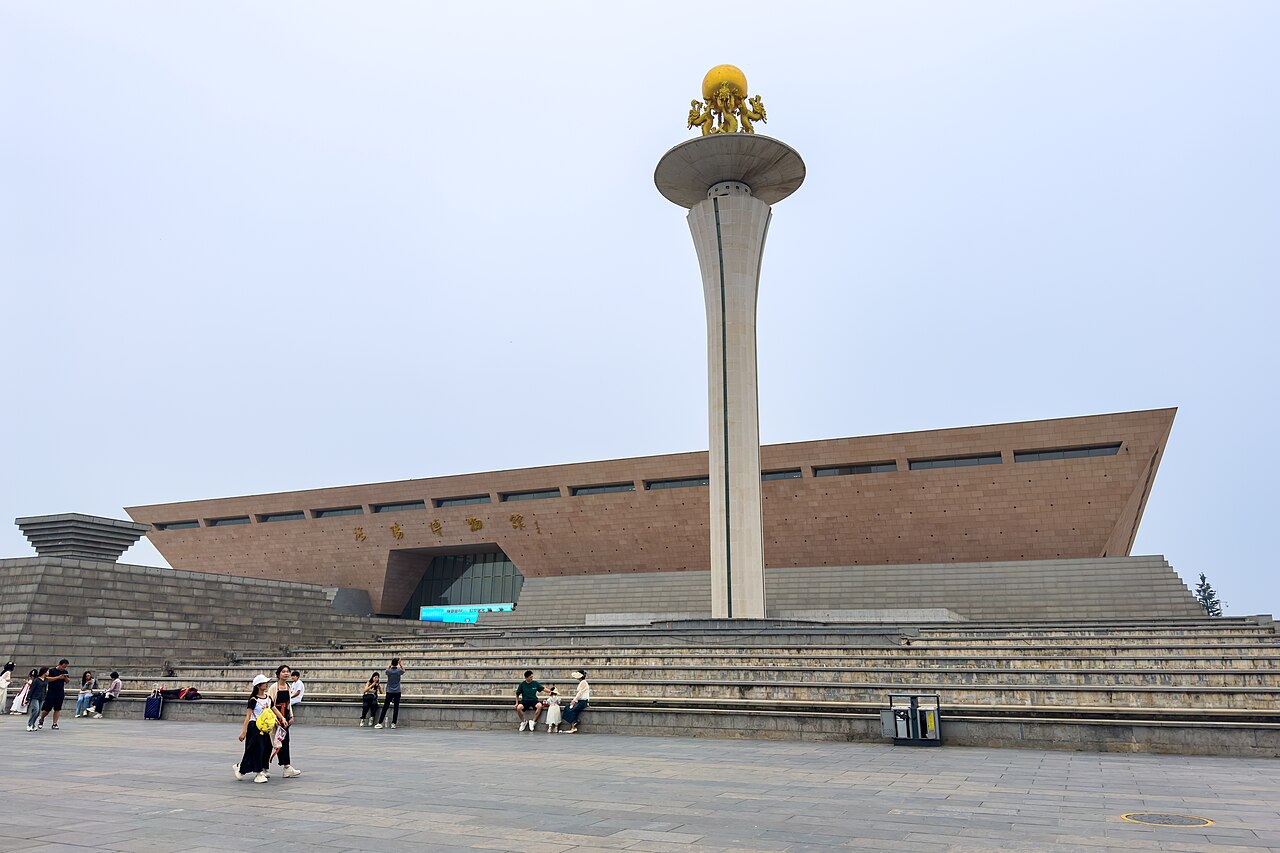
The Luoyang Museum is where the city's many capitals become visible in one building. Luoyang served as capital for a long list of dynasties, from the Eastern Zhou and Eastern Han to the Northern Wei and, as the eastern capital, the Sui and Tang, and nearly everything dug up in and around the city ends up here or in its stores. The museum was founded in 1958, moved several times, and opened its current building in Luolong District in 2011. It was named in the first group of national first-grade museums in 2008. Chinese Wikipedia gives more than 11,000 objects on display. Entry is free with a reservation. It is the morning of day two in the Luoyang plan, before White Horse Temple.
Four homes in fifty years
The early history says a lot about how Chinese museums were built. In 1958 the new museum had no building and used the halls of Guanlin, the Guan Yu temple south of the city, as galleries, with a staff of fourteen. During the hard years of the 1960s and the Cultural Revolution the work nearly stopped, and for a while the collection was shown in a flower shed in Wangcheng Park. A purpose-built hall on Zhongzhou Road opened in 1974. The present museum, begun in 2007 on a large site south of the Luo River, opened to the public in April 2011.
What the galleries cover
The permanent display is organised around Heluo civilization, the culture of the region where the Yellow River and the Luo meet, and runs in order from the Yangshao and Longshan Neolithic cultures through the Xia, Shang and Zhou to the Ming, Qing and Republican periods. Chinese Wikipedia notes that this dynastic span is unusual for a city-level museum, and because Luoyang sat so long at the political centre, the main sequence works as an outline of Chinese history.
Early highlights come from Erlitou, the large Bronze Age site east of the city that many archaeologists associate with the Xia, including jades, early bronzes and pottery. The Northern Wei rooms include tall stone attendant figures from imperial tombs and material from the Yongning Temple, the great imperial temple of Northern Wei Luoyang. Han pottery figures and tomb models, such as a pottery kitchen from a Western Han tomb, show daily life.
Tang sancai
The best-known part of the collection is Tang sancai, the lead-glazed pottery in amber, green and cream that was buried in Tang tombs around the eastern capital. Horses, camels, grooms and court ladies show how Luoyang's elite wanted to be remembered, and the glazes are as bright as when they went into the ground. Tang tombs around the eastern capital have yielded sancai in large numbers, which is why the museum's holdings are so deep.
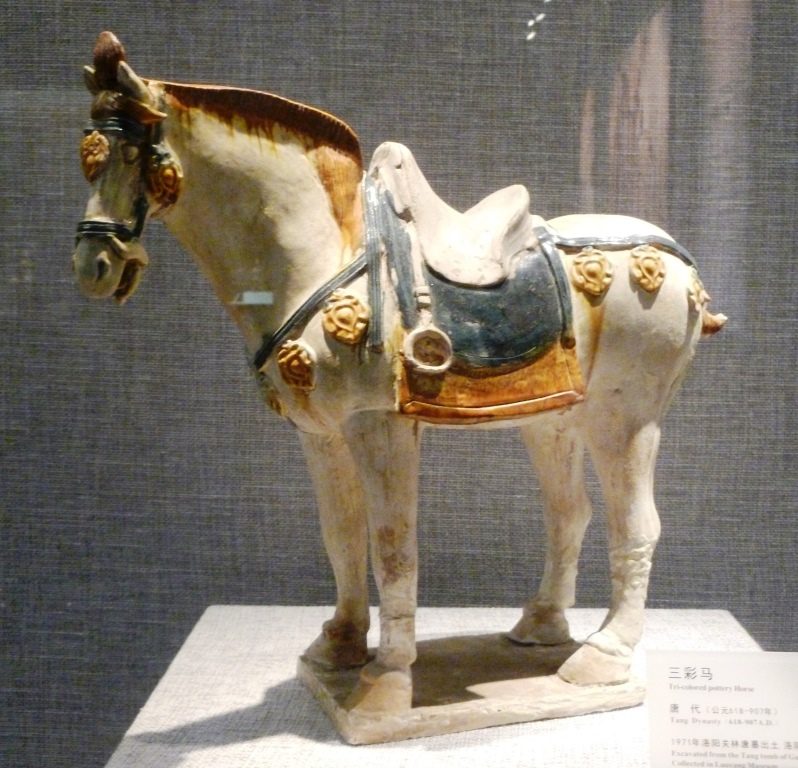
The museum is also known for jade, bronzes, stone carving and Qing court objects, and it runs changing special exhibitions.
Tickets, booking and hours
Entry is free, but visitors need to reserve in advance through the museum's official WeChat account, and foreign visitors can book with a passport, according to several 2026 visitor guides. Opening hours are commonly given as 09:00 to 17:00, closed on Mondays except public holidays. Special exhibitions may need separate tickets. Check the day's notice on the official account before you go, especially around holidays and the April peony festival.
Getting there
The museum is in Luolong District, south of the Luo River. Chinese Wikipedia lists Wenboyuan station on Luoyang Metro Line 2 as the nearest stop, and a dedicated museum bus line runs from Luoyang railway station. A taxi from the old town is short. The museum is on the same side of the city as the Longmen Grottoes and Guanlin, so it also fits into a southern-district day if your booking dates work better that way.
How to visit
Two to three hours is a fair visit. If time is short, walk the main chronological display quickly to the Northern Wei and Tang rooms and spend your time there, since those periods explain what you will see at Longmen and in the Sui-Tang Luoyang City heritage park. Visiting the museum before Longmen helps, because the Northern Wei carvings make more sense once you have seen the period's tomb figures and stone work up close. Lockers and security checks work like other major Chinese museums; bring your ID or passport.
Things to confirm before you go
- Your free reservation through the official account, for the right date and time slot.
- Monday closure and any holiday changes.
- Whether a special exhibition needs a separate ticket.
- The metro station or bus route from your hotel.
Frequently asked questions
Is the Luoyang Museum free?
Yes, the permanent galleries are free, but you need to reserve in advance through the official account and show ID on entry.
When is the Luoyang Museum closed?
It is normally closed on Mondays, with changes for public holidays. Hours are commonly 09:00 to 17:00.
What is the museum known for?
Its Heluo civilization sequence, Erlitou finds, Northern Wei tomb sculpture and a deep collection of Tang sancai pottery.
How long should I spend there?
Two to three hours.
Sources
Facts in this article were checked against the following sources, retrieved 6 October 2026.
- 洛阳博物馆, Chinese Wikipedia
- Luoyang Museum, English Wikipedia
- Luoyang travel guide for foreign visitors, Zhengzhou Travel
Photos are from Wikimedia Commons under the licences shown in each caption.