Sui-Tang Luoyang City: Mingtang, Tiantang and Yingtian Gate
The Sui-Tang Luoyang City National Heritage Park protects the core of the eastern capital that Emperor Yang of Sui began in 605, south-west of the older Han and Wei city. Its planners copied the layout of the Sui capital at Daxing, today's Xi'an, but placed the palace and imperial cities on the highest ground in the north-west. The city stayed in use for more than five hundred years, through the Sui, Tang, the Five Dynasties and the Northern Song, and it was among the first national archaeological parks named in 2010. The park now presents three main sites on the old palace axis, the Mingtang, the Tiantang and the Yingtian Gate, with reconstructions built over excavated foundations. It is day three in the Luoyang plan, and Yingtian Gate lit at night belongs to any evening.
Wu Zetian's Divine Capital
The city reached its peak under Wu Zetian. She renamed it Shendu, the Divine Capital, in 684, and after declaring her own Zhou dynasty in 690 she ruled from here for most of her reign. Her building projects here were meant to show a new kind of legitimacy, and two of them stood side by side in the palace city.
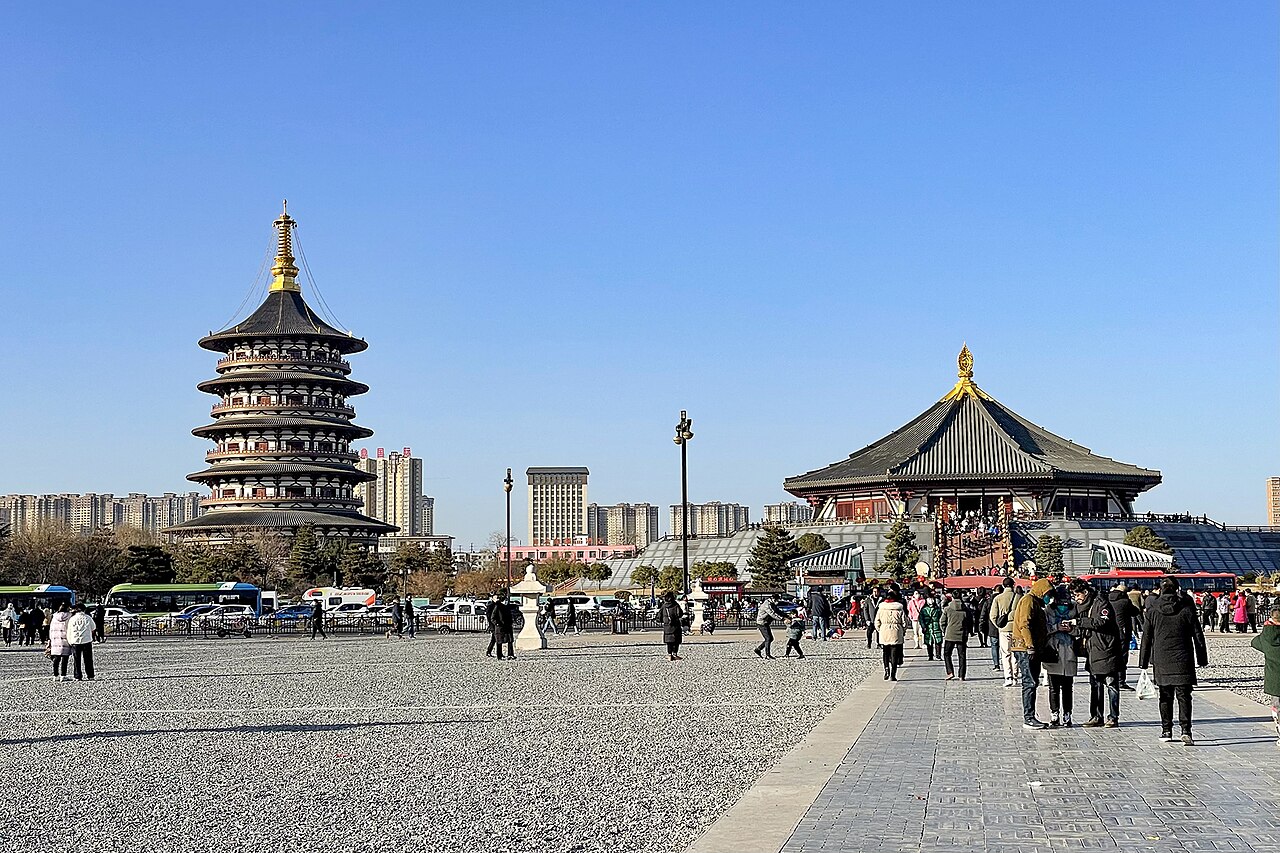
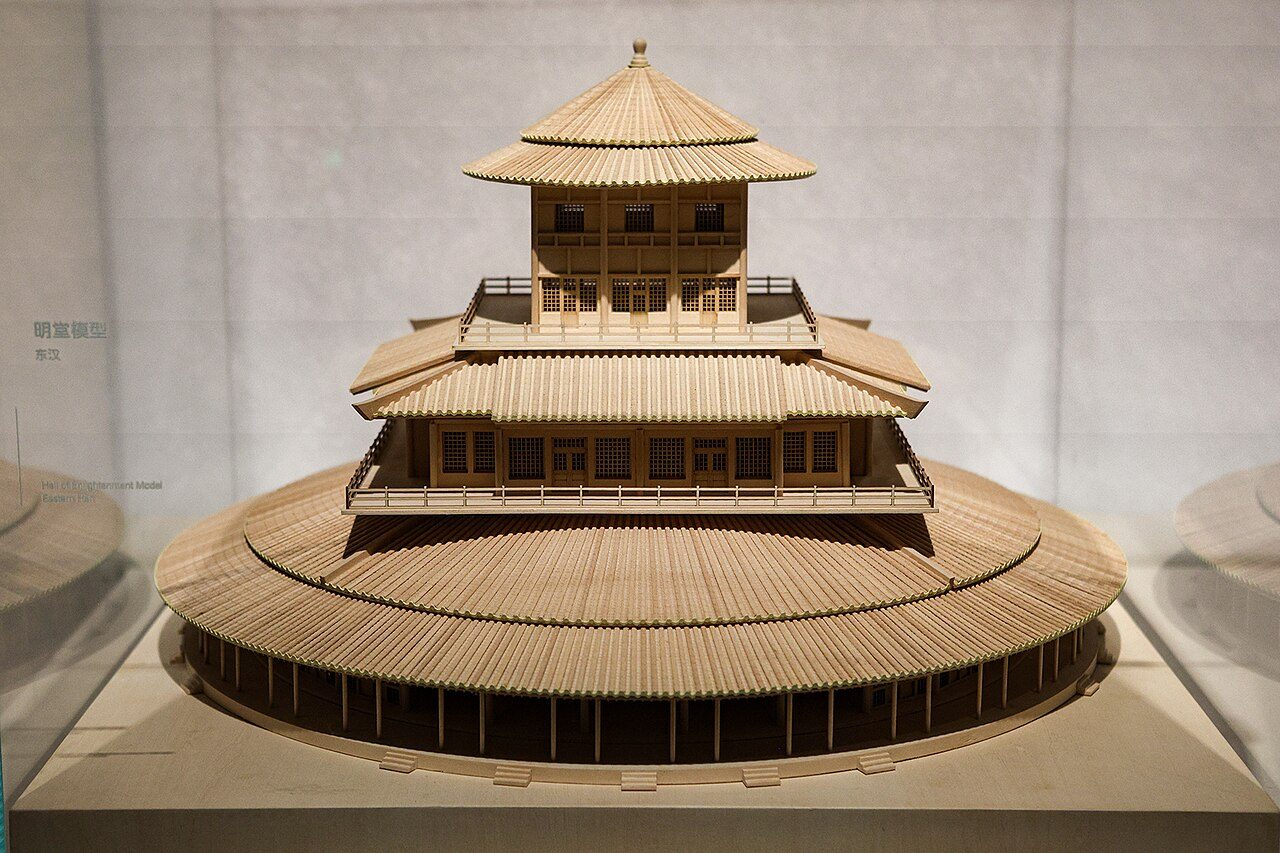
The Mingtang, also called the Hall of Myriad Phenomena, went up in 688 on the foundation of the former Qianyang Hall. It was the place for the most important rites and audiences, and Chinese Wikipedia notes that some scholars regard it as one of the largest single timber buildings ever raised. Its height has been estimated at about 91 metres. Behind it stood the Tiantang, a Buddhist pagoda-hall and the tallest building in the palace, which a Tang source describes in exaggerated terms as a thousand chi high. The Tiantang burned only a few years after it was finished, and the fire spread to the Mingtang, which Wu Zetian later rebuilt.
What you see today
The Mingtang foundations were found by chance in 1986 and later excavated. The current Mingtang building is a protective shell over the site, about 33.5 metres high, much lower than the original but still the largest structure in the park. Inside you can look down at the excavated base of the central pillar and walk through exhibitions on the hall and on Tang court life. A detailed model shows the original tiered design.
The Tiantang reconstruction next door rises in tiers to a high top, with displays on Buddhism at the Tang court and views over the palace area from its upper floors. The two are usually visited together on one ticket.
Yingtian Gate
Yingtian Gate was the main southern gate of the palace city, where emperors announced amnesties, received envoys and celebrated victories. The rebuilt gatehouse, about fifty metres tall according to visitor notes, now stands over the excavated remains with towers and linking galleries in the form of the Chinese character for "gate". It holds exhibitions on the gate's history, and in the evening its lighting, and on some nights a projection show, turn it into the city's busiest photo stop.
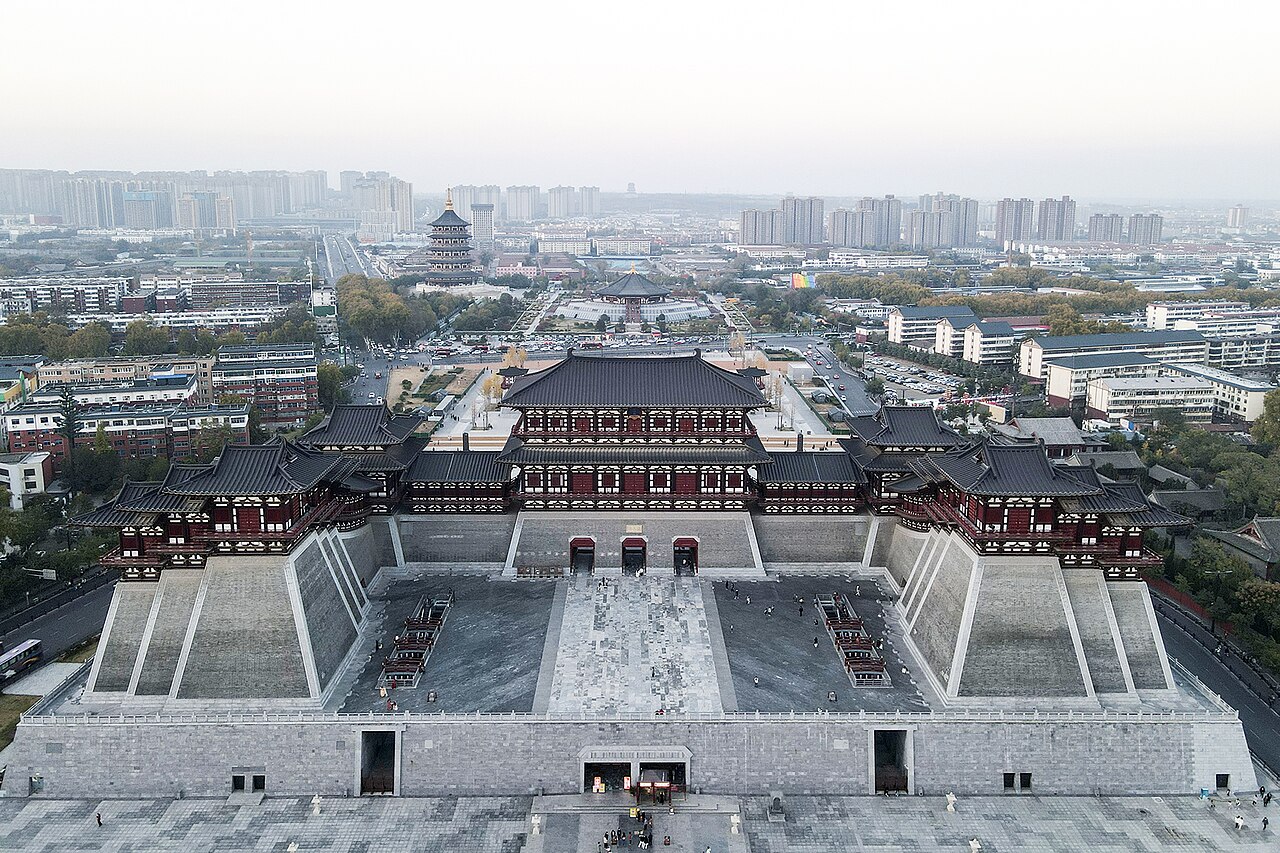
The square in front of the gate is open, and the old town with its night market and Cross Street begins just to the east. Luoyi Ancient City, a free Tang-style area popular with visitors in hanfu costume, is also nearby.
The wider heritage
The park is only part of what survives. Luoyang's World Heritage sites include the Dingding Gate of the Sui-Tang outer city, listed in 2014 as part of the Silk Roads, and the Hanjia and Huiluo granaries, listed the same year as part of the Grand Canal. Jiuzhou Pond, a palace garden lake, has also been restored and opened. If you have time after the main sites, Dingding Gate, on the southern axis road, is the one most worth adding.
Tickets and hours
Mingtang and Tiantang share a ticket, and Yingtian Gate has its own. Listings for 2026 give adult prices of about 90 yuan for Mingtang and Tiantang and about 60 yuan for Yingtian Gate, each slightly cheaper when booked online in advance, with combined tickets for the heritage park also sold. The same listings give opening from 09:00 to late evening, around 22:30, with last entry half an hour earlier and evening lighting from around dusk. These details change with the season and the April peony festival, so check the day's notice on the official channels.
Getting there and timing
The park is in the old city area west of the old town. Yingtianmen station on Metro Line 2 serves the gate, and the Mingtang and Tiantang are a short walk north. A good plan is the Mingtang and Tiantang in the afternoon, Yingtian Gate as the light fades, and dinner in the old town after dark. The Luoyang Museum is worth seeing first for the Tang background, and the Longmen Grottoes show the same court's patronage in stone.
Things to confirm before you go
- Current prices for Mingtang and Tiantang, Yingtian Gate and any combined ticket.
- Evening hours and whether the projection show runs on your date.
- Crowd levels during the peony festival in April and national holidays.
Frequently asked questions
Are the Mingtang and Tiantang original buildings?
No. They are modern reconstructions and protective halls built over the excavated Tang foundations, which you can see inside.
Is Yingtian Gate better at night?
Most visitors think so. The gate is lit in the evening, and the old town night market is next door.
How long do I need?
Two hours for the Mingtang and Tiantang, one for Yingtian Gate, plus time in the old town.
How much are the tickets?
Listings for 2026 give about 90 yuan for Mingtang and Tiantang and about 60 yuan for Yingtian Gate. Check the day's notice.
Sources
Facts in this article were checked against the following sources, retrieved 6 October 2026.
- 隋唐洛阳城遗址, Chinese Wikipedia
- 明堂 (洛阳), Chinese Wikipedia
- 天堂 (洛阳), Chinese Wikipedia
- UNESCO World Heritage Centre, The Grand Canal
- UNESCO World Heritage Centre, Silk Roads, the Routes Network of Chang'an-Tianshan Corridor
Photos are from Wikimedia Commons under the licences shown in each caption.