Qingyuan Mountain, Quanzhou: the Laojun Statue and a City View
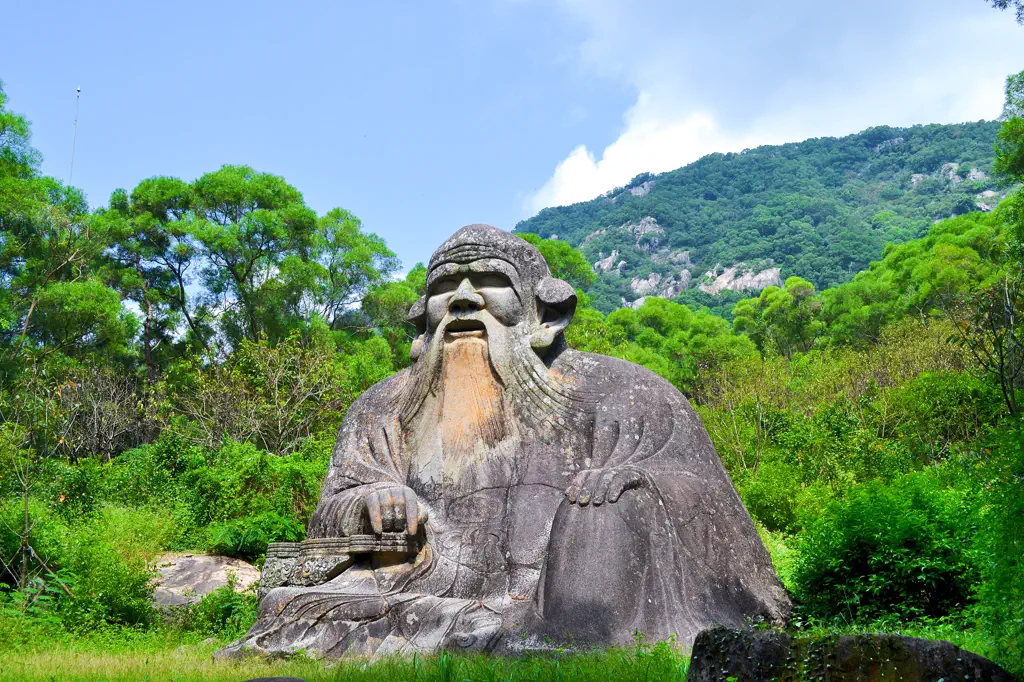
Qingyuan Mountain's signature sight is not at the summit — it sits near the entrance, where a bearded old man carved from a single natural boulder has watched the city since Song times. Locals call the Laojun statue "Laozi, first under heaven," and official texts back the boast: the earliest and largest surviving stone statue of Laozi in China. The mountain behind it is Quanzhou's 5A scenic area and one of the country's first natural-and-cultural dual heritage sites. Facts below were checked against public sources retrieved in September 2026.
The mountain's inventory
The scenic area runs three sections — Qingyuan Mountain proper, Jiuri Mountain to the west, and Lingshan with its Islamic tombs — totalling 62 square kilometers. Most visitors keep to the main mountain. The Laojun statue measures 5.63 meters high, 8.01 wide and 6.85 deep, seated on a 55-square-meter base, carved in Song-Yuan times out of one granite outcrop. It stands in the open air with no hall over it, so you can walk a full circle around it; the robe folds and the beard stay crisp up close. Of Quanzhou's 22 heritage sites it is one, and since Jiuri Mountain dropped its ticket in 2022, only three heritage sites in the city still charge — this statue, the Qingjing Mosque and the Islamic Tombs. The statue sits inside the main-scenery ticket gate, so seeing it means buying the mountain ticket.
The hillside carries more than one sage. Seven sites and nine Song-Yuan stone statues survive on the mountain — Ruxiang, Ci'en, Mituo, Bixiao, Xifeng and Qianshan rocks besides the Laojun — Daoist and Buddhist figures sharing one slope, which is rare anywhere.
Master Hongyi's stupa
One stop ties the mountain to Kaiyuan Temple. West of Mituo Rock stands the memorial stupa of Master Hongyi, a white granite pagoda in a quiet stone court framed by bamboo. On the rock beside it are carved the four characters of his final brushwork — "grief and joy mingled" — with a portrait of the monk by his student Feng Zikai set in stone nearby. Hongyi, born Li Shutong, ordained in 1918, spent his last years in southern Fujian; his followers laid his remains here. The spot is easy to walk past — watch for the Mituo Rock signs.
Tickets, hours and transport
| Item | Reference |
|---|---|
| Ticket | main scenery 70 yuan; concessions per posted notice |
| Hours | Laojun and Qianshou gates 7:00–18:00; Qiyun gate 8:00–17:00 |
| Address | Fengze District, at the north edge of the city |
| Time | half a day |
Gate times follow the 2025 Bendibao listing. After 18:00 the mountain opens to local residents on separate rules — visitors should plan inside the ticketed window. For scale, the Quanzhou government answered a city councilor in 2025 that this 70-yuan ticket sits below the roughly 108-yuan average across the country's 280 5A scenic areas.
How to walk it
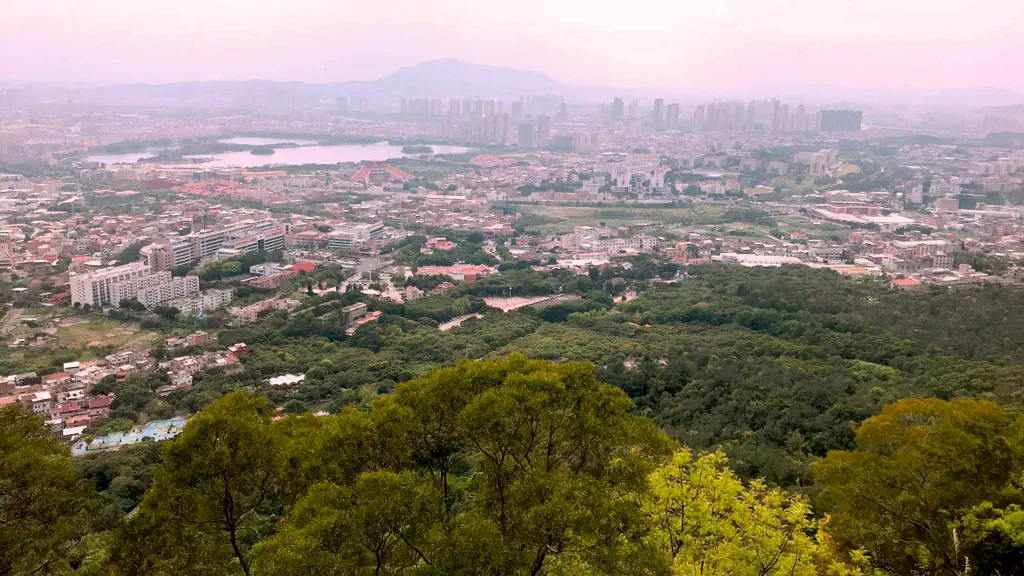
The standard route starts at the Laojun statue, climbs past Qianshan Rock and Mituo Rock, and pauses at Tianhu lake; strong walkers push on to Nantai Rock and Qingyuan Cave. Nantai Rock is the view — most of the city spreads out below, river to sea. Reviews repeat one warning: supply points are sparse, so carry water and snacks. The paths mix stone steps and dirt, with real elevation in places; slow knees will still finish comfortably in half a day. On crowded days, enter by the Qianshan gate and walk the loop backwards to dodge the queue.
A half day suits the mountain. Only shooting the statue takes half an hour; walking to the carvings makes the 70 yuan well spent. Take a taxi from the city — it drops you at the gate — and start early in summer, down by noon. Back in town, the monk whose stupa you passed has his memorial hall at Kaiyuan Temple. The full heritage circuit is in the Quanzhou guide.
Things to confirm before you go
- The main-scenery ticket is 70 yuan; student and concession rates were not verified — check the posted board.
- Evening access after 18:00 follows local-resident rules that change; visitors should keep to the daytime window.
- Steps and mixed terrain run through the climb; strollers will not manage, and rain makes the stone slick.
Frequently asked questions
Do I need a ticket just to see the Laojun statue?
Yes. The statue sits inside the main-scenery gate, so the 70-yuan mountain ticket applies even for a short photo stop. Walking on to the rock carvings is where the ticket pays off.
How long does Qingyuan Mountain take?
Half a day. Statue to Mituo Rock and back is a comfortable morning; adding Nantai Rock and Qingyuan Cave wants the full window and spare legs.
Is the climb hard?
Moderate. Stone steps and dirt paths with some steep pulls, shaded for most of the way. Take water — the gaps between supply points are the real difficulty, not the gradient.