West Street, Quanzhou: the Old Street Beneath the Twin Pagodas
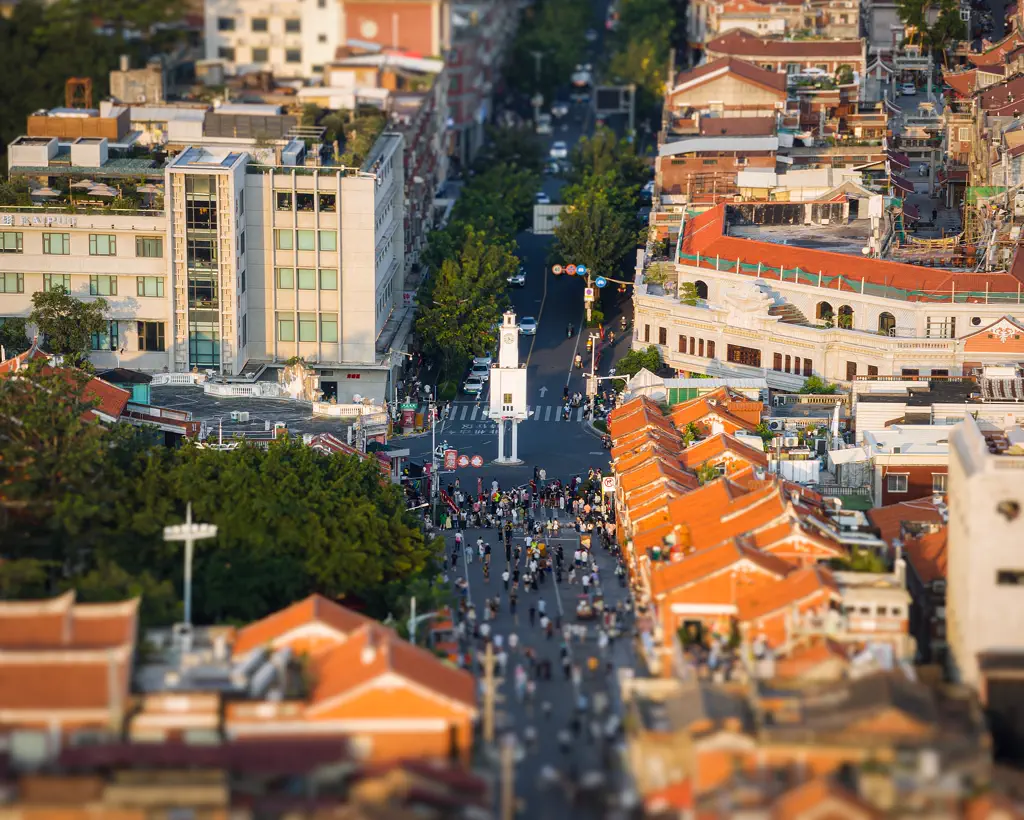
Quanzhou locals give directions by the Bell Tower, not by compass points. The tower stands in the middle of the crossing where East Street, West Street and Zhongshan Road meet — 13.8 meters of 1934 concrete, built to hold the city's standard clock, still on its original spot while the traffic lights changed around it. From the tower, West Street runs west to the gate of Kaiyuan Temple, and that stretch is the oldest, most lived-in kilometer of the old town. Free to walk, open all day. Details below were checked against public sources retrieved in September 2026.
What the street is
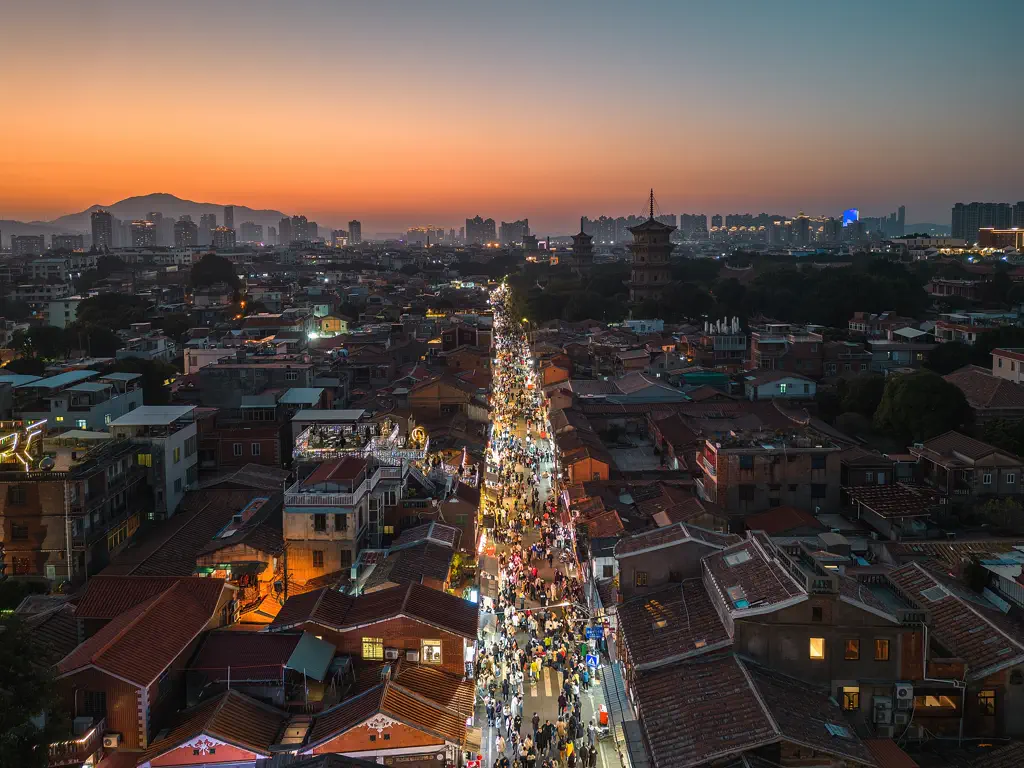
Kaiyuan Temple's gate anchors the street, and the street grew up serving the temple — thirteen hundred years of shops and lanes fanning off the main line like a fishbone. The frontage is old arcades and red-brick houses, granite dressed into the walls between darker brick, swallowtail ridge-tiles riding the roofs. Quanzhou calls the patched masonry "brick in and stone out" — rubble rebuilt into pattern, a habit turned into an art. From the street you catch the tops of Kaiyuan's twin pagodas floating over the rooflines, the shot half the visitors to Quanzhou come for.
The Bell Tower itself is worth a pause. It was started in 1934 and finished the next year; the designer, by local research, was Lei Wenquan, an engineer who studied in Britain. Stand under it at dusk and look four ways — each direction gives you a different city.
The lanes and the arcades
The main street carries the crowds; the lanes carry the life. Old houses, wells and big trees sit deep in the side lanes, washing over the walls and bamboo chairs out on the doorsteps, and the residents have long stopped noticing cameras. Shoot twice and move on. Walk one lane to its end and you meet a pagoda over the roofs; walk another and you find a well. Zhongshan Road runs south from the tower under a continuous arcade — the covered walk carries you a kilometer in shade or rain, the buildings unchanged in silhouette since the old photographs, only the shops turning over.
Eating your way down it
The street's shops split old and new — the old half cooking, the new half pouring coffee and printing postcards, side by side without crowding each other. Quanzhou's snack list is all here. Mianxian hu, rice vermicelli in a thick broth, starts the day with a fried dough stick drowned in it. Vinegar pork comes fried in paper bags for the walk. Four-fruit soup and stone-flower jelly chill the afternoon, toppings to taste. Runbing, the soft spring roll, is a spring ritual you can eat any month. The brave add tudongdong, the cold sea-worm jelly. Nothing on the list is expensive — single digits to low tens of yuan — so budget appetite, not money. Teahouses pour Tieguanyin between stops; for gifts, tea and candied fruit travel best.
Tickets, hours and transport
| Item | Reference |
|---|---|
| Ticket | free, open street |
| Hours | all day; shops keep their own |
| Address | Licheng District, Bell Tower east end to Kaiyuan Temple west end |
| Bus | routes 6, 26, 33, 41 to Kaiyuan Temple West Gate stop |
| Time | 2–3 hours with food |
Parking is the practical headache — the old town's lanes were not built for cars, and holidays fill every spot. Buses beat driving here; leaving the car at your hotel and walking in is the calm option. An electric rental bike works if you are staying close.
How to spend it
The street's rhythm runs by daylight. Mornings are loose, with the noodle shops full of locals; shops all open by noon; weekend evenings pack the pavement shoulder to shoulder. Shoot empty scenes early, eat late, and both moods reward you. After dark the street lamps come up and the pagodas catch their outline lights — from the crossing the view gains a layer the noon sun never shows. Street stalls keep the night fed.
West Street makes no demands on an itinerary. Kaiyuan Temple in the morning, lunch out of the temple gate, lanes or the arcade south in the afternoon, Tumen Street's mosque and Guandi Temple within walking reach, back to the tower by evening — one day, one line, and the skeleton of the old town is in your legs. First-time visitors should take this line on day one and save Qingyuan Mountain and the river for day two; Tianhou Temple closes the old town at its southern end. The three-day frame is in the Quanzhou guide.
Things to confirm before you go
- The street itself never closes; individual shops and snack stands keep their own hours, and a few close one weekday.
- Weekend evenings are the crowded window; bring children early instead.
- Most stalls take mobile payment; a little cash still helps at the smallest counters.
Frequently asked questions
How long is West Street, and how long does it take?
Roughly one kilometer from the Bell Tower to Kaiyuan Temple's gate. Two to three hours covers the walk, the lanes and a proper snack circuit; add the temple and it becomes the whole morning.
Is West Street the same as Zhongshan Road?
They meet at the Bell Tower. West Street runs west to the temple and is the older, quieter line; Zhongshan Road runs south under continuous arcades. Doing both is an easy afternoon.
What should I eat on West Street?
Mianxian hu for breakfast, vinegar pork for the walk, four-fruit soup for the afternoon heat, runbing any time. Adventurous eaters add tudongdong, the cold sea-worm jelly the city is famous for.