Shihezi Travel Guide: The Corps Museum, an Old Sugar Mill and a Bowl of Liangpi
Shihezi is an easy day trip or one-night stop from Urumqi: intercity trains cover the 135 km in roughly 70 minutes, and the reason to come is the Xinjiang Corps Military Reclamation Museum, which is free and closed on Mondays. The city was laid out from 1950 by soldiers of the PLA's 22nd Army Group who were turned into farmers, so you are visiting a planned 20th-century town, with tree-lined avenues and parks rather than an old Silk Road quarter. Pair the museum with the nearby Zhou Enlai monument, the converted Bayi sugar mill and a bowl of the city's well-known liangpi.
Why Shihezi looks the way it does
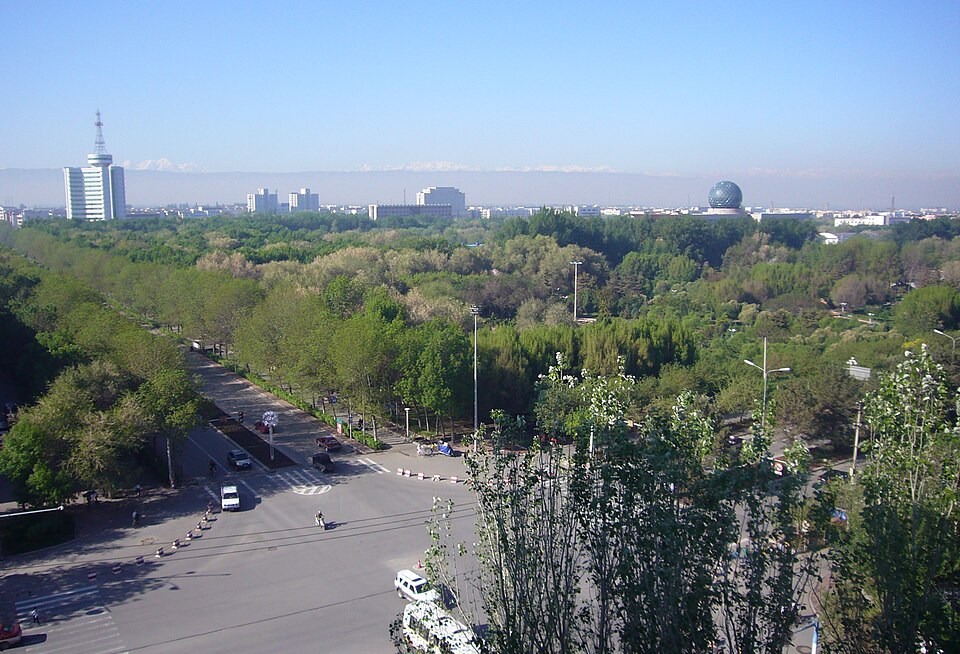
In 1951 General Wang Zhen picked this spot on the northern foot of the Tianshan as a base for demobilised troops, and the Xinjiang Production and Construction Corps (the Bingtuan) was formally set up in 1954. Shihezi is still run jointly with the Corps' 8th Division under a "division and city" arrangement. The farms around it grow cotton and sugar beet, which explains the textile mills and the sugar factory you will hear about. Green cover, set against a semi-arid climate with about 206 mm of rain a year, is the city's point of pride; in 2000 it received a UN-Habitat best-practice award for its living environment.
That background is the whole story here. If you want mosques, bazaars or mud-brick lanes, keep your days for Kashgar and Turpan.
Places worth visiting
Xinjiang Corps Military Reclamation Museum
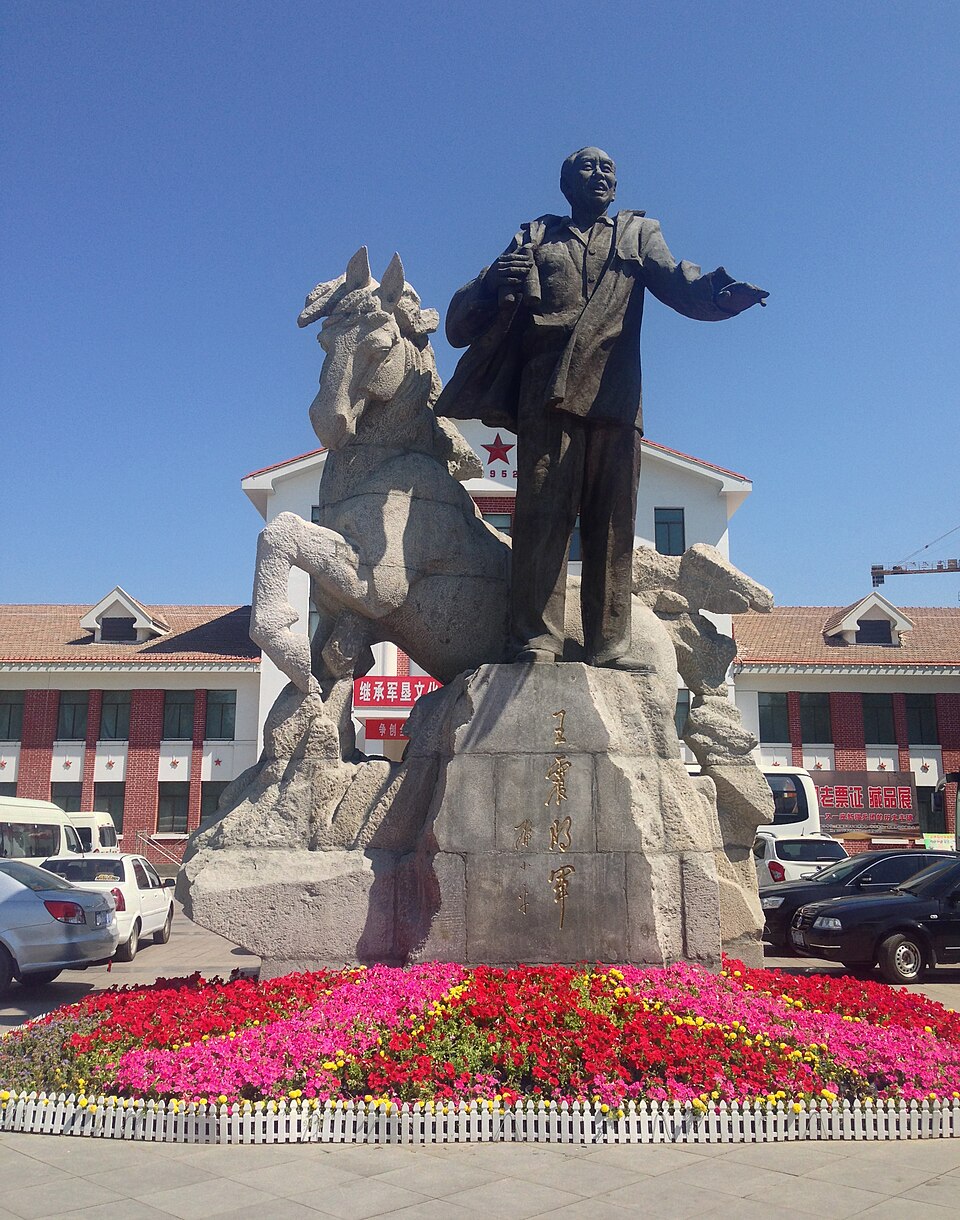
The museum sits on Beisan Road (No. 59) inside the former headquarters of the 22nd Army Group, a 1950s block locals call "the first building of the reclamation". It opened in its first form in 1995, moved into this building in 2004 and was refitted in 2010 and 2021. Admission has been free since 2008.
The permanent exhibition follows the Corps from the army's march into Xinjiang through the farm-building years. The objects that stay with people are small: an army greatcoat with 296 patches, an 8 kg ketmen hoe used to break ground, farm tools made from shell casings. There is a 47 m diorama of soldiers pulling ploughs by hand, full-size reconstructions of a dugout dwelling (diwozi) and a canteen, and retired Y-5 and Y-11 aircraft from the Corps' crop-spraying fleet. Allow two hours; the exhibition is in Chinese, so a translation app helps with the labels.
Since 9 October 2025 the museum has opened 10:00 to 18:00, closed on Mondays, with free walk-in entry on ID (passport for foreigners). Some listings still mention advance booking through the museum's WeChat account and longer summer hours, so check the account or call 0993-2012111 before a holiday visit. A free Chinese-language tour runs at 11:00 on open days.
Zhou Enlai monument and the Ai Qing Poetry Museum
Less than a kilometre west of the museum, a 12.8 m white marble monument to Premier Zhou Enlai stands in a stand of trees, with a small hall about his July 1965 visit. Nearby, the Ai Qing Poetry Museum remembers the poet, who lived in Shihezi for 16 years and wrote "The Young City" about it; it keeps manuscripts and a reconstruction of his study. Both fit into a walk after the museum, and the city counts them among six "red" landmarks on a study-tour route.
Bayi Sugar Mill creative quarter
The Bayi (August 1st) sugar factory was founded in 1958 and is said to have produced Xinjiang's first sugar cubes. Production has stopped; the Soviet-style red-brick sheds and tall chimney were kept and now hold cafés, workshops and a craft centre where you can try Corps-style paper-cutting and pottery. In summer 2026 the quarter hosted a national intangible-heritage showcase, and it is the most relaxed place in town for an evening. A second conversion, the Gobi Impression park in the old Bayi cotton mill, keeps looms and a steam locomotive.
Library and campus
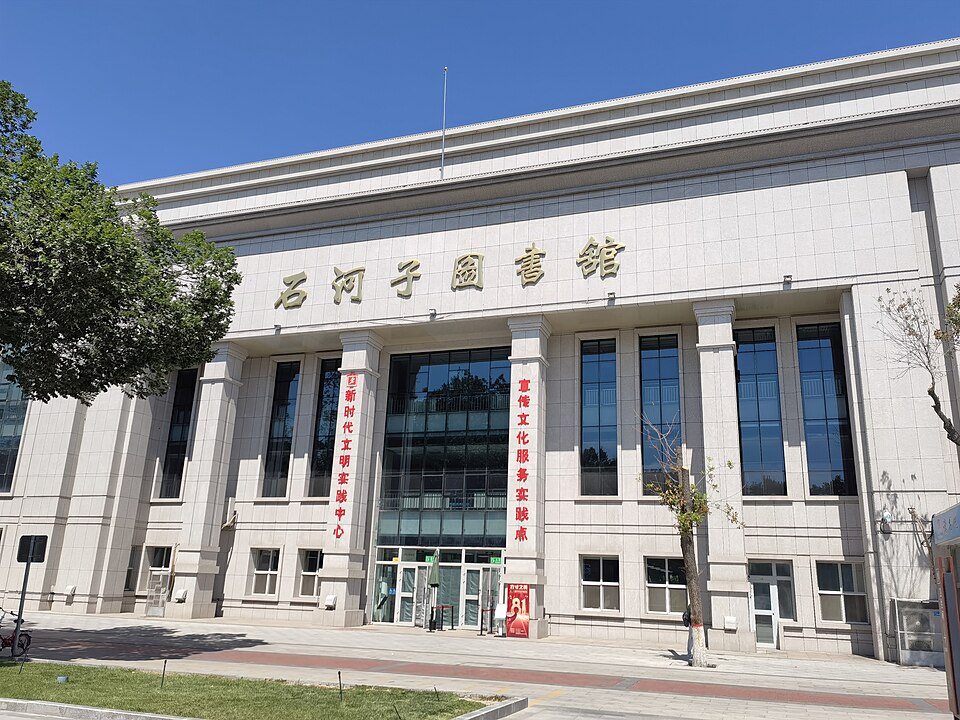
Shihezi University, with around 40,000 students, gives the north of the city its young feel, and the library is a good-looking modern building if you are photographing the planned town. Neither is a destination by itself. Out of town, the Changyu Baron Balboa winery runs cellar tours and tastings among its vineyards; it suits people who drive and have a spare half-day.
Getting in and where to stay
- From Urumqi by train: C-series intercity trains run from Urumqi Station to Shihezi through the day, about 1 hr 3 min to 1 hr 20 min; a few start at Urumqi South and take longer. Second class was about ¥29–32 on 2025–26 listings. Check 12306 for the day's timetable.
- By air: Shihezi Huayuan Airport reopened in 2015 after rebuilding but has few routes. Most people fly into Urumqi.
- In town: taxis and shared bikes cover everything listed above; the museum, monument and poetry museum are walkable from one another.
- Where to stay: the centre near Beisan Road for walking access, or just come for the day from Urumqi.
Shihezi sits between Urumqi and the oil town of Karamay, so it can also break the drive or train ride northwest toward Ili.
When to come
Shihezi has a dry continental climate: January averages about -15 °C, July about 25 °C. May to early October is the comfortable window for the parks and the sugar mill quarter. The museum works in any season, which makes Shihezi a reasonable winter half-day from Urumqi when the mountains are cold.
Eating in Shihezi
Liangpi is the dish people come back for: wide steamed noodles with a sesame-paste and chilli-oil dressing and chunks of gluten. The liangpi street by Residential Block No. 8 (Bahao Xiaoqu) has long-running stalls with queues, mostly of locals; order the mixed "liangmian" style and some kebabs. The Bingtuan Daily put a summer meal of liangpi, skewers and a bottle of kvass at a little over ¥20 in July 2026. Otherwise expect northern Chinese and Xinjiang staples: laghman, polo, big-plate chicken.
How to arrange the route
Day trip from Urumqi (not Monday): morning train; museum from 10:00; lunch at the liangpi street; Zhou Enlai monument and the poetry museum; late afternoon at the sugar mill quarter; evening train back.
One night: add the winery or the cotton-mill park the next morning, then continue to Karamay or back to Urumqi.
What to cut if short on time
Cut the winery and the cotton mill first, then the poetry museum. Keep the Corps museum. If you land in Urumqi on a Monday, move Shihezi to another day; the museum is the reason for the trip.
Things to confirm before you go
- Museum hours, holiday arrangements and whether booking is needed (WeChat account or 0993-2012111).
- Train times on 12306; carry the passport you booked with, as stations check ID.
- Winery tour availability if you plan to go.
Frequently asked questions
Is Shihezi worth a visit from Urumqi?
Yes, if the history of the Production and Construction Corps interests you. The museum is the best place in Xinjiang to understand it, and the round trip is about two and a half hours by train.
Is the Corps museum free?
Yes. Entry has been free since 2008; bring ID. It is closed on Mondays.
Why is Shihezi so green?
The city was planned and planted by the Corps from the 1950s, using irrigation from the Manas River system, and green space is part of its identity.
Sources
The facts in this article were checked against the following sources, retrieved October 1, 2026, and rechecked on October 21, 2026.
- Shihezi https://en.wikipedia.org/wiki/Shihezi
- 石河子市 (Chinese Wikipedia) https://zh.wikipedia.org/wiki/石河子市
- 新疆兵团军垦博物馆 (Chinese Wikipedia) https://zh.wikipedia.org/wiki/新疆生产建设兵团军垦博物馆
- Bingtuan Daily, "戈壁明珠焕新彩" (XPCC government site, 30 July 2026) https://www.xjbt.gov.cn/c/2026-07-30/8496283.shtml
- Museum opening-hours notice from 9 October 2025 (Urumqi Bendibao, 27 October 2025) http://wlmq.bendibao.com/xiuxian/20251027/66400.shtm
- Urumqi–Shihezi timetable (gaotie.net, 2026) https://www.gaotie.net/route/wulumuqi-shihezi/
Train fares are approximate from timetable sites; the museum is free.
All photos are from Wikimedia Commons, used under CC licenses; re-use requires attribution.
- shihezi-museum.jpg from File:新疆石河子市军垦博物馆前的王震雕像.jpg, by Mypowercell, CC BY-SA 3.0
- shihezi-city.jpg from File:Shihezi city 01.jpg, by Ccyber5, Public domain
- shihezi-library.jpg from File:石河子图书馆 Shihezi Library.jpg, by HaziiDozen, CC BY-SA 4.0