The Humble Administrator's Garden (Zhuozheng Yuan)
The Humble Administrator's Garden (拙政园) is Suzhou's largest classical garden and the one to see if you only see one. Tickets are real-name and for a time slot, booked 1 to 7 days ahead on the garden's official channels. They cost 80 yuan in April, May and July to October, and 70 yuan from November to March and in June. From March to October the garden opens 07:30 to 17:30, with last entry at 17:00. From November to February it closes at 17:00, with last entry at 16:30. Book the first slot of the day. The central garden is at its best, and quietest, in the first hour. Allow two to three hours. The gate is at 178 Dongbei Street, a few minutes from Zhuozhengyuan Subo station on metro Line 6.
For the rest of Suzhou, see the Suzhou travel guide.
Booking
- Where: the garden's official WeChat account or mini-program, or authorised ticket apps. Enter the passport you'll bring.
- When: 1 to 7 days ahead. Weekend and holiday morning slots go first, so book as soon as your dates are fixed.
- Early openings: in summer 2026 the garden opened at 06:45 between 19 June and 7 October, the first change to its hours in 74 years. That has ended for the year, but similar summer schedules may return, so check the notice.
| Month | Adult ticket (2026) |
|---|---|
| April, May, July to October | 80 yuan |
| November to March, June | 70 yuan |
Children, students and older visitors get concessions with ID. Check the current rules on the booking page.
What makes it special
In 1509 the censor Wang Xianchen retired to Suzhou and turned the site of an old Buddhist temple into a garden. He took the name from the Western Jin writer Pan Yue, who joked that growing vegetables and selling them was how a simple man governed, a wry comment on a retired official's life. The painter Wen Zhengming is said to have helped with the design. Almost five centuries of owners later, it was opened to the public in 1952. It has been a nationally protected site since 1961, and was put on the UNESCO list with the other Classical Gardens of Suzhou in 1997.
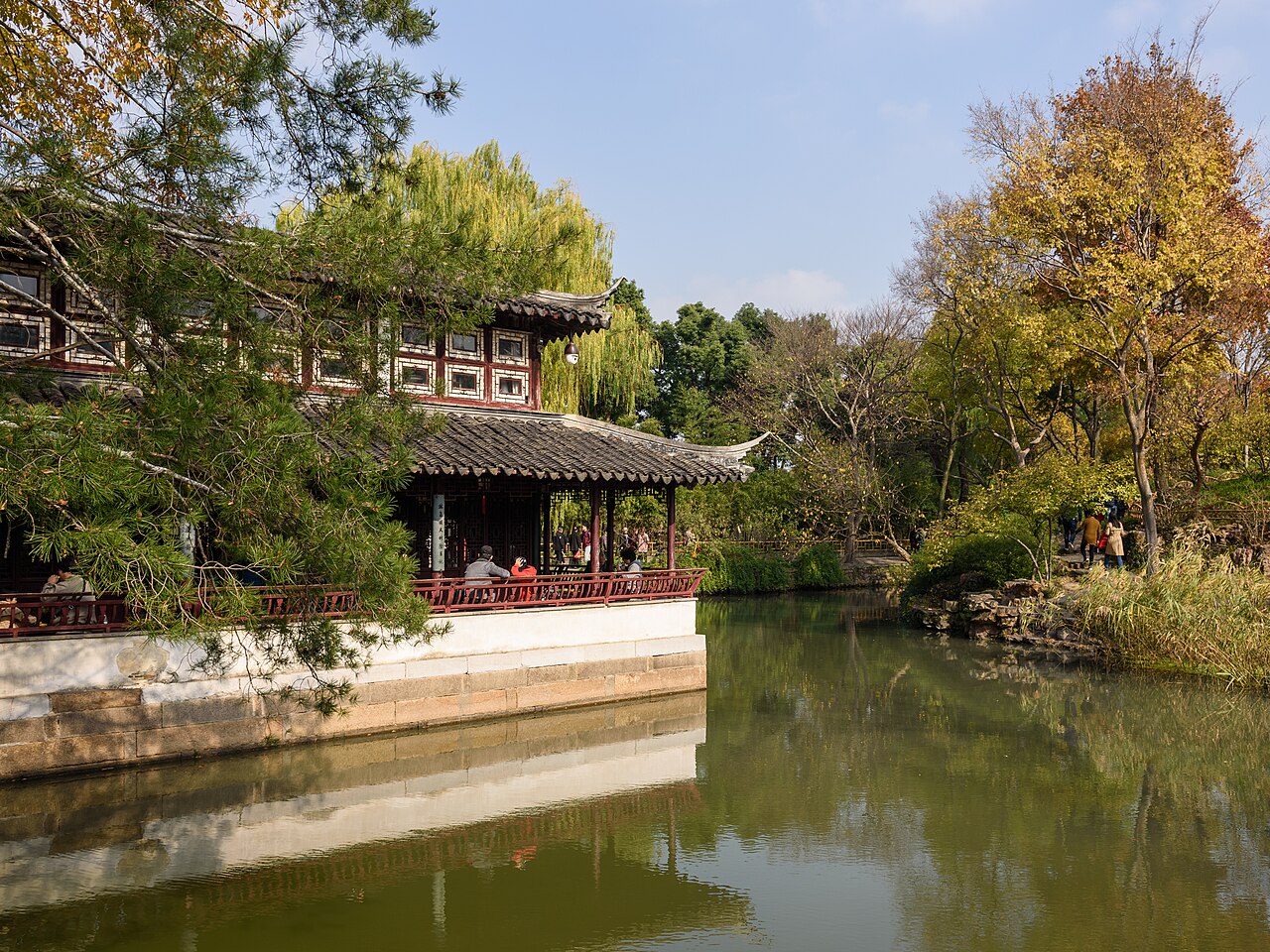
The garden covers about 46,000 square metres, laid out around water. Everything is arranged to be seen across ponds: halls face out over lotus beds, covered walkways bend so that each turn frames a new view, and walls with patterned windows give glimpses into the next space. It doesn't reveal itself all at once. That is the point.
A route through the three gardens
You enter through the East Garden, the most open part: lawns, a large pond and newer buildings. Walk through it fairly quickly.
The Central Garden is the heart of it. Go straight there if you're early.
- The Hall of Distant Fragrance (远香堂) faces north over the main pond. The name refers to the scent of lotus carried across the water in summer. Its windows on all sides frame the garden like a series of paintings.
- The islands in the pond have small pavilions and rockeries. Cross by the zigzag bridges, which are designed to slow you down and turn you towards new views.
- Hill-View Tower (见山楼) in the north-west corner looks back over the whole central garden.
- Small Flying Rainbow (小飞虹), a covered bridge, is one of the most photographed spots in Suzhou.
The West Garden is denser, with a hall built for listening to rain and music and a long winding corridor over the water. It is less visited and worth half an hour at the end.
For a short visit of about an hour, do just the Central Garden and leave through the West. Audio guides are available at the entrance if you want the names and stories explained.
Timing and crowds
- At opening: you can photograph the central pond without crowds. By 10:00 tour groups fill the terraces of the main halls.
- Late afternoon: better than midday, but last entry is 17:00 (16:30 in winter).
- Seasons: azaleas in spring, lotus flowering on the ponds in summer, autumn colour and osmanthus in October and November. Winter is quiet.
- Rain: the covered walkways keep you mostly dry, and the garden is beautiful in light rain. The stone paths and steps get slippery, though, so wear shoes with grip.
Next door
Suzhou Museum is a few steps away, a modern building by I. M. Pei. Entry is free, but you must book up to seven days ahead on the museum's website, WeChat account or mini-program. It opens 09:00 to 17:00 from Tuesday to Sunday, with last entry at 16:00, and is closed on Mondays except public holidays. Garden at 07:30, museum at 10:00 works well.
Pingjiang Road, the canal street, starts a few minutes' walk east along Dongbei Street. Lunch there, then walk south for the afternoon.
Save Tiger Hill and Hanshan Temple for another day, as they are on the other side of the city.
Frequently asked questions
How much is the Humble Administrator's Garden?
80 yuan in April, May and July to October 2026, and 70 yuan from November to March and in June.
Do you need to book the Humble Administrator's Garden?
Yes. Tickets are real-name and for a time slot, sold 1 to 7 days ahead. Holiday dates sell out.
How long do you need at the Humble Administrator's Garden?
Two to three hours for all three sections. One hour covers the Central Garden alone.
Is it the best garden in Suzhou?
It is the largest and most famous. The smaller Master of the Nets Garden and the Lingering Garden are just as fine in their own ways, and less crowded.