Tiger Hill (Huqiu), Suzhou
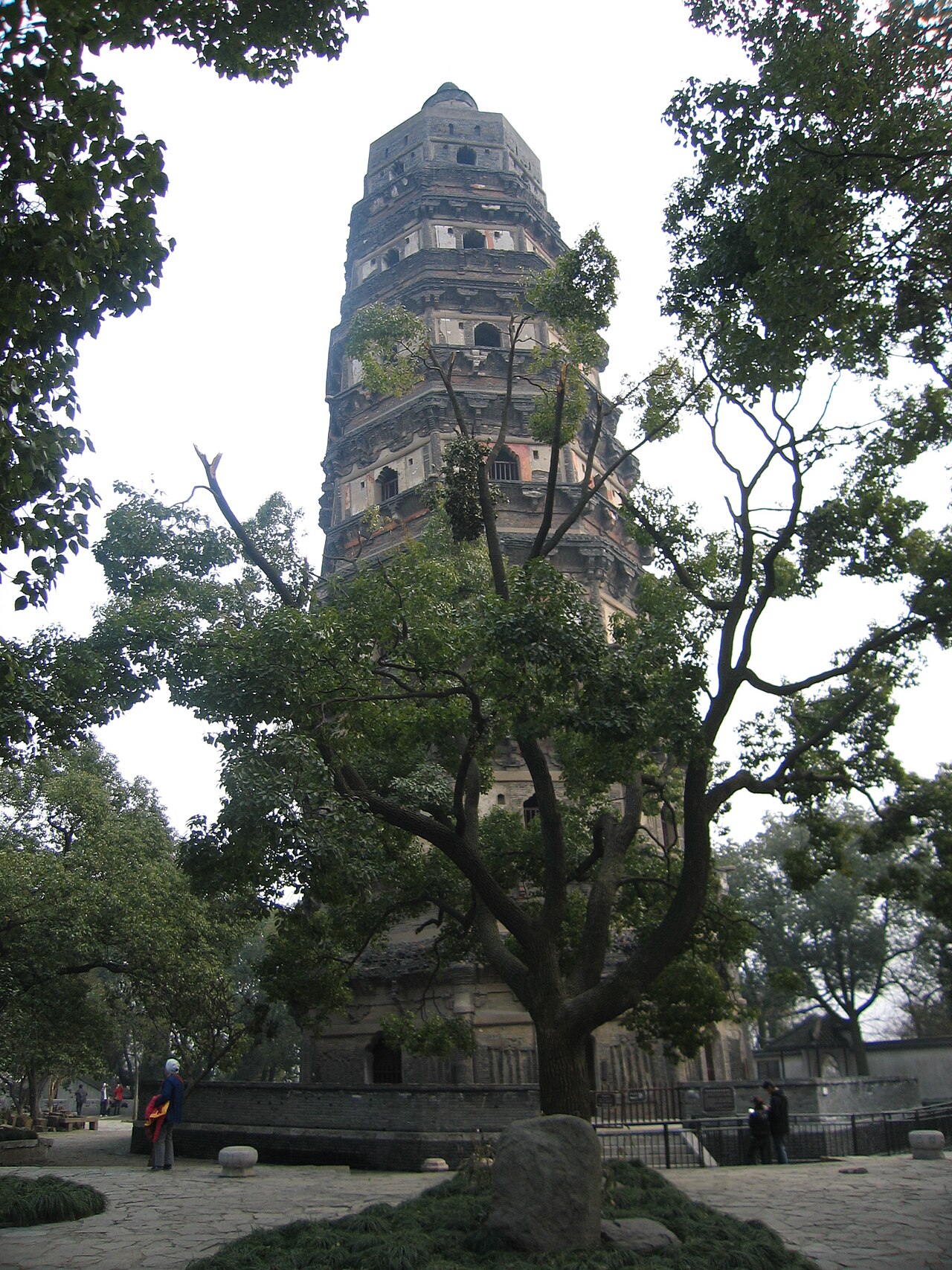
Tiger Hill (虎丘) is a low, wooded hill in north-west Suzhou crowned by the Yunyan Temple Pagoda, a thousand-year-old brick tower that leans visibly to one side. In 2026 tickets cost 70 yuan in April, May and July to October, and 60 yuan in other months. From May to October it opens 07:30 to 18:00, with last entry at 17:30. From November to April it closes at 17:30, with last entry at 17:00. Take metro Line 6 to Huqiu station, exit 3, and the south gate is a five-minute walk. Allow two to three hours, then walk to Shantang Street for lunch.
The rest of the city is in the Suzhou travel guide.
Why people have come here for 2,000 years
Tiger Hill is barely 35 metres high, but it has been the great outing of Suzhou since antiquity, "the finest sight in Wu". Su Dongpo is quoted as saying that to come to Suzhou and not visit Tiger Hill would be a lifelong regret. The legends start early. King Helü of Wu, who died in 496 BC, is said to be buried under the hill, and the name is said to come from a white tiger seen crouching on his tomb.
In the Tang the hill was briefly renamed Wuqiu, because "Hu" (tiger) was part of the name of the dynasty founder's grandfather. In 825, Bai Juyi, then governor of Suzhou, had a canal dug for seven li from Tiger Hill to the city's Chang Gate. That canal is Shantang Street today.
What to see, bottom to top
Thousand People Rock (千人石). A broad, reddish sloping rock on the way up, big enough for a thousand people to sit on. One legend says Helü's son killed the thousand workmen who built the tomb here, to keep its location secret, and their blood stained the rock. Another says the Liang dynasty monk Shenggong preached to crowds here.
The Sword Pool (剑池). A narrow, deep pool between sheer cliffs, with old inscriptions carved into the rock. Helü is said to have been buried beneath it with three thousand swords, and it is also linked to a legend about the calligrapher Wang Xizhi. Whether the tomb is really there has never been settled.
The Yunyan Temple Pagoda (云岩寺塔). Built between 959 and 961, at the end of the Five Dynasties, the pagoda is octagonal, seven storeys and 47.7 metres high, built of brick to imitate wooden construction. During repairs in 1638 it was found to be leaning north-east, so when the builders rebuilt the top storey they shifted its centre of gravity south. Modern engineering has since stabilised it. In the 1950s, Yue-ware celadon, a sutra box, embroidery and bronze Buddhas were found inside. You can't climb it. Walk round it instead, and see how much it leans from different terraces.
The rest of the hill has a temple, small gardens, a bonsai garden and terraces with views towards the city. Take a slow circuit back down the other side.
When to go
- At opening (07:30): the best time. The pagoda in morning light, no queues at the Sword Pool.
- Mid-morning on weekends and holidays: crowded on the main stair.
- Summer evenings: from 1 July to 31 August, the hill has opened in the evening until 21:00, with the pagoda lit up.
- Season: spring flowers, then a summer that is hot on the exposed slopes. Autumn is comfortable.
The paths are stone and there are steps everywhere, though nothing steep or long. If you have limited mobility, the lower areas are manageable, and the pagoda's lean is visible from several viewpoints without climbing to the top.
Tickets
| Months | Adult (2026) |
|---|---|
| April, May, July to October | 70 yuan |
| January to March, June, November, December | 60 yuan |
Concessions for children, students and older visitors are available with ID. Buy through the official booking channels or at the gate.
Getting there and the rest of the day
- Metro: Line 6 to Huqiu station, exit 3, then about five minutes on foot to the south gate.
- Bus: tourist line 1 (游1) to Huqiu Road, then about 500 metres to the south gate. Bus 32 and some tourist lines go to the north gate.
Afterwards, walk out of the south gate to the end of Shantang Street, and either follow the canal back towards the city, about 3.6 km to Changmen, or ride part of it. The street is busy with restaurants and lit up at night. In the afternoon, Hanshan Temple and the Maple Bridge are a short taxi ride west.
Keep the Humble Administrator's Garden and Pingjiang Road for a different day, since they are on the other side of the old city.
Frequently asked questions
How much is Tiger Hill?
70 yuan in peak months (April, May, July to October) and 60 yuan in the rest of the year, in 2026.
Can you climb the Tiger Hill Pagoda?
No. The leaning pagoda is closed to climbers, and you see it from the outside.
How long do you need at Tiger Hill?
Two to three hours for the Sword Pool, the pagoda and a circuit of the hill.
How do I get to Tiger Hill by metro?
Take Line 6 to Huqiu station and leave by exit 3. The south gate is about a five-minute walk.