Hubei Provincial Museum: How to Book and What to See First
The Hubei Provincial Museum, at 160 East Lake Road in Wuchang, is one of China's eight national-level key museums and the best reason to spend a morning indoors in Wuhan. Entry is free but must be booked in advance by real name, up to five days ahead. Its four headline treasures are the 65-piece bronze chime bells of Marquis Yi of Zeng, the Sword of Goujian, the Yunxian Man skull fossil, and a Yuan blue-and-white meiping vase. The bells are also played in a 30-minute show with its own ticket. It is closed on Mondays except public holidays. Plan three to four hours, then go out to East Lake for the afternoon. The city plan is in the Wuhan travel guide.
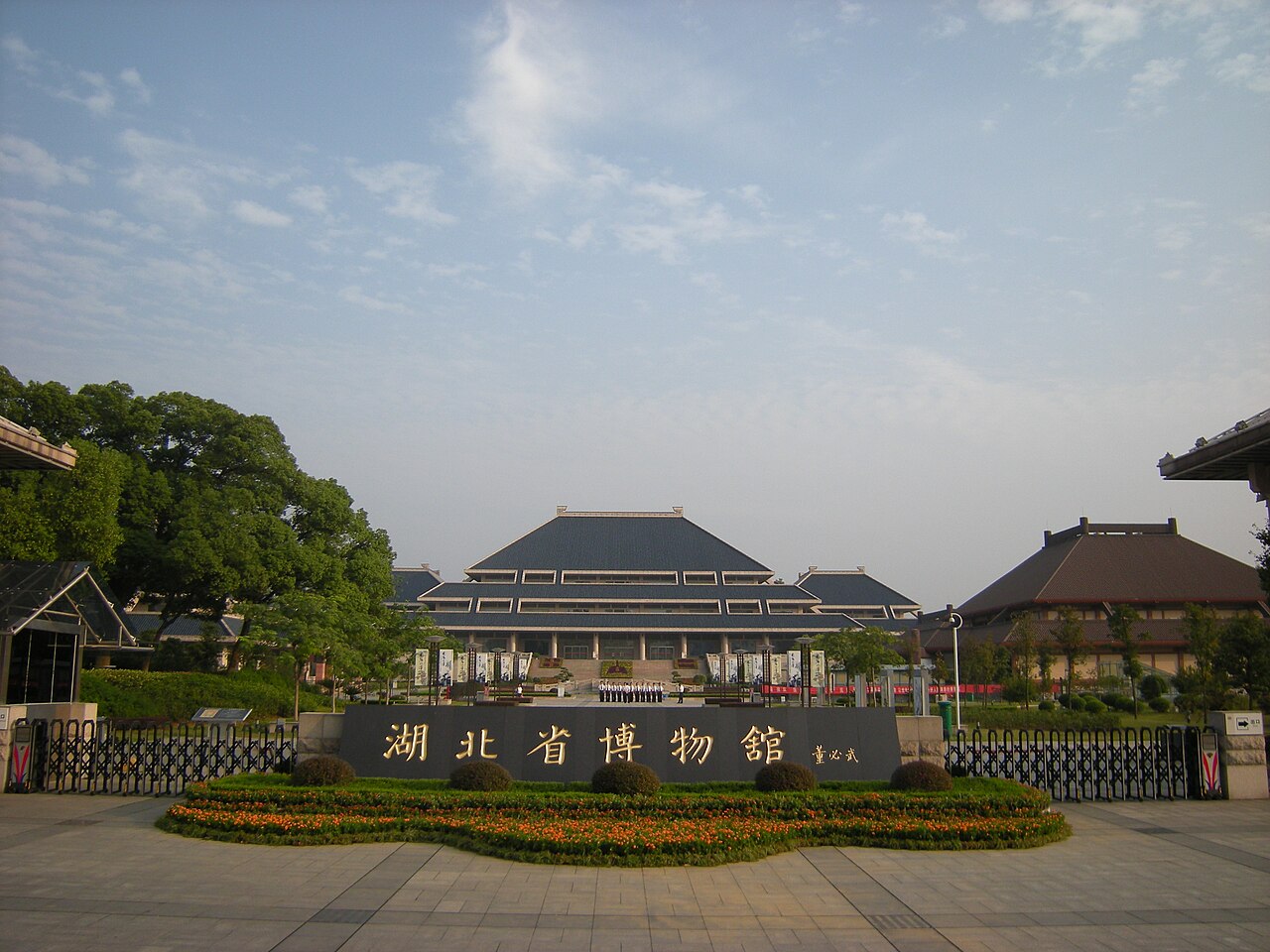
Booking and opening hours
Book a free timed slot through one of the museum's authorised channels: its official website, its official WeChat account, Meituan, and two Hubei government service apps. The museum says no other site or reseller is authorised. Each open day has timed entry slots; arrive within yours with the passport or ID you booked with. If you are late, you may be moved to the next slot.
From October 2026 the museum lengthened its regular hours:
- Tuesday to Friday: 09:00 to 17:30, last entry 16:30.
- Saturday and Sunday: 09:00 to 20:30, last entry 19:30.
- Public holidays: 08:30 to 21:00, last entry 20:00.
- Mondays: closed, except public holidays.
On weekend evenings, after 17:00, only the South and North buildings stay open. Slots for holidays and summer weekends disappear quickly, so book as soon as the five-day window opens. The weekend evening session is a good fallback when day slots are gone.
The chime-bell show
The Marquis Yi bells are played in replica in a 30-minute music and dance performance in the new chime-bell hall on the basement level of the South main building. You must reserve museum entry first, then buy a show ticket with an assigned seat at the self-service machines outside the hall, in the bells mini-program, or at the staffed counter. Prices on the museum's site are CNY 50 standard and CNY 30 concession, for military personnel, students, people with disabilities and visitors aged 65 to 69; visitors over 70 go free. In peak season, March to October, weekday shows are listed at 11:30, 14:00 and 15:00, with an extra 10:30 show at weekends and on holidays; in winter there are fewer. Weekend evening shows have been added this year. Times change, so check the mini-program on the day.
What to see, in order
The collection is huge and the complex has several buildings; the South building, the third phase of expansion, opened in December 2021. Go in with a short list.
Marquis Yi of Zeng. Start here. The tomb was excavated in Suizhou in 1978, and a bronze bell inscription dates the burial to about 433 BCE. The set of 65 bells hangs in three tiers and eight groups on an L-shaped bronze and wood frame, and the bells can still play full scales. The same tomb produced bronze ritual vessels, lacquer coffins and weapons; give this gallery the most time.
The Sword of Goujian. The sword of the King of Yue carries an inscription in bird-script: "King Goujian of Yue made this sword for his own use". It is still sharp and barely tarnished after about two and a half thousand years. Expect a short queue to see it at peak hours.
Chu and Zeng. The galleries on the states of Chu and Zeng explain where those two treasures fit, with lacquerware, bronzes and bamboo slips, including the Qin slips from Yunmeng found in 1975.
Yunxian Man and the meiping. The skull fossil, found in 1989 in Yunxian, is Hubei's first discovery of an early human skull. The blue-and-white plum vase is a small detour for anyone interested in porcelain.
A highlights visit covering just the bells and the sword takes about two hours. Temporary exhibitions can be excellent, and some need a separate booking; decide in advance whether they come before or after the permanent stars.
Getting there
Take Metro Line 8 to the Provincial Museum Hubei Daily station (省博湖北日报站). The museum recommends Exit A or the Huangli Road pedestrian passage, then a walk of about 600 metres to the South Gate. The North Gate opens toward East Lake, which makes it the natural exit for an afternoon by the water. Taxis and ride-hailing use the South Gate on East Lake Road.
Practical points
- Leave large bags at your hotel; security is slower with luggage.
- Eat before you go in, or plan a break after two hours. Halls are big and there is a lot of standing.
- Photography rules vary by gallery; flash is not allowed.
- School groups crowd the main halls on weekday mornings. The first slot of the day, or the weekend evening session, is calmer.
- If Chinese labels slow you down, an audio guide helps in the bells and Chu galleries.
Fitting it into a Wuhan trip
The museum and East Lake together make the east Wuchang day: galleries in the morning, a walk or bike ride on the greenway after lunch. Keep Yellow Crane Tower, Hubu Alley and the Yangtze River Bridge for a different day in central Wuchang; trying to do the tower and a full museum visit in one morning leaves both rushed.
If you are travelling north toward Suizhou, where the Marquis Yi tomb was found, see the museum first. It holds the objects; the site holds the context.