Wuhan Yangtze River Bridge: How to Walk Across
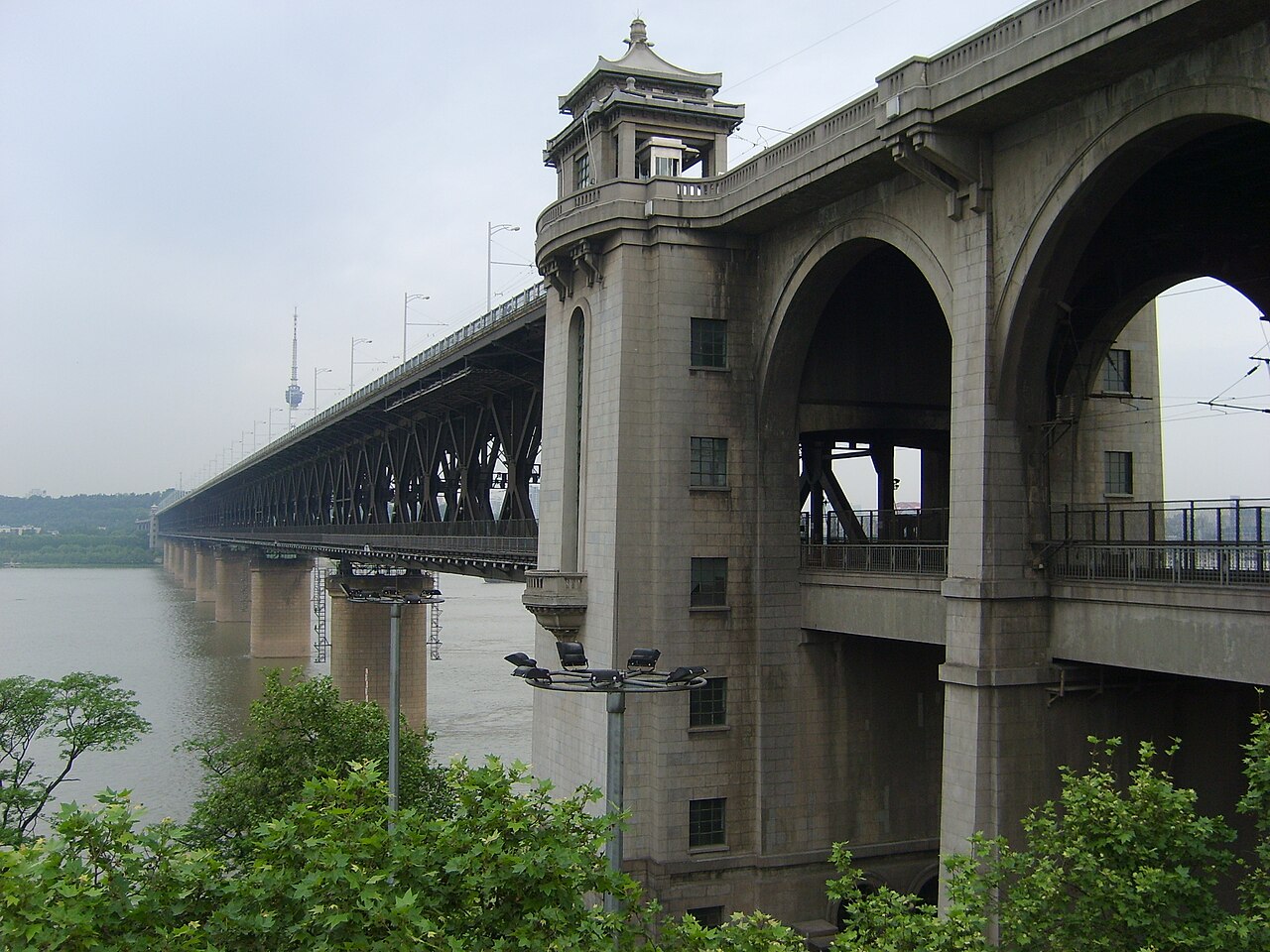
The Wuhan Yangtze River Bridge was the first bridge across the Yangtze when it opened on 15 October 1957, joining Snake Hill in Wuchang to Guishan in Hanyang. It is a double-deck steel truss bridge: four lanes of road with a footpath on each side above, and the Beijing to Guangzhou railway below. Walking across is free and takes about half an hour one way with stops, and it is the best way to feel the width of the river in the old heart of the city. Start from the Wuchang end beside Yellow Crane Tower, and go in the late afternoon if you want the lights. The rest of the city is in the Wuhan travel guide.
The bridge in numbers
The whole structure is 1,670 metres long: 1,156 metres of main bridge over the river and approach viaducts of 303 metres on the north bank and 211 metres on the south. The road deck carries an 18-metre carriageway with a 2.25-metre footpath on each side. The steel spans were joined over the sixth pier on 5 May 1957, and the bridge opened that October, two years ahead of schedule thanks to a new method of sinking the piers on drilled tubular columns instead of pressurised caissons. A month later the Beijing to Hankou and Guangzhou to Hankou lines were joined into a single Beijing to Guangzhou railway, with this bridge as its crossing.
Ideas for a bridge here go back to the 1910s, and nearly every plan used the same idea: build the approaches on the two hills to keep them short. That is still what makes the setting work. The bridge springs from Snake Hill on one side and Guishan on the other, and Yellow Crane Tower, rebuilt in 1985 on a new site because the bridge approach took the old one, stands over the southern end.
Getting on and off
From Wuchang. Walk from Yellow Crane Tower or Hubu Alley toward the bridgehead on Snake Hill; the nearest metro is Simenkou Yellow Crane Tower on Line 5. The bridgehead towers at each end, 35 metres high in a Chinese pavilion style, were the tallest buildings in Wuchang until the new tower went up. Pedestrian access to the deck is at the bridgeheads; follow the signs or the flow of walkers.
From Hanyang. Approach from the Guishan side, below Guishan, near the Qingchuan Pavilion area. Walking from Hanyang to Wuchang puts the Yellow Crane Tower ahead of you the whole way, which some people prefer.
Access points occasionally close for maintenance. If one end is shut, the other usually is not.
What you see from the deck
Downstream you look toward Hankou's skyline and the long riverfront parks; upstream, newer bridges cross the river in the haze. Cargo barges and ferries pass underneath. Because the railway runs on the lower deck, the deck shudders when a train goes by; that is normal. Facing back toward Wuchang, the tower on Snake Hill sits directly above the bridge, which gives the classic photograph without paying for the tower.
At the Wuchang end, on the south side of the bridgehead, stands the 11.5-metre monument built with the bridge. Its column represents the tubular piers; one face carries Mao Zedong's line, "a bridge flies across north and south, turning a natural barrier into a thoroughfare".
Best time to go
Late afternoon into dusk is the favourite: the light warms, the bridge lights come on, and the riverfront lights up on both banks. Early morning is cooler and quieter, with locals walking and exercising. Midday in July and August is hard work on exposed steel and concrete; bring water and a hat. In winter the wind over the river is much colder than in the streets below.
On humid days the far bank can disappear into haze. A clear day after rain or a north wind gives the longest views.
Safety and etiquette
Stay on the footpath. The carriageway is busy and there is no stopping for photos in traffic. Hold on to children near the railings and keep tripods out of the way of other walkers. In heavy rain the surface is slippery, and in a thunderstorm the open deck is no place to be; turn back. Drone use over the river and bridge falls under local flight rules, so do not assume it is allowed.
Pairing it with the rest of Wuhan
The easiest plan is a Wuchang morning or afternoon:
- Breakfast at Hubu Alley.
- Yellow Crane Tower at opening.
- The bridge on foot, out and back or across to Hanyang and then the metro.
Or reverse it: tower in the afternoon, bridge at dusk, dinner in Wuchang. Either way, keep the Hubei Provincial Museum and East Lake for a separate day on the east side, where they need most of a day between them. The Hankou riverfront and Jianghan Road make a good evening on another day; Metro Line 2 crosses under the river in minutes.
Is it worth a special trip?
If you have climbed Yellow Crane Tower and seen the bridge from above, you may feel you have it. Walking it is a different experience, though: the noise of trains underneath, the scale of the river, the two hills facing each other. For the price of an hour and nothing else, it is one of the best things to do in central Wuhan, and an easy one to fit around the tower.