Yellow Crane Tower: Tickets, Floors and the View Over the Yangtze
Yellow Crane Tower stands on Snake Hill in Wuchang, above the southern end of the Wuhan Yangtze River Bridge. A tower here is recorded from 223 CE, and it has burned and been rebuilt many times; the present one, finished in June 1985, is a new concrete building with five storeys and a gourd-shaped finial, 51.4 metres tall, about a kilometre from the old site. People climb it for the view of the river and the bridge, and for the poems by Cui Hao and Li Bai that made the name famous. The 2026 day ticket is CNY 70, and there is a separate, pricier night session. Allow one and a half to two hours, and pair it with breakfast at Hubu Alley, ten minutes away. The Wuhan travel guide has the full route.
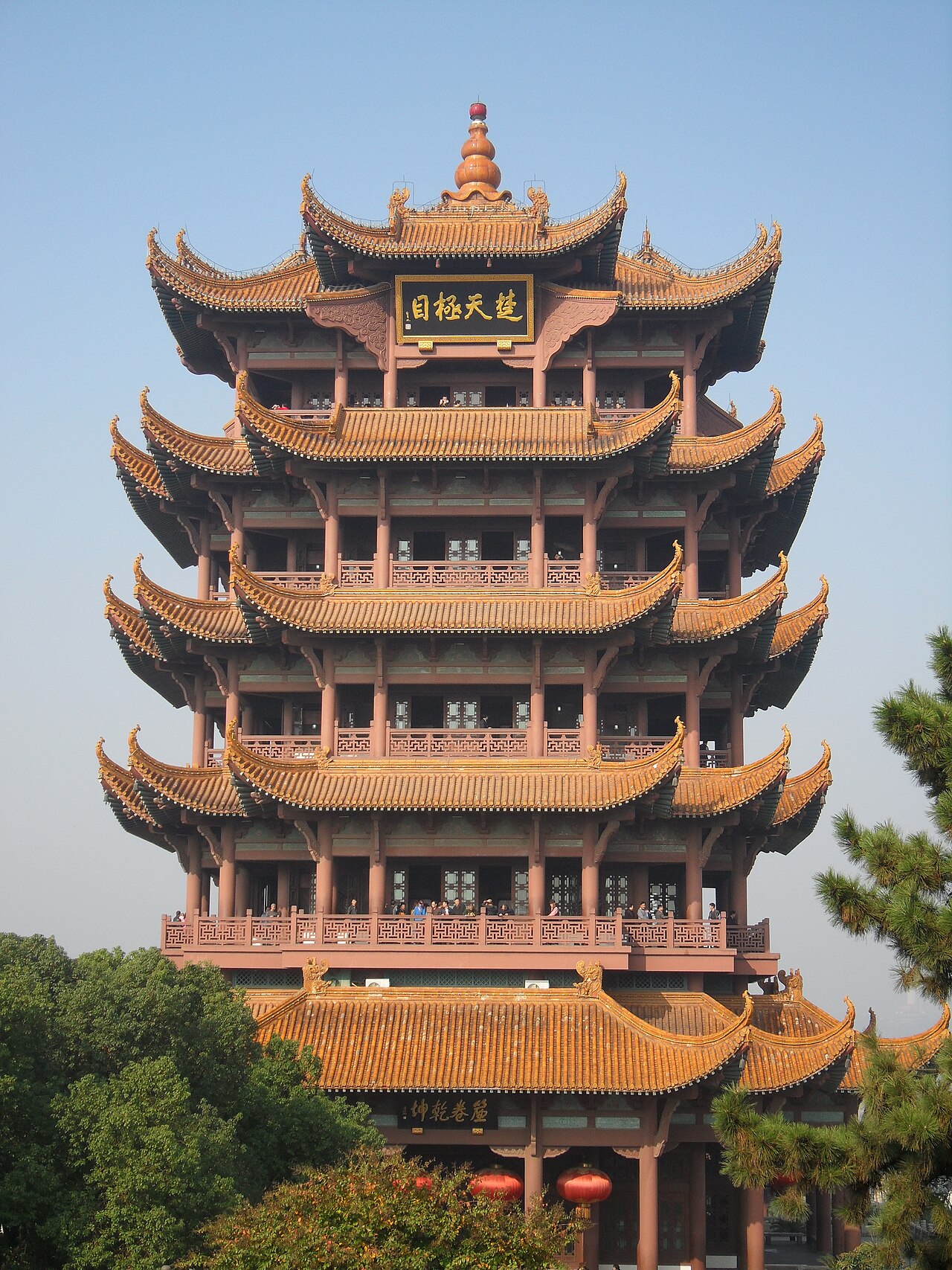
Tickets and hours in 2026
The park's official site and local listings collected in August 2026 give the following:
| Day session | Night session | |
|---|---|---|
| Adult | CNY 70 | CNY 150 (CNY 120 Monday to Thursday, non-holiday) |
| Reduced | CNY 35 half price | Child, student and concession rates |
| Tickets sold | 08:30 to about 17:00 | 19:30 to 21:40 |
| Last entry | 17:20 | 21:50 |
| Park clears | 18:00 | 22:30 |
Half price applies to under-18s from age six, full-time students up to undergraduate level, people aged 60 to 64, and Chinese military veterans, with ID. Visitors aged 65 and over and children 1.2 metres or under enter free. Buy through the park's official WeChat account or its ticket mini-program, and carry the passport used for the booking. Inside the park, the main tower is open until 18:00 and smaller halls close earlier, from 17:00. Prices are collected listings, not a promise; check the board before you pay.
What is inside
The building is a modern reconstruction, and it does not pretend otherwise. The floors hold exhibits rather than period rooms. The ground-floor hall has a large mural of the crane legend; the third floor shows portraits of poets who wrote about the tower, Li Bai, Bai Juyi, Lu You and Yue Fei among them, with their lines; another floor shows models of the tower as it looked in different dynasties. Read one or two of these and keep moving: the top is the reason to come.
From the upper galleries you look straight down Snake Hill to the bridge, with Guishan on the far bank in Hanyang and the river traffic between. On a clear day you can follow the bridge across. Humid summer haze often flattens the view at midday; mornings after rain, and autumn and winter days, are usually sharper.
The park around the tower is bigger than it looks from the gate. Poem steles, the White Cloud Pavilion, a bronze statue of Yue Fei and smaller halls are spread along Snake Hill. A loop through them adds half an hour to an hour.
Day or night?
The day ticket is the better value for a first visit: daylight is when you see the river, the bridge and the hill clearly. The night session is a different product, with lighting and performances at more than twice the price. It suits a second visit, or travellers who care more about the illuminated tower than about the view from it. Monday to Thursday nights outside holidays are cheaper. Do not plan to use a day ticket after dark; the sessions are separate.
Getting there and avoiding queues
Metro Line 5 stops at Simenkou Yellow Crane Tower station, a short walk from the park and from Hubu Alley. Follow the signs from the station exit. Taxis and ride-hailing drop on the roads around Snake Hill.
The gate queues are longest from mid-morning on weekends and holidays, when tour groups arrive. Be at the gate around opening, climb straight to the top while the galleries are empty, then walk the park on the way down. In July and August the terraces are hot by late morning; that is another reason to start early.
A Wuchang morning
The most natural pairing in Wuhan:
- Hubu Alley for breakfast at about 07:30, before the lane fills.
- Yellow Crane Tower at opening, top floor first.
- The bridge on foot from the Wuchang end, either straight after or at dusk.
Leave the Hubei Provincial Museum and East Lake for another day; both are on the east side of Wuchang and each wants several hours. Hankou's Jianghan Road and riverside are across the river by Metro Line 2 and belong to an evening.
A little history worth knowing
The old tower stood closer to the river. The last traditional version, three storeys high, burned in 1884, leaving only its bronze finial, and when the bridge's Wuchang approach was built in 1957 it took over the old site. The city decided in October 1981 to rebuild from historical records, on a new spot on Snake Hill, and the new tower is close to twenty metres taller than the one it replaced. Knowing that helps: you are visiting a 1980s landmark that carries an old name, and the view is the real survivor.
Who might skip it
If you have seen several rebuilt towers already and expect antiquity, the concrete interior may disappoint. You can get much of the same river view free by walking onto the Yangtze River Bridge from the Wuchang end, where the tower itself becomes part of the picture. For most first-time visitors, though, the climb is still the clearest way to understand how the city sits across the river, and it takes little more than an hour.