Gulangyu, Xiamen: Ferry Booking and a One-Day Plan
Book the ferry first. Gulangyu, the small car-free island off Xiamen's southwest shore, takes at most 50,000 visitors a day. Every visitor ticket is real-name and sold through one official system, and tickets open 15 days ahead at 09:00. Most day visitors sail from Dongdu Passenger Terminal at the Xiamen International Cruise Centre. Once you are across, a full day covers Sunlight Rock, a couple of the gardens and the old consulate lanes; the five main paid sites share a combined ticket listed at 90 yuan in 2026. There are no cars or bicycles, only electric buggies and service vehicles, so you walk everywhere, uphill in places. UNESCO inscribed the island in July 2017 as "Kulangsu, a Historic International Settlement". The three-day city plan is in the Xiamen travel guide.
The ferry, step by step
The official platform is the 屿见厦门 mini-program on WeChat or Alipay. The windows and machines at the wharves sell the same tickets. Under the ferry company's published 2026 notices:
- Book with the ID you will carry. Tickets are real-name, and a passport works as the ticket at the gate if you booked with it.
- Book early for weekends and holidays. From 1 February 2026, tickets open 15 days ahead, with each new day released at 09:00. Holiday sailings can sell out before noon.
- Pick your wharf. Day visitors leave from Dongdu Passenger Terminal, which has the most sailings, from the First Wharf, or from Songyu terminal in Haicang. Boats land at Sanqiutian or Neicuo'ao on the island. The central Xiamen Ferry Terminal opposite Zhongshan Road carries residents in the daytime and runs visitor sailings only in the evening, from Hall 2.
- Know the fare. Published visitor fares are 35 yuan for the standard route and 80 yuan for the premium sightseeing boat.
- The return is included. Your outbound ticket includes one free return trip, valid for 20 days, from any island wharf on any boat type.
- Arrive 45 to 60 minutes early. Security queues are long. Boarding checks open 20 minutes before sailing and close 5 minutes before.
The mini-program is designed for domestic users, and overseas phones sometimes struggle with it. If that happens, the windows at Dongdu sell to passport holders, but on a holiday you risk finding the day sold out. Routes and evening hours shift between the summer and winter timetables, so check the notice for your date.
How the island got its buildings
After the Treaty of Nanking opened Xiamen (then Amoy) as a treaty port in 1843, foreign merchants and missionaries chose to live on Gulangyu rather than in the crowded town across the channel. On 10 January 1902, the consuls of nine powers signed the land regulations that made the island a public international settlement, and a municipal council followed in 1903. Thirteen countries eventually kept consulates here. The British dominated the council, and Sikh policemen from British India patrolled the lanes. Japan occupied the island from 1942 until the end of the Second World War.
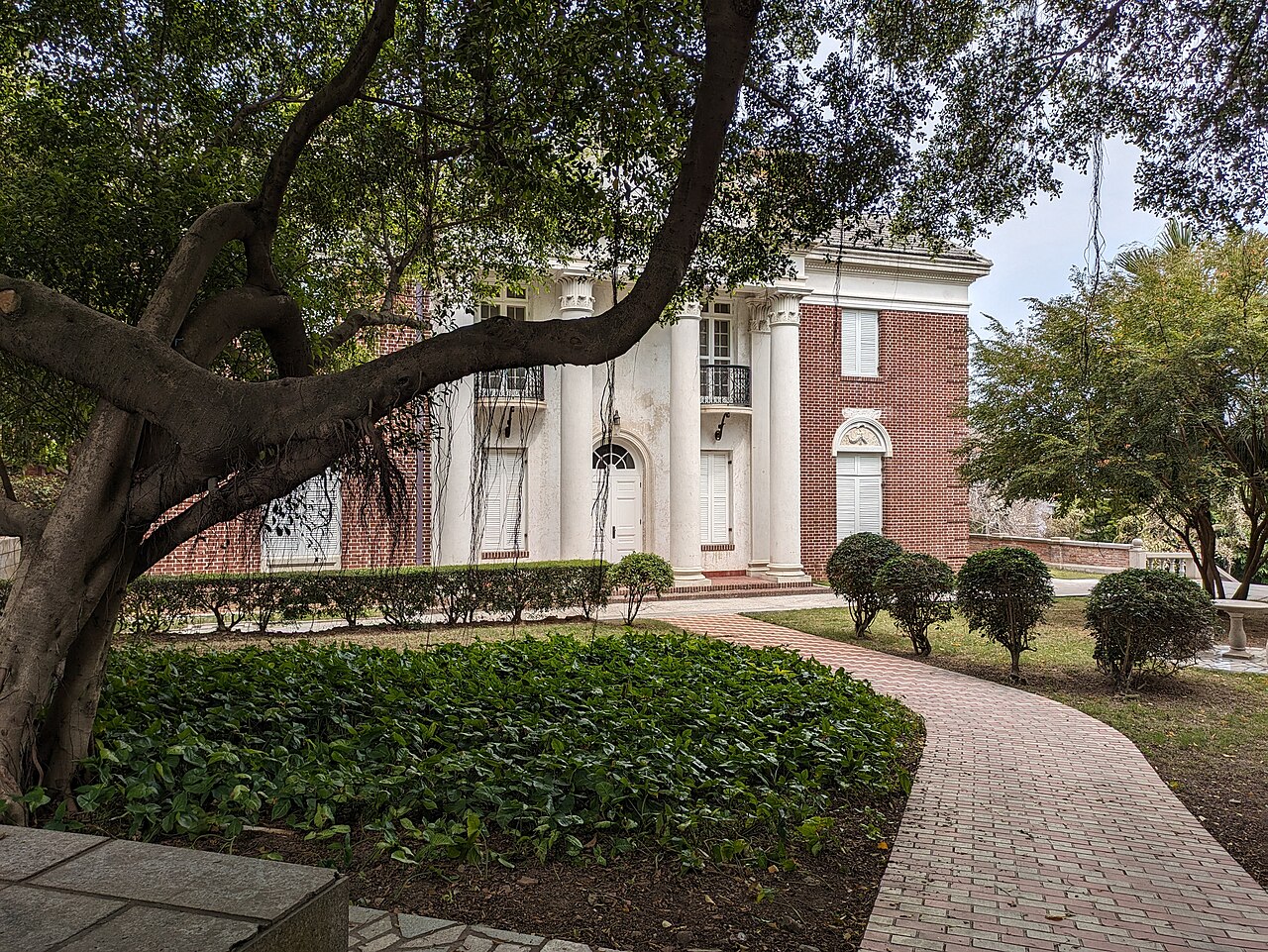
The result is the mix you walk through. Western consulates and trading-house residences stand next to Minnan courtyard houses and large villas built in the 1910s to 1930s by overseas Chinese returning from the Philippines, Indonesia and Singapore. Most are now homes, guesthouses or offices, so you see them from the lane. The former American consulate at 26 Sanming Road, built in 1930, is now a hotel. The Catholic church on Lujiao Road, from 1916, is one of the island's few Gothic facades.
The paid sites
The 90-yuan combined ticket covers five sites: Sunlight Rock with the Qinyuan garden, Shuzhuang Garden with the Piano Museum, Haoyue Garden, the Organ Museum in Bagua Lou, and the International Calligraphy Carving Art Museum. Listed single prices are 50 yuan for Sunlight Rock, 30 for Shuzhuang Garden and 10 for Haoyue Garden. If you want Sunlight Rock and at least two others, the combined ticket roughly pays for itself.
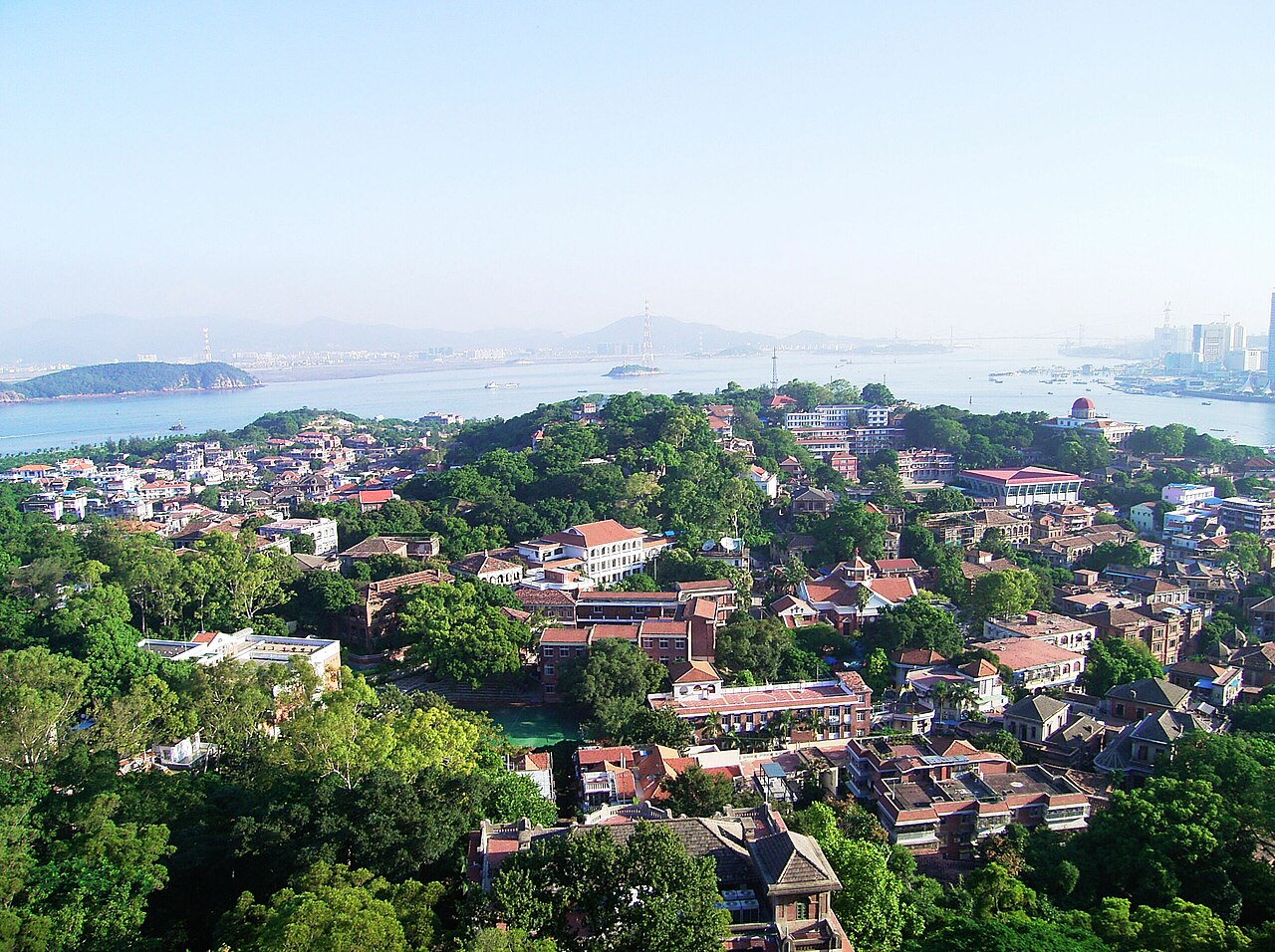
- Sunlight Rock is the island's summit, at about 92.7 metres, and the one view that shows all of Gulangyu at once.
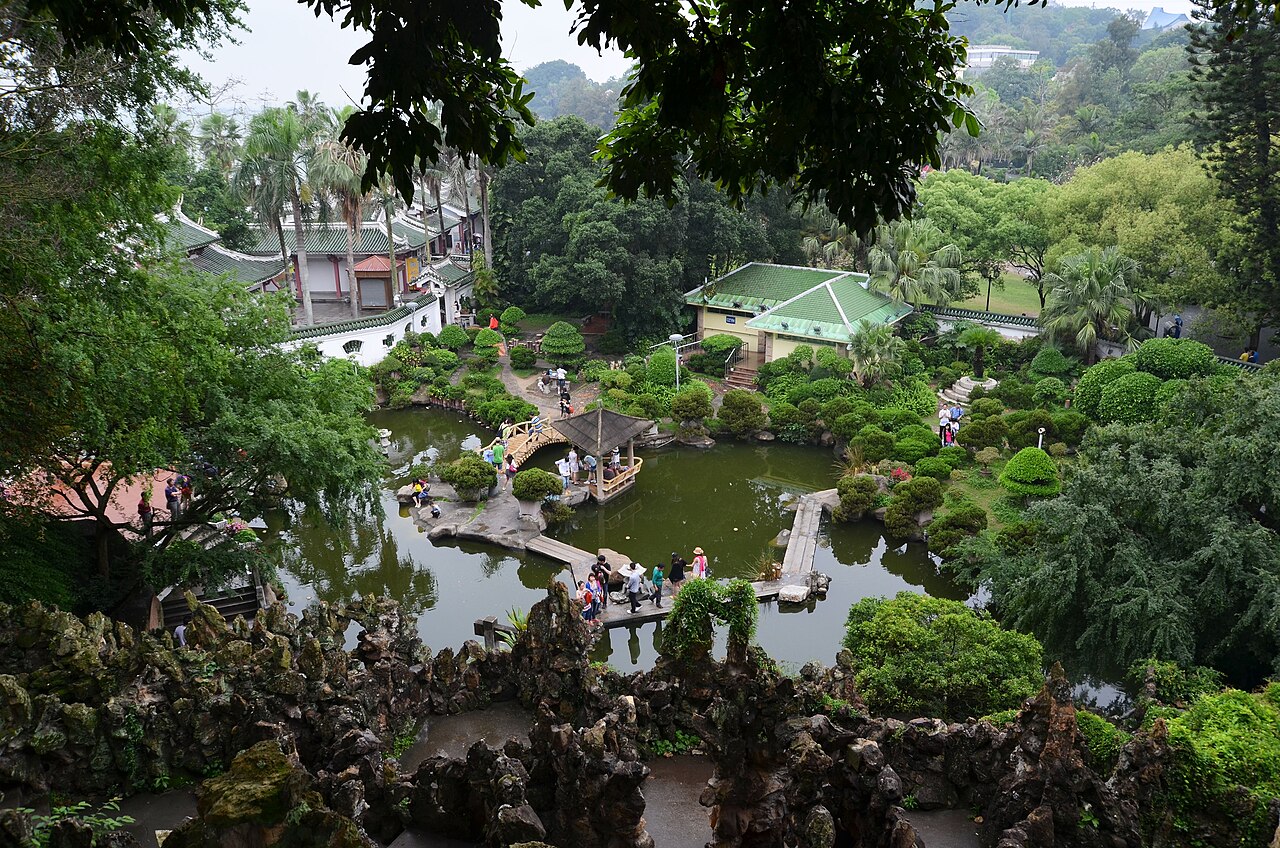
- Shuzhuang Garden was built in 1913 by Lin Erjia of the wealthy Lin family of Banqiao in Taipei, who moved here after Taiwan was ceded to Japan, and modelled it on the family garden. Half of it works the hillside with rockeries. The other half opens onto the sea with pavilions and a zigzag bridge. The Piano Museum inside is the clearest stop for the island's "piano island" name.
- Haoyue Garden on the east shore holds a 15.7-metre granite statue of Zheng Chenggong (Koxinga), put up in 1985 and facing the strait.
- Bagua Lou, built in 1907 for Lin Heshou, is the domed landmark you see from the ferry. It now houses the Organ Museum.
The Palace Museum's Gulangyu Gallery of Foreign Artefacts, which opened in May 2017 in the restored former Hope Hospital on Guxin Road, is ticketed separately.
A one-day route
- Early boat from Dongdu, landing at Sanqiutian.
- Sunlight Rock first, before the tour groups from later boats reach the final staircase.
- Downhill to Shuzhuang Garden and the south-shore beach.
- Lunch in the lanes.
- Afternoon in the consulate streets and Bagua Lou.
- Haoyue Garden on the way to the boat back.
The operators suggest four to six hours for all five paid sites, which is a full day once you add the walking. Lanes branch constantly, so download an offline map. Late afternoon is when day visitors thin out and the island starts to feel like a neighbourhood. Return boats run from one wharf or another around the clock, so staying for dinner is easy. Piano Wharf handles the small-hours departures.
Music and staying over
The island has produced pianists such as Yin Chengzong, and the Chinese Musicians' Association named it an "Island of Music" in 2002. The Gulangyu Concert Hall schedules recitals; check its programme if an evening concert appeals.
A night in one of the villa guesthouses gives you the island early and late, when it is quietest, and makes the day less dependent on boat times.
Frequently asked questions
Do I need to book the Gulangyu ferry in advance?
Yes on weekends and holidays, and it is wise on any day. Tickets open 15 days ahead and the island is capped at 50,000 visitors a day.
Which wharf should I use?
Dongdu Passenger Terminal at the cruise centre has the most daytime visitor sailings. The central ferry terminal on Zhongshan Road takes visitors only in the evening.
How long should I spend on Gulangyu?
A full day for the main sites at an easy pace. Half a day is enough for the lanes and Sunlight Rock alone.
Can I stay overnight on Gulangyu?
Yes. Villa guesthouses let you see the island before the first boats and after the last day visitors leave. The next day, Xiamen University and Nanputuo Temple make a natural mainland morning, followed by the coast along Huandao Road.