Huaqing Palace: The Tang Hot-Spring Palace Next to the Terracotta Army
Huaqing Palace (Huaqingchi) is a hot-spring palace garden at the foot of Mount Li in Lintong, about 10 kilometres from the Terracotta Army, on the same day trip from Xi'an. It is best known for the Tang emperor Xuanzong and his consort Yang Guifei, whose baths survive as excavated ruins, and for the Xi'an Incident of 1936, when Chiang Kai-shek was detained here. Entry costs 120 yuan and the grounds are open 07:00 to 18:00. Allow two to three hours, and visit after the army, not instead of it. The evening show The Song of Everlasting Sorrow is a separate ticket.
The full plan is in the Xi'an travel guide.
Tickets and hours
From the scenic area's official ticket page:
- Entry: 120 yuan for adults, 60 yuan for students.
- Hours: 07:00 to 18:00. Ticket sales stop at 17:30 and entry at 17:40.
- The Song of Everlasting Sorrow: sold separately, with seats in several price bands from about 199 yuan up to nearly 1,000 yuan. A show ticket doesn't require a palace ticket. Show times listed on the official page include 19:10, 20:35, 22:00 and 23:25, but the schedule changes with the season, and the show usually stops for the winter.
Buy through the scenic area's official channels and bring your passport. On holidays, buy ahead.
What you walk through
The palace sits on a slope, with the pools and halls at the bottom and paths climbing Mount Li behind.
The Tang imperial bath ruins. The main reason to come. Excavations uncovered the stone-lined baths used by the Tang court, including the Lotus Pool, associated with Emperor Xuanzong, and the smaller Haitang (Begonia) Pool linked to Yang Guifei. They are displayed under cover as ruins, so you see the shapes of the pools and the water channels, not working baths.
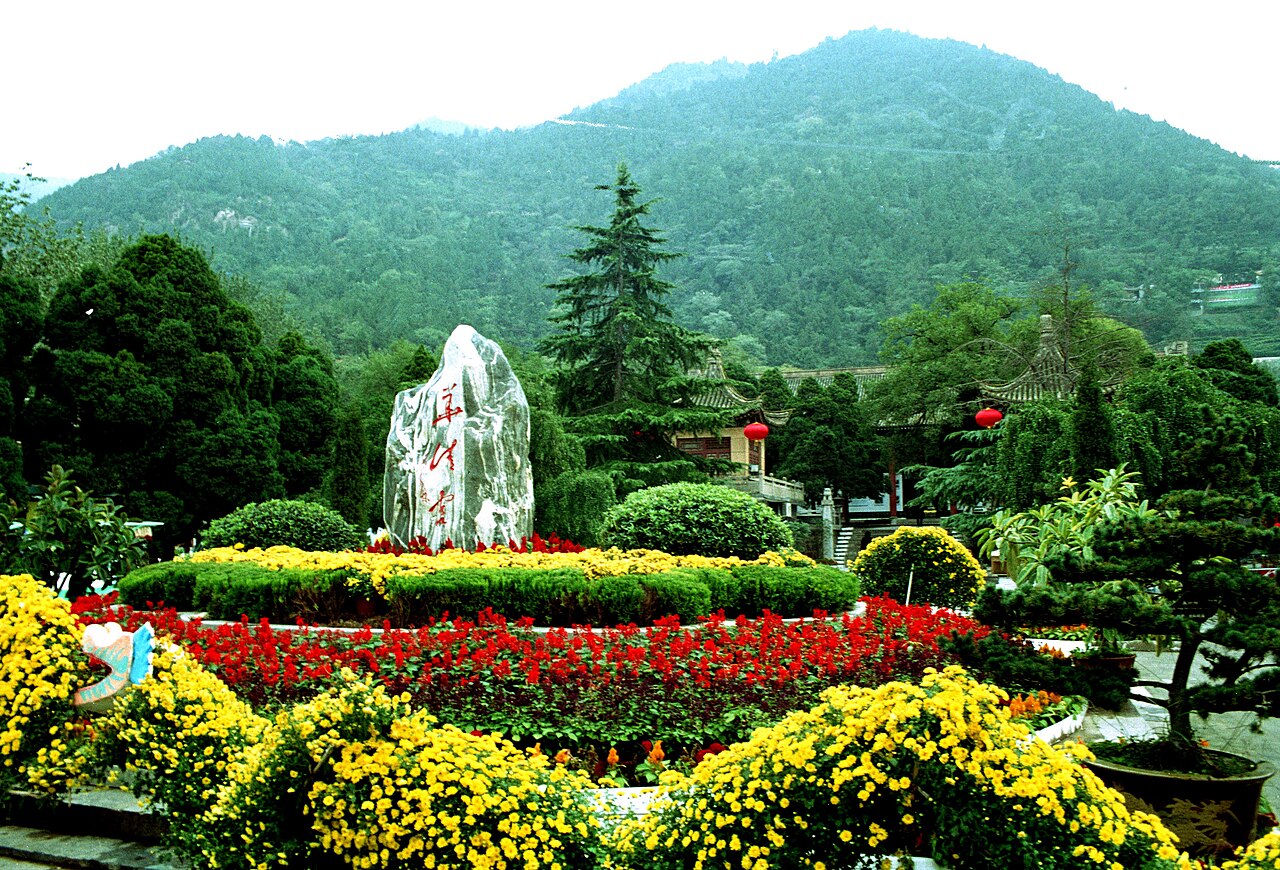
The gardens and lake. The reconstructed Tang-style halls around Jiulong Lake (Nine Dragon Lake) and the statue of Yang Guifei are where most people take photos. Expect a polished scenic area rather than an untouched ruin.
The Xi'an Incident sites. In December 1936, the generals Zhang Xueliang and Yang Hucheng detained Chiang Kai-shek to force him to stop fighting the Communists and turn against the Japanese invasion. The Five-Room Hall (Wujianting), where Chiang was staying, still shows bullet marks from the night of the arrest. Up the slope, a pavilion marks the spot on Mount Li where he was found hiding. The climb takes extra time and energy after the pits, so skip it if your legs are tired.
You won't get a bath here. The palace is a heritage site, and the hot-spring hotels in Lintong and around Xi'an are separate businesses with separate bookings.
Background
Rulers bathed in the Mount Li springs long before the Tang dynasty. The palace reached its height under Xuanzong in the eighth century, when he spent winters here with Yang Guifei. Their story, which ended with her death during the An Lushan rebellion, was retold in Bai Juyi's poem The Song of Everlasting Sorrow, the source of the evening show's name. The palace was rebuilt and restored many times afterwards and was listed for national protection in 1996.
Getting there
- From the Terracotta Army: about 10 kilometres, around 15 minutes by taxi or car. Bus 306 links the two.
- From Xi'an: bus 306 (also signed 游5), which since 29 August 2026 has started from Xi'an East Railway Station, or metro Line 9 to Huaqingchi station, the closest to the palace, then a walk or short taxi depending on the gate. A car takes about an hour from the city centre.
Planning the Lintong day
Most visitors see the Terracotta Army in the morning, when the pits are less crowded and cooler, and Huaqing Palace after lunch. A realistic schedule:
- 08:30 Terracotta Army: the three pits, then Lishan Garden.
- 13:30 Lunch in Lintong.
- 14:30 Huaqing Palace: the bath ruins, the gardens and the Five-Room Hall.
- 17:00 Back to Xi'an, or stay for the evening show.
If the army takes longer, drop Huaqing Palace. It's the part of the day to give up, not the pits. If you want to see the show, arrange your transport back first, since late shows finish close to midnight.
The city wall, the Big Wild Goose Pagoda and the Muslim Quarter belong to other days or a late evening in the city.
Is it worth it?
Go if you are interested in Tang history, the Yang Guifei story or the Xi'an Incident, and if the army finishes by early afternoon. Skip it if you only have one day in Lintong and the pits take longer than expected, or if a reconstructed palace garden doesn't appeal. The bath ruins and the 1936 sites are the parts that make the ticket worthwhile.
Things to confirm before you go
- Last ticket sale (17:30) and last entry (17:40).
- Whether the evening show is running on your date, and its times.
- Transport between the army and the palace, and back to the city after dark.
- Summer heat and sun on open paths; there is little shade on the hill.
Frequently asked questions
How much is the Huaqing Palace ticket?
120 yuan for adults and 60 yuan for students. The evening show is a separate ticket.
Can you do the Terracotta Army and Huaqing Palace in one day?
Yes. They are about 15 minutes apart by car. See the army in the morning and the palace in the afternoon.
Is the Song of Everlasting Sorrow show worth it?
If you enjoy large outdoor spectacles, yes. It is expensive, runs late and usually doesn't run in winter. The daytime visit covers the history without it.
How long do you need at Huaqing Palace?
Two to three hours for the bath ruins, the gardens and the Xi'an Incident sites. Longer if you climb Mount Li.