Xi'an Muslim Quarter: Food, Lanes and the Great Mosque
The Muslim Quarter (Huimin Jie) is the old Hui neighbourhood just west of the Drum Tower, inside the Xi'an city wall. Most visitors come for dinner. The streets are free and stay busy late into the evening. The main tourist street is Beiyuanmen, which runs north from the Drum Tower. For the same food with fewer crowds, turn west into Dapiyuan, Sajinqiao or North Guangji Street. Order mutton paomo, a cured beef roujiamo and a bowl of liangpi cold noodles. If you have time, visit the Great Mosque on Huajue Lane, a Chinese-style courtyard mosque, for 25 yuan in the main season. Zhonglou (Bell Tower) station on Lines 2 and 6 is a five-minute walk away.
The Xi'an travel guide shows how the quarter fits the rest of a trip.
What to eat
The quarter's food is northwestern and halal: wheat breads and noodles, beef and mutton, and a lot of cumin and chilli. Portions are big, so order one dish fewer than the number of people at the table and share.
Yangrou paomo (mutton soup with bread). The classic. You are given a round of unleavened bread and tear it into small pieces, as small as you can manage, before it goes into the mutton broth. The smaller the pieces, the better the bread soaks up the soup. Tell the server how you'd like it cooked if you know the local terms; otherwise, leave it to them.
Roujiamo. Chopped meat stuffed into a flatbread. In the Muslim Quarter it is beef or mutton, usually cured beef (la niurou), never the pork version sold elsewhere in Xi'an.
Liangpi. Cold, chewy wheat or rice noodles with chilli oil, vinegar and garlic. A good cool contrast to the soups.
Biangbiang noodles and youpo noodles. Wide hand-pulled noodles topped with chilli flakes and sizzling oil, a Shaanxi staple you will find here in beef or mutton versions.
Sweets. Look for zenggao (steamed sticky rice with dates and beans), persimmon cakes fried in oil and filled with sweet osmanthus, and small round "mirror cakes" on sticks.
Drinks. Sour plum juice (suanmeitang) and pomegranate juice in season help with the spice.
Pay with mobile payment or cash. Prices are not always posted, especially for snacks sold by weight, so ask before you order. Shops with menus on the wall and a line of local customers are usually the safest choice.
Where to walk
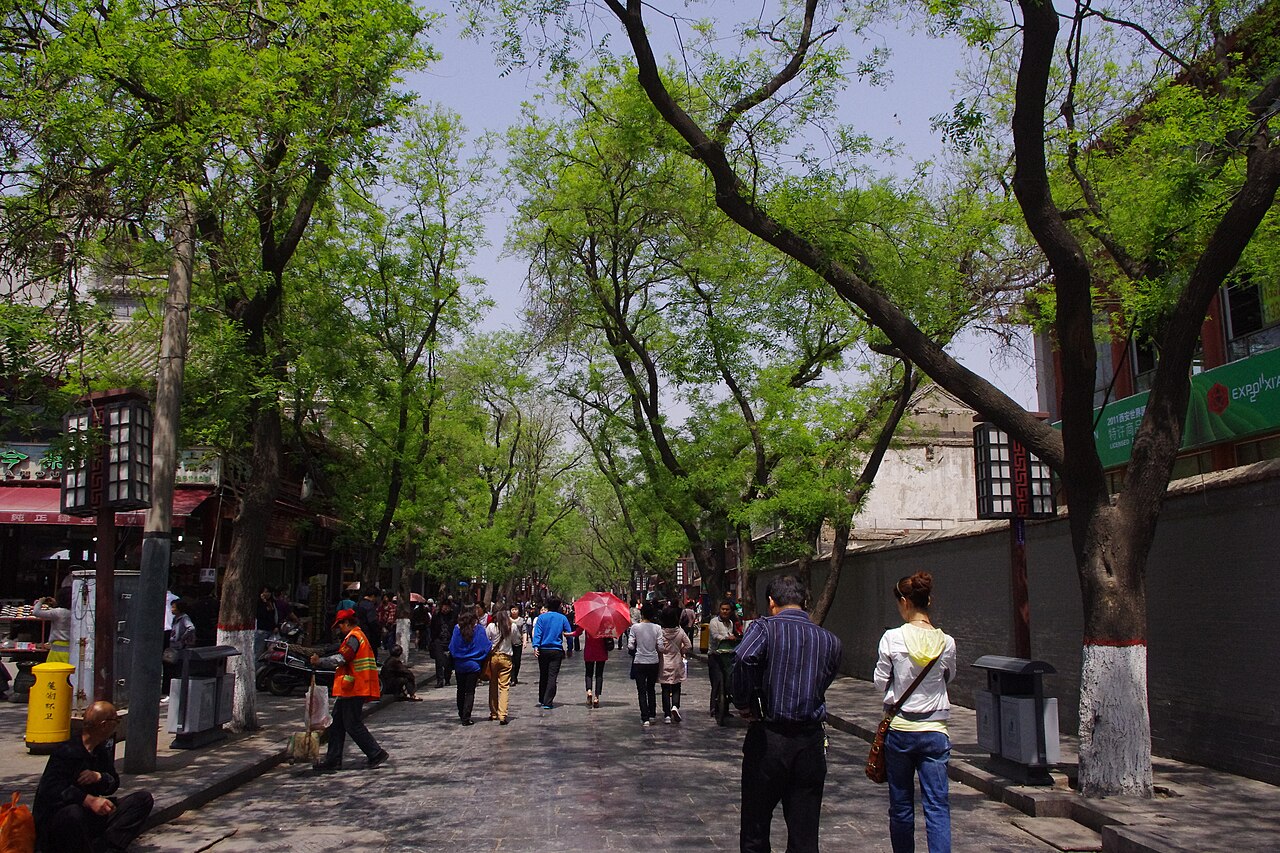
Beiyuanmen is the busiest street and the one most visitors stop at. It starts at the Drum Tower arch and runs north, crowded, bright and lined with souvenir shops as well as food stalls. Walk it once for the atmosphere.
Dapiyuan and Sajinqiao branch off to the west. They have more of the long-established local shops and fewer people taking photos. Sajinqiao in particular is lined with food shops that locals use.
North Guangji Street, which runs parallel to Beiyuanmen, is another option with more sit-down restaurants.
A good loop: walk the full length of Beiyuanmen, turn west, then come back south through Dapiyuan and Sajinqiao, choosing where to eat on the way. Agree on a meeting point near the Drum Tower before you start, because it is easy to lose people in the crowd.
The Great Mosque of Huajue Lane
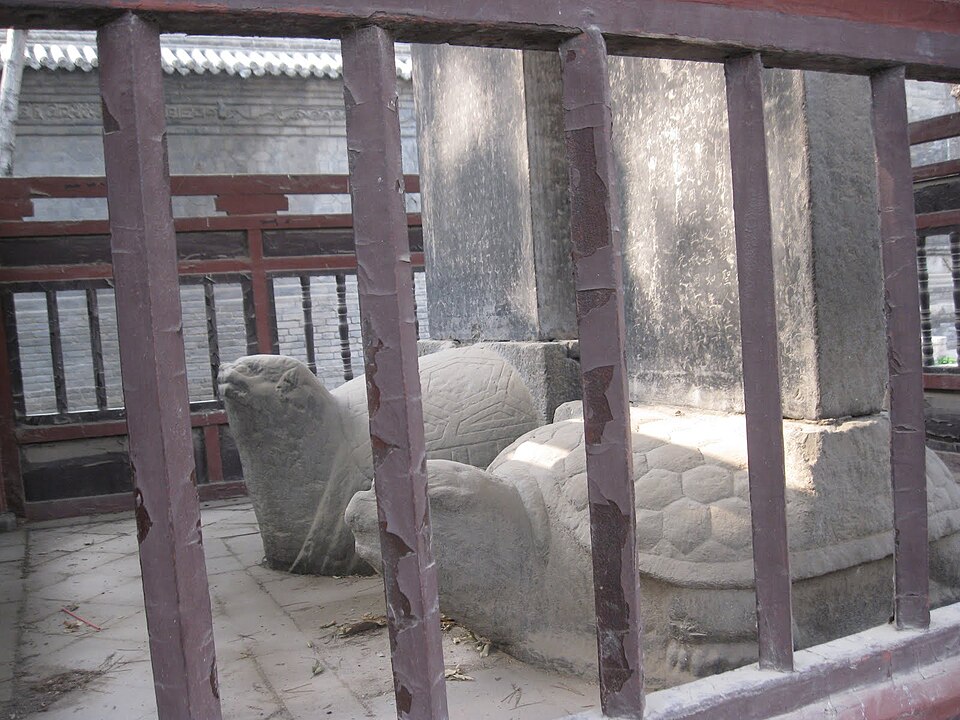
The Great Mosque is a short walk west of the main street through a narrow lane lined with souvenir stalls. It is a working mosque built in the form of a Chinese temple, with wooden gateways, a pagoda-like minaret, stone tablets and quiet courtyards. Its founding is traditionally dated to the Tang dynasty, and most of what stands today is from the Ming and Qing.
- Tickets: 25 yuan from March to November and 15 yuan from December to February, according to 2026 listings. Muslims usually enter free.
- Hours: roughly 08:00 to 20:00 in summer and 08:00 to about 18:40 the rest of the year.
- Prayer times: non-Muslim visitors may be asked to wait during prayers. Avoid Friday midday, the main weekly prayer, and major Islamic festivals.
- Etiquette: dress modestly, with shoulders and knees covered. Keep your voice down, and do not enter the prayer hall unless invited. Follow any signs about photography.
Allow 30 to 45 minutes. The mosque is calmer than the streets outside and a good break from the crowds.
When to go
- Late afternoon to early evening is the best time to arrive, when the lights come on and before the busiest hour.
- Weekend and holiday evenings around 20:00 are the most crowded. On Beiyuanmen it can be shoulder to shoulder.
- Weekday lunchtime is the calmest time for eating without a queue, though the street feels less lively.
Summer evenings stay hot and winter nights are cold and dry. The whole area is outdoors.
Fitting it into a Xi'an trip
The quarter is the natural end to a day in the old city. A good order is the city wall in the afternoon, the Bell Tower and Drum Tower at dusk, and dinner in the Muslim Quarter. After a long day at the Terracotta Army and Huaqing Palace, many people are too tired for a late night here, so save it for another evening if you can.
The Big Wild Goose Pagoda has a different evening scene in the south of the city, with a fountain and a lit pedestrian street. One evening in each is a good split.
Things to confirm before you go
- Great Mosque hours, ticket price and prayer times for your day.
- Prices before you order, especially for food sold by weight.
- Spice levels: say so if you want less chilli.
- Holiday crowds, especially in the National Day week.
Frequently asked questions
Is the Muslim Quarter in Xi'an free?
Yes. The streets are free to walk. You pay only for food and for the Great Mosque, if you visit it.
What should I eat in the Muslim Quarter?
Mutton paomo, a cured beef roujiamo and liangpi cold noodles are the classics. Add a sweet like zenggao or a persimmon cake.
How do I avoid the crowds in the Muslim Quarter?
Walk Beiyuanmen once, then turn west into Dapiyuan and Sajinqiao, where locals eat. Arrive before 19:00 on weekends.
Can non-Muslims visit the Great Mosque in Xi'an?
Yes, with a ticket and modest dress. Visits may pause at prayer times, so avoid Friday midday.