Xining Travel Guide: Five Stops in the Huang River Valley (with a Three-Day Itinerary)
Xining is the capital of Qinghai, old names Shanzhou, Xiping and Qingtang City, set in the Huang River valley on the northeastern edge of the Qinghai-Tibet Plateau, the Datban range to the north, the Laji to the south, the Sun-and-Moon Mountains to the west, the Huang River running through town. City elevation sits above 2,200 meters, the 2022 population was about 2.48 million, and it is the largest city on the plateau, the gate to Tibet, where the Qinghai-Tibet railway begins, with Tibetan Buddhist monasteries, mosques and Han temples living side by side in one valley. Five places below (the Kumbum Monastery (Ta'er Si), the Dongguan Grand Mosque, the Qinghai Tibetan Culture Museum, Dangaer Old Town, and Beichan Temple) have all had their origins checked against public sources.
Planning a short Xining stay
Protect one signature half-day and one buffer for transport. Cut malls and duplicate viewpoints if the calendar is tight. A cut list beats a checklist when time runs short.
When to come to Xining
Summer is Xining's calling card, the city is known across China as the Summer Capital, with July temperatures around twenty degrees while the rest of the country swelters; nights in high season need a blanket. June through August is the sweet spot and the busiest. Spring and autumn are short, winter cold but bright. The sun is fierce at this elevation: sunscreen, sunglasses and lip balm are gear, the day-night gap is wide, and even in summer pack a coat. At 2,200-plus meters, take the first two days gently, water, slow steps, no hill sprints. Town sights run on buses and taxis; the Kumbum Monastery in Huangzhong wants a half day, Dangaer in Huangyuan over an hour each way.
How to get in and where to stay
Use the main airport or high-speed rail station that serves Xining, then ride metro, bus, or taxi per posted notices. Stay near the primary visitor cluster if walking matters; treat outlying scenic areas as day trips, not hotel districts.
Places worth visiting
The Kumbum Monastery (Ta'er Si)
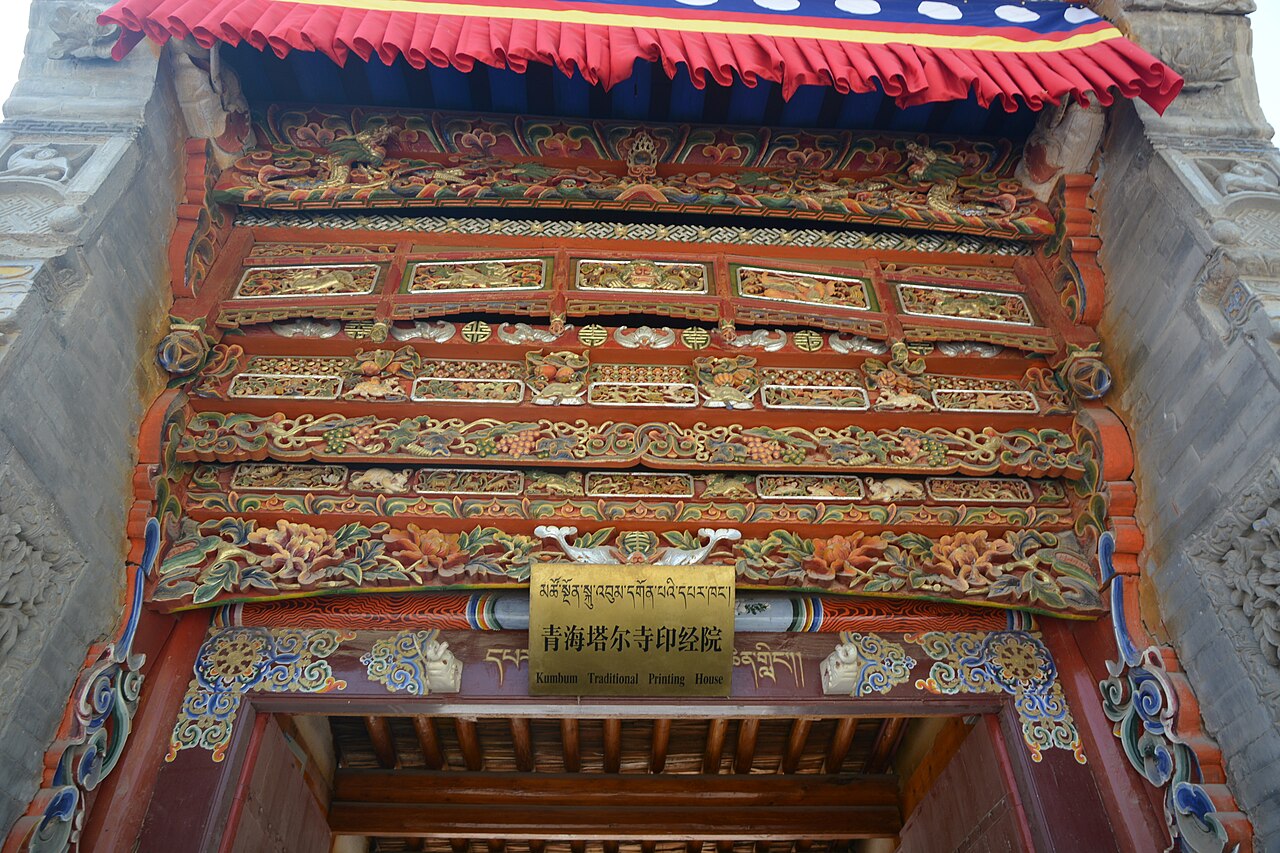
The Kumbum Monastery sits in the lotus-shaped folds of Shashar town in Huangzhong, one of the six great monasteries of the Gelug school of Tibetan Buddhism. Building began with a stupa before any temple: in 1379, the mother of Tsongkhapa (born on this spot) raised a stupa around the sandalwood tree at his birthplace, setting one hundred thousand images of the roaring-lion Buddha inside it; that stupa was the Kumbu. In 1560 the monk Rinchen Tsondru Gyaltsen built a small monastery beside it, and the compound took its name from the stupa. Qing patronage of the Gelug brought the Great Golden Roof Hall, the printing house, the eight stupas and the residences of living Buddhas, laying out the north-south complex seen today. In March 1961 it entered the first batch of nationally protected sites; it is now a national 5A scenic area.
The monastery keeps no full wall, the kora path ringing the folds of the hill is its boundary, so the walk unrolls bay after bay of halls. Butter sculpture, murals and appliqué embroidery are the monastery's three celebrated arts; in the butter-sculpture hall, flowers and figures modeled in yak-butter butter stand in chilled cases year-round. Before the Great Golden Roof Hall, the wooden platform where pilgrims prostrate full-length has been worn into deep grooves, keep quiet, and note that photography inside halls usually follows the monastery's rules on site. The four colleges, the butter sculpture workshops and ticket notes are on the Kumbum Monastery page.
The Dongguan Grand Mosque
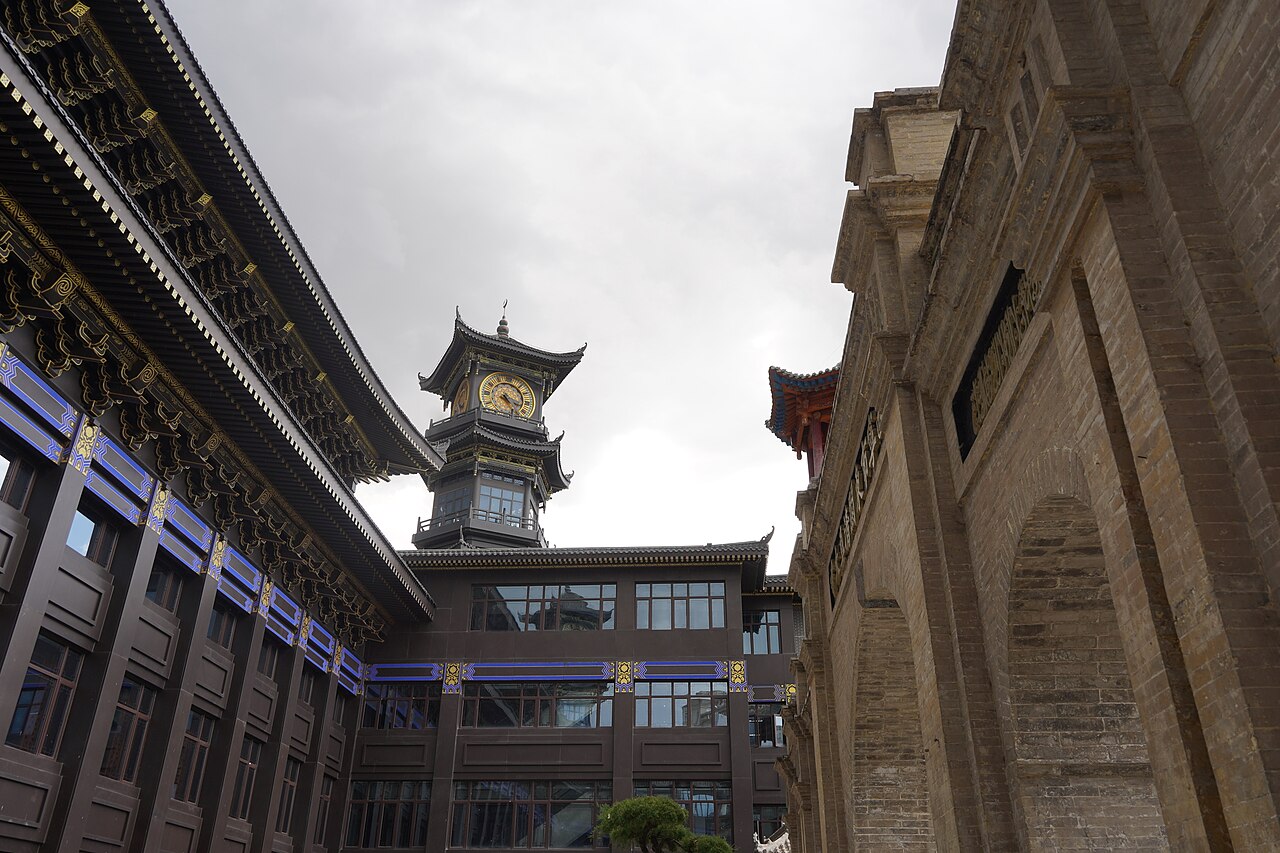
The Dongguan Grand Mosque stands on Dongguan Street in the city's east district. Tradition dates its founding to the Ming Hongwu years, and steles inside record that it "was founded in the Ming and destroyed in war," rebuilt generation after generation, today it is the largest mosque in Qinghai, named alongside the Huajue Mosque of Xi'an, the Qiaomen Mosque of Lanzhou and the Id Kah of Kashgar as one of the four great mosques of China's northwest. The compound covers 11,940 square meters, fusing tower, wall and hall, with green-and-white roofs and two tall minarets that draw the city's most recognizable skyline.
Outside prayer times the courtyard is open to visitors, and the mix of Chinese palace form and Islamic detail on the main hall rewards a slow look. On Friday afternoons the neighborhood fills with worshippers, caps in waves along the street, a sight more moving than any ticketed attraction; watch from the roadside and keep cameras down. Dress rules and visiting hours follow the notices on site; women may want a scarf for comfort.
The Qinghai Tibetan Culture Museum
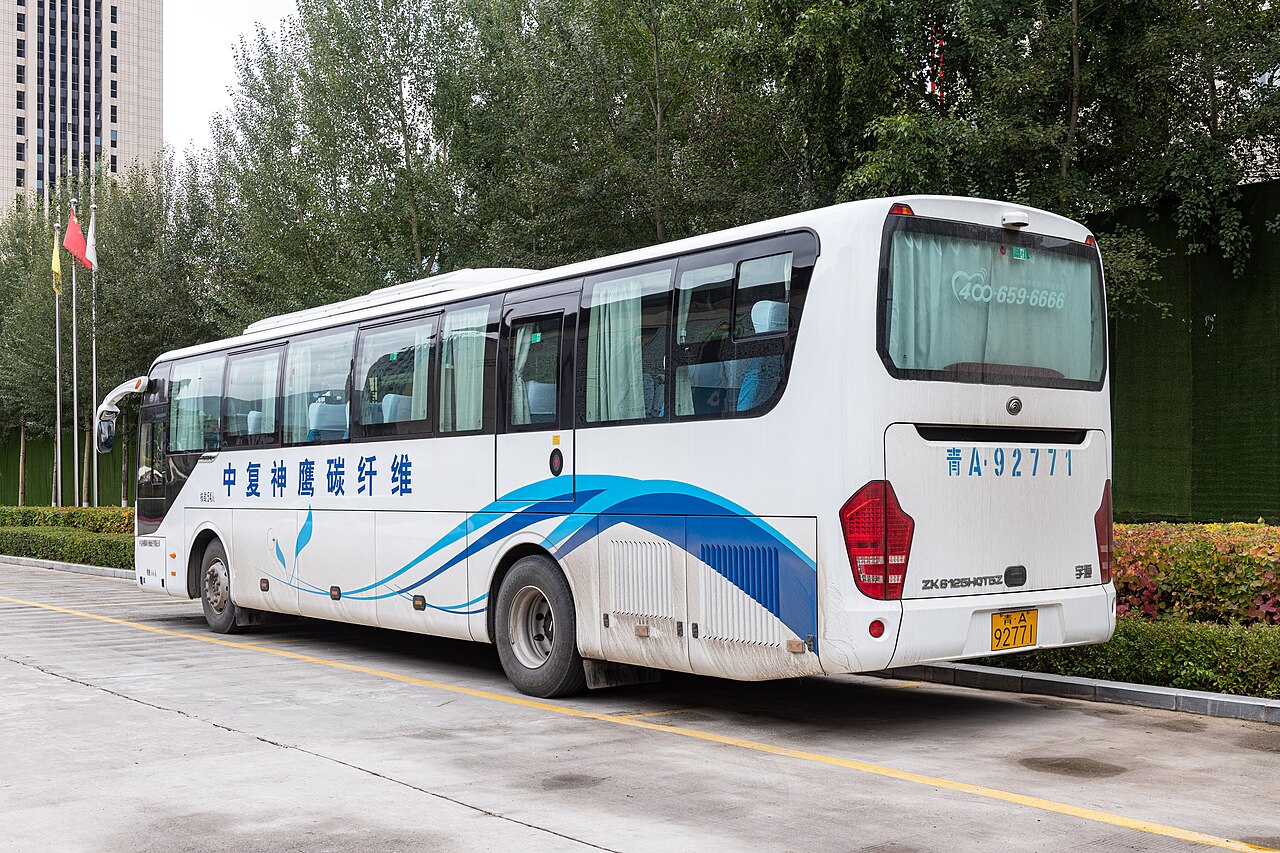
The Qinghai Tibetan Culture Museum (also the Qinghai Tibetan Medicine and Culture Museum) sits on a single street in the city's economic zone with a medicine branch beside it. Its treasure is the giant thangka "The Grand Painted Compendium of Tibetan Culture": the first scroll, 618 meters long and 2.5 meters wide, was finished in 1999 and entered the Guinness records that year as the longest thangka in the world; with the second scroll the whole work runs past a thousand meters, some 1,500 square meters of painting weighing 1.5 tons.
The scroll covers Tibetan history, medicine, astronomy and the calendar (four hundred painters worked more than four years) and walking the display line end to end takes over an hour; go slow, the detail in each panel rewards it. The Tibetan medicine halls lay out plateau pharmacology and diagnostic systems plainly. After the museum, the butter sculptures of the Kumbum Monastery read differently: the plateau's arts all run on one current. Opening hours and reservations follow official notices.
Dangaer Old Town
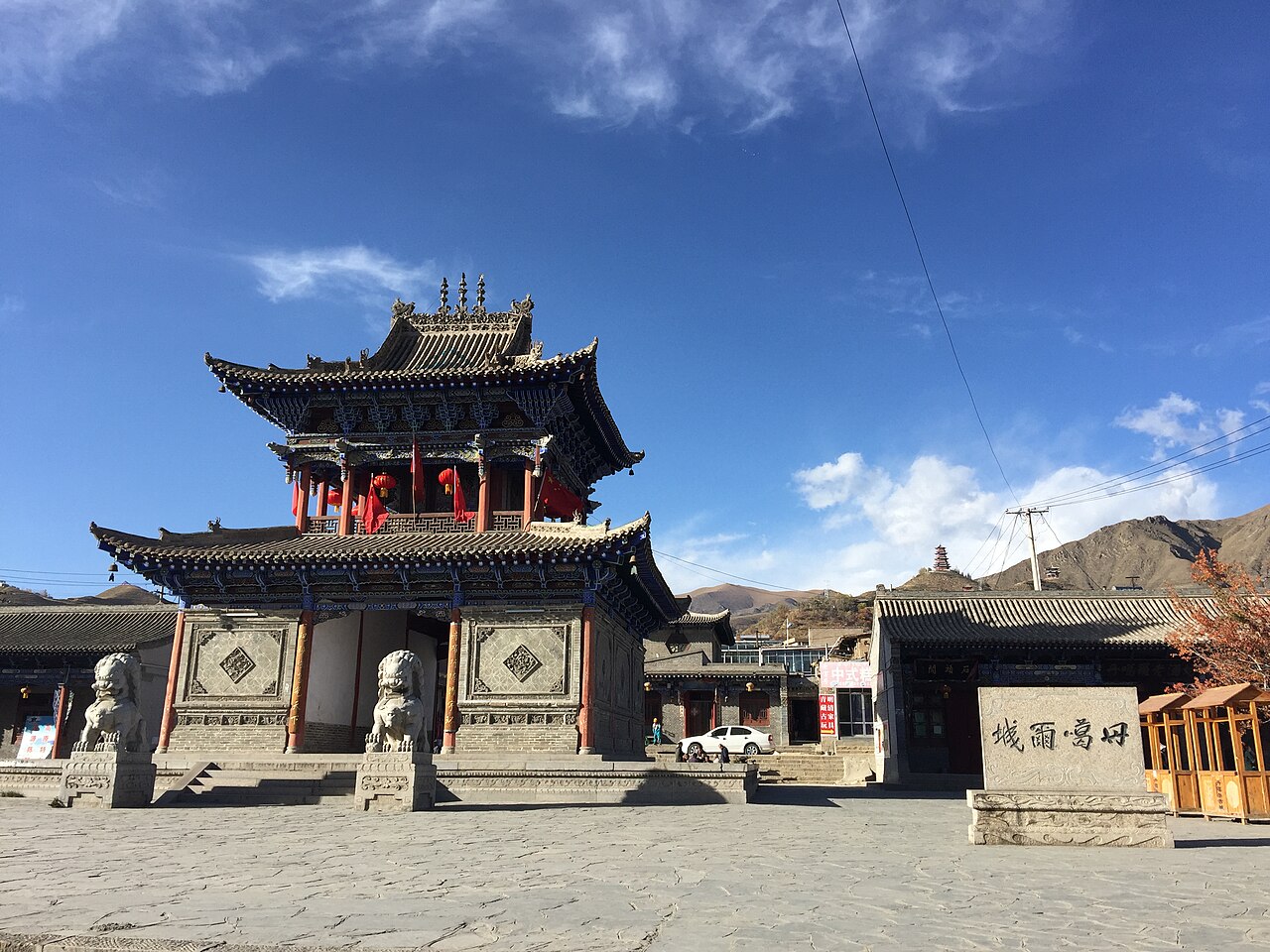
Dangaer Old Town fills the county seat of Huangyuan, fifty-some kilometers from Xining. In the tea-and-horse trade era this was the garrison-and-market gateway between the plateau and the interior (the histories call it "the throat of the land of stores and the sea" and "the trade capital of tea and horses") tea and silk moving up, hides and livestock moving down, for centuries. The town keeps two gates, Gonghai to the west and Yingchun to the east, and a startling density of temples along its streets: the City God temple, the Golden Buddha temple, the Fire God tower, the Jade Emperor temple, the Guan Di temple, the God of Wealth temple.
The town has been restored with exhibitions, and its signature is the paifang lanterns, long ranked lanterns painted with stories, hung along the streets and best at night when they light. Two or three hours covers it; eat a plate of local niangpi, glance at the Huang tributary, and the plateau-town rhythm does the rest. Half a day from Xining, and the loess gorges and terraced fields on the drive are scenery in their own right.
Beichan Temple
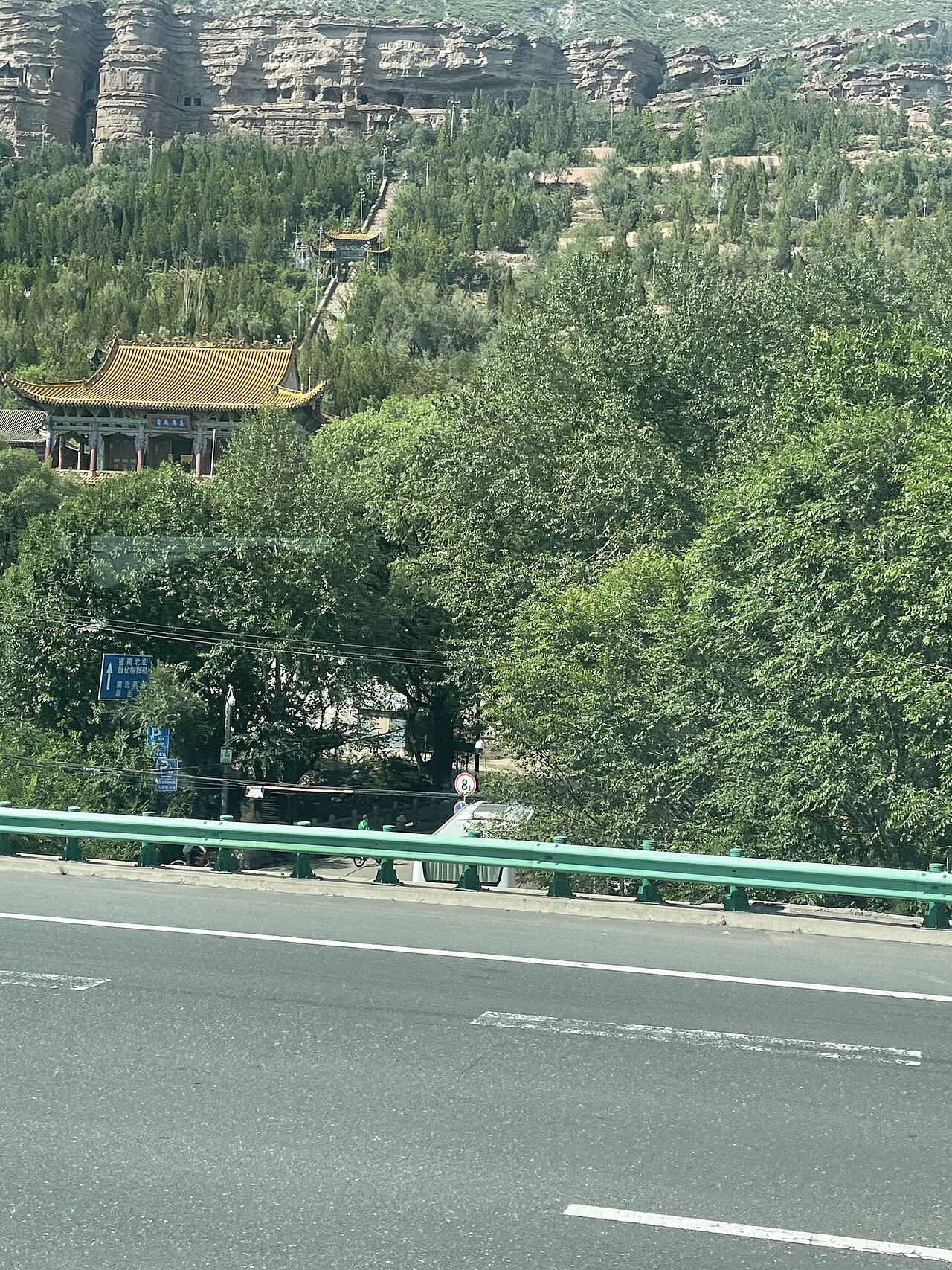
Beichan Temple (also Tulou Guan, the North Mountain Temple) climbs the red Danxia cliffs of Beishan on Xining's north side. Its founding is generally placed in the Northern Wei, making it among the earliest religious buildings in Qinghai; it is now a protected site of Qinghai Province. The sandstone face is pocked with a rank of caves joined by hanging walkways, statues and Daoist shrines sharing the same cliff, the site began as a Buddhist retreat and turned Daoist as the centuries turned, both faiths' traces stacked on one wall.
Mist over this north hill was counted among the old Eight Scenes of Huangzhong; from the upper terraces the city spreads below and the south hills stand across the valley, and after rain the mist view is the one people wait years for. The hill is low and the climb is easy, though some walkway sections are narrow and steep, take care if heights bother you. Ticket policy follows on-site notices; the hour before sunset turns the red sandstone properly red.
Eating in Xining
Hand-grabbed lamb is the pride of the Qinghai table, good pasture sheep carry no gaminess, so a plain boil with salt and pepper is already the point. Niangpi, the cold wheat-sheet salad, runs its own school in Qinghai: thick slabs, oil-chili, sour and opening. Tianpei is a cold sweet of fermented highland barley, faintly boozy and perfect in summer heat. Yak yogurt sets a pale-yellow cream skin on top and sours hard, one spoon of sugar settles it. Ga mianpian, fingernail-sized dough pieces in lamb broth, is the homey staple people miss first when they leave. Mojia Street and the Daxin night market cover the whole list in one evening, and portions run a size larger than inland, order carefully.
How to arrange the route
Day one stays in town and acclimatizes: the Dongguan Grand Mosque in the morning, lunch on Mojia Street, the Tibetan Culture Museum in the afternoon for the kilometer of thangka, early night for the altitude.
Day two belongs to the Kumbum Monastery: leave early to beat the tour buses, walk the butter-sculpture hall, the Great Golden Roof Hall and the kora slowly, and let the Huangzhong farmland slide past on the ride back. The night market is the reward.
Day three: Dangaer Old Town in the morning, niangpi in Huangyuan for lunch, then Beichan Temple in the afternoon to close the trip from the cliff terraces above town. With a spare day, Qinghai Lake is a common out-and-back from Xining. East of the city, Haidong covers Huzhu Tu folklore parks, Liuwan pottery, and Ledu’s Qutan Monastery as short prefecture chapters — not a substitute for the lake itself. Farther south and west on the plateau, Yushu covers Jiegu monastery culture at higher altitude, and Haixi is the Golmud/Qaidam salt-lake hinge (including Chaka logistics) rather than a Xining city substitute.
Things to confirm before you go
- Xining sits above 2,200 meters: go easy the first two days, drink water, and schedule nothing strenuous on arrival day.
- The Kumbum Monastery is a working monastery, hall photography rules and kora direction follow on-site signs, and dress respectfully.
- The Dongguan mosque fills on Friday afternoons; visit around that window and read up on etiquette before you go.
- Museum and old-town hours and reservations follow official notices.
- Plateau UV and dryness are real, sunscreen, sunglasses, lip balm and a water bottle, plus a coat for cool nights even in summer.
Frequently asked questions
How many days for Xining?
Three days fits the five stops comfortably. Xining's larger role is as the gate to the plateau. Qinghai Lake and Chaka add two to three more days and make the classic run.
Is the Kumbum Monastery worth it?
Yes, one of the six great Gelug monasteries, and the three arts are unique in China's temples. See the exhibition first, then the halls, and the butter sculpture will make sense as craft grown inside faith.
Will I get altitude sickness in Xining?
At 2,200-plus meters most people feel only mild breathlessness or a heavy head for a day or two. Walk slowly, drink water, save the hiking for day three, and the higher country afterward comes easier.
What must you eat in Xining?
Hand-grabbed lamb and niangpi are the base, tianpei and yak yogurt for dessert, ga mianpian for the homesick staple, one night market covers them all, and the Tan-sheep lamb carries no gaminess to fear.
Sources
The facts in this article were checked against the following Chinese Wikipedia entries, retrieved September 4, 2026.
- Xining (city) https://zh.wikipedia.org/wiki/西宁市
- Kumbum Monastery https://zh.wikipedia.org/wiki/塔尔寺
- Xining Dongguan Mosque https://zh.wikipedia.org/wiki/西宁东关清真寺
- Dangaer Old Town https://zh.wikipedia.org/wiki/丹噶尔古城
The Chinese Wikipedia entry for Beichan Temple (Xining) could not be retrieved in this environment; its founding era and present status were verified against Wikipedia, the Qinghai provincial government site and other public reports, with the founding given as the Northern Wei period in general terms. The Qinghai Tibetan Culture Museum has no independent entry; the length, Guinness record and making of the Grand Painted Compendium were verified against Guangming Daily, People's Daily Qinghai channel and the Tibet autonomous region culture department, using the 618-meter first scroll and a full work over one kilometer as the figures.
All photos are from Wikimedia Commons, used under CC licenses; re-use requires attribution.
- xining-city.jpg from File Xining skyline.jpg, by NoGhost, CC BY-SA 4.0
- xining-taersi.jpg from File A Cover of Taer Temple.JPG, by EricDiao, CC BY 3.0
- xining-dongguan.jpg from File Dongguan Mosque, Xining, Qinghai province, China.jpg, by Wikiwakhan, CC0
- xining-bowuguan.jpg from File Qing A92771 at Qinghai Tibetan Culture Museum (20230925120057).jpg, by N509FZ, CC BY-SA 4.0
- xining-dangaer.jpg from File Dangaer Old Town.jpg, by 慕尼黑啤酒, CC BY-SA 4.0
- xining-beichan.jpg from File 西宁土楼观.jpeg, by 章彦博, CC BY-SA 4.0