Yangguan, Dunhuang: Visiting the Sun Pass
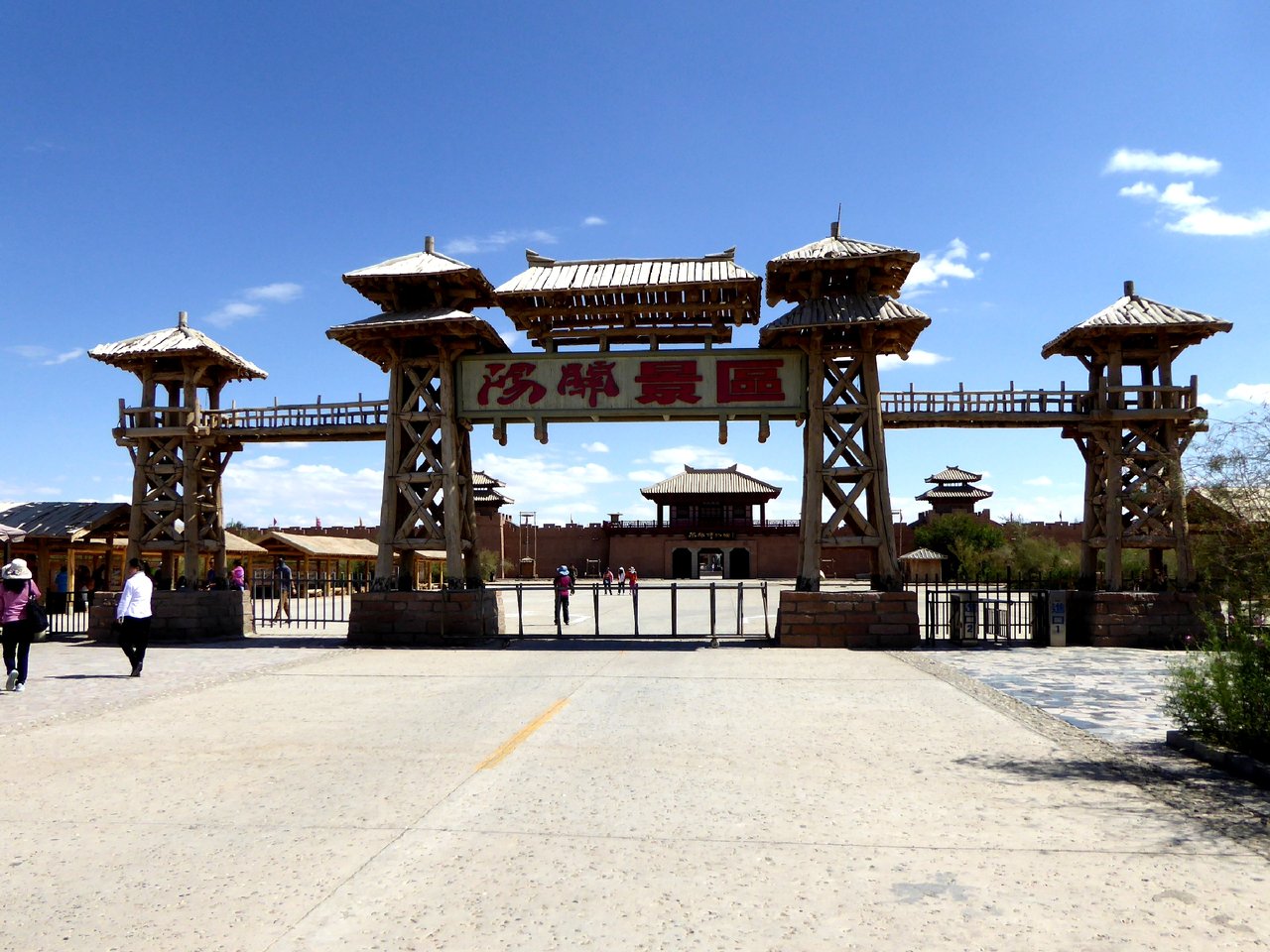
Yangguan (阳关), the Sun Pass, was the Han dynasty gate on the southern road west out of the Dunhuang oasis, and it is now an archaeological site and museum complex about 70 kilometres southwest of the city. What survives of the original is a single weathered beacon tower on a ridge above the desert; around it is a modern scenic area with a reconstructed pass gate, exhibitions and a sightseeing car. Tickets are 50 yuan for the site alone or 90 yuan for a combined ticket with Yumen Pass, and a shuttle bus runs between the two sites several times a day. Plan it as part of a full day out in the Gobi with Yumen, after you have seen the Mogao Caves. How it fits a longer stay is in the Dunhuang travel guide.
Why the pass mattered
When the Han dynasty pushed its frontier west along the Hexi Corridor in the second century BCE, it built a line of walls and beacon towers and two gates west of Dunhuang: Yumen, the Jade Gate, on the northern road, and Yangguan, the Sun Pass, on the southern. Yang means the sunny, south side, and the pass took its name from lying south of Yumen. Travellers, envoys, merchants and armies passing out of China toward the kingdoms around the Tarim Basin left through one or the other, and returning caravans checked in here.
For Chinese readers, the pass is above all a line of poetry. Wang Wei, the Tang poet, wrote a farewell to a friend heading west that ends "west of Yang Pass, there will be no old friends". The poem is taught in schools, and much of the scenic area is built around it.
What you see
- The beacon tower on Dundun Mountain (墩墩山烽燧). The real Han-era remnant, a tower of rammed earth and reed on a ridge overlooking the desert. It is the reason to come.
- The open desert around it, where archaeologists have found scatters of pottery, coins and arrowheads over the years. The exact site of the gate itself is uncertain, which is part of the place's story.
- The modern pass complex, with a rebuilt gate tower, walls, exhibition halls about Han frontier life, and interactive displays. It is new and makes no claim otherwise, but it helps you picture what a frontier post was like.
The sightseeing car (20 yuan) takes you from the complex to the beacon tower area. The light is best in the late afternoon, when the earthworks throw long shadows; midday is harsh and flat.
Tickets and the shuttle between passes
From the Yangguan and Yumen Pass Tourist Area's notice:
- Combined ticket for the tourist area: 90 yuan.
- Yangguan site: 50 yuan full, 25 yuan half price.
- Yumen Pass site: 40 yuan full, 20 yuan half price.
- Sightseeing cars: 20 yuan at Yangguan, 50 yuan at Yumen.
- Shuttle bus between the two sites: 30 yuan each way, daily all year. From Yangguan to Yumen it leaves at 11:30, 13:30 and 15:30; from Yumen to Yangguan at 10:30, 12:30 and 14:30.
Buses to the tourist area run from Dunhuang bus station, with tickets at the station window or through the "出行365" mini-program or the 12306 mini-program. From the railway station and airport, there are buses where you pay by scanning a code on board.
Under Dunhuang's 2026 to 2027 winter offers, running from 1 December 2026 to 31 March 2027, the tourist area is on low-season prices and Yumen's site ticket is half price.
Planning the day
Yangguan and Yumen are about 70 to 90 kilometres from the city in different directions, and the road between them crosses open desert. Two ways to do it:
- By bus and shuttle. Take the tourist bus out, visit one site, ride the shuttle to the other, and return. Plan around the fixed shuttle times above and check the last bus back to town.
- By hired car with a driver. More flexible, and the driver can add the Han Great Wall remains near Yumen or, farther out, the Yadan landforms. Agree the route, the time at each site and the return time before you leave.
Either way, it is a full day. Eat a solid breakfast and carry water and snacks; food options at the sites are limited.
Who should go
Yangguan is a site for people who care about the Silk Road's geography and history, or who know the Wang Wei poem. Its surviving remains are a single beacon tower and the desert itself, with modern buildings around them. If you are hoping for Mogao-style art or a dramatic fortress, you will be disappointed. On a three-day trip, the city guide's advice is to cut Yangguan and Yumen first and keep Mogao, Mingsha Mountain and Crescent Lake.
Desert practicalities
- Bring more water than you think you need.
- Sun protection is essential: hat, sunglasses, sunscreen.
- Pack a windproof layer, even in summer. The Gobi wind is strong and cold in spring and autumn.
- Download offline maps; phone signal can be patchy.
- Don't climb on the beacon tower or any original earthworks.
- Avoid the trip on sandstorm days.
Frequently asked questions
How far is Yangguan from Dunhuang?
About 70 kilometres southwest of the city.
How much is the Yangguan ticket?
50 yuan for the site, or 90 yuan for the combined ticket with Yumen Pass. Sightseeing cars are extra.
Can I visit Yangguan and Yumen Pass on the same day?
Yes. A shuttle bus runs between them several times a day, or you can hire a car for the loop.
Is Yangguan worth visiting?
Yes if Silk Road history interests you and you have a fourth day in Dunhuang. Skip it on a short trip.
Sources
- Yangguan and Yumen Pass Tourist Area, visitor information: https://www.dhymg.com/sys-nd/1330.html
- NetEase, Dunhuang 2026 to 2027 winter offers: https://www.163.com/dy/article/L91OUVH10550FADZ.html
- Yangguan, Chinese Wikipedia: https://zh.wikipedia.org/wiki/阳关