Yumen Pass, Dunhuang: Visiting the Jade Gate Ruins
Yumen Pass (玉门关), the Jade Gate, is the Han dynasty frontier post about 90 kilometres northwest of Dunhuang, and of the two famous passes it has the more impressive ruins: a square rammed-earth fort, long sections of the Han Great Wall built of reeds and gravel, and the remains of a huge granary, all spread across the Gobi. It is part of the UNESCO-listed Silk Roads network. The site ticket is 40 yuan, or 90 yuan combined with Yangguan, and you need the 50-yuan sightseeing car to reach the scattered ruins. Treat it as a full desert day together with Yangguan, after you have done the Mogao Caves. The rest of the trip is planned in the Dunhuang travel guide.
The Jade Gate in history
From about 111 BCE, after Emperor Wu of Han had pushed the frontier west along the Hexi Corridor, Yumen became the main gate on the northern road out of China toward the oasis kingdoms of the Tarim Basin. The name is usually explained by the jade from Khotan that came east through it. Soldiers garrisoned the line of walls and beacon towers, checked travellers' passes, and signalled with smoke and fire along the frontier.
In Chinese literature, the pass stands for the edge of the known world. The Tang poet Wang Zhihuan's line "the spring wind does not cross Yumen Pass" is one of the most quoted lines in the language. Scholars still debate how the pass's exact position shifted over the centuries, but the fort you visit is the one traditionally identified with it.
What there is to see
The ruins are spread over many kilometres, and the sightseeing car links them:
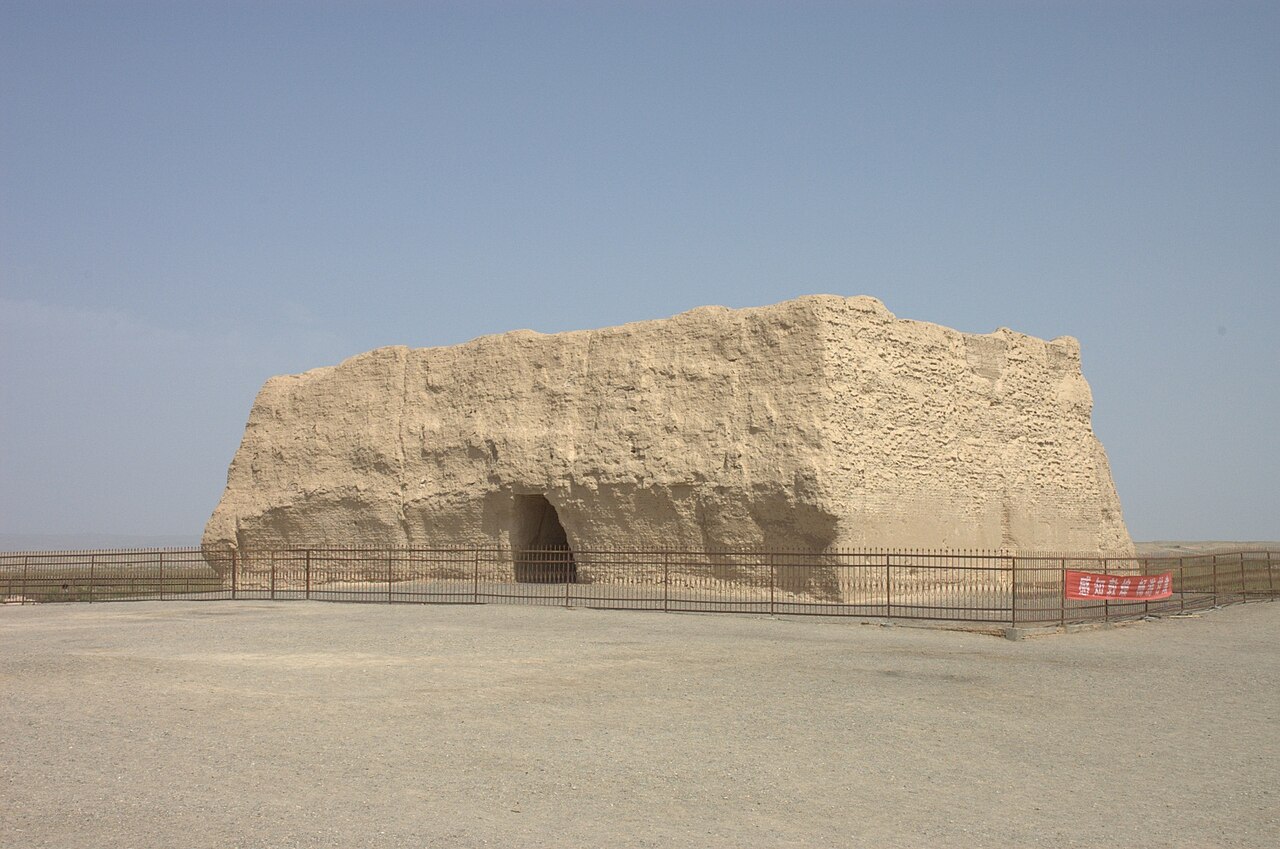
- Xiaofangpan fort (小方盘城). The square fort of rammed earth, about ten metres high, that most people picture as Yumen Pass. You walk around it on a boardwalk. Its plain, battered walls standing alone in the desert are the image of the site.
- The Han Great Wall. Low sections of the Han dynasty wall, built from alternating layers of reeds or tamarisk branches and gravel, survive near the fort. Up close you can see the layers clearly. They are among the best-preserved Han wall remains anywhere.
- Hecang fort (河仓城), also called Dafangpan. The ruins of a large Han granary and supply base, east of the fort. Its long walls are more broken but show the scale of the frontier logistics.
- The exhibition hall near the entrance, with models and finds from the frontier, including the wooden slips that record the daily life of the garrisons.
Allow two to three hours on site.
Tickets and transport for 2026
From the Yangguan and Yumen Pass Tourist Area's notice:
- Yumen Pass site: 40 yuan full, 20 yuan half price.
- Combined ticket with Yangguan: 90 yuan.
- Yumen sightseeing car: 50 yuan. You need it; the ruins are far apart.
- Shuttle bus to Yangguan: 30 yuan each way. From Yumen it leaves at 10:30, 12:30 and 14:30; from Yangguan at 11:30, 13:30 and 15:30.
Buses to the tourist area run from Dunhuang bus station; buy at the window or through the "出行365" or 12306 mini-programs. Check the last bus back before you set out.
For the 2026 to 2027 winter, from 1 December 2026 to 31 March 2027, the Yumen site ticket is half price under Dunhuang's winter offers.
Planning the day
There are two ways to do the trip:
- Tourist bus and shuttle. Ride out to one pass, use the shuttle to the other, then return to town. The fixed shuttle times shape the day: for example, arrive at Yumen in the morning, take the 12:30 or 14:30 shuttle to Yangguan, then head back.
- Hired car with a driver. More flexible. Agree the route, timing and price in advance. On the way, some drivers add the Yadan National Geopark, an area of wind-carved rock formations beyond Yumen, which is ticketed separately and needs several more hours.
Either way it is a long day. Leave early, eat a solid breakfast, and carry water and snacks; there are few places to buy food.
Yumen or Yangguan?
If you can only see one, pick Yumen. Its ruins are larger and more varied: the fort, the wall, the granary. Yangguan has a single beacon tower and a modern museum complex around it, though its link to Wang Wei's poem matters to many Chinese visitors. Combine both if you have the day.
When to skip it
On a three-day trip, cut Yumen and Yangguan first. Mogao, Mingsha Mountain and Crescent Lake are closer and more rewarding. Skip it too on days of high wind or sandstorm warnings.
Desert practicalities
- Bring water, sunscreen, a hat and sunglasses.
- Wear a windproof layer; the Gobi wind can be cold even in summer.
- Phone signal may be patchy; download maps.
- Stay on the boardwalks. The rammed-earth walls and wall sections are fragile.
- Late afternoon gives the best light on the ruins, but watch the time for the last bus or your driver.
Frequently asked questions
How far is Yumen Pass from Dunhuang?
About 90 kilometres northwest of the city.
How much does Yumen Pass cost?
40 yuan for the site, or 90 yuan with Yangguan. The sightseeing car is another 50 yuan.
Can I go from Yumen Pass to Yangguan?
Yes. A shuttle bus runs three times a day each way, at 30 yuan.
How long do I need at Yumen Pass?
Two to three hours on site, and a full day including Yangguan and the drive.
Sources
- Yangguan and Yumen Pass Tourist Area, visitor information: https://www.dhymg.com/sys-nd/1330.html
- NetEase, Dunhuang 2026 to 2027 winter offers: https://www.163.com/dy/article/L91OUVH10550FADZ.html
- Yumen Pass, English Wikipedia: https://en.wikipedia.org/wiki/Yumen_Pass
- UNESCO, Silk Roads: the Routes Network of Chang'an-Tianshan Corridor: https://whc.unesco.org/en/list/1442