Central Street, Harbin: How to Walk the Old Pedestrian Street
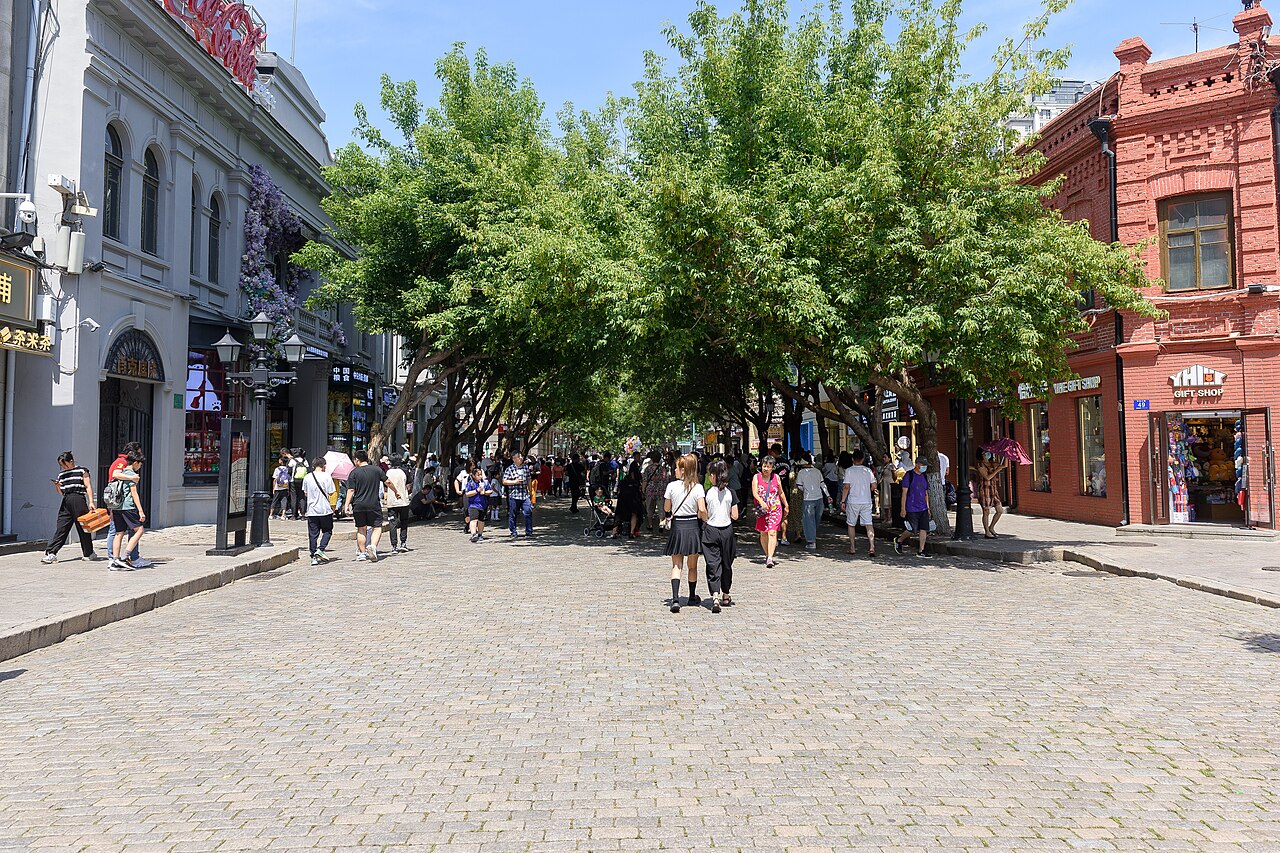
Central Street (Zhongyang Dajie) is a 1,450-metre pedestrian street of early twentieth-century European facades in Harbin's Daoli district. Walk it south to north, from Xinyang Square to the Flood Control Monument on the Songhua, and allow one to two hours with stops. Detour a few minutes east to St. Sophia Cathedral on the way. It is free and never closes. Come back after dark, when the facades are lit. Metro Line 2 has a Central Street station, and taxi drivers all know the name in Chinese, 中央大街. The whole street is paved with rounded square blocks that locals call bread stones, and after the full walk you feel them in your ankles. The rest of the three-day plan is in the Harbin travel guide.
A street built by the railway
Harbin exists because the Chinese Eastern Railway needed a junction where it crossed the Songhua. No city wall or dynasty founded it. The street was laid out in 1898, when it was called China Street (Kitayskaya in Russian), and it grew into the commercial heart of the railway boomtown. Russian, Jewish and other European merchants, engineers and, later, refugees put up the banks, hotels, shops and apartment blocks that line it today. In 1997 it reopened as mainland China's first commercial pedestrian street, and it is often described as the longest pedestrian street in Asia.
That history is the reason to come. The ground floors sell what tourist streets everywhere sell. The upper floors are Baroque, Renaissance and eclectic facades with domes, balconies, caryatids and carved window surrounds. Look up and the street reads like an outdoor museum of the 1900s to the 1930s. Some buildings carry plaques with a date and the original use. Read a few as you walk, because they turn the stroll from shopping into history.
The walk, south to north
- Start at Xinyang Square at the southern end. The crowds are thinner here, and the buildings are just as good.
- Walk north on the main street. The middle stretch has the densest run of restored facades and the biggest crowds. The Modern Hotel, a Harbin institution since the early twentieth century, and the Modern shop selling ice cream bars and pastries are on this part of the street.
- Detour east to St. Sophia Cathedral. The red-brick cathedral with the green onion dome is a few minutes' walk off the street through the side lanes, and the square is free.
- Finish at the Flood Control Monument and climb onto the Songhua embankment to look at the river.
The side streets that run off Central Street, numbered as cross streets, have quieter buildings, cafes and bakeries. Duck into one when the main street gets too crowded.
Day and night
Daylight shows the detail: cornices, carvings and colour. After dark the street lighting turns plaster and brick gold, and it becomes the city's easiest postcard. Many visitors walk it twice, once each way. Early morning gives you near-empty cobbles and soft light on the facades. Weekend nights and the Spring Festival weeks pack the street shoulder to shoulder.
Winter on the bread stones
In ice season the cobbles glaze over. Wear soles with real grip and walk in shorter stretches, stepping into a cafe or shop to warm up every twenty minutes or so. Cold drains phone batteries quickly, so keep your phone in an inside pocket against your body and take it out only to shoot. A little cash still helps at small pastry counters when payment apps falter in the cold.
In summer evenings the river end is cool enough to want a light jacket, and the street stays busy late.
What to eat and buy along the way
- Modern ice cream bars, from the Modern counter on the street. The queue in midwinter, at twenty below, is a Harbin sight in itself.
- Red sausage from the shops on and around the street. Buy sealed packs of the main brands, Qiulin or Haroulian, rather than loose sausage, if you want to take some home.
- Dalieba, the enormous round Russian-style loaf.
- A sit-down meal of guobaorou (crisp sweet-and-sour pork), borscht or pot-stewed beef. The old Russian-style restaurants on and off the street are part of the city's story. Choose a place with a menu outside rather than following the loudest tout.
Where to stay
Daoli, within walking distance of the street, is the best base in Harbin, especially in winter, when you will want to retreat indoors between outings. After a night at Ice and Snow World, you can come back to Central Street for a hot meal. Metro Line 2 runs from Ice and Snow World station via Sun Island to Central Street.
If your train leaves from Harbin West station, allow time for the cross-town transfer. Harbin station, on the other hand, is two stops away on Line 2.
Frequently asked questions
How long is Central Street in Harbin?
About 1,450 metres, from Xinyang Square in the south to the Flood Control Monument on the Songhua in the north.
How long does it take to walk Central Street?
Allow one to two hours for a first walk with stops. Half a day if you add St. Sophia Cathedral, the monument and a long meal.
Is Central Street worth visiting in summer?
Yes. The architecture is there all year, and summer evenings on the street and the river embankment are among the best times in Harbin.
What is the nearest metro station?
Central Street station on Metro Line 2. Line 2 also serves Harbin station, Sun Island and Ice and Snow World.