Jokhang Temple, Lhasa: How to Visit Tibet's Holiest Temple
The Jokhang (大昭寺) is the temple at the centre of Lhasa's old town and the most important pilgrimage site in Tibetan Buddhism, home of the Jowo Sakyamuni statue that pilgrims cross the plateau to see. To visit, reserve a day ahead through the temple's official WeChat mini-program, then pay for the ticket at the temple on the day with the same ID; the price usually quoted is 85 yuan. Morning entries between 8:30 and 13:30 are by time slot, while afternoon entry has no slot. Allow one to two hours inside, then walk the Barkhor circuit outside. The rest of the four-day plan is in the Lhasa travel guide.
Why pilgrims come here first
The Jokhang was built in the seventh century, when Songtsen Gampo unified Tibet and made Lhasa his capital. Tradition says it was raised to house an image of the Buddha brought by his Nepali wife, Princess Bhrikuti, on ground that was once a lake. Goats carried earth to fill it, which is why the first name of the temple referred to goats and earth, and why some say the city of Lhasa itself took shape around it. Tibetans have a saying that the Jokhang came before Lhasa.
The statue at the centre now is the Jowo Sakyamuni, said to show the Buddha at the age of twelve, which tradition says Princess Wencheng brought from Tang China. The image associated with Bhrikuti was later moved to Ramoche Temple, a short walk north. In 1409 Tsongkhapa, founder of the Gelug school, held the first Great Prayer Festival here, gathering monks from every school, and the temple has been a meeting point for all of Tibetan Buddhism ever since.
The complex covers more than 25,000 square metres, faces west, and mixes Tibetan, Tang Chinese, Nepali and Indian building styles. It has been a nationally protected site since 1961 and was added to the Potala Palace World Heritage listing in 2000.
Booking and tickets
The process, as set out by the Tibet tourism authority for summer 2026:
- Reserve one day ahead in the "大昭寺" WeChat mini-program or the temple's official account, using your real name and ID number.
- Morning entry, 8:30 to 13:30, is by time slot. Pick yours when you book. Afternoon entries are not tied to a slot.
- Pay on the day at the designated point with your booked ID, collect the ticket and go through the gate.
- People over 60, soldiers and veterans, people with disabilities and some others buy on site with their documents and do not need to reserve online.
Foreign visitors on a Tibet Travel Permit tour normally have the booking made by their agency with passport details. The price is usually quoted at 85 yuan per person with no student discount, but check the figure on the day.
Inside: the order of a visit
After the gate you enter the main courtyard, then a corridor of prayer wheels, then the dim central hall. The core of the visit is the Jowo chapel at the back. The queue to file past the statue is made of pilgrims who may have travelled weeks to stand where you are; it moves slowly and you should let it set the pace. Around the central hall, the Nangkor, the innermost of Lhasa's three pilgrim circuits, takes you clockwise past a ring of smaller chapels lit by butter lamps.
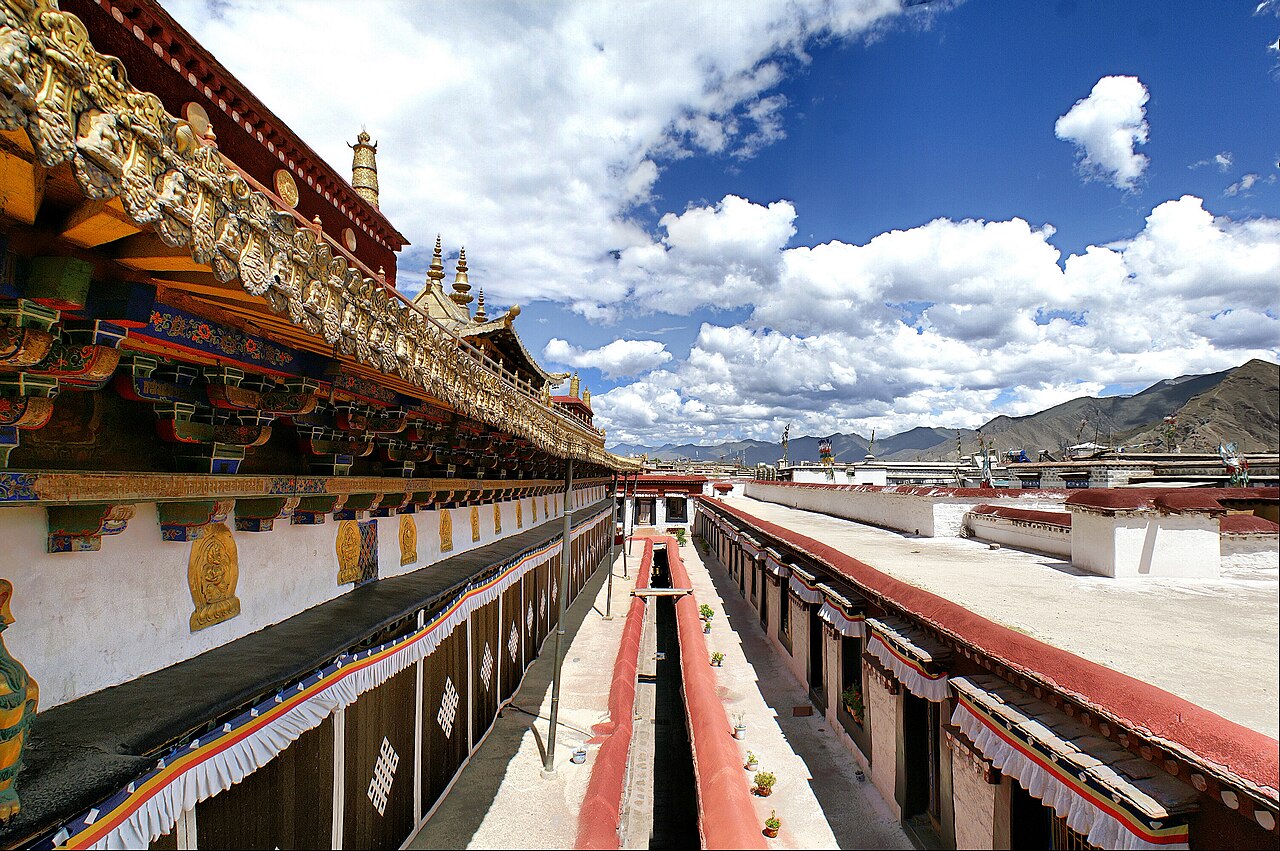
Don't leave without going up to the roof. The gilded roof ornaments, the golden deer and Dharma wheel, are close enough to touch (don't), and the view west over Barkhor Square toward the Potala Palace is the best free panorama in the old town.
Photography is not allowed inside the chapels. Follow the stewards; they will tell you clearly.
Getting the timing right
- Early morning brings pilgrims doing prostrations at the main gate, which is something to see even before you go in. Morning slots are for tourists too.
- Afternoon is when the queue for the Jowo is often lighter for visitors, and you do not need a slot.
- Festival days, especially around Losar (Tibetan New Year) and Saga Dawa, can be extremely crowded, with pilgrims queuing for hours. Ask your guide whether that changes the plan.
Etiquette that matters here
- Walk clockwise everywhere, inside and around the temple.
- Remove your hat inside, keep your voice low and dress modestly.
- Do not step over or in front of people prostrating at the entrance.
- Never touch statues, murals or butter lamps, and do not point your feet at altars when you sit.
- If you want to make an offering, pilgrims usually add small notes or butter to lamps. Watch quietly or ask your guide.
The square outside
In front of the temple, Barkhor Square is where you see the Jokhang's facade best, with the two big incense burners pouring out juniper smoke. Near the main gate stand the Tang–Tibet Alliance Monument, a stone recording a ninth-century treaty, and the stump of an old willow known as the Princess Willow, which legend links to Princess Wencheng. They are behind low walls, and pilgrims often crowd the area.
From the square you join the Barkhor flow, walking clockwise around the outside of the temple. Doing the circuit once after your visit is the natural way to finish.
Pacing at altitude
The Jokhang is on flat ground, which makes it kinder than the Potala for your first full day. Even so, at about 3,660 metres, standing in a slow queue and climbing to the roof is tiring. Drink water, sit down when you need to, and keep the rest of the day light. A teahouse stop on the Barkhor afterwards is the right ending.
Frequently asked questions
Do I need to book the Jokhang in advance?
Yes, one day ahead through the official WeChat channel, with a time slot for morning entry. Older visitors and some other groups can buy on site.
How much is the Jokhang ticket?
It is usually quoted at 85 yuan. Check the price on the day when you pay at the temple.
Can I take photos inside the Jokhang?
Not in the chapels. The courtyard, the roof and the square outside are fine for photos.
How long does a visit take?
One to two hours inside, more if the Jowo queue is long. Add an hour for the Barkhor circuit outside.
Sources
- Jokhang Temple, Chinese Wikipedia: https://zh.wikipedia.org/wiki/大昭寺
- Tibet Department of Culture and Tourism, summer booking guide for Lhasa sites, July 2026: https://wlt.xizang.gov.cn/xccx/lytg/202607/t20260720_550689.html
- Tibet CITS, Lhasa visitor notes: https://www.xizangcits.com/guide/1132.html