Sera Monastery, Lhasa: Seeing the Monks' Debate
Sera Monastery (色拉寺) sits at the foot of the hills on Lhasa's northern edge, about twenty minutes by taxi from the old town, and most visitors come for one thing: the debate courtyard, where monks argue Buddhist philosophy in pairs, clapping and stamping to drive home each point. The debates are usually held in the afternoon, commonly from around 15:00, but not every day, so check with your guide or at the gate. Tickets are bought on site with no reservation; recent price lists give 50 yuan. Arrive early in the afternoon to see the main halls first, then take your place at the edge of the courtyard. The day plan that pairs Sera with Drepung is in the Lhasa travel guide.
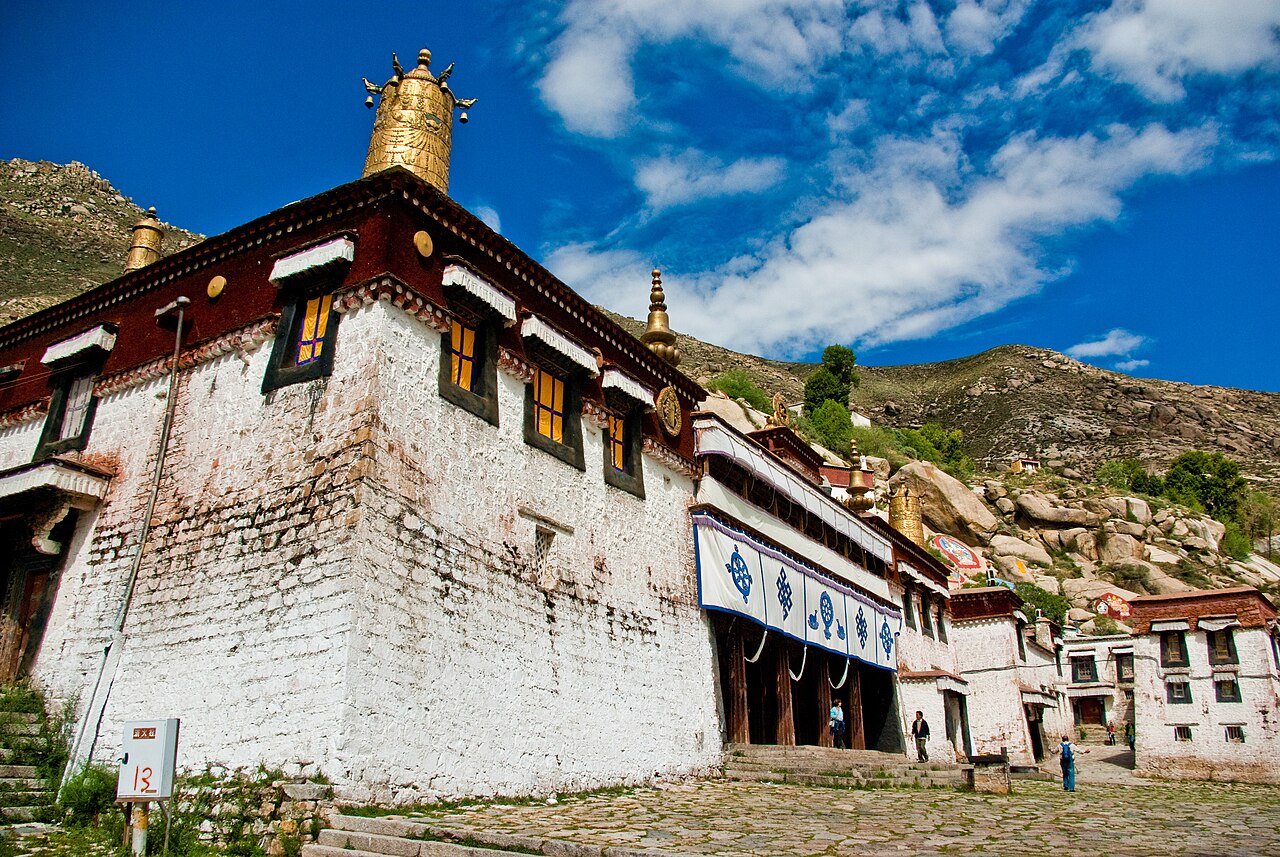
The monastery
Sera was founded in 1419 by Jamchen Chöje, a disciple of Tsongkhapa, the founder of the Gelug school. It stands at the southern foot of Sera Utse mountain, and its name is usually explained as "wild rose", after the thickets that grew here. With Ganden and Drepung, it is one of the three great Gelug monasteries of Lhasa. At its height it had an allotment of about 5,500 monks, second only to Drepung. It was placed on China's second national list of protected cultural relics in 1982.
Among its treasures is a Kangyur, the collected teachings of the Buddha, written in vermilion ink, which the Ming Yongle emperor gave to Jamchen Chöje. It is described as the first Tibetan-language edition of the Buddhist canon. You will not be leafing through it, but it explains why Sera was so important to scholars.
The debate: what you are watching
Debate is how monks in the Gelug tradition train their minds and test what they have memorised. It is part of their study timetable, not a performance for visitors.
The format is easy to follow even without understanding Tibetan. One monk sits and defends a position. His questioner stands over him, poses a point, and finishes it with a sweeping gesture: a loud clap of the hands, often with a stamp of the foot and a swing of the prayer beads. The clap is said to close the door on wrong views. If the seated monk answers well, the questioner moves on; if he stumbles, he hears about it. Dozens of pairs work at once under the trees of the courtyard, so the noise rises and falls in waves.
Most sessions last an hour or more. When the session ends, the monks simply get up and leave.
How to watch respectfully
- Stay at the edges of the courtyard where visitors sit or stand. Do not walk between debating pairs.
- Keep your phone silent and your voice low.
- Look for the photography rules on the day. Some days photos are allowed from the edge; flash and close-up shots of individual monks are poor manners anywhere.
- Don't ask monks questions mid-debate or try to join in.
- Leave quietly when the session ends instead of lingering for one more shot.
If debate is cancelled for a festival, an exam or the monastery's own schedule, you will still have the halls. Sunday has often been listed as a no-debate day in visitor notes, but the timetable is the monastery's and it changes.
The halls to see before the debate
Arrive by about 13:30 or 14:00 so you have time for the main buildings first:
- The great assembly hall (Tsokchen), the largest building, where the whole monastery gathers. Butter lamps, rows of seats and hanging thangkas.
- The colleges, each with its own assembly hall and chapels, including Sera Me and Sera Je. One of them houses a chapel to the horse-headed protector Hayagriva, where parents bring young children to receive a black mark on the nose for protection.
- The walk up between residential buildings toward the hillside, with views back over the city.
Walk clockwise in every chapel, take your hat off and do not touch statues or offerings. Chapels can close for part of the day, so let your guide sequence the visit.
Getting there
A taxi from the old town takes about twenty minutes. If you are on a permit tour, your driver will take you. Sera is at the northern edge of the city and Drepung is about five kilometres west of the centre, so the usual plan is Drepung in the morning, lunch back in town, and Sera after lunch in time for the debate.
Altitude and pacing
You are still at about 3,660 metres, and the monastery climbs the slope. Walk slowly between halls, drink water, and sit while you watch the debate. Two monasteries in a day is enough for anyone still adjusting. Don't add a Namtso Lake trip the next morning unless the monastery day felt easy.
Sera or Drepung if you can only do one?
Choose Sera if you want to see the debate, the most memorable living scene in any Lhasa monastery. Choose Drepung for its scale and the Ganden Phodrang, the original seat of the Dalai Lamas' government. With a full day, do both, and save the Potala Palace and Norbulingka for another day.
After Sera
Head back to town for an easy dinner. Tibetan noodle soup and a pot of sweet tea are kind on a tired body. If you still have energy, an evening walk around Barkhor Street and the Jokhang Temple square is flat and gentle.
Things to confirm before you go
- Whether debate is scheduled on your date, and roughly when it starts.
- The ticket price at the gate. Tickets are sold on site without a booking.
- Photography rules in the halls and the courtyard.
- Your guide and permit arrangements if you are a foreign visitor.
Frequently asked questions
What time is the debate at Sera Monastery?
Usually in the afternoon, commonly from around 15:00, though it is not held every day. Confirm on the day.
Do I need to book Sera Monastery tickets?
No. Tickets are bought at the gate. Recent price lists give 50 yuan.
Can I take photos of the debate?
Often from the edge of the courtyard, but check the rules on the day and avoid flash and close-ups.
How long should I spend at Sera?
Two to three hours: an hour or so for the halls, and an hour or more for the debate.
Sources
- Sera Monastery, Chinese Wikipedia: https://zh.wikipedia.org/wiki/色拉寺
- Tibet Department of Culture and Tourism, summer booking guide for Lhasa sites, July 2026: https://wlt.xizang.gov.cn/xccx/lytg/202607/t20260720_550689.html
- Ctrip, reference ticket prices for Tibet sites: http://vacations.ctrip.com/notes/5978.html