Norbulingka, Lhasa: Visiting the Summer Palace Gardens
Norbulingka (罗布林卡), "Jewel Park", is the walled garden about two kilometres west of the Potala Palace where the Dalai Lamas spent their summers from the eighteenth century on. It is the gentlest major sight in Lhasa: flat paths under old trees, a lake with pavilions, and a few palace buildings you can enter. Tickets were 60 yuan for adults and 30 yuan for concessions when sales resumed on 16 March 2026, bought through the Norbulingka WeChat mini-program or at the ticket office by the east gate. Give it two to three hours, ideally on the afternoon after your Potala morning. The city plan is in the Lhasa travel guide.
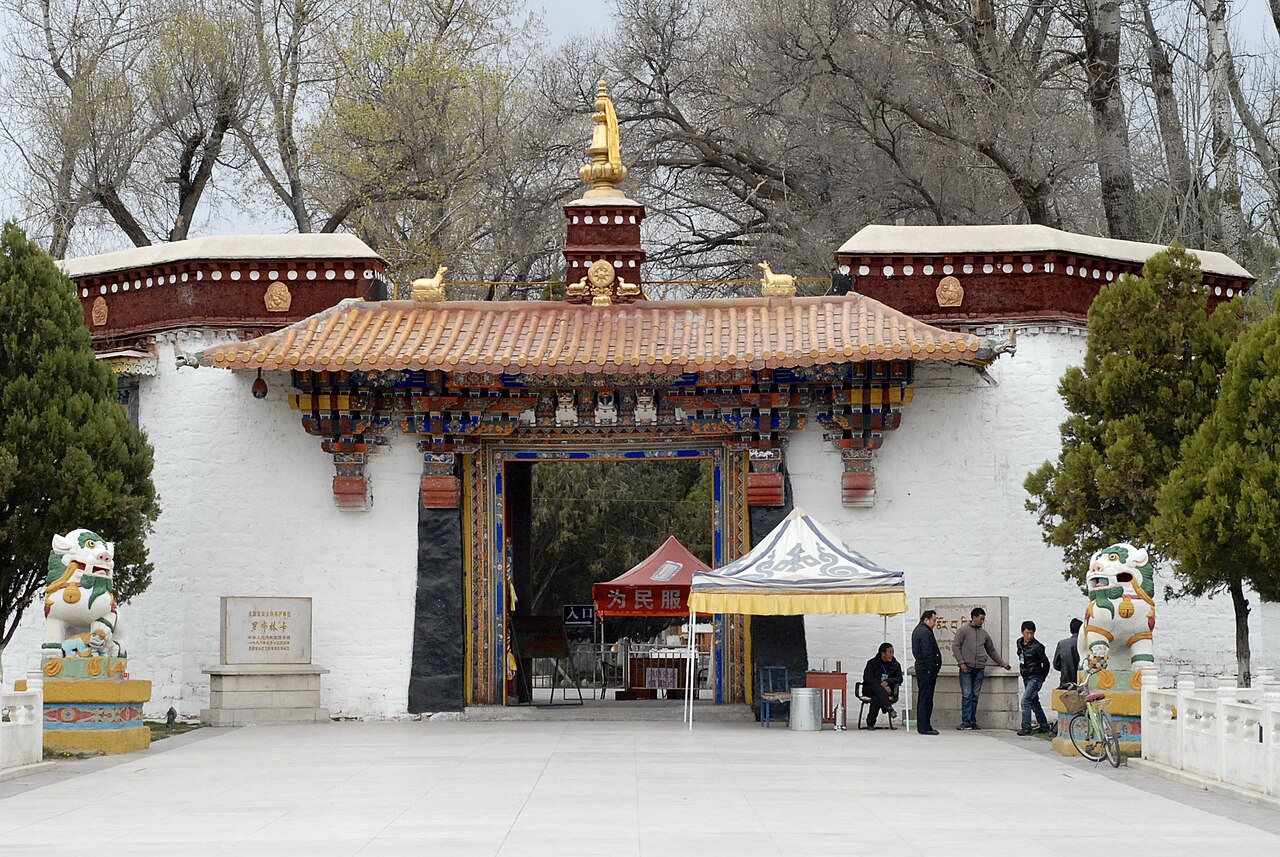
How a garden became a palace
The site was a wooded stretch of riverbank with a spring when the Seventh Dalai Lama began using it in the 1740s; tradition says he came for a spring believed to be good for his health. In 1751 he built the Kelsang Phodrang (格桑颇章), the first palace, and from then on the Dalai Lamas moved here every summer, holding court and carrying out government business from the garden while the Potala sat empty on its hill. Young Dalai Lamas also studied here before taking up their duties.
Each later ruler added something. The Eighth Dalai Lama dug the lake and built the pavilions on it. The Thirteenth built the Golden Phodrang in 1922. The Fourteenth built the Takten Migyur Phodrang, usually called the New Palace, in 1954. The result covers about 360,000 square metres with 374 rooms, and it is the largest man-made garden in Tibet. Norbulingka became a nationally protected relic in 1988 and was added to the Potala Palace World Heritage listing in 2001.
Tickets and getting in
From the March 2026 reopening notice:
- Adult ticket 60 yuan; concession 30 yuan for people 65 and over, children aged 7 to 17, full-time students up to bachelor level, soldiers and veterans, people with disabilities and some other groups, with documents.
- Group discounts of 10 per cent for 15 to 25 people and 20 per cent above 25.
- Buy online through the Norbulingka WeChat mini-program and enter by scanning the QR code or your ID, or buy at the ticket office to the right of the east gate.
In winter, Tibet's "Winter Tour" promotion has made Norbulingka free in past seasons; the 2025–26 round ended on 15 March 2026. If you are travelling between November and mid-March, check whether a new round applies.
Some older guides mention a midday break for individual buildings. Palace interiors keep their own hours and can close before the garden does, so arrive early in the afternoon rather than late.
What to see
The garden is large, so pick a loop rather than trying to see everything.
- The New Palace (Takten Migyur Phodrang), the most interesting interior for many visitors, built in 1954, with painted murals and rooms that show how the palace was used in the mid-twentieth century.
- The Golden Phodrang, the Thirteenth Dalai Lama's palace, set in its own walled section.
- Kelsang Phodrang, the original 1751 palace and the oldest building in the park.
- The lake and its pavilions, built under the Eighth Dalai Lama. This is the quietest and coolest part of the park, with Tibetan pavilions and Chinese-style elements side by side.
Between them, the paths run under willows, poplars and flowering shrubs. In summer it is one of the few genuinely shady places in Lhasa.
Interiors follow the same rules as monasteries: take your hat off, speak quietly, don't touch murals or furniture, and check for no-photography signs.
Shoton: opera week
Norbulingka's big week is the Shoton Festival in late summer. After the giant thangka is unveiled at Drepung Monastery on the opening morning, Lhasa families move to the park for days of Tibetan opera, picnics and gatherings under the trees. Opera troupes perform in the open, and the park is full from morning to evening. It is the best time to see how Lhasa uses its garden and the worst time for a quiet look at the palaces. If your dates fall on Shoton, plan to arrive early and expect crowds.
Why it suits the Potala afternoon
The standard way to visit is after a morning at the Potala Palace. The Potala is a steep climb of stairs at about 3,660 metres; Norbulingka is flat and shaded. Seeing them back to back also makes historical sense, since the Potala was the winter palace and Norbulingka the summer one. Between them, take in the classic Potala view from the platform on Chakpori (Yaowang) Hill, then take a short taxi to Norbulingka's east gate.
If the Potala left you headachy, skip the garden and rest. Norbulingka will keep. If your Potala booking failed, Norbulingka plus the Yaowang Hill viewpoint still makes a decent palace-themed afternoon.
Practical notes
- Bring a light layer. The shade under the trees is noticeably cooler than the open Potala square.
- Food options inside are limited. Eat before you go or plan a meal back in town.
- Children should stay close near the ponds and steps.
- Keep your rubbish until you find a bin. This is a World Heritage site, not a city lawn.
What to pair with it
The old-town sights, the Jokhang Temple and Barkhor Street, make a better day on their own. The monasteries of Drepung and Sera belong together on another day. Keep Namtso Lake for after you have spent a few days acclimatising in the city.
Frequently asked questions
How much is the Norbulingka ticket?
Adult tickets were 60 yuan and concessions 30 yuan from 16 March 2026. Winter promotions have sometimes made it free.
How long do I need at Norbulingka?
Two to three hours for the New Palace, the lake and one other palace.
Can I visit the Potala and Norbulingka on the same day?
Yes. The Potala in the morning and Norbulingka in the afternoon is the usual pairing. They are about two kilometres apart.
What is the best time to visit?
Summer for the gardens and shade; Shoton week for opera and atmosphere, if you can handle the crowds.
Sources
- Norbulingka, Chinese Wikipedia: https://zh.wikipedia.org/wiki/罗布林卡
- Norbulingka ticket notice via the Tibet Department of Culture and Tourism, 13 March 2026: https://wlt.xizang.gov.cn/xccx/lytg/202603/t20260313_529254.html
- Tibet Department of Culture and Tourism, summer booking guide for Lhasa sites, July 2026: https://wlt.xizang.gov.cn/xccx/lytg/202607/t20260720_550689.html