Namtso Lake from Lhasa: How to Do the Day Trip Safely
Namtso (纳木错) is the holy lake about 100 kilometres north of Lhasa, at 4,718 metres above sea level, more than a kilometre higher than the city. Most visitors go on a long day trip by car with their agency: about four hours each way, over the 5,190-metre Nagen La pass, leaving around 7:00 and back in Lhasa before dark. The entry ticket is listed at 120 yuan from May to October and 60 yuan from November to April, with a compulsory shuttle bus inside the scenic area charged on top. Go only after two or three days in Lhasa, when headaches have settled. Where it fits in the four-day plan is in the Lhasa travel guide.
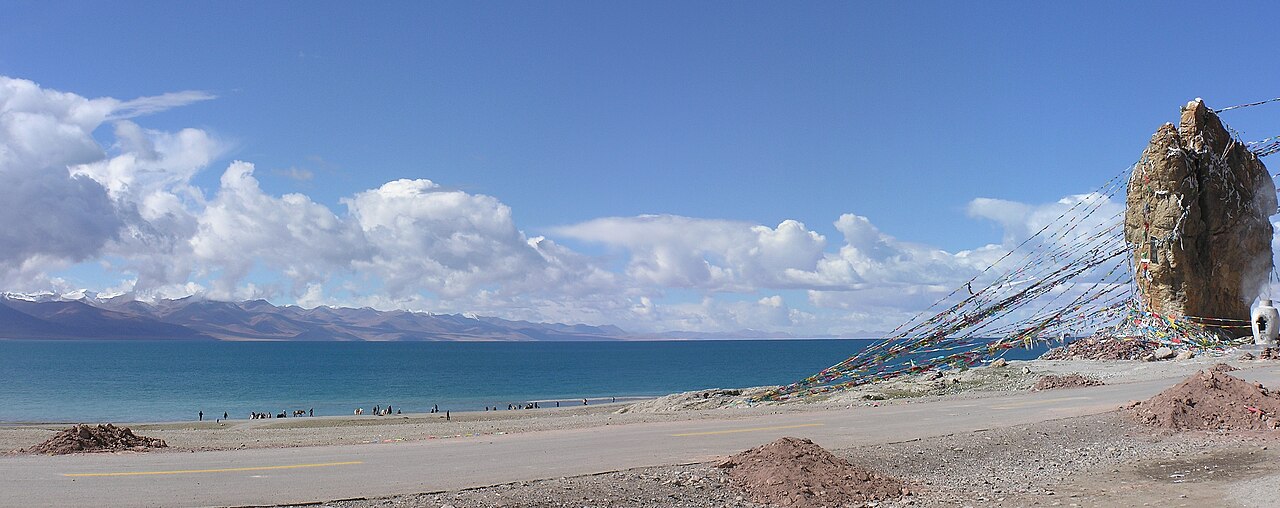
The lake
Namtso means "heavenly lake" in Tibetan; the Mongolian name, Tengri Nor, means the same. It covers more than 1,900 square kilometres and stretches over 70 kilometres east to west, and it is usually described as the highest large lake in the world. It is one of the three holy lakes of Tibet, and pilgrims walk the full circuit of its shore in the Tibetan Year of the Sheep. Along the south shore rises the Nyenchen Tanglha range, and on a clear day its snow peaks stand over the water. The lake lies in Damxung County, administered from Lhasa, close to the border with Nagqu.
The drive, hour by hour
A typical day with a driver looks like this:
- About 7:00: leave Lhasa heading north on the Qinghai–Tibet highway toward Damxung. The road follows wide valleys with yak herds and nomad tents in summer.
- Around Damxung: turn off toward the lake and start the climb.
- Nagen La pass (5,190 metres): the highest point of the day, strung with prayer flags. Get out for a few minutes for photos, then get back in the car. Walking around or running for pictures here is the classic way to trigger a headache.
- Around noon: reach the lake at Tashi Peninsula, the main visitor area on the southeast shore.
- 15:00 to 16:00: start back so you cross the pass in daylight.
The road is paved the whole way. In practice the time depends on checkpoints, weather and how many stops you make, so treat four hours each way as a minimum.
Tickets and the shuttle bus
Published reference prices are 120 yuan for the entry ticket from May to October and 60 yuan from November to April. Inside the scenic area, private vehicles cannot drive to the core zone, so a shuttle bus ticket is added on top; recent summaries put the combined ticket and shuttle around 200 yuan in peak season. In past winters, Tibet's "Winter Tour" promotion has made entry free at some scenic areas, including Namtso, so off-season trips can be much cheaper. Confirm the current price with your agency, since it is usually built into the tour.
Foreign visitors need a Tibet Travel Permit and the additional paperwork for areas outside Lhasa, arranged by a licensed agency, and travel with a guide. Your agency handles the vehicle and checkpoints.
Tashi Peninsula
The visitor area sits on Tashi Peninsula, a knob of limestone sticking into the lake. Wind and water have eroded it into towers, caves and arches, and pilgrims have covered it with prayer flags and mani stones carved with mantras. Two big rocks near the shore, often called the gate rocks, are the standard photograph.
On the peninsula:
- Walk slowly. At 4,718 metres, even a short uphill stretch leaves you breathless.
- Stay on paths, keep off fragile rock formations and do not move mani stones.
- Walk clockwise around sacred markers as pilgrims do.
- Do not fly a drone unless your guide confirms it is allowed.
You do not need to go far. Standing on the shore with the snow peaks across the water is the experience, and climbing a ridge for a slightly different angle is not worth the strain.
When to go
The lake freezes in winter and does not fully thaw until around mid-June. July and August are the most popular months: green pastures, herds on the shore, and the lake at its bluest, though afternoon clouds and showers are common. September and early October bring clearer skies and colder air. In winter the frozen lake has its own appeal and far fewer visitors, but temperatures at the shore are severe and the road can close in snow.
Altitude: when to turn back
Your body will notice the jump from Lhasa. Headache, nausea, dizziness, unusual breathlessness at rest or confusion are reasons to head down, not to push on for a photograph. Many cars carry oxygen; ask your agency. The best prevention is simple:
- Spend at least two or three nights in Lhasa first, and do the city sights before Namtso.
- Sleep well the night before, eat a light breakfast and skip alcohol the evening before.
- Drink water through the day.
- Anyone with heart or lung conditions should get medical advice before going.
Some tours offer a night near the lake. Sleeping at 4,700 metres is far harder on the body than a few hours' visit, which is why most short itineraries treat Namtso as a day trip.
What to bring
- A warm coat, hat and gloves even in July; the wind off the lake is cold.
- Sunglasses, high-factor sunscreen and lip balm. The UV at this height burns quickly.
- Water and simple snacks.
- Motion-sickness tablets if you get carsick on long drives, after checking with a pharmacist.
- A charged power bank. Batteries drain fast in the cold.
Is it worth it?
For most people with a fourth day in Lhasa, yes. The view of the lake below the Nyenchen Tanglha range is one of the defining landscapes of Tibet. But it is a long day in a car for a few hours at the shore, and skipping it is the right call if anyone in your group is still unwell, if you are travelling with young children or elderly relatives, or if you have only three days. Lhasa's city sights, the Potala Palace, Jokhang Temple, Barkhor Street, Norbulingka, Sera and Drepung, make a complete trip without it.
Frequently asked questions
How long is the drive from Lhasa to Namtso?
About four hours each way on a paved road, over the 5,190-metre Nagen La pass.
How much is the Namtso ticket?
Listed at 120 yuan from May to October and 60 yuan from November to April, plus the shuttle bus. Winter promotions have sometimes made entry free.
Can I visit Namtso on my first day in Lhasa?
No. Spend two or three days in Lhasa first. The lake is over a kilometre higher.
When is the best time to visit Namtso?
July to early October, after the ice has melted. July and August are greenest; September is often clearest.
Sources
- Namtso, Chinese Wikipedia: https://zh.wikipedia.org/wiki/纳木错
- Ctrip, reference ticket prices for Tibet sites: http://vacations.ctrip.com/notes/5978.html
- Pandatrip, 2026 Tibet ticket price summary: https://www.pandatrip.cc/2026-tibet-tourist-attractions-ticket-price-guide/