Old South Gate (Laomendong): An Afternoon Inside the Ming Wall
Laomendong, usually signposted in English as Old South Gate, is the rebuilt historic quarter just inside Nanjing's southern city wall, east of Zhonghua Gate. It is free, open at all hours, and about 15 to 20 minutes' walk south of the Confucius Temple. Come for the grey-brick lanes, food and bookshops in the afternoon, and the wall lit up after dark; the Zhonghua Gate barbican next door is a separate paid site. Compared with Fuzimiao it is quieter and easier to wander. The Nanjing travel guide has the full three-day plan.
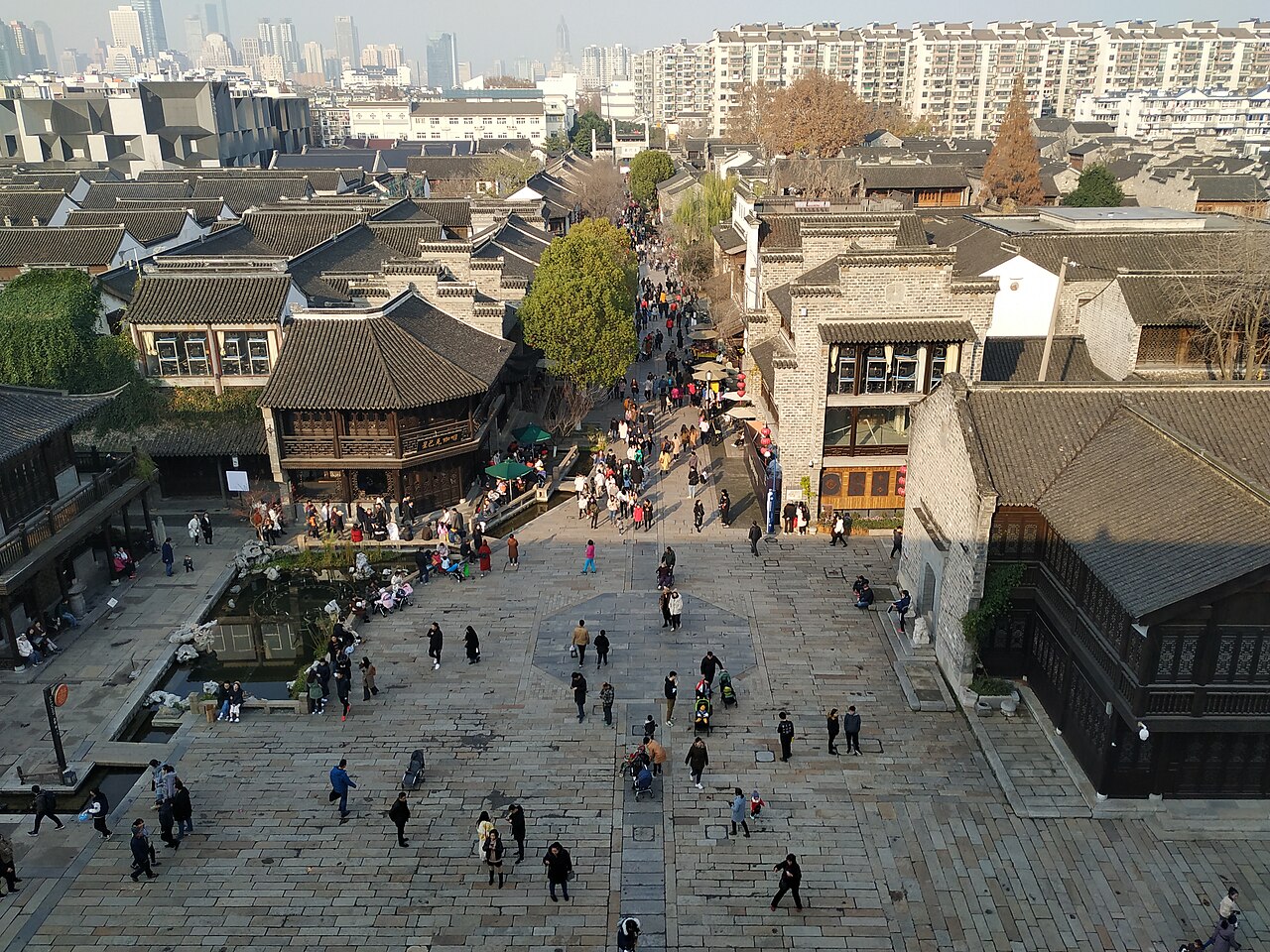
What Laomendong is, and is not
"Mendong" means "east of the gate": historically, the city inside the south gate was split into Mendong and Mengxi, and both had been among Nanjing's busiest districts since the Southern Tang. In the early 2000s the city named the southern part of Mendong, from Madao Street down to the wall, a historic and cultural block. The first stretch, along Gutong Lane, opened on 30 September 2013 with a stone archway at its entrance. Other blocks followed, including Santiaoying, and in 2018 the area was named one of Jiangsu's first districts for time-honoured brands.
So be clear about what you are seeing. A few buildings, such as the Jiang Shoushan residence, are genuinely old. Much of the rest, including the Jieziyuan garden, was rebuilt from 2010 onward in the traditional style, with horse-head gables and flagstones. It is a careful reconstruction filled with cafes, restaurants, craft studios and a Librairie Avant-Garde bookshop, not a preserved neighbourhood. Taken on those terms, it is a pleasant place to spend two hours.
A walk through the lanes
Start at the archway on Gutong Lane, the main north-south spine, and walk it once to get your bearings. Then turn off. The side lanes running east, Santiaoying, Zhongying and Bianying, hold the quieter courtyards, and a minute off the main lane the crowds thin. The bookshop is a good place to sit if it rains.
Work south toward the city wall. The lanes end against the Ming brickwork, and the strip of open ground there gives the best view of the wall from below. After dark, when the wall is floodlit and the lanterns come on in the lanes, this is the part people remember.
Zhonghua Gate: the paid add-on
Zhonghua Gate, at the west end of the quarter, was the city's main south gate. It was rebuilt from 1366 under Zhu Yuanzhang on the site of the Southern Tang gate, and was called Jubao Gate until 1931. It is the largest surviving fortified barbican in China: about 118 by 128 metres, with three enclosed courtyards linked by four arched gateways, and 27 vaulted chambers in its walls, estimated to have held 3,000 soldiers. Ramps let horses reach the top.
Entry to the gate and the wall-top walk is a separate ticket sold through the Nanjing City Wall channels, with its own hours, which run into the evening in peak seasons. The free lanes do not include it. Decide before lunch whether you have the legs for the ramps and steps; if the afternoon has already been long, the view of the wall from street level is enough.
Eating
Laomendong is a better place to eat than Fuzimiao. The restaurants are less frantic, many have tables, and prices are slightly lower. Look for Nanjing staples: salted duck, duck blood and vermicelli soup, small wontons and sweet osmanthus desserts. Treat any "number one" signs as advertising, and look for places with steady local custom. A proper sit-down meal here, followed by the walk back north to the boats at Fuzimiao, makes a good evening.
Timing
- Afternoon into dusk is the best window: lanes in daylight, wall lights at nightfall.
- Weekday evenings are calmer than Saturdays, when the Fuzimiao crowds spill south.
- The Lantern Fair at Spring Festival brings lanterns and crowds to these lanes too.
- Rain makes the flagstones slippery and also empties the lanes, which has its own appeal.
Getting there
Wudingmen on Metro Line 3 is the closest station on the east side; Zhonghuamen on Line 1 is outside the gate to the south-west. Most people simply walk down from Fuzimiao along the river. Taxis drop at the archway on Gutong Lane.
Pairing it with the rest of the city
Put Laomendong and the Confucius Temple on the same day: Fuzimiao halls in the morning, lunch, Laomendong in the afternoon, then back north for the night boat. Keep the Presidential Palace and Xuanwu Lake for a mid-city day, and the Sun Yat-sen Mausoleum and Ming Xiaoling for Purple Mountain.
If your trip is only two days and the south end has to go, keep at least an evening at Fuzimiao and look at Laomendong on the way. Cutting the free lanes saves very little time.
How long to allow
Two hours covers the lanes at an easy pace with a coffee or a bookshop stop. Add an hour for the Zhonghua Gate barbican and a stretch of the wall top, and another for a proper dinner. Families with pushchairs will find the main lanes flat and manageable; the gate ramps and wall steps are harder going. The lanes are lit and busy until late, so there is no need to rush out before dark.
Before you go
Check whether the Zhonghua Gate barbican and wall walk are open on your date, and what time the last ticket is sold. If you have booked a night boat at Fuzimiao, work backwards from its departure time and give yourself twenty minutes for the walk.