Sun Yat-sen Mausoleum (Zhongshanling): Booking and the Climb
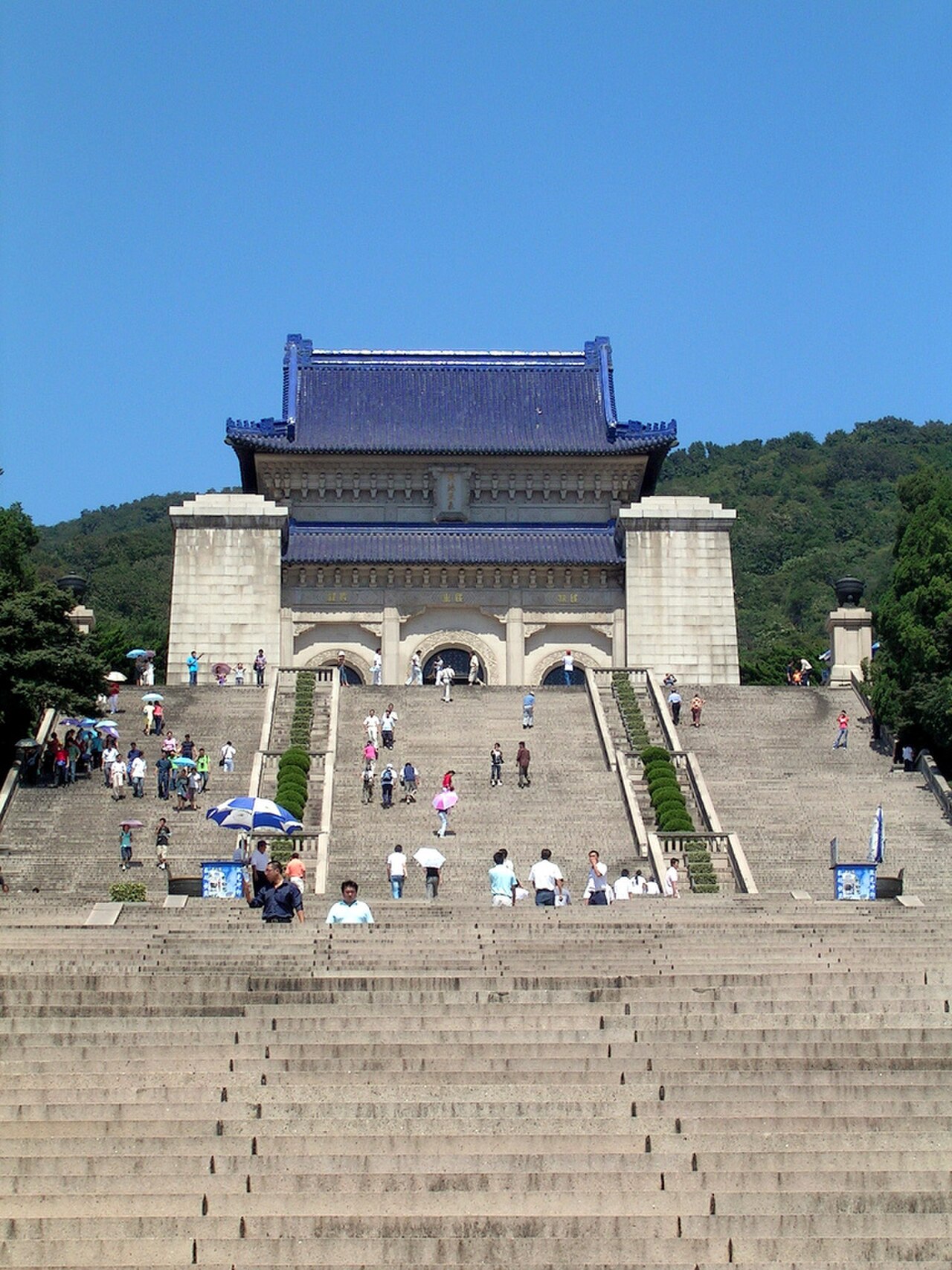
The Sun Yat-sen Mausoleum is the tomb of the founder of the Republic of China, on the southern slope of Purple Mountain in east Nanjing. Entry has been free since 12 November 2010, but you need a real-name timed reservation, and the area above the main gate is closed on Mondays for maintenance except on public holidays and Sun's birth and death anniversaries. The visit is a climb of 392 granite steps from the archway to the blue-roofed sacrificial hall, with the city and forest spread out behind you. Most people need one to two hours. Pair it with Ming Xiaoling next door, as set out in the Nanjing travel guide.
Booking the free slot
Reservations are made through the Zhongshan Scenic Area's WeChat channels, on Meituan, or at self-service machines on site, using the same passport or ID you will carry. Each booking is for a time window. Show the document at the checkpoint below the main gate. On ordinary weekdays slots are usually easy to get; on weekends, school holidays and the National Day week, book a day or more ahead and choose an early window.
Recent notices put the opening hours for the area above the main gate at about 08:30 to 17:00. The approach below it, including the archway and the long tomb path, is part of the wider scenic area and usually open longer. The tomb chamber itself is closed to visitors. In late 2024 the sacrificial hall was partly screened for three months of repair work; similar maintenance can happen again, so read the scenic area's notice for your date.
The climb, from the bottom
The Bo'ai Archway. The granite gateway at the foot of the axis is 11 metres high and carries Sun's calligraphy for "universal love". From here to the sacrificial hall is about 700 metres on the map and 73 metres of height. The architect Lü Yanzhi laid the whole complex out in the shape of a bell when seen from above, a reference to Sun's call to awaken the people.
The tomb path and main gate. A long, tree-lined path leads up to the main gate, set on twenty steps and inscribed with Sun's four characters "tian xia wei gong", "the world belongs to all". This is where the reservation checkpoint sits.
The stele pavilion. Just beyond, a square pavilion with a blue-tiled roof shelters a granite stele 9 metres tall, quarried in Fujian.
The stairs. From the pavilion, 290 steps climb in eight flights, with a wide platform between each. The platforms are the reason the climb feels easier than the number suggests; stop on them rather than on the steps when staff ask people to keep moving. Turn round on the upper platforms: the view back down, with the steps disappearing into the trees, is the photograph most people want.
The sacrificial hall. At 158 metres above sea level, the stone hall has a double roof of blue glazed tiles. Inside sits a white marble statue of Sun, 4.6 metres high, by the French sculptor Paul Landowski, under a mosaic ceiling. The tomb chamber lies behind, through a double door; it is not open. Photography inside the hall may be restricted, and visitors are expected to keep quiet.
Getting there
Metro Line 2 to Xiamafang or Muxuyuan puts you on the edge of the scenic area, from where shuttle buses run to the mausoleum, Ming Xiaoling and Linggu. Shuttles fill quickly on holidays; taxis between the main car parks are short. Coming from the city centre, give yourself forty minutes door to door so you reach the checkpoint within your window.
Timing and weather
Go early. By late morning in summer the open stairway is hot and crowded, and tour groups arrive in waves. Autumn, from late September into November, is the best season, with clear air and the plane trees and ginkgo turning. The plum rains in late June and July make the granite slick, so wear shoes with grip. Winter is quiet, cold, and good for views when the air is clear.
Add-ons on the same mountain
The Music Stage, a semicircular open-air auditorium below the mausoleum, and Meiling Palace, the villa associated with Song Meiling, carry small separate tickets. Both are pleasant, and both are easy to drop. On a first visit, the better use of the afternoon is Ming Xiaoling, where the Spirit Way and its stone animals need two to three hours. If you plan to visit three or more paid sites on Purple Mountain, compare the four-site combo, recently listed at CNY 100, against single tickets; it does not cover the mausoleum because the mausoleum is free.
Keep the Presidential Palace, where Sun took office in 1912, and Xuanwu Lake for a separate day in the centre. The Confucius Temple and Old South Gate suit an evening at the south end of town.
Frequently asked questions
Do I need to book even though it is free?
Yes. Entry above the main gate is by real-name timed reservation, and you show your passport or ID at the checkpoint.
Is the mausoleum open on Mondays?
Normally no. The core area closes on Mondays for maintenance, except on public holidays and the anniversaries of Sun's birth and death. On a Monday, visit Ming Xiaoling instead and come back on Tuesday.
Can you go inside the tomb?
No. You can enter the sacrificial hall and see the statue, but the tomb chamber behind it is closed.
How hard is the climb?
The 392 steps are broken up by ten platforms, so most people manage it at their own pace with a few stops. Allow extra time with children or older relatives.