Presidential Palace, Nanjing: One Plot, Six Centuries of Government
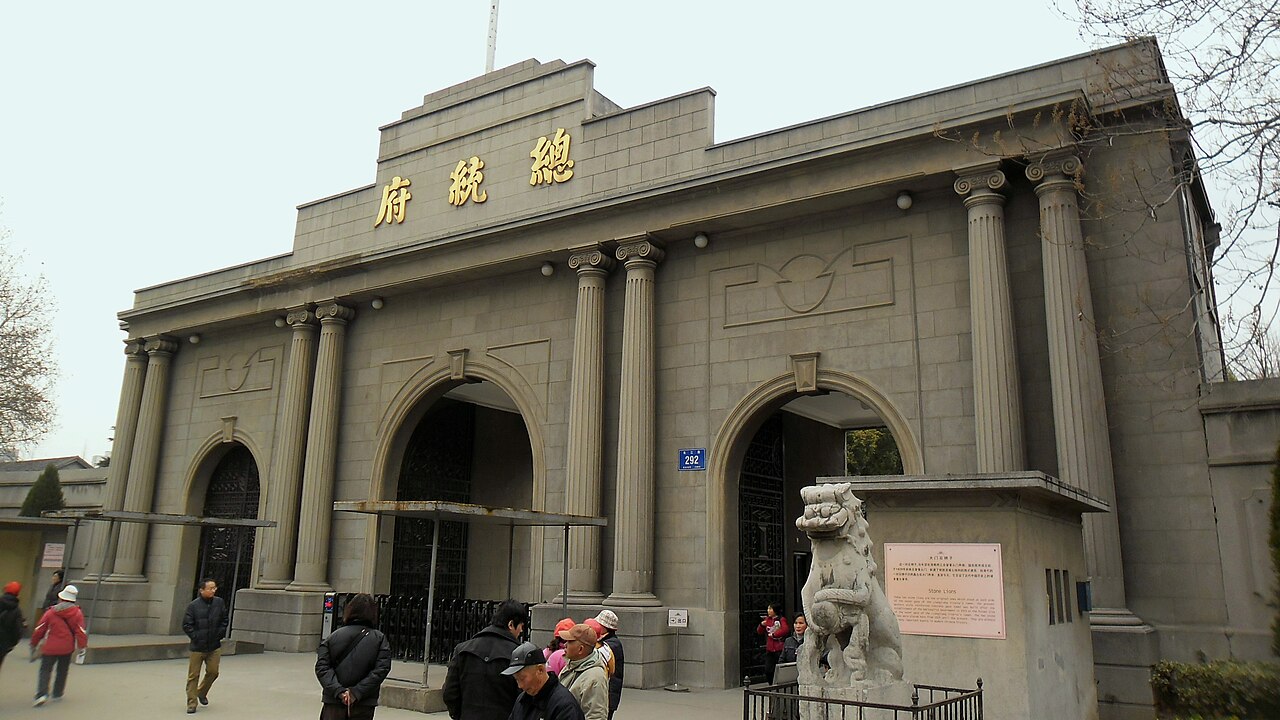
The Presidential Palace at 292 Changjiang Road is the compound where Sun Yat-sen was sworn in as provisional president of the Republic of China on 1 January 1912, and where the Nationalist government later had its offices. Before that it was a Ming prince's mansion, the Qing office of the Liangjiang Viceroy, and the Taiping Heavenly King's palace. Today it is the Nanjing Museum of Modern Chinese History Site. Tickets cost CNY 35 and must be booked by real name through the official "南京总统府" WeChat mini-program. It is closed on Mondays except public holidays. Allow two to three hours, then walk to Xuanwu Lake for the afternoon. The city plan is in the Nanjing travel guide.
Booking, hours and current notices
The official site gives these rules for 2026:
- Price: CNY 35 per person, valid for one entry on the booked day. Groups of ten or more with a travel agency pay a group rate.
- Booking: individual visitors book a timed slot in the mini-program, which releases tickets at midnight. Bring the original passport or ID used for the booking; you scan it at the gate. Unused tickets can be refunded within seven days.
- High season, 1 March to 14 October: 08:30 to 18:00, last entry 17:00.
- Low season, 15 October to the end of February: 08:30 to 17:00, last entry 16:00.
- Mondays: closed all day, except on public holidays.
The official site warns that it has authorised no third-party sellers or guides. Weekend and holiday slots sell out, so book as soon as your dates are fixed.
Two notices from this year are worth knowing about. The site closed temporarily in July 2026 and reopened on 13 July. On 31 July it posted a notice about hoarding and construction work on the gate tower and other buildings. If the famous gate is the photo you came for, check the latest notice in the mini-program; it may still be partly screened.
How the compound is laid out
The site is divided into three parts, and knowing that saves a lot of wandering.
The central axis runs north from the gate. The Western-style gate with Ionic columns was rebuilt in 1929; its sign read "Nationalist Government" until the three-character "Presidential Palace" name went up in 1948. Behind it, the halls of the Qing viceroy's office were rebuilt in 1870 on the site of the main Taiping throne hall, and at the far end stands the Zichao Building, the Nationalist-era office block of the 1930s named after Lin Sen, chairman of the government. A notice in July 2025 suspended visits to the building; ask at the entrance whether it is open.
The West Garden, or Xu Garden, is a classical garden around a pond, with a marble boat and pavilions built in the 1870s. Sun Yat-sen's office as provisional president is here, in a Western-style building put up in 1909 by the viceroy Duanfang. For many visitors this is the most rewarding corner: shade, water, and the room where the Republic began.
The East Garden was the eastern garden of the Taiping palace and now holds exhibition space, including the Taiping material.
A sensible route
Enter at opening if you can and take the gate photo before the tour groups arrive. Walk the central axis to the Zichao Building first, while it is still quiet. Then turn west into Xu Garden and Sun Yat-sen's office, and finish with the east side if you still have energy. That order puts the two highlights early.
Choose one thread to read in depth. If you care most about 1912, give your time to the West Garden. If the Nationalist government interests you, read the rooms on the axis. Trying to read every panel in every wing usually means museum fatigue by lunchtime. Bilingual signs cover the main rooms; an audio guide helps if Chinese labels slow you down. Photography rules vary by room, so follow the signs.
Getting there
Take Metro Line 2 or Line 3 to Daxinggong, leave by Exit 5, turn right along Changjiang Road and walk about 200 metres. The station name comes from the "great travelling palace" used by the Kangxi and Qianlong emperors when this was the viceroy's office. Buses 29, 44, 65, 95 and 304 stop at the Zongtongfu stop. Do not drive: parking nearby is scarce.
Pairing it with the rest of Nanjing
The natural day is the palace in the morning, lunch nearby, and an afternoon walk around Xuanwu Lake, which is free and a short ride north. If you arrive on a Monday, swap: lake and city wall first, palace on Tuesday.
Keep the Sun Yat-sen Mausoleum and Ming Xiaoling together on a Purple Mountain day. The mausoleum is where Sun is buried; the palace is where he governed, and the two make more sense on consecutive days than squeezed into one. The Confucius Temple and Old South Gate belong to an evening at the south end.
Is it worth it?
For anyone interested in twentieth-century China, yes; nowhere else in the city brings the late Qing, the Taiping and the Republic together on one site. If modern history does not interest you, the Xu Garden alone may not justify the booking, and Xuanwu Lake or Purple Mountain will give you more for the time. On a hot day, the garden shade makes the visit easier than the open courtyards suggest.